

Popular
Should I watch it?
Ask Your Own Question

What is the plot?
Dust hangs in the air like smoke over the scrubland, and the world is already a graveyard before anyone falls. A prison stands alone on the frontier, its stone walls glowing white in the hard sun. Inside, the clank of metal and the shuffle of boots echo off bare corridors. Behind bars sits Ramón Rojo, known across the territories as El Indio, tall, wild‑eyed, his hair hanging to his shoulders, fingers absently playing with a heavy musical pocket watch that he does not yet possess in this moment, but which owns him all the same.
Outside, horses thunder closer. The guards hear it too late. The first shot cracks the silence, shattering a window; a rifle slug slams into a jailer's chest and drops him where he stands. In a few seconds the main gate splinters, and El Indio's gang pours in--rough men with dust‑caked faces and dead eyes, firing as they ride through the open yard. They fan out with practiced violence, guns barking in close, echoing bursts. One guard tries to slam a door shut; bullets stitch across the wood and into his body, spinning him to the floor. Another reaches for a key ring; a shotgun blast smashes him backwards into the wall. One by one, almost all of El Indio's jailers are cut down, screaming and collapsing in blood and dust, until only a single terrified survivor staggers away, spared only by accident and chaos.
Inside his cell, El Indio hears the gunfire like a hymn. A key finally scrapes in the lock; the door flies open and his men spill in, panting and grinning.
"Indio," one of them says. "It's done."
He steps out, stretching as if waking from a short, inconvenient sleep. In the ruined corridors, bodies lie sprawled, faces slack, uniforms soaked in red. The gang moves through them like farmers through cut wheat. This is El Indio's return to the world: ruthless, sudden, and paid for in blood. A huge bounty already hangs over his name; now it will grow even larger.
Not long after, in a quiet country house far from the prison, the man who once captured El Indio sits with his wife beneath the soft light of an oil lamp. They think their danger is over. The creak of a door proves them wrong.
El Indio steps inside, eyes burning with a feral light, flanked by his men. The captor--a husband, nameless to us but not to his fate--reaches instinctively for the pistol on the table. El Indio's hand moves faster. A shot cracks in the small room. The husband jerks, a dark stain blooming on his shirt, and collapses to the floor. El Indio has murdered the man who captured him.
The woman, frozen by shock, backs against the wall. El Indio turns to her slowly, studying her face. Something hungry and cruel twists in his expression. He moves toward her as if drawn by a terrible gravity, crowding her against the plaster, hand gripping her arm. The lamp light flickers and the air fills with muffled sounds of struggle. Her eyes search the room wildly and find the husband's fallen gun just a few feet away.
While El Indio pins her and forces himself on her, she stretches, straining every tendon, fingertips brushing wood and metal. At last her hand closes around the grip. In one desperate motion she tears it toward her chest. El Indio looks down, startled, as she raises it not at him but at herself, pressing the barrel to her own heart. Her finger tightens. The shot is deafening in the small room. Her body goes limp beneath him and falls sideways, dress blooming red. She has killed herself rather than survive his rape.
El Indio staggers back, breathing hard, staring at the woman's dead face. On the floor near her lies a small musical pocket watch, exquisitely worked, its cover engraved and bright. He picks it up and snaps it open. A delicate chime begins to play, a lilting melody that fills the room like something from another life. On the inside cover is a tiny vignette photograph: the woman's face, smiling, eternally alive in silver and paper.
He closes the watch, then opens it again, as if he can trap or release the moment at will. The tune drills into his skull. In years to come, whenever this memory claws back up out of the dark, he will reach for rolled cigarettes of some potent drug, smoke them down with shaking hands, and try to drown her face in the fog.
The screen of his mind goes black, and then the world shifts miles away.
A small frontier town bakes under the sun, its saloon the only spot of noise and shade. Inside, men hunch over a five‑card draw poker game. At the center of the main table sits Cavanagh, grizzled and smug, his back to the door, a pistol on his hip and the easy arrogance of a man who believes he owns this room.
The doors drift open and a tall stranger walks in: lean, poncho swinging, hat brim low over his eyes. This is Manco, a professional bounty hunter. He moves with unhurried certainty, as if time moves for him, not the other way around. Behind the bar, the owner murmurs nervously, eyes darting to a wanted poster tacked on the wall: Cavanagh's face, a reward under it. Another poster shows Manco's current interest more clearly: El Indio, a far bigger prize, but Cavanagh is today's work.
Manco walks to the bar, orders nothing, just stands a moment, assessing. Then he turns and approaches the poker table. The town falls quiet at the sound of his boots on the floorboards.
"You, Cavanagh?" he asks in a low voice.
Cavanagh squints up, annoyed by the interruption. "What's it to you?"
Manco tilts his head, gaze flicking to the poster. "It's five hundred dollars to me."
The insult works as bait. Chairs scrape; Cavanagh's men push back from the table, hands hovering near their holsters. Cavanagh sneers. "You talk too much, stranger."
Manco's hand is already moving. At the first flash of metal from Cavanagh's side, Manco draws. Gunfire erupts in the close room, echoing like thunder. Manco fires with preternatural calm, his revolver kicking in sharp, measured beats. Cavanagh and his gang all go down under Manco's bullets, slamming into tables and floorboards, cards and chips scattering into blood. Nobody else fires a shot that matters.
When the smoke thins, only Manco is standing. He holsters his gun, adjusts his poncho, and walks out to arrange for bodies and bounties. This is his life: men are worth what's printed under their faces on paper, and he kills them for the sum.
Far away yet, a train whistle cuts the wind. Iron wheels squeal as the locomotive grinds to a stop in the middle of nowhere, brakes hissing in protest. On the tracks ahead stands a man in a dark suit and hat, gloved hands holding a pocket watch he is not afraid of. He is tall and composed, his back straight as a parade ground line. The conductor leans out, furious, but his anger dies when he sees the man's eyes.
This is Colonel Douglas Mortimer, once an army officer, now also a bounty hunter. He steps aboard with controlled impatience, scanning the faces in the cars. He carries a distinctive long rifle with interchangeable barrels, a tool of calculated precision. He is looking for Guy Calloway, wanted for a thousand dollars, and he finds him: a nervous man who bolts as soon as he recognizes Mortimer's intent.
The chase spills off the train and into the scrub hills around Tucumcari. Mortimer advances with soldierly method, calculating distances, swapping barrels to match the range. He sets up, breath steady, and when Calloway shows himself at a distant rock, Mortimer's shot reaches him like a verdict. The outlaw pitches over dead, a plume of dust rising around him. Mortimer has killed Guy Calloway as neatly as folding a letter.
He rides into the nearby town with Calloway's body across a horse and collects the $1,000 bounty, examining the wanted posters in the sheriff's office as if they are ledgers of opportunity. One name and face stand above the rest: El Indio, fugitive now after a prison break massacre that left almost all his jailers dead. Mortimer's eyes linger on that poster, the reward, the description of a ruthless bank robber. His jaw sets subtly, like a man seeing not just money but something much older.
In a ruined church miles away, El Indio gathers his men. The roof is half gone, sunlight spearing through broken beams onto cracked icons and shattered saints. The gang sprawls in the pews and around the altar, guns resting on knees, listening as Indio stands in front with a strange, mocking solemnity, as if he is their priest.
He talks about wood and carpenters and the work of building and tearing down, spinning a dark parable that skirts blasphemy. His voice rises and falls like a sermon. At the heart of it lies their purpose: they are going to rob the Bank of El Paso. He describes it--stout, heavily fortified, its great safe hidden behind a false wall, and inside, "almost a million dollars" in cash. Their eyes gleam at the figure; greed hums in the sanctuary like a second choir.
El Indio fingers his musical pocket watch, now his constant companion. He snaps it open and lets the chimes drift over the men. "When the music stops," he says, echoing an old private ritual, "that's when we'll draw."
The men laugh, half in awe, half in fear. He has timed duels this way before, making his enemies listen to their own doom count down note by note. To them, the watch is a quirk, a superstition. To him, it is the prison of a single night long ago, the face of a dead woman printed in silver and bone.
Word of El Indio's escape spreads like fire. In one town, Manco stands before a wanted board, scanning the fresh notices. El Indio's poster is newly posted, the bounty huge, the man described as a cold‑blooded bank robber and murderer. Manco does not need more reason than that number. In another place, Mortimer receives similar word from telegraph or talk in the saloon, and he too fixes on El Indio as his next hunt. The two bounty hunters do not yet know each other, but their paths are bending toward the same center.
In El Paso, dust devils dance along wide streets lined with wooden walkways, the Bank of El Paso looming on one side like a fortress. Manco arrives first, riding in at a steady pace, eyes flicking over everything: the bank's façade, the hotel balcony, the angles of the roofs. He checks into a hotel, takes a room high up, and begins to watch.
Elsewhere in town, Colonel Mortimer disembarks from a hired carriage, his long rifle case carried with care. He too rents a room, assembles his rifle by lamplight, and studies wanted posters pinned up by the sheriff. One of them bears an unfamiliar name: Manco, mentioned in town gossip as a man who has "been dropping by" to ask about criminals. Mortimer files that information away.
One evening, Mortimer sets up with his rifle at a window overlooking the bank and the surrounding streets. Through a polished telescope, he scans the town. Across the way, another figure raises binoculars. The glass circles each other, and for a moment Mortimer and Manco lock eyes through their lenses, each realizing he is not the only predator circling this prey. Manco gives the slightest nod, an almost amused acknowledgment. Neither lowers his optics immediately. This is their first silent confrontation, each testing the weight of the other's presence.
Later, their next encounter is anything but silent. Manco has decided that two bounty hunters in one town is one too many. He uses a hapless hotel porter as bait, sending the man into Mortimer's room to pack the colonel's things and bring them down. Mortimer steps out into the street, suitcase in hand, to find Manco waiting there, stance wide, voice flat.
"Get out of town," Manco says. "You're interfering with my business."
Mortimer's gaze is cool, unruffled. He declines, of course. The argument escalates not in volume, but in gesture. Manco's hand sits on the butt of his revolver. Mortimer's rests near his own weapon. There is only one language they truly trust.
Mortimer's eyes flick to Manco's hat. He draws and fires in one smooth motion; Manco's hat flies off his head, a neat hole punched through the brim. Manco looks at it, then at Mortimer, and, unhurriedly, puts the hat back on. He draws and shoots Mortimer's hat from his head, knocking it into the dust.
The hat‑shooting game escalates. Mortimer fires again, spinning Manco's hat into the air, then, before it lands, sending it cartwheeling further with another shot. Manco catches up, firing back, pinning Mortimer's hat against a post. The onlookers gape at the display of marksmanship. No one is hit; the violence is precise, controlled, a duel of skill and nerve rather than blood. In the end, both men know what the other is: very fast, very accurate, and not to be taken lightly.
They part, but neither leaves town.
That night, as El Paso settles into uneasy darkness, word filters through gambling tables and bar counters: El Indio has been seen in the region, his gang massing. Both Manco and Mortimer realize they cannot afford to work at cross purposes. On a quiet street, they finally talk instead of shooting each other's hats.
Mortimer lays out a blunt assessment: "Indio's gang is too big to take down alone."
Manco, who prefers simple equations of man and money, is wary. Mortimer outlines a plan: one of them must infiltrate El Indio's gang, earn his trust, and act from within, while the other supports from the shadows. "We get him between two fires," he says. Caught between bounty hunters and his own paranoid men, El Indio will have nowhere to run.
Manco considers, squinting at this older man with the military bearing and the cool, intelligent eyes. "And why you so interested in Indio?" he asks.
Mortimer looks away for a moment, voice turning distant. "One day," he says quietly, "something happened that made life very precious to me." He does not elaborate. The half‑confession hangs there like smoke. Manco only hears that this is more than business for Mortimer. Still, the money is real, the plan sound.
They decide: Manco will join Indio's gang. To do so, he must present Indio with proof of usefulness and loyalty. Mortimer has the key: one of Indio's trusted associates languishes in a prison at Santa Cruz. If Manco breaks him out, he will have a path straight into Indio's camp.
At Santa Cruz, dawn finds guards listless at their posts, not expecting trouble. Manco moves under cover of darkness, plants sticks of dynamite along the wall with a flourish of casual confidence, lights the fuse, and steps back, giving a little wave to no one in particular as if this were just another card trick. The blast rips a gap in the stone. Smoke and dust roll outward, and prisoners surge toward freedom. Amid the chaos, Manco seizes Indio's friend, hauls him onto a waiting horse, and rides hard, bullets whining past. Behind them, two or three guards fall under flying debris and panic, but none have names we will ever know; they are swallowed by history's anonymity.
They reach El Indio's current lair--a temporary camp on the way to El Paso. The rescued man shouts Manco's praises. But Groggy, El Indio's scarred, brutal lieutenant, eyes Manco with deep suspicion, counting those who left Santa Cruz and those who returned.
"You went with four of our men," Groggy growls. "How come you're the only one that comes back?"
Manco shrugs with a practiced lie about guards, bad luck, and the cost of doing business. Groggy's hand looms near his gun, eyes cold. But behind Manco's ear is a fresh, bloody wound, the bullet groove Mortimer deliberately gave him earlier to sell the story of a desperate firefight. El Indio studies that wound, the cool steadiness in Manco's gaze, and weighs greed against doubt.
He finally smiles. "You did well," El Indio says. "We lost men. But we gained a man." He accepts Manco into the gang, over Groggy's continuing resentment.
The plan advances. El Indio leads his enlarged crew toward El Paso, each horse's hoofbeat a ticking second toward the heist. Manco rides with them now, close enough to smell the sweat and cruelty of the men he plans to kill. Ahead of them, Mortimer moves separately, always somehow a step ahead, studying routes and vantage points.
In El Paso, El Indio's men fan out through the town, casing the bank, noting guards, watching routines. Inside, behind polished counters and iron bars, the disguised safe sits hidden behind a façade, its thick steel belly full of almost a million dollars. On nearby rooftops and behind shuttered windows, Mortimer and Manco both watch; Manco from the angle of a conspirator, Mortimer from that of a sniper.
The robbery comes suddenly. Men burst from alleys and through the front doors, guns drawn. Panic erupts as townsfolk duck and scatter. Indio's men force clerks to the floor, crack open the bank's visible compartments, then reveal the hidden safe behind decorative panels. Explosives are set; the building shakes as the blast roars, shoving glass and dust outward. Flames lick at wood beams as men shout and cheer, hauling out bags of money, stacking them in a large chest that El Indio commandeers, later to become his strongbox.
Outside, any guards who resist are gunned down quickly--more nameless dead to feed Indio's legend. The gang rides out under a haze of smoke, leaving the town trembling in the aftermath. News will soon claim that El Indio robbed the Bank of El Paso and got away with nearly a million dollars.
The next stage is escape and division. El Indio orders the loot placed into the strongbox and personally locks it, the key heavy in his pocket. He turns to his men, smiling lazily.
"The money will be divided after one month," he declares. Suspicion flickers immediately in several faces. A month is a long time to trust a man like El Indio with a fortune like that. Groggy shifts, uneasy, but outwardly obeys. Indio's control rests not only on fear, but on a twisted charisma, the tone of someone who plays preacher in a ruin.
Manco and Mortimer's own plan revolves around that same chest. Under cover of night and confusion, they attempt to steal the strongbox and vanish, taking the huge sum and leaving Indio and his men to tear each other apart over the betrayal. But they misjudge some detail--Indio's vigilance, the gang's restlessness. When the dust settles, the chest is found still locked, untouched. El Indio opens it enough to see the bags intact and, oddly, chooses not to kill Manco and Mortimer outright.
Instead, he sees another angle. If he keeps the money and also collects the massive bounties on these two bounty hunters, his profit doubles. He smiles to himself. He has someone he trusts above all: Nino, his right‑hand man.
El Indio has the gang ride on, heading for the Mexican border, toward the small, vice‑ridden town of Agua Caliente. They take Manco and Mortimer prisoner, beating them savagely first in a dusty clearing to remind everyone who leads. Fists and boots crash into ribs; rifle butts slam into shoulders and skulls. The two bounty hunters are left bruised, bloodied, but alive. El Indio has them tied and placed under guard by a single man, a choice that seems careless, but is the core of his scheme.
Later that night, he leans close to Nino. "When the time comes," he murmurs, "you will kill the guard. Free them. Then we will be waiting outside to kill them and collect the reward." Nino nods, understanding that this is about both money and Indio's enjoyment of the game.
In the dark, the guard sits on a rock, nodding off. Nino approaches silently. A flash of steel, a muffled gurgle, and the guard's throat opens under Nino's knife. The man topples, dead without a cry. Nino quickly cuts Manco and Mortimer free, whispers instructions to run, to escape. To the bounty hunters, this is an unexpected gift of fate; they do not yet see the trap waiting beyond the shadows.
They move out, weapons recovered, into the open. Hidden behind rocks and scrub El Indio's men wait in ambush, guns ready, eyes gleaming. But they underestimate who they're hunting. Manco and Mortimer have not survived by walking into lines of fire blind.
Sensing trouble, they fan out, using cover, anticipating angles. When the first outlaw rises and fires, his bullet misses by inches and earns him a fatal response. Mortimer's rifle barks, a distant crack, and a man tumbles from his perch. Manco whirls between rocks, his revolver blazing. The ambush flips in seconds; gang members drop one by one under the bounty hunters' guns. Yells of surprise turn to screams and then to nothing. The scrubland becomes a killing field, bodies sprawled amidst cactus and stone.
Still, not all of Indio's men die there. When the gun smoke clears, a core survives: El Indio himself, Groggy close by, and a handful who manage to melt into the terrain or flee back toward Agua Caliente. The stage is set for the true endgame.
Meanwhile, Mortimer has ridden ahead earlier, correctly predicting that Agua Caliente is where Indio will hole up to count his secrets. The town squats near the border, a loose cluster of adobe buildings around a dusty square dominated by a cantina. Music and drunken shouting leak from open doors. It is a place where laws blur and men vanish.
Mortimer arrives alone, stables his horse, and checks into a modest room. His posture is almost casual, but every step is measured. When El Indio's gang rides in later, Manco now among them, dust rising in thick plumes, the town's usual noise dims. El Indio dismounts like a man taking possession of everything within sight.
In the cantina, Mortimer sits at a table, pipe smoke curling up around his hat brim. He has adopted a new role: he presents himself as a specialist who can open safes without explosives, the very expert a man like Indio might suddenly find invaluable. His calm presence is a quiet challenge.
But there is a complication: among El Indio's followers is Wild, a hunchbacked killer with a twisted spine and a twisted temper to match. He sees Mortimer across the room and pauses, his lip curling. Recognition flares.
"You," Wild hisses, stepping forward. "I know you."
The atmosphere tightens. El Indio watches, interested. Mortimer rises slowly, turning to face Wild. No banter, no bluff. The two men step out into the open square, eyes locked. The town falls silent to watch. Dust spins between them like a tiny whirlwind.
Hands hover over revolvers. The air stretches taut. Someone mutters a prayer. The guns flash.
Wild's draw is fast, but Mortimer's is faster and truer. Wild jerks as Mortimer's bullet hits him, his body arching, then collapsing into the dust, his strange frame finally slack. Colonel Mortimer has killed Wild in a clean, one‑on‑one confrontation. The hunchback lies still, his long hate silenced.
El Indio studies Mortimer, impressed rather than angered. Here is a man who kills without haste or waste, and who claims to crack safes without a sound. He listens as Mortimer offers his services to open the strongbox containing the El Paso loot without using explosives, which would attract unwanted attention. El Indio, ever the opportunist, agrees to let him try. With Manco already inside the gang and Mortimer now accepted as a consultant of sorts, the two bounty hunters have managed what they set out to do: they have entered El Indio's inner circle in the den of Agua Caliente.
The strongbox itself is kept close, heavy and locked. El Indio keeps the key, the assurance that he alone controls the ultimate prize. He repeats his promise, almost taunting: division of the loot will wait until a month has passed. The tension within the gang grows like heat in a closed room.
Around them, days and nights in Agua Caliente blend into sequences of drinking, scheming, and watching. Manco and Mortimer share quick, whispered conferences in shadowed corners, aligning their next steps. Mortimer's true motive, however, remains his own. When he is alone, something like pain flickers in his eyes, and his hand drifts unconsciously toward the pocket watch he carries--a twin, unknown yet to anyone else, of the one in Indio's possession.
El Indio, meanwhile, is haunted. At odd moments, he stops whatever he is doing, pulls out his musical watch, and opens it. The melody spills into the air, and his face hardens, then softens, as if each note is a knife and a caress. Around him, the men glance at one another uneasily; they know he is dangerous, but few understand that something behind his eyes is always playing that same scene: the husband he shot, the woman who shot herself while he was on her, the shock and horror freezing her face forever at the moment she died.
He smokes often, rolled cigarettes of a potent drug, the smoke thick and acrid. He inhales deeply when the memories surge, trying to drown the image of the woman's face and the sound of the watch's chime in narcotic fog. It never fully works.
The uneasy balance cannot last. El Indio eventually discovers that the strongbox was never actually looted by Manco and Mortimer. Combined with the failed ambush outside and the thinning of his ranks, this pushes him toward a last, decisive arrangement. The remnants of his gang relocate to a hideout on open ground near Agua Caliente, trees clustered on a rise, dry grass rolling out around them. This is where everything will end.
Before they set out from town, Manco quietly takes the bag of bank money--the portable fortune itself--and rides ahead to the campsite. At the right moment, out of sight from the others, he climbs up into one of the trees near the clearing and hides the money by tossing the bag into the branches, where it lodges among leaves and limbs. The gang, when they arrive, is none the wiser; they see only the strongbox still under El Indio's control, not the secret stash Manco has set aside.
Tensions explode. El Indio orchestrates another round of brutality, having Manco and Mortimer beaten savagely once more, punishing them for their perceived treachery, affirming his dominance in front of Groggy and the remaining men. Boots and fists fall in vicious rhythm until the two bounty hunters are bloody and gasping on the ground. Still, El Indio does not kill them. A different game is forming behind his eyes.
In the night that follows, after yet more shifting allegiances and moments of violence, the group has been whittled down further by intermittent gunfights with Manco and Mortimer, as the bounty hunters continue to turn every ambush back on its originators. By the time the sun lifts above the trees on the final day, only a handful are left alive: El Indio, Groggy, some scattered underlings whose faces blur, and the two bounty hunters.
El Indio knows the time has come for a confrontation he has been unconsciously moving toward since the night in that distant house. He finds Mortimer, now stiff and sore but upright, and makes him an offer that is also a sentence.
He produces two pocket watches. One is his own; the other is one he has taken off Mortimer earlier, perhaps in a previous scuffle--the same style, the same music, though he has not yet opened it to see the photograph within. He holds both like he is holding the hearts of two ghosts.
"We'll have a duel," El Indio says, voice low, almost gentle. "Like before. When the music stops… we draw."
He intends to control the timing by owning both watches, to play the same cruel game he has always played, with an enemy standing in for the husband he murdered, the woman he destroyed. This duel will play out on the open ground at the gang's camp near Agua Caliente, dry wind touching the grass. Mortimer understands this is about more than money. His eyes narrow, the tilt of his jaw changing as old, buried grief rises up like a specter.
Manco, sensing the weight of what is coming, withdraws to the edge of the clearing with a Henry rifle in his hands. From a slight elevation, between trees and rocks, he has a clear line of sight on the space where El Indio and Mortimer will stand.
The two men face each other in the open, boots carved into the dust, air humming with the expectation of violence. Around them, what's left of the gang lingers, stunned that their leader is submitting to ritual instead of a quick shot in the back. But El Indio has always loved theater.
He opens one watch, then the other. Whether he intends to trick Mortimer by staggering the chimes or simply revel in the sound multiplied, the moment is disrupted.
Manco steps into the open, still at a distance but clear and calm. He holds Mortimer's gun belt and pistol in his hand--taken earlier when the colonel was stripped and beaten. Now he tosses them in a smooth arc. The leather slaps into the dirt at Mortimer's feet.
Mortimer looks down, then up at Manco, measuring this act. Manco's voice carries across the clearing.
"Very careless of you, old man," he says dryly, echoing an earlier mock. He hooks his thumb toward El Indio and the watches. "Try this." He pauses a beat, then delivers the line that cracks the air like an extra shot: "Now we start."
Mortimer fastens the belt around his hips with a controlled, almost ritual care. El Indio watches, fury and something like fear flickering behind his eyes. For the first time, the game is not entirely his.
One watch opens. The familiar chime begins to play, the haunting melody pouring out over the grass. Time seems to slow, each note turning into a separate heartbeat. Mortimer's hand floats near his gun. El Indio's fingers flex. Manco steps back again, raising the Henry rifle, the barrel pointed not at Mortimer but at El Indio's chest. If Indio tries anything outside the rules of this twisted duel, he will not live to finish the thought.
The music plays on, the same tune that echoed through a small house years ago, the same one that has tormented El Indio's sleep ever since. In his mind, the scene replays: the husband's fall, the woman's desperate reach, the gun's flash, her body collapsing. Across from him, Mortimer sees something else: the face in his own watch, the smile of a woman he once loved and failed to protect, frozen behind glass while reality bled around her.
The last chimes hang in the air and then fade into silence.
Both men draw.
To the onlookers, it is almost too fast to see. Two blurs, two flashes of metal, a double crack. For a fraction of a second, the world is balanced on a knife edge. Then the balance tips. El Indio jerks and stumbles, Mortimer's bullet tearing into him. His own shot goes wide, kicking up dust. His body arches, then collapses hard onto the ground, the watches spilling from his slackened grip. El Indio, Ramón Rojo, is dead, killed by Colonel Douglas Mortimer in the duel he thought he could control.
Silence falls heavier than any gun smoke. Mortimer stands still for a moment, chest rising and falling, eyes fixed on the corpse. This is not just the death of a notorious outlaw for him. It is the end of a long, private war.
Groggy, watching all this, holds his fire. He sees Manco's rifle, Mortimer's steady stance, and understands that the odds are finally, irrevocably against him--for now. He slinks back a little, living to take his last shot another minute.
Mortimer steps forward, stooping by El Indio's body. He reaches down and pries the musical pocket watch from the dead man's hand. The metal is smeared with dust and blood. He snaps it open; the tune flickers to life again, then dies as he closes it. He pockets it with a certain grim finality.
Manco joins him near the body. In the light, he can see the face inside Mortimer's own watch, which the colonel has reclaimed. Curious, he opens it without ceremony. The tiny photograph beneath the lid shows a young woman's face--the same face that stared out of El Indio's watch, the same woman in the recurring flashbacks of murder and rape and suicide.
Manco studies the picture, then glances at Mortimer, comparing the line of the jaw, the set of the eyes. "She looks like you," he observes. "Same eyes."
Mortimer's face softens, the deep lines around his mouth pulling down. For the first time, he speaks the truth out loud.
"She was my sister," he says quietly. In some versions of the story told elsewhere, the dubbing will call her his daughter, but here, in his own voice, she is his sister. The distinction hardly matters to the pain. "One day," he repeats, "something happened that made life very precious to me."
Now that something has been avenged. The man who murdered her husband and brutalized her, the man whose crime drove her to pull a trigger against her own heart, lies at their feet, lifeless, his nightmares ended by the brother he never knew followed him all these years. The two identical watches, one from the victim and one from her family, have finally come back into the same hands.
Manco understands in an instant why Mortimer's interest in El Indio was so fierce, so controlled. This was never just a bounty hunt for the colonel. It was a pilgrimage to a grave he had to dig himself.
Mortimer closes his own watch and tucks it away. The two men stand together in a strange, quiet peace. Around them, the bodies of El Indio's scattered gang lie where they fell in earlier gunfights and ambushes, victims of their leader's greed and the bounty hunters' resolve.
Manco, ever practical, thinks of numbers. "There's a lot of reward on these men," he says, half‑to himself.
Mortimer shakes his head. "My work is finished," he replies. "I don't want any part of the reward."
He has no interest in money now that his private war is over. Without another word, he turns and walks to his horse. In the distance, the landscape is open and empty, a space where a man with a heavy heart might finally lay some of it down. He mounts, reins in, and rides away from the camp, leaving El Indio's corpse and the rustle of two watches behind him.
Manco watches him go, then exhales and turns to the more immediate business of the dead. He begins to collect the bodies of El Indio's gang, dragging and lifting them onto a wagon. Each corpse is another figure in his mental accounting: this one worth so much, that one a different sum. As he hoists them--Indio himself, Nino, the anonymous killers who fell during the earlier bounty‑hunter ambush, the nameless few who died in Agua Caliente--he keeps a running tally in his head.
The total bounty, by his reckoning, should come to $27,000. When he ties down the last body and steps back to count, something doesn't add up. He runs the list again, lips moving faintly. One man is missing.
Groggy.
The lieutenant has been too quiet. The hair on the back of Manco's neck rises. He turns slowly, hand hovering near his pistol. The wagon stands still, horses snorting. The grass whispers.
From behind some rocks or from beneath a fallen comrade--sources disagree on the exact angle--Groggy emerges, wounded but alive, gun drawn, eyes blazing with a final, desperate hatred. He has waited for this, planning to ambush Manco, kill him, and perhaps make one last play for the money or for meaningless revenge.
But Manco's reflexes, honed by a life of such moments, fire first. He spins, draws, and shoots Groggy down in an instant. Groggy's body jerks and flops into the dirt, the gun falling from his hand. Groggy dies there, his brief ambush thwarted, his share of imagined loot gone with him.
Manco walks over, confirms the death with a glance, then hauls Groggy's body onto the wagon, completing both the physical and financial ledger. Now the numbers line up. Every name on the wanted posters that drew him into this mess--Indio, Groggy, Wild, Nino, the faceless henchmen--has been crossed off in blood.
There is one last detail. Manco walks away from the wagon toward the stand of trees near the camp, stopping under the one where he hid the loot earlier. He looks up, spots the bulge of canvas nestled in the branches, and climbs just high enough to retrieve the bag of money from its hiding place. He drops to the ground with it and hefts its weight. This is not bounty money; this is the stolen fortune from the Bank of El Paso, roughly a million dollars. What he plans to do with it--return it, keep it, split it with himself alone--the film does not say. The choice is wordless and ambiguous, the bag simply another part of his burden.
He stows the bag securely, then climbs onto the wagon seat. The horses stamp, ready to move. Behind him, the piled bodies of El Indio and his gang sway slightly with every shift of the wheels. Ahead lies the long road back toward El Paso and other towns, where sheriffs will pay out rewards with grim satisfaction and newspapers will print belated triumph over a bandit king.
Manco flicks the reins. The wagon lurches forward, wooden wheels creaking, dust rising in a low cloud. He rides off across the empty land, a solitary figure towing death behind him and wealth at his side, heading toward bounty offices and anonymous rooms where he will spend his winnings and wait for the next poster to go up on a wall.
Somewhere far off, Colonel Douglas Mortimer continues in another direction, his saddlebags lighter for leaving the money behind, his heart perhaps a fraction lighter too for having finally stood over the man who destroyed his sister and watched him fall. The twin watches, now reunited, tick on in his pocket, their music no longer a promise of death but an elegy for what was lost.
Between them lies an invisible line across the frontier, drawn in gunpowder and grief and a few dollars more than most men will ever see, the price of lives taken and one life avenged.
The story ends with Manco's wagon growing smaller against the horizon, the silhouettes of dead outlaws stacked like cordwood, their violence finally spent, and the harsh, indifferent land swallowing the trail of two bounty hunters who met over wanted posters and parted over something much deeper than money.


What is the ending?
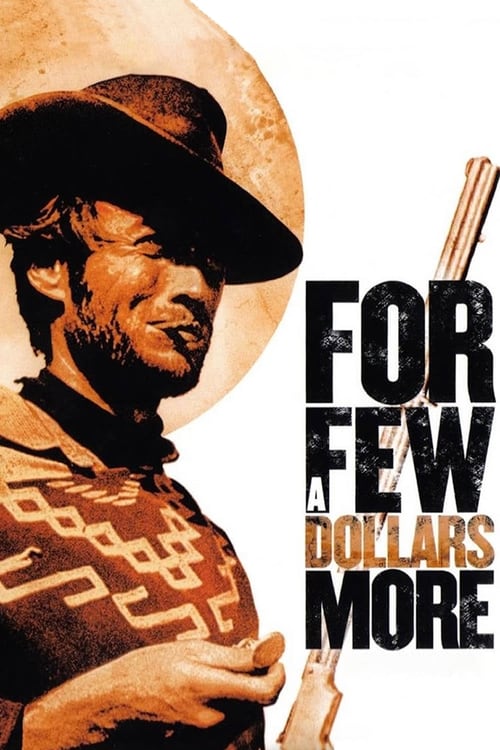
In the ending of "For a Few Dollars More," Colonel Mortimer confronts the outlaw Indio in a final showdown. After a tense standoff, Mortimer manages to outsmart Indio, killing him. Meanwhile, Monco, who has been working alongside Mortimer, watches the confrontation. After Indio's death, Monco retrieves the bounty on Indio's head, and Mortimer, having avenged his sister's death, walks away, leaving Monco to decide his own fate.
As the sun begins to set over the dusty landscape, the final confrontation unfolds in a desolate area where the air is thick with tension. Colonel Mortimer, a man driven by vengeance for his sister's murder, stands resolute, his eyes fixed on the notorious outlaw Indio. The two men are locked in a deadly game of cat and mouse, each aware that only one will walk away from this encounter.
The scene opens with Mortimer, his face a mask of determination, as he approaches Indio's hideout. The camera captures the rugged terrain, emphasizing the isolation of the setting. Indio, confident and cunning, is surrounded by his gang, but Mortimer's presence disrupts their bravado. The outlaw's men scatter, sensing the impending doom, leaving Indio to face Mortimer alone.
As they stand facing each other, the tension is palpable. Mortimer's hand hovers near his gun, a symbol of his resolve. Indio, with a smirk, taunts Mortimer, underestimating his opponent. The dialogue is sharp, filled with the weight of their shared history and the pain of loss. Mortimer's internal struggle is evident; he is not just fighting for a bounty but for justice and closure.
The standoff escalates as Mortimer reveals a hidden advantage--he has set a trap for Indio. The camera zooms in on Mortimer's face, capturing the flicker of hope mixed with the burden of his quest for revenge. Indio, realizing too late that he has been outmaneuvered, draws his gun, but Mortimer is quicker. In a swift motion, he fires, and Indio falls, the life draining from his eyes.
With Indio's death, the camera shifts to Monco, who has been observing from a distance. He approaches the scene, his expression a mix of admiration and contemplation. Monco, a man who has walked a fine line between law and chaos, now faces a choice. He retrieves the bounty on Indio's head, a symbol of his own survival in a harsh world. The weight of the money in his hands contrasts with the moral implications of their actions.
As Mortimer stands over Indio's lifeless body, a sense of peace washes over him. He has avenged his sister, but the victory feels bittersweet. Mortimer's journey has been one of loss and retribution, and now he must confront the emptiness that follows. He turns away from the scene, leaving Monco to decide his own path.
In the final moments, Monco watches Mortimer walk away, the sun setting behind him, casting long shadows. Monco's fate remains uncertain, but he is left with the bounty and the weight of his choices. The film closes on a note of ambiguity, highlighting the complexities of justice, morality, and the bonds formed in a world rife with violence.
In summary, Colonel Mortimer avenges his sister's death by killing Indio, while Monco, having witnessed the confrontation, claims the bounty. Mortimer walks away, having fulfilled his quest for vengeance, while Monco is left to navigate his own future in a morally ambiguous landscape.
Is there a post-credit scene?
For the movie "For a Few Dollars More," produced in 1965, there is no post-credit scene. The film concludes with a final showdown between the main characters, Monco and Colonel Mortimer, and the antagonist, Indio. After the climactic confrontation, the story wraps up without any additional scenes or content following the credits. The film ends on a note that emphasizes the themes of revenge and the complexities of morality, leaving the audience with a sense of closure regarding the characters' fates.
Who are the main characters in For a Few Dollars More?
The main characters in For a Few Dollars More are Colonel Douglas Mortimer, played by Lee Van Cleef, and Manco, portrayed by Clint Eastwood. Mortimer is a bounty hunter with a personal vendetta, while Manco is a more laid-back gunslinger who is also pursuing the notorious outlaw Indio.
What motivates Colonel Mortimer in the film?
Colonel Mortimer is driven by a deep desire for revenge against Indio, who was responsible for the death of his sister. This personal connection fuels his determination to bring Indio to justice, showcasing his emotional turmoil and the weight of his past.
How does Manco and Mortimer's relationship evolve throughout the film?
Initially, Manco and Mortimer are wary of each other, each with their own agendas. However, as they face various challenges together, they develop a mutual respect and camaraderie. Their partnership becomes crucial as they combine their skills to take down Indio and his gang.
What is the significance of the pocket watch in the story?
The pocket watch serves as a symbol of Mortimer's quest for revenge. It is a reminder of his sister's death, as Indio had stolen it from her. The watch also represents the passage of time and Mortimer's relentless pursuit of justice, culminating in a dramatic confrontation.
How does Indio's character reflect the themes of the film?
Indio, played by Gian Maria Volonté, is a complex antagonist whose motivations are rooted in his tragic past. He is a charismatic yet ruthless outlaw, whose actions are driven by a desire for power and control. His character embodies the moral ambiguity present in the film, as he is both a villain and a victim of circumstance.
Is this family friendly?
"For a Few Dollars More," directed by Sergio Leone, is a Spaghetti Western that features several elements that may not be suitable for children or sensitive viewers. Here are some potentially objectionable aspects:
-
Violence: The film contains numerous scenes of gunfights and shootouts, showcasing characters being shot and killed. The violence is stylized but can be intense.
-
Death and Morality: The themes of death and revenge are prevalent throughout the film, with characters grappling with moral dilemmas related to their actions and the consequences of violence.
-
Gritty Atmosphere: The film has a dark and gritty tone, with scenes that depict the harsh realities of life in the Old West, including lawlessness and betrayal.
-
Character Behavior: Some characters exhibit ruthless behavior, including betrayal and manipulation, which may be unsettling for younger audiences.
-
Language: While not excessively profane, there are instances of coarse language that may not be appropriate for children.
-
Emotional Tension: The film explores themes of revenge and loss, which may evoke strong emotional responses and could be distressing for sensitive viewers.
Overall, while the film is a classic of the Western genre, its mature themes and content may not be suitable for all audiences, particularly children.








