




















Popular
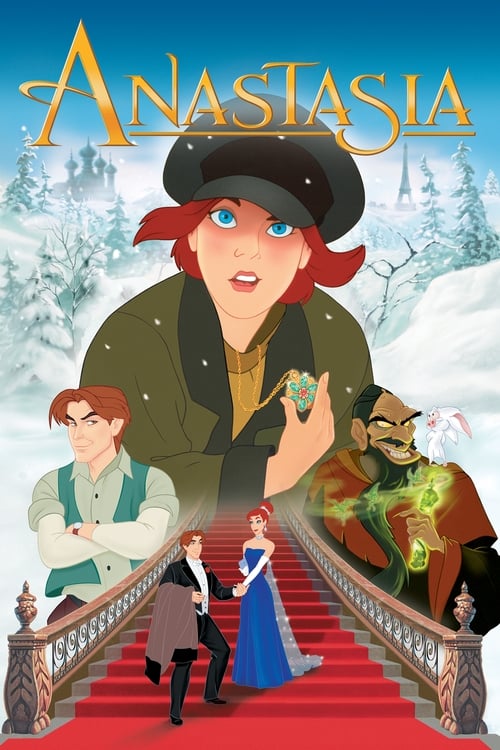
What is the significance of the music box in Anastasia's journey?
How does Anastasia's relationship with Dimitri develop throughout the film?
What role does Rasputin play in the story, and how does he affect Anastasia?
What are the key moments that reveal Anastasia's royal identity?
How does the character of Vlad influence the story and Anastasia's journey?
Should I watch it?
Ask Your Own Question

What is the plot?
Sorry, we aren't able to watch and write up a full detailed plot yet. Check back in a few days.







What is the ending?
In the ending of the movie "Anastasia," Anastasia, having discovered her true identity as the lost Grand Duchess, reunites with her grandmother, the Dowager Empress Marie. They share a heartfelt moment, solidifying their bond. Meanwhile, the villainous Rasputin is defeated, and Dimitri, who has fallen in love with Anastasia, expresses his feelings. The film concludes with a grand celebration, symbolizing hope and new beginnings.
Now, let's delve into the ending in a more detailed narrative fashion.
As the climax of the story unfolds, Anastasia, Dimitri, and Vlad find themselves in Paris, where they are finally able to confront the remnants of the past. The atmosphere is charged with anticipation as they arrive at the opulent palace, where the Dowager Empress Marie awaits. The grand hall is adorned with lavish decorations, and the air is filled with the sounds of a bustling celebration.
Anastasia, dressed in a stunning gown, stands before her grandmother, who is initially hesitant to believe that this young woman is indeed her long-lost granddaughter. The tension is palpable as Anastasia, filled with a mix of hope and fear, reveals her identity. The moment is heart-wrenching; the Dowager Empress's eyes widen with disbelief, and then, as recognition dawns, tears of joy stream down her face. They embrace tightly, a poignant reunion that signifies the restoration of family and love after years of separation.
Meanwhile, the villainous Rasputin, who has been lurking in the shadows, is determined to thwart their happiness. He conjures dark magic, summoning a swarm of bats to attack the celebration. The scene shifts dramatically as chaos erupts in the palace. Dimitri and Vlad spring into action, trying to protect Anastasia and her grandmother from Rasputin's wrath. The tension escalates as they confront Rasputin, who is fueled by his desire for revenge against the Romanovs.
In a climactic showdown, Dimitri and Vlad work together to outsmart Rasputin. As the battle rages, Anastasia finds herself face-to-face with Rasputin. In a moment of bravery, she confronts him, declaring her strength and resolve. The confrontation culminates in a dramatic moment where Rasputin's own magic backfires, leading to his demise. The dark energy dissipates, and with Rasputin defeated, the atmosphere shifts from chaos to calm.
With the threat eliminated, the celebration resumes, and the mood transforms into one of joy and relief. Dimitri, having fought valiantly for Anastasia, finally confesses his feelings for her. He expresses how much she means to him, and in a tender moment, they share a kiss, solidifying their bond. The love that has blossomed between them throughout their journey is now fully realized.
As the film draws to a close, the camera pans out to reveal the grand celebration in full swing. The Dowager Empress, now reunited with her granddaughter, watches with pride and happiness. The palace is filled with laughter, music, and dancing, symbolizing a new beginning for Anastasia and her family. The final scene captures the essence of hope, love, and the enduring strength of family ties.
In the end, Anastasia has reclaimed her identity and her place in the world, Dimitri has found love and purpose, and the Dowager Empress has regained her family. Each character has undergone a transformation, emerging from the shadows of their past into a bright future filled with promise. The film concludes on a note of optimism, leaving the audience with a sense of closure and the belief that love can conquer all.
Is there a post-credit scene?
The 1997 animated film "Anastasia" does not have a post-credit scene. The movie concludes with a final scene where Anastasia, now reunited with her family, shares a heartfelt moment with her grandmother, the Dowager Empress Marie. They embrace, and the film ends with a sense of closure and happiness as they look forward to a new beginning together. The credits roll without any additional scenes or content following them.
What is the significance of the music box in Anastasia's journey?
The music box serves as a crucial symbol of Anastasia's lost past and her connection to her family. It plays the song 'Once Upon a December,' which evokes memories of her childhood and her royal heritage. Throughout the film, the music box represents hope and the longing for belonging, guiding Anastasia on her quest to discover her identity.
How does Anastasia's relationship with Dimitri develop throughout the film?
Anastasia and Dimitri's relationship evolves from initial distrust and misunderstanding to deep affection and partnership. Initially, Dimitri sees Anastasia as a means to an end, hoping to profit from her resemblance to the lost princess. However, as they journey together, they share personal stories and experiences, leading to mutual respect and love. Their chemistry is highlighted through moments of playful banter and emotional vulnerability, culminating in a romantic bond.
What role does Rasputin play in the story, and how does he affect Anastasia?
Rasputin serves as the primary antagonist, representing the dark forces that threaten Anastasia's quest for identity and safety. His obsession with the Romanov family and desire for revenge against them drives the plot's conflict. He uses dark magic to try to eliminate Anastasia, creating obstacles that she must overcome. His presence looms over the story, embodying the fear and danger that Anastasia faces as she seeks to reclaim her past.
What are the key moments that reveal Anastasia's royal identity?
Key moments that reveal Anastasia's royal identity include her recollection of the music box and the song 'Once Upon a December,' which triggers memories of her family. Additionally, when she visits the palace in Paris, she recognizes the grand staircase and the decor, further confirming her connection to the Romanov lineage. These moments are filled with emotional weight, as they highlight her internal struggle between her past and her present.
How does the character of Vlad influence the story and Anastasia's journey?
Vlad, Dimitri's mentor and friend, plays a pivotal role in supporting Anastasia's journey. He provides comic relief and wisdom, often reminding Dimitri of the importance of kindness and loyalty. Vlad's encouragement helps Anastasia navigate her identity crisis, and he becomes a fatherly figure, offering guidance and protection. His belief in her potential and his own desire to see the Romanov legacy restored add depth to the narrative and highlight themes of friendship and loyalty.
Is this family friendly?
The 1997 animated film "Anastasia" is generally considered family-friendly, but it does contain some scenes and themes that may be unsettling for younger children or sensitive viewers. Here are a few potentially objectionable or upsetting aspects:
-
Loss and Separation: The film opens with the tragic fall of the Romanov family, depicting the separation of young Anastasia from her family, which may evoke feelings of sadness or fear.
-
Dark Themes: The story involves themes of betrayal, loss of identity, and the threat of danger, particularly from the antagonist, Rasputin, who is portrayed as a sinister figure.
-
Scary Imagery: Rasputin's character includes some frightening visuals, such as his ghostly appearance and the presence of his minions, which may be alarming for younger viewers.
-
Violence: There are moments of implied violence, including the overthrow of the Romanov family and Rasputin's attempts to harm Anastasia, which could be distressing.
-
Emotional Struggles: Anastasia's journey involves significant emotional turmoil as she grapples with her past and the loss of her family, which may resonate deeply with sensitive viewers.
While these elements contribute to the film's dramatic narrative, they may require parental guidance for younger audiences.









