
















Popular
What crime is Dr. Richard Kimble accused of?
How does Dr. Kimble escape from the prison transport bus?
What motivates U.S. Marshal Samuel Gerard in his pursuit of Kimble?
What evidence does Kimble find that suggests he is innocent?
How does Kimble's relationship with his wife impact his character throughout the film?
Should I watch it?
Ask Your Own Question

What is the plot?
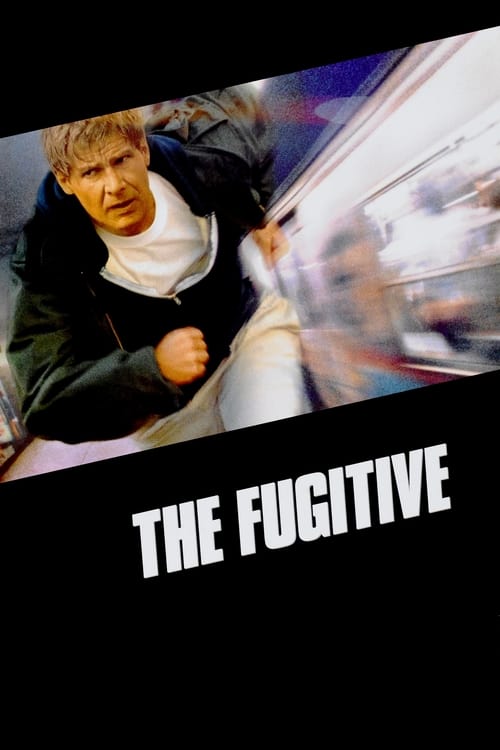
Dr. Richard Kimble, a respected vascular surgeon in Chicago, returns home one evening to a nightmare: his wife, Helen Kimble, is under attack. The assailant is a one-armed man, and despite Richard's desperate struggle to save her, Helen dies from a crushed skull inflicted by a heavy lamp wielded by the attacker. As she fights for her life, Helen manages to make a 911 call, whispering, "Richard, is he trying to kill me?" but the police misunderstand this plea, interpreting it as Helen naming Richard as her attacker. The crime scene offers no signs of forced entry, and the murder weapon bears Richard's fingerprints, sealing his fate. Coupled with the fact that he stands to gain from Helen's lucrative life insurance, the evidence convinces the court of his guilt. Richard Kimble is convicted of first-degree murder and sentenced to death, though he maintains his innocence, haunted by the one-armed man he glimpsed during the attack.
As Kimble is being transported to death row by prison bus, chaos erupts. Other prisoners stage a violent escape attempt, shooting the bus driver dead and causing the vehicle to crash headlong into an oncoming train. Amid the wreckage and confusion, Kimble risks his life to pull a wounded police officer from the path of the train, an act of courage that contrasts sharply with his accused status. Seizing the opportunity, Kimble flees into the wilderness, initiating a nationwide manhunt led by Deputy U.S. Marshal Samuel Gerard, a relentless and no-nonsense lawman who commands a team of marshals determined to recapture him. Gerard's pursuit is methodical and unyielding, driven by a belief in the law and initially, in Kimble's guilt.
Kimble's escape propels him into a desperate fight for survival. Injured and vulnerable, he sneaks into a hospital to tend to his wounds, cleverly disguising himself to avoid detection. However, his cover is blown when the wounded officer he saved is brought to the same hospital and recognizes him. In a tense, breathless moment, Kimble escapes in an ambulance, weaving through Chicago's streets as Gerard's men close in. Faced with a blockade, Kimble slips into a storm drain, the cold, dark water his only refuge as Gerard pursues him relentlessly. Cornered at the edge of a dam spillway, Kimble makes a daring leap into the icy waters below, escaping capture once again. Throughout these encounters, Kimble asserts his innocence, but Gerard remains skeptical, replying coldly, "I don't care".
While on the run, Kimble begins piecing together the truth behind his wife's murder. He recalls the one-armed man and discovers that this figure, Fredrick Sykes, is real and connected to a sinister conspiracy. Kimble's investigation leads him to uncover a pharmaceutical cover-up involving Provasic, a drug developed by the company Devlin MacGregor. Kimble had discovered that Provasic was dangerous, a fact that threatened the company's interests and those of his colleague, Dr. Charles Nichols. Nichols, once a trusted friend and fellow doctor, emerges as the mastermind behind the plot to silence Kimble. He had hired Sykes, the one-armed man and a dirty ex-cop, to kill Kimble. The plan went tragically wrong when Helen intervened and was killed instead.
Kimble's pursuit of the truth is punctuated by deadly confrontations. On a train bound for a medical conference where Nichols is set to unveil Provasic, Sykes attacks Kimble, shooting dead a police officer who tries to intervene. In a tense, brutal fight, Kimble overpowers Sykes, handcuffing him to the train and ensuring he cannot escape. This confrontation is a turning point, confirming the existence of the one-armed man and the conspiracy that framed Kimble.
The climax unfolds at the medical conference hotel, where Nichols is publicly presenting Provasic. Kimble storms the event, exposing Nichols's role in the conspiracy before a crowd of medical professionals and journalists. The tension escalates as Nichols attempts to silence Kimble once and for all. The final showdown takes place in a laundry facility adjacent to the hotel, a grim and claustrophobic setting where Nichols tries to kill Kimble to cover his tracks. In a fierce struggle, Kimble uses a pipe to knock Nichols unconscious, preventing him from escaping justice.
Marshal Gerard arrives just in time to witness Nichols's incapacitation and to arrest both Nichols and Sykes. The evidence Kimble has gathered convinces Gerard of Kimble's innocence, prompting a significant shift in his attitude. As Kimble surrenders, Gerard remarks wryly, "Keep it a secret that I care," acknowledging the respect and belief he now holds for Kimble. The film closes with Kimble being escorted away by Gerard, the manhunt finally over, his name cleared, and his freedom restored.
Throughout the film, every death is accounted for with stark clarity: Helen Kimble is murdered by Fredrick Sykes with a crushing blow from a lamp; the prison bus driver is shot dead during the escape attempt; a police officer is killed by Sykes aboard the train; Sykes himself is subdued and arrested by Kimble; and Dr. Charles Nichols is knocked out and arrested after his failed attempt to kill Kimble. The narrative is a relentless chase across Chicago's urban landscape and beyond, weaving together moments of intense physical danger, sharp investigative insight, and moral reckoning. The story's tension builds steadily, from the initial tragedy through Kimble's harrowing escape and investigation, to the explosive revelations and confrontations that bring the conspiracy to light and restore justice.
More Movies Like This
Browse All Movies →


What is the ending?
In the ending of "The Fugitive," Dr. Richard Kimble confronts the truth behind his wife's murder and ultimately proves his innocence. He tracks down the real killer, a one-armed man, and exposes him. U.S. Marshal Samuel Gerard, who has been pursuing Kimble throughout the film, recognizes Kimble's determination and the evidence he presents. The film concludes with Kimble being exonerated, and Gerard acknowledges his efforts, leading to a moment of mutual respect.
Now, let's delve into the ending in a more detailed narrative fashion:
As the climax of "The Fugitive" unfolds, Dr. Richard Kimble finds himself in a tense confrontation at a Chicago warehouse. He has been tirelessly searching for the one-armed man who murdered his wife, Helen. The atmosphere is thick with suspense as Kimble, driven by desperation and a need for justice, finally tracks down the elusive killer. The warehouse is dimly lit, filled with shadows that dance across the walls, mirroring the turmoil within Kimble's heart.
In a gripping scene, Kimble confronts the one-armed man, who is revealed to be the true murderer. The man, realizing he has been cornered, tries to escape, but Kimble's determination is unwavering. The two engage in a fierce struggle, filled with raw emotion and desperation. Kimble's face is a mixture of anger and sorrow as he grapples with the man who has taken everything from him. The fight culminates in a moment of clarity for Kimble; he is not just fighting for his own freedom but for the memory of his wife.
Meanwhile, U.S. Marshal Samuel Gerard, who has been relentlessly pursuing Kimble throughout the film, arrives at the scene. Gerard, portrayed with a steely resolve, is initially focused on capturing Kimble, but as he witnesses the confrontation, he begins to understand the truth. The tension escalates as Gerard watches Kimble confront the murderer, and he realizes that Kimble is not the criminal he has been led to believe.
In a pivotal moment, Kimble manages to overpower the one-armed man, and as he holds him at gunpoint, he demands answers. The killer, cornered and desperate, admits to the crime, revealing the details of the night Helen was murdered. This confession is a cathartic release for Kimble, who has been haunted by the loss of his wife and the wrongful accusation of her murder.
As the police arrive, Gerard steps in, recognizing the gravity of the situation. He approaches Kimble, who is still reeling from the confrontation. In a moment of mutual understanding, Gerard acknowledges Kimble's innocence and the truth of the events that have transpired. The tension that has defined their relationship throughout the film shifts to one of respect. Gerard, who has been a relentless pursuer, now sees Kimble as a man wronged by fate.
The film concludes with Kimble being exonerated, standing in front of the Chicago skyline, a symbol of his newfound freedom. He is finally able to grieve for Helen without the weight of guilt and accusation hanging over him. Gerard, having fulfilled his duty as a lawman, walks away with a sense of closure, having learned that justice is not always black and white.
In the final moments, Kimble and Gerard share a brief but significant exchange. Gerard, with a hint of admiration, tells Kimble, "I didn't kill my wife," to which Kimble responds, "I don't care." This exchange encapsulates the journey both men have taken--Kimble's quest for truth and Gerard's pursuit of justice. The film ends on a note of resolution, with Kimble finally free, and Gerard having gained a deeper understanding of the complexities of justice and humanity.
Is there a post-credit scene?
The movie "The Fugitive," produced in 1993, does not have a post-credit scene. The film concludes with Dr. Richard Kimble, played by Harrison Ford, finally confronting the truth about his wife's murder and proving his innocence. After a tense and dramatic chase, he is exonerated, and the film ends on a note of resolution as he walks away, leaving behind the turmoil of his past. The credits roll without any additional scenes or content following them.
What crime is Dr. Richard Kimble accused of?
Dr. Richard Kimble is accused of murdering his wife, Helen Kimble, who was found dead in their home. The evidence against him includes a 911 call where he is heard arguing with her and a lack of an alibi.
How does Dr. Kimble escape from the prison transport bus?
Dr. Kimble escapes from the prison transport bus after it crashes into a train track. The bus is hit by an oncoming train, allowing him to flee amidst the chaos and destruction.
What motivates U.S. Marshal Samuel Gerard in his pursuit of Kimble?
U.S. Marshal Samuel Gerard is motivated by his strong sense of duty and professionalism. He is determined to capture Kimble, believing in the integrity of the law and the importance of bringing a fugitive to justice.
What evidence does Kimble find that suggests he is innocent?
Kimble discovers a clue that leads him to a one-armed man, who he believes is the real killer. This realization drives him to seek out the man and prove his innocence, as he recalls seeing the one-armed man at the scene of the crime.
How does Kimble's relationship with his wife impact his character throughout the film?
Kimble's relationship with his wife, Helen, deeply impacts his character. His love for her and the trauma of her murder fuel his determination to clear his name and find the true killer, showcasing his emotional turmoil and sense of loss.
Is this family friendly?
"The Fugitive," produced in 1993, is primarily an action thriller that contains several elements that may not be suitable for children or sensitive viewers. Here are some potentially objectionable or upsetting aspects:
-
Violence: The film features several intense action sequences, including fights, gunfire, and a train crash that results in significant destruction and loss of life.
-
Death: There are scenes depicting the aftermath of violent incidents, including the death of characters, which may be distressing.
-
Themes of Injustice: The central plot revolves around wrongful conviction and the pursuit of a fugitive, which may raise complex themes about justice and morality that could be difficult for younger viewers to fully understand.
-
Intense Chase Scenes: The film includes high-stakes chase sequences that create a sense of danger and urgency, which might be frightening for some viewers.
-
Emotional Turmoil: The protagonist, Dr. Richard Kimble, experiences significant emotional distress due to the loss of his wife and the trauma of being wrongfully accused, which may be heavy for sensitive audiences.
-
Language: There are instances of strong language that may not be appropriate for younger viewers.
These elements contribute to the film's overall tone and may not be suitable for all audiences, particularly children.









