
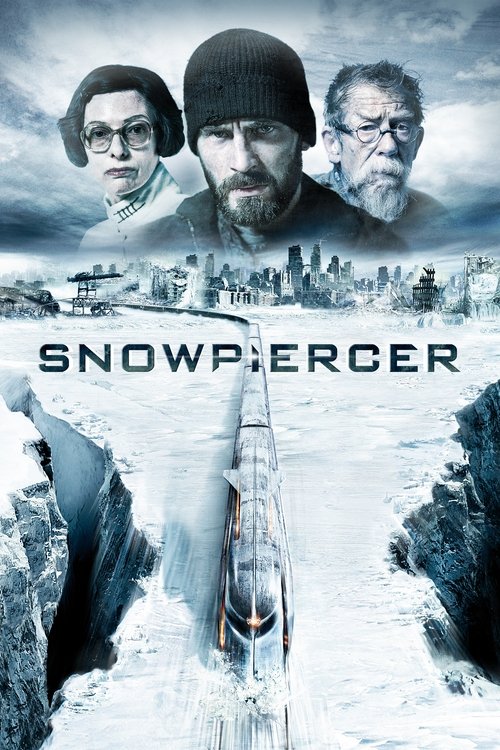































Popular
What is the significance of the train's class system in Snowpiercer?
How does Curtis plan the revolution against the front of the train?
What role does the character of Mason play in the story?
What is the significance of the protein blocks consumed by the tail section inhabitants?
How does the character of Yona contribute to the plot?
Should I watch it?
Ask Your Own Question

What is the plot?
Sorry, we aren't able to watch and write up a full detailed plot yet. Check back in a few days.




What is the ending?
In the ending of Snowpiercer, Curtis and his group reach the front of the train, where they confront Wilford, the train's creator. After a tense standoff, Curtis learns the truth about the train's operation and the sacrifices made to maintain its ecosystem. In a climactic moment, he decides to destroy the train rather than continue the cycle of oppression. The film concludes with an explosion, and the fate of the remaining characters is left ambiguous.
Now, let's delve into the ending in a detailed narrative fashion:
As the final act unfolds, Curtis, along with his loyal companions, reaches the heavily fortified front of the Snowpiercer. The atmosphere is thick with tension, a culmination of their arduous journey through the train's oppressive compartments. They are met by the imposing figure of Wilford, the enigmatic creator of the Snowpiercer, who sits in a lavishly decorated control room, surrounded by the trappings of power and control.
Wilford greets them with a calm demeanor, exuding an air of superiority. He explains the rationale behind the train's strict social hierarchy, revealing that the sacrifices made by the tail section are essential for the survival of the entire train. He presents a chilling perspective on the necessity of maintaining order, suggesting that chaos would lead to the end of humanity. Curtis, grappling with the weight of this revelation, feels the burden of his choices and the lives lost along the way.
In a moment of emotional turmoil, Curtis confronts Wilford about the brutal reality of their existence. He is torn between the desire for revenge and the need for a new beginning. As the conversation escalates, Wilford offers Curtis a position of power, inviting him to take over the train and continue the cycle of oppression. This moment serves as a critical turning point for Curtis, who realizes that accepting this offer would mean betraying everything he fought for.
In a desperate act of defiance, Curtis chooses to destroy the train rather than perpetuate the system of oppression. He takes a moment to reflect on his journey, the friends he has lost, and the sacrifices made. With a heavy heart, he activates explosives that he and his group had prepared earlier. The train begins to shake violently as the realization of impending destruction dawns on everyone aboard.
As the train hurtles towards its demise, the camera shifts to the remaining characters. Tanya, the mother figure, and her son, who have been symbols of hope and innocence, are seen in the chaos, their fates intertwined with Curtis's decision. Meanwhile, the loyal and fierce Edgar, who has stood by Curtis's side throughout their struggle, faces the consequences of their rebellion.
In the final moments, the train erupts in a massive explosion, a fiery spectacle that symbolizes the end of the oppressive regime. The screen fades to black, leaving the audience with a haunting silence. The fate of Curtis, who has sacrificed everything for a chance at freedom, remains uncertain. The last image is of a young girl, a survivor who escapes the explosion, stepping into the snow-covered wasteland outside the train. This moment signifies a glimmer of hope amidst the destruction, suggesting that life may continue beyond the confines of the Snowpiercer.
The film concludes with an ambiguous yet powerful message about the cyclical nature of oppression and the potential for rebirth, leaving viewers to ponder the implications of Curtis's choices and the future of humanity.
Is there a post-credit scene?
In the movie "Snowpiercer," there is no post-credit scene. The film concludes with a powerful and ambiguous ending that leaves viewers contemplating the fate of the characters and the world outside the train. After a climactic confrontation, the train derails, and the last surviving characters, Yona and Timmy, escape into the frozen wasteland. As they step outside, they see a polar bear, suggesting that life is still possible outside the confines of the train, but the future remains uncertain. The absence of a post-credit scene reinforces the film's themes of survival, class struggle, and the cyclical nature of oppression.
What is the significance of the train's class system in Snowpiercer?
The train in Snowpiercer is divided into distinct classes, with the wealthy elite living in luxury at the front and the impoverished masses confined to the squalor of the tail section. This class system serves as a microcosm of societal inequality, highlighting the stark contrast between the privileged and the oppressed. The tail section's inhabitants, led by Curtis, are motivated by desperation and a desire for justice, while the front's inhabitants, including Wilford, represent the oppressive forces of power and control.
How does Curtis plan the revolution against the front of the train?
Curtis meticulously plans the revolution by gathering allies from the tail section, including the resourceful and determined Edgar and the wise and strategic Gilliam. He understands that they must fight their way through each car, overcoming various obstacles and guards, to reach the front where Wilford resides. Curtis's internal struggle is evident as he grapples with the moral implications of violence and the sacrifices required for freedom.
What role does the character of Mason play in the story?
Mason, played by Tilda Swinton, serves as the spokesperson for Wilford and the oppressive regime of the front. Her character embodies the cold, calculating nature of the elite, using manipulation and propaganda to maintain control over the tail section. Mason's interactions with Curtis and the others reveal the psychological tactics used to suppress dissent, and her eventual downfall symbolizes the fragility of the power structure.
What is the significance of the protein blocks consumed by the tail section inhabitants?
The protein blocks are a crucial element of survival for the tail section inhabitants, representing the dehumanizing conditions they endure. Initially believed to be made from a sustainable source, it is later revealed that they are made from processed insects, highlighting the extent of their exploitation. This revelation deepens the emotional impact of their struggle for dignity and the lengths to which they must go to reclaim their humanity.
How does the character of Yona contribute to the plot?
Yona, the daughter of a tail section inhabitant, possesses a unique ability to sense danger, which proves vital to the group's survival. Her character represents hope and innocence amidst the brutality of their reality. As the story progresses, Yona's bond with Curtis strengthens, and her instincts guide them through perilous situations, emphasizing the importance of intuition and familial connections in their fight for freedom.
Is this family friendly?
"Snowpiercer," produced in 2013, is not considered family-friendly due to its intense themes and graphic content. Here are some potentially objectionable or upsetting aspects that may affect children or sensitive viewers:
-
Violence: The film contains numerous scenes of brutal violence, including hand-to-hand combat, shootings, and graphic depictions of injuries and death.
-
Death and Despair: Characters face dire situations, leading to moments of despair and hopelessness, which may be distressing for younger audiences.
-
Social Commentary: The film explores heavy themes such as class struggle, oppression, and survival, which may be difficult for children to understand or process.
-
Disturbing Imagery: There are scenes that include unsettling visuals, such as the treatment of the lower-class passengers and the conditions they endure.
-
Substance Abuse: The film features scenes that depict drug use, which may not be appropriate for younger viewers.
-
Mature Language: The dialogue includes strong language and adult themes that may not be suitable for children.
Overall, the film's dark tone and mature content make it more appropriate for adult audiences.








