


















































Popular
Should I watch it?
Ask Your Own Question

What is the plot?
In 1947, in the quiet city of Portland, Maine, Andrew "Andy" Dufresne, a successful banker, stands trial for the brutal murders of his wife, Linda Dufresne, and her lover, Glenn Quintin, a golf professional. Despite his calm and composed demeanor, Andy vehemently proclaims his innocence, but the evidence and his detached manner convince the jury otherwise. He is sentenced to two consecutive life terms at Shawshank State Penitentiary, a grim and unforgiving prison in Maine, where the death penalty does not exist and life imprisonment is the harshest punishment.
Andy arrives at Shawshank, a fortress of despair and corruption, where the prisoners are ruled by violence and fear. On his first day, he meets Ellis Boyd "Red" Redding, a seasoned inmate serving a life sentence for murder and known as the man who can procure anything from the outside world. Red narrates the story, introducing us to the bleak reality of Shawshank. Andy's quiet resolve sets him apart from the other prisoners, many of whom break under the brutal conditions. On that first night, a newly arrived inmate, nicknamed "fat ass," breaks down hysterically, drawing a savage beating from the chief guard, Byron Hadley, who strikes him for making noise. The inmate later dies in the infirmary because the prison doctor had already left for the night. Andy, however, remains stoic and unbroken.
Red, intrigued by Andy's calmness, bets that Andy will break down first, but he loses the bet. Over time, Andy asks Red to procure a rock hammer, ostensibly to resume his hobby of rock collecting and shaping. Red obliges, unaware of the hammer's true purpose. Andy is initially assigned to the prison laundry, a harsh environment where he becomes a target of "the Sisters," a violent gang led by Bogs Diamond, who repeatedly sexually assault him during his first two years in Shawshank. These brutal assaults are a dark and harrowing part of Andy's early prison life, underscoring the cruelty he must endure.
In 1949, Andy's fortunes begin to change when he uses his financial expertise to assist the prison guards and Warden Samuel Norton with their tax returns. This new role removes him from manual labor and the violence of the Sisters. He is assigned to the prison library, ostensibly to help the elderly librarian Brooks Hatlen, but in reality to serve as a front for his bookkeeping duties for the warden's corrupt financial schemes. The library becomes Andy's sanctuary, a place where he exerts influence and gains respect. Red procures a large poster of Rita Hayworth for Andy, which hangs in his cell and later serves as a psychological comfort and a literal concealment for Andy's secret tunnel.
Brooks Hatlen, the elderly librarian, is a poignant figure in the story. After serving 50 years, Brooks is paroled in 1954 but finds himself unable to adjust to life outside the prison walls. The outside world is alien and frightening to him, and overwhelmed by loneliness and despair, he tragically hangs himself, a victim of institutionalization.
As the years pass, Andy's quiet influence grows. He helps the guards legally reduce their sentences by filing appeals and tax returns, and he expands the prison library, securing funding and books. His friendship with Red deepens, built on mutual respect and shared hope. Andy often speaks of freedom and dreams of a life beyond Shawshank, mentioning a place called Zihuatanejo, a small town on the Pacific coast of Mexico where he hopes to live free one day.
In 1964, a new inmate named Tommy Williams arrives at Shawshank. Tommy is young, charismatic, and likable, quickly becoming friends with Andy and Red. Andy helps Tommy learn to read and guides him through obtaining his General Educational Development (GED) diploma. Tommy's presence brings a glimmer of hope to Andy's life.
The pivotal moment arrives when Tommy reveals a bombshell: his former cellmate at another prison confessed to committing the murders for which Andy was convicted--the murders of Linda Dufresne and Glenn Quintin. This revelation offers Andy a chance at justice and freedom. Filled with hope, Andy approaches Warden Norton, expecting the warden to help him secure a new trial based on this evidence. Instead, Norton reacts with cold fury. He refuses to jeopardize his lucrative money-laundering operation, which Andy has been unwittingly facilitating through his financial work. Norton orders Andy to keep silent about the scheme, but when Andy insists on pursuing the truth, Norton punishes him by sending him to solitary confinement for two months.
Norton then orchestrates a cruel murder to protect his interests. He meets with Tommy privately and asks if he will testify on Andy's behalf. Tommy agrees enthusiastically, but Norton has guard Byron Hadley kill Tommy under the pretense of an escape attempt. When Andy is released from solitary, the warden coldly informs him that Tommy was shot dead while trying to escape. Andy, devastated but resolute, tells Norton that he will no longer assist with the money laundering. Norton threatens to destroy the library, strip Andy of his privileges, and transfer him to the harshest cell block if he refuses to cooperate. Andy endures another month in solitary confinement, his hope seemingly crushed.
But Andy's spirit is unbroken. Over the course of nearly two decades, he has been secretly digging a tunnel behind the poster of Rita Hayworth in his cell, using the rock hammer Red procured for him. The tunnel extends through the prison walls and connects to the sewage pipe, a narrow, foul passage leading to freedom. The posters change over time--from Rita Hayworth to Marilyn Monroe, and finally to Raquel Welch--each concealing the tunnel's entrance.
One night, after enduring the warden's cruelty and the loss of Tommy, Andy executes his meticulously planned escape. He slips through the tunnel, crawling through the narrow sewage pipe for hours, emerging into the freedom of the outside world. At dawn, he walks calmly into a nearby town, where he enters a bank and withdraws over $370,000 in the name of Randall Stephens, a fictitious identity Andy created to launder the warden's money. He also mails evidence of the warden's corruption and money laundering to a local newspaper.
The next morning, Shawshank is thrown into chaos when guards find Andy's cell empty during roll call. Warden Norton, enraged, storms into Andy's cell and furiously throws a rock at the Raquel Welch poster, revealing the tunnel behind it. The warden realizes the full extent of Andy's deception and the collapse of his financial empire. When authorities arrive to arrest Norton, tipped off by Andy's mailed evidence, Norton chooses to end his own life rather than face imprisonment. He shoots himself in his office, a final act of desperation and defeat.
Meanwhile, Red faces his own battle with freedom. After serving 40 years at Shawshank, he is finally paroled the following year. However, the outside world is alien and frightening to him, and he struggles to adjust, fearing he will never truly be free. Remembering his promise to Andy, Red sets out to find a specific hayfield near Buxton, Maine, where Andy instructed him to look for a large black stone. Beneath the stone, Red discovers a small box containing a large sum of money and a letter from Andy inviting him to join him in Zihuatanejo, Mexico.
Defying the conditions of his parole, Red leaves the halfway house and hitchhikes to Mexico, unafraid of the consequences. He admits that no one would mount an extensive manhunt for an old crook like himself. The journey represents a rebirth, a reclaiming of hope and freedom.
The film's final scene is a powerful and emotional reunion on a sun-drenched beach in Zihuatanejo. Red finds Andy standing barefoot in the surf, a free man at last. The two friends embrace, their smiles radiant with relief and joy. Andy's dream of freedom has been realized, and Red's hope has been restored. The oppressive walls of Shawshank are left behind forever, replaced by the vast, open horizon of possibility.
Throughout the film, every death is marked by tragedy and injustice: the "fat ass" inmate beaten to death by Hadley on Andy's first night; Brooks Hatlen, who hangs himself after release; Tommy Williams, murdered on Norton's orders; and Warden Norton, who takes his own life to avoid arrest. Andy's escape is the ultimate triumph over corruption and despair, a testament to the enduring power of hope, friendship, and meticulous planning. The story closes with freedom attained not just physically but spiritually, as both Andy and Red step into a new life beyond the prison walls.






What is the ending?
At the end of The Shawshank Redemption, Andy Dufresne escapes from Shawshank Prison after years of meticulous planning. He reveals his escape to his friend Red, who is eventually paroled. The film concludes with Red traveling to Zihuatanejo, Mexico, where he reunites with Andy on a beach.
As the film approaches its conclusion, the tension builds within the confines of Shawshank Prison. Andy Dufresne, portrayed by Tim Robbins, has spent nearly two decades behind bars for a crime he did not commit. Throughout his time in Shawshank, he has maintained a sense of hope and resilience, despite the oppressive environment.
In the final act, Andy's escape plan comes to fruition. He has spent years digging a tunnel through the wall of his cell, using a rock hammer, and meticulously covering the hole with a poster of Raquel Welch. The night of his escape, he crawls through the tunnel he has painstakingly carved out, emerging in the prison sewage system. The scene is dark and grimy, emphasizing the filth and despair of his surroundings. As he crawls through the muck, Andy's determination is palpable; he is driven by the hope of freedom.
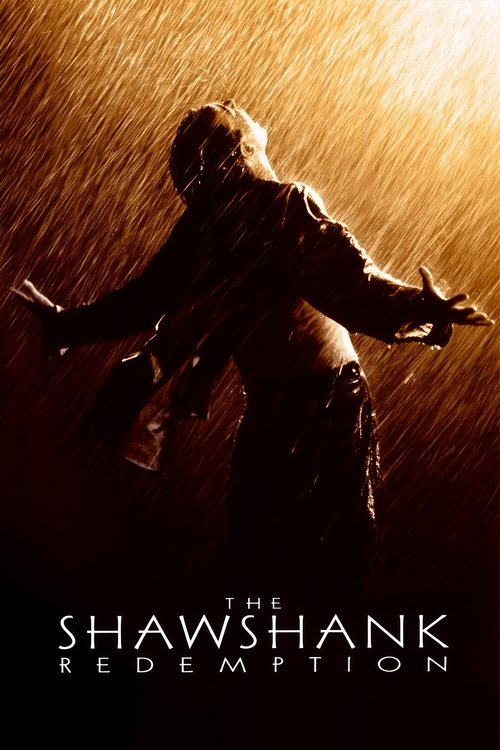
Emerging from the sewer, Andy finds himself outside the prison walls, standing in the rain. The rain pours down on him, washing away the grime and symbolizing his rebirth. He raises his arms in a moment of pure elation, feeling the freedom he has longed for. This moment is visually striking, capturing the essence of liberation and the triumph of the human spirit.
Meanwhile, Red, played by Morgan Freeman, is still inside Shawshank, serving his sentence. He has become a close friend of Andy's and has been deeply influenced by Andy's unwavering hope. After Andy's escape, Red is left to grapple with the reality of life in prison. He is eventually paroled after serving 40 years, but the world outside feels foreign and daunting to him.
Red struggles to adjust to life outside of prison, haunted by memories of his time in Shawshank. He finds himself in a halfway house, feeling lost and disconnected. However, Andy has left him a message, instructing him to find a specific location in the woods where he has buried a cache of money and a letter. This moment serves as a beacon of hope for Red, reigniting the spark of friendship and the possibility of a new life.
In the final scenes, Red makes the journey to Zihuatanejo, Mexico, fulfilling the promise he made to Andy. He arrives at the beach, where he sees Andy waiting for him. The reunion is emotional, filled with unspoken understanding and the joy of friendship. The two men embrace, standing on the shore, with the vast ocean before them, symbolizing endless possibilities and the freedom they have both sought.
The film concludes with a sense of hope and redemption, as both characters find solace in their friendship and the promise of a new beginning. Andy has escaped the confines of Shawshank, while Red has found the courage to embrace life outside of prison, ultimately leading to their reunion in a place where they can finally be free.
Is there a post-credit scene?
The Shawshank Redemption does not have a post-credit scene. The film concludes with a powerful and emotional ending that leaves a lasting impact on the audience. After Andy Dufresne escapes from Shawshank Prison, the final scenes depict his reunion with his friend Red on a beach in Zihuatanejo, Mexico. The film ends on a hopeful note as the two men embrace, symbolizing freedom, friendship, and the enduring human spirit. The credits roll immediately after this poignant moment, with no additional scenes following.
What crime was Andy Dufresne convicted of?
Andy Dufresne was convicted of the murder of his wife, Linda, and her lover, although he maintained his innocence throughout the film.
How does Andy Dufresne escape from Shawshank Prison?
Andy escapes from Shawshank by meticulously digging a tunnel through the wall of his cell over nearly 19 years, using a rock hammer. He then crawls through the tunnel and the prison sewage pipe to freedom.
What role does Red play in Andy's life at Shawshank?
Red, played by Morgan Freeman, becomes Andy's closest friend and confidant in Shawshank. He helps Andy navigate prison life, provides him with contraband items, and ultimately plays a crucial role in Andy's escape plan.
What is the significance of the poster of Rita Hayworth in Andy's cell?
The poster of Rita Hayworth, which Andy uses to cover the hole he digs in his cell wall, symbolizes his dreams of freedom and serves as a cover for his escape route. It also represents the hope and desire for a life beyond the prison walls.
How does Andy help the other inmates, particularly with the library?
Andy helps the other inmates by advocating for the expansion of the prison library, eventually securing funding and resources. He teaches them to read and write, providing them with a sense of purpose and hope, which transforms their lives within the oppressive environment of Shawshank.
Is this family friendly?
The Shawshank Redemption, while a critically acclaimed film, contains several elements that may be objectionable or upsetting for children or sensitive viewers. Here are some aspects to consider:
-
Violence and Assault: The film includes scenes of physical violence, including beatings and sexual assault, particularly in the prison environment, which may be distressing.
-
Language: There is frequent use of strong language throughout the film, including profanity that may not be suitable for younger audiences.
-
Themes of Despair and Hopelessness: The film explores heavy themes such as institutionalization, hopelessness, and the impact of a life sentence, which may be emotionally challenging for some viewers.
-
Death and Loss: Characters experience significant loss, including the death of friends and loved ones, which can evoke strong emotional responses.
-
Corruption and Abuse of Power: The portrayal of corrupt prison officials and the abuse of power can be unsettling, highlighting the darker aspects of human nature.
These elements contribute to the film's mature themes and emotional depth, making it more suitable for older teens and adults rather than a family-friendly viewing experience.








