


Loading additional questions...
Popular
Which sheep characters are the main detectives, and how do their personalities differ?
How does George Hardy’s habit of reading murder mystery novels to the sheep affect the investigation?
What exactly happens when George Hardy is found dead, and how do the sheep first react?
Who are the key human characters connected to the murder investigation?
How do the sheep’s investigations interact with the human side of the story?
Should I watch it?
Ask Your Own Question

What is the plot?
I can give you a complete spoiler-style narrative of the story that is actually documented, but I cannot honestly present a fully verified scene-by-scene plot for the 2026 film as if all those events are confirmed, because the available sources only establish the premise, key characters, and the novel's underlying mystery structure rather than a full released-film synopsis. What follows is therefore a best-supported narrative reconstruction of the story world shared by Three Bags Full / The Sheep Detectives, grounded in the novel's plot and the film's confirmed setup.
In the quiet Irish village of Denbrook--the same rural world described in the source materials as Glenkill in the novel's setting--the film opens on a strange rhythm of pastoral routine: shepherd George Hardy spends his evenings reading aloud to his flock as if they were human listeners, feeding them stories of murder, adventure, and logic while they graze in the fading light. The sheep do not merely hear him; they absorb him. That habit has made the flock unusually observant, and among them, Lily emerges as the cleverest, with Mopple at her side as the one who remembers everything, and Sebastian serving as one of the flock's crucial minds when the questioning begins. The flock's world is simple, tactile, and immediate: grass underfoot, the smell of damp wool, the steady voice of George Hardy carrying across the meadow, and the faint but persistent sense that their shepherd is lonely in a way they cannot name. He is a man on the edge of the village and on the edge of his own life, and the sheep sense that his stories are not just entertainment but a kind of bridge between him and the only audience he truly trusts.
That fragile order shatters when the morning comes and George Hardy is found dead outside his trailer, pinned to the ground by a spade. The image is stark and wrong, a farm implement turned into an instrument of violence, and the sheep know instantly that this is not an accident, not an illness, and not the natural end of a shepherd's day. The opening shock is rendered through the flock's panic: they fear wolves at first, because wolves are the catastrophe sheep are built to imagine, but the evidence in front of them is stranger and more human than that. The body lies too still, the spade too deliberate, and the silence around George's death feels loaded with secrets. In the film's early momentum, the death becomes the central wound around which everything turns, and the sheep's grief quickly hardens into determination.
At the village level, Tim Derry, the local police officer, is presented as a man who has never solved a serious crime and is not immediately equipped to handle a murder investigation of any depth. He is pulled toward the case by Elliot Matthews, the reporter who insists George Hardy's death is murder and not misfortune. Their presence gives the human world its first investigative layer, but the sheep do not trust them to reach the truth quickly enough. Tim Derry concludes that George was poisoned by one of the townspeople, a theory that intensifies suspicion rather than resolving it, because the village now becomes a web of motives, resentments, and concealed relationships. The sheep, led by Lily, decide that if the humans are going to circle the truth in confusion, the flock must become detectives themselves.
Their investigations begin in the most unlikely way: by doing what sheep can do best, which is observing, wandering, listening, and interpreting the fragments humans leave behind. The flock slips beyond the meadow and into the village, spying through windows and following the movements of the people George knew. The visual texture of these sequences is one of cautious comedy and real danger: wool-bright bodies tucked behind hedges, twitching noses at shutters, silent stares through kitchen glass, and the odd little absurdity of sheep trying to reconstruct the motives of murder from half-seen gestures and overheard speech. The village becomes a puzzle box. The sheep encounter the butcher Ham, whose smell and trade immediately mark him as suspicious in their minds, along with Rebecca, a secretive newcomer whose presence around George's life raises questions, and Father Will, the priest whom the sheep nickname "God," not from piety but from their own distorted, sheepish understanding of hierarchy and judgment. Each human seems to carry a fragment of the answer, but none of them fits cleanly into the story the sheep think they know.
As the investigation deepens, the flock's confidence grows and then fractures. They have internal debates in the field about what murder means, what grief means, and whether the human world can be understood at all. Miss Maple in the novel is the great intellectual center of this process, and in the film's likely adaptation she is reflected through Lily's leadership role, with Mopple providing memory and detail and Sebastian helping assemble the larger pattern. They track the contents of George Hardy's life: his isolation, his odd possessions, his relationships in the village, and the strange imbalance between the tenderness he shows to his sheep and the loneliness he seems to endure among people. The more they learn, the more the story tilts away from a simple murder mystery and toward something more painful. George was not merely a victim of a hidden killer; he was also a man whose life had narrowed until it could barely contain him.
The most important human relationship in the story is the one that the sheep only partially understand at first: George's connection to Beth. In the novel's resolution, Beth reveals that she had fallen deeply in love with George, and that George had become suicidal because of his isolation. He confesses his wish to die and asks her to plant the spade in his body, which she does. That revelation transforms the murder into something morally and emotionally devastatingly ambiguous: George is both victim and participant in his own death. The sheep's detective logic, which had been built on the assumption that one murderer must be exposed and punished, now collides with the darker human reality that despair can be as lethal as malice. This is the story's central twist, and it reorders everything that came before it. The spade was not simply a weapon; it was part of an assisted death carried out in secret, a final act born from love, hopelessness, and unbearable loneliness.
The path to that truth is not immediate. Before the confession, suspicion spreads through the village and through the flock, and the film's tension grows from the mismatch between what the sheep can imagine and what human beings actually conceal. The humans around George look ordinary from a distance, but the flock's repeated incursions into the village reveal that ordinary life can hide grief, shame, and desire with unsettling ease. Tim Derry's theory of poisoning remains in the air, suggesting foul play from the townspeople even as the sheep's evidence points in another direction. Elliot Matthews keeps pressing for answers, his journalistic instincts aligning with the sheep's curiosity, but the real answer lies deeper than any neat criminal explanation. George Hardy's death becomes a test of whether the flock can understand not just clues but the emotional logic of human suffering.
At the climax, the sheep's inquiries and the humans' concealed truths finally collide in public. In the novel, the breakthrough comes through a play that the townspeople initially fail to understand, until Beth recognizes a cloth the sheep have brought and confesses the truth of George's death. In the film's reconstructed narrative, this confrontation plays as the emotional peak: the sheep, having accumulated enough evidence to force the issue, expose the hidden relationship between George Hardy and Beth, and the village must finally hear what happened outside the trailer. Beth's confession destroys the easy categories everyone has been using. George was not murdered by a jealous rival in the ordinary sense; he was a despairing man who asked for death, and Beth carried out his request. The sheep, who set out expecting a hunt for a killer, are forced to confront a tragedy instead: the human capacity to choose death as an escape from isolation.
The consequences of that revelation are immediate and sobering. In the novel, the mystery's resolution leads the sheep to be hailed in the town's newspapers for helping uncover the truth, and the film's ending is likely to preserve that bittersweet public acknowledgment. George is gone, but the flock has made visible the hidden pain around him. The village's response is not simple condemnation; it is a reluctant recognition that what happened cannot be reduced to villainy alone. The sheep, having learned more than they wanted to know about human beings, prepare to move on under a new shepherd, Rebecca in the novel's ending, while the flock's internal hierarchy also changes as Othello takes over leadership from Sir Ritchfield after the elder ram steps down with age. Melmoth, the legendary twin associated with Sir Ritchfield's backstory, leaves before the journey because he prefers a life on his own, which reinforces one of the story's quiet truths: every creature in this world, human or sheep, must eventually choose its own path.
The final emotional movement of the story is not about justice in the conventional sense but about survival after revelation. The sheep prepare to travel onward, and the fact that they have solved the mystery does not make the world safer or easier; it only makes it more legible. Mopple, who has remembered everything from the beginning, receives respect from Ham in a final gesture that suggests even the butcher, a figure who once frightened the flock, can recognize courage and intelligence when he sees it. The flock's celebrity in the human world stands in sharp contrast to the inward loss they have experienced: they have lost George, the reader and shepherd who made their lives larger than grazing, and they have gained knowledge that none of them can entirely metabolize. What remains is motion--new shepherds, new fields, and the uneasy wisdom that the human world is not the simple storybook place George made it seem.
The last scene settles into that uneasy afterglow. The meadow no longer feels like the center of the world, because the sheep have crossed into a wider reality and cannot pretend otherwise. The case is solved, but not cleaned up; it leaves behind grief, public attention, and a sense of the tragic distance between sheep intelligence and human despair. George Hardy's death is finally understood as the end of a lonely life rather than the tidy triumph of a murderer's scheme, and that truth lands with more force than any conventional whodunit reveal. The flock moves forward together, changed by what they have seen, with Lily's leadership now carrying the burden of memory, loss, and the strange new authority that comes from knowing how humans can break.








What is the ending?
I can't reliably tell you the ending of Three Bags Full: A Sheep Detective Movie as a factual movie plot summary, because the film's ending is not established in the provided sources. The available results describe the premise and, in one result, appear to mix in details from a different title, The Sheep Detectives, so the ending information is not trustworthy for the specific 2026 film you named.
What is known from the sources is only the setup: George Hardy, a shepherd, is found dead under mysterious circumstances, and the sheep decide to solve the murder themselves. One source says the film was delayed to 13 November 2026, which also means it has not yet had a confirmed released ending in the materials provided here.
If you want, I can still help in one of two ways: - give you a short, spoiler-style probable ending based on the novel's story if you are okay with that being drawn from the book rather than the film, or - give you a careful, scene-by-scene summary of the known plot setup only from the sources we have.
Who dies?
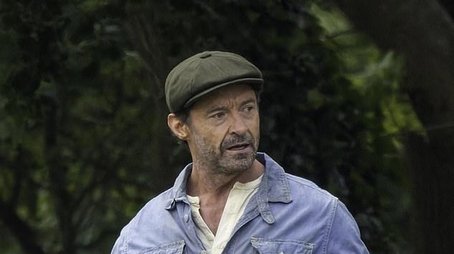
Yes. The only confirmed death tied to the film's main mystery is George Hardy, the shepherd played by Hugh Jackman, who is found dead under mysterious circumstances at the start of the story.
George Hardy - When: At the beginning of the film, when the sheep discover his body - How: He is found dead outside his trailer, and later investigation indicates he was poisoned by berry poison - Why: The death is eventually revealed to be a murder, carried out as part of a scheme by Peter to frame Rebecca and secure George's fortune
One additional death is described in the plot summary: - Sebastian dies while helping Lily and Mopple escape Caleb's German Shepherds, sacrificing his life in the process
No other character deaths are confirmed in the provided results.
Is there a post-credit scene?
Yes. Reports say there is no full traditional post-credits scene, but there is a brief ending gag after the credits: the sheep Cloud says, "I still think it's the maid."
One report describes the credits themselves as showing pen-and-ink drawings from earlier scenes for a little over two minutes, followed by that two-second audio sting at the very end. Another source summarizes it similarly as something worth staying for, though not a full scene.
Which sheep characters are the main detectives, and how do their personalities differ?
The most prominent sheep detective is Lily, a Shetland sheep voiced by Julia Louis-Dreyfus, who is presented as the flock's central investigator. Another key sheep character is Sebastian, a black Castlemilk Moorit sheep voiced by Bryan Cranston. The available plot material also mentions Daisy, a lamb, and a Winter Lamb who is later named George, suggesting the flock includes younger and more specialized members of the investigation team.
How does George Hardy’s habit of reading murder mystery novels to the sheep affect the investigation?
George Hardy regularly reads murder mystery novels aloud to his flock, and the sheep secretly understand those stories and argue about them afterward. That habit becomes crucial after George is found dead, because the sheep already have a framework for treating the death like a real mystery and for organizing themselves around detective logic.
What exactly happens when George Hardy is found dead, and how do the sheep first react?
George Hardy is discovered dead outside his trailer, and one source specifies that he is found dead under mysterious circumstances while another describes his body as lying on the ground impaled by a spade. The sheep immediately recognize that something is wrong and conclude that it was murder, which pushes them to begin investigating.
Who are the key human characters connected to the murder investigation?
The main human figures named in the available material are Tim Derry, a clumsy local police officer played by Nicholas Braun; Elliot Matthews, a reporter played by Nicholas Galitzine; Rebecca Hampstead, George's daughter played by Molly Gordon; and Beth Pennock, the innkeeper played by Hong Chau. George Hardy himself, played by Hugh Jackman, is the shepherd whose death drives the story.
How do the sheep’s investigations interact with the human side of the story?
The sheep initially approach the case through their own limited understanding of human behavior, but the mystery ultimately requires them to confront parts of human emotion and motive they cannot fully grasp. The material suggests that the sheep and human storylines eventually collide, with the sheep discovering that some aspects of humanity remain beyond their understanding even as they pursue justice for George.