









Popular
What is the significance of the flashbacks in the narrative?
What motivates the character of Lucie throughout the film?
How does the relationship between Lucie and her brother influence the story?
What role does the taxi driver play in Lucie's journey?
How does the setting of the night contribute to the film's atmosphere?
Should I watch it?
Ask Your Own Question

What is the plot?
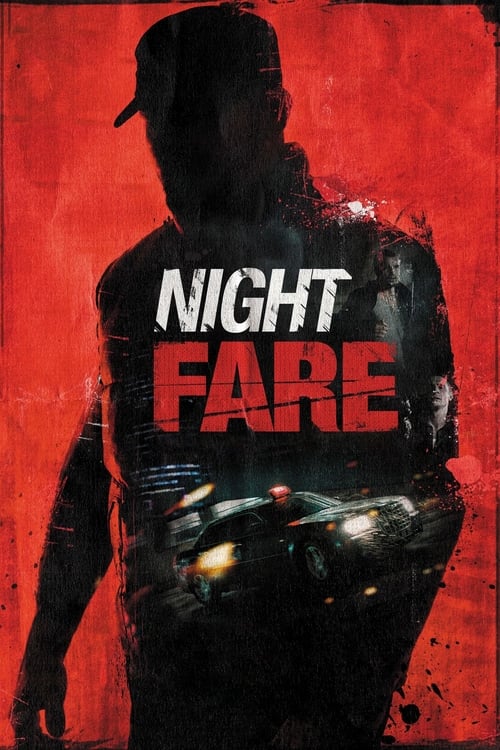
Chris returns to Paris after two years away, and the city immediately feels charged with old damage and unfinished business. He comes back as an outsider trying to slip back into a life he abandoned, hoping to reconnect with his ex-girlfriend, Ludivine, and his estranged friend, Luc, but the reunion has already curdled before anyone even starts drinking. Ludivine is now with Luc, and that simple fact lands like a slap: Chris has left her without explanation, and now the man he once considered his friend is the one beside her. The film makes this emotional triangle clear right away, and every later disaster grows out of that first, quiet wound.
Chris first sees Ludivine and Luc in Paris after his long absence, and the tension between them is immediate. Luc is loud, cocky, and social, the kind of man who treats the night as something to be consumed, while Chris is visibly uneasy, trying to act like he belongs in this circle even though he knows he is late to his own life. Ludivine does not soften the situation for him. She reminds him that he left her behind without saying why, and when Chris tries to reclaim some emotional ground, she makes it plain that she is over him. Her words land with a cold finality, and the air between the three of them becomes brittle before the party even begins.
Luc, still eager to keep the night moving, drags Chris into a wild downtown party. The scene is all flashing lights, alcohol, drugs, and restless bodies, and the atmosphere reinforces how far Chris has drifted from the kind of life Luc now leads. Chris is uncomfortable from the start, watching Luc slide deeper into reckless partying while trying and failing to reconnect with Ludivine. When the tension finally becomes too much, Chris decides to leave. Ludivine leaves early as well, taking Luc's car, and that small departure only sharpens the emotional split. Luc then follows Chris into the street, talking him into staying out longer and trying to sell him on yet another party, as if the night itself can erase any personal grievance if they just keep moving.
The streets of Paris become the first real stage of the thriller. Chris and Luc drift drunkenly through the city, and Luc keeps pushing bad ideas with the confidence of someone who has never had to pay for them. At one point he suggests stealing a car, and Chris rejects the idea, instead insisting they simply take a taxi. That decision seems ordinary, even responsible, but the film turns it into the hinge on which everything breaks. In the taxi, Luc snorts cocaine, which further alienates Chris and makes the car feel less like transport than a sealed capsule of bad decisions. Luc then reveals that he has a large amount of cash on him but refuses to pay the fare on a whim, treating the driver's labor like a joke. He deliberately gives the wrong address, waits until they arrive at the supposed destination, and then uses the old "I need to use the ATM" pretext to flee with Chris. They run from the cab without paying, stiffing the driver on a fare that has climbed to 45.00. In the scramble, Chris realizes he has left his backpack and cell phone in the taxi, an omission that will become catastrophic.
The taxi driver does not roar or curse in the way a more conventional villain might. He simply becomes a presence behind them, a black shape stalking the pair through the night. The cab itself turns into a mobile instrument of punishment, and the city's empty streets and passageways begin to feel like a trap designed around the pair's stupidity. Luc still thinks of the whole thing as a laughable mistake, but Chris feels the scale of what they have done more acutely. The unpaid fare becomes a visible, running debt, and the driver's silence gives the chase a chilling, impersonal edge. He does not appear to be angry in the ordinary sense. He appears to be collecting something.
What follows is a relentless pursuit across Paris. The taxi driver stalks them through several streets and walkways, and the spatial geography of the film tightens: stairs, dark alleys, and narrow passages become brief shelters that never last. Chris and Luc are no longer merely avoiding embarrassment or argument; they are trying to survive a man who seems almost unstoppable. During the chase, they are robbed, and the chaos only deepens the sense that they are losing control of a night already poisoned by arrogance. The driver's violence escalates sharply when crooked police officers get involved. He kills three corrupt cops and spares one officer who appears innocent, a detail that quietly signals that his violence is not random. He is not simply murdering everyone in his path; he is judging them.
The city begins to look like a machine feeding bodies into the driver's mission. He continues to track the pair with unnerving precision, and even when they seem to slip away, he reappears with the calm persistence of inevitability. The meter, still ticking somewhere in the film's symbolic logic, becomes a cruel joke: the fare is no longer about money, but about the moral cost of disrespect. Chris and Luc are still running from what they think is a furious cab driver, but the chase is already widening into something stranger, darker, and more structured. The driver's silence, his control, and the way he uses the city against them suggest purpose rather than rage.
The next major escalation comes when the driver uses Chris's cell phone to locate Ludivine. This is where the plot stops pretending the men's humiliation is the only issue. The driver takes Ludivine hostage and uses her as leverage to force Chris and Luc toward him. The abduction transforms the conflict from a chase into a trap, and the emotional stakes finally become unbearable. Chris's guilt over leaving Ludivine years ago, and over returning only to find her with Luc, becomes inseparable from the physical danger she is now in. The driver has taken the most painful part of Chris's return and turned it into bait.
A flashback then reorients the entire night. The film reveals that Chris and Luc are not merely irresponsible friends who made a drunken mistake; they have a darker shared history, one tied to a terrible crime committed two years earlier. The sources describe this secret as involving a possible murder, and the revelation reframes their relationship with each other and with Ludivine. Chris did not leave Paris simply because life took him elsewhere. He left after something bad happened, and the unresolved guilt from that event has followed him back. Luc's breezy recklessness now looks like one more layer over a deeper moral rot, while Chris's discomfort begins to read as the shame of someone who knows he has never fully escaped what he helped do.
At this point, the taxi driver's true purpose starts to emerge. He is not hunting them because of the fare alone. The money is only the trigger, the visible offense that allows him to drag them into a larger reckoning. The chase is revealed to be part of an ideological system, a form of recruitment and punishment governed by rules beyond ordinary revenge. Chris pleads with the driver to leave Ludivine alone, and that moment becomes one of the film's key confrontations. His desperation is no longer self-interested; he is trying to save the woman he failed once already. The driver answers not with a speech, but with action. He releases Ludivine, showing that she is not his actual target. Instead, he makes it clear that Luc is the one he wants to take away.
Luc, for his part, is forced into a humiliating and terrifying next step. He enters the taxi expecting death or brutal punishment, but what he receives is stranger. After an undisclosed period of time, he wakes in a naked jail cell. The image is stark and dehumanizing: Luc, stripped of status, swagger, and all the party-boy confidence that has defined him, is reduced to vulnerability. The cell suggests imprisonment, but not the ordinary kind. It feels ritualistic, as if the driver has placed him in a space designed to break down his identity before rebuilding it.
Then the driver gives Luc a book. That book contains the history of a secret society of vigilantes who recruit people who have repented from selfish and violent lives. This is the film's big ideological reveal. The taxi driver is not merely an avenger or a psycho cabbie; he is an agent of a hidden order, one that judges whether men like Luc can transform into something better. The story quietly shifts genres at this point, moving from urban revenge thriller into initiation narrative. Luc, who has spent the film treating the world like a playground, is now being asked to account for the kind of man he is. The book is not just exposition. It is a mirror.
The revelation forces Luc to confront himself. He recognizes, in a way he has probably never done before, that his life has been selfish and violent. The film does not present this as instant redemption. It comes after fear, humiliation, and the stripping away of his old identity. Still, the effect is decisive: Luc agrees to join the driver's secret society. The man who once snorted cocaine in a taxi and laughed off a fare now accepts the logic of a hidden moral order. The decision reframes everything that came before. The driver has not merely punished him; he has tested whether he is capable of change.
The film then shows the practical side of that transformation. After training with the driver, Luc is dropped in front of a violent mugging and left to deal with it on his own. The moment is crucial because it proves the secret society is not abstract philosophy. It is action, discipline, and intervention. Luc's final test is not whether he can talk about repentance, but whether he can step into danger and protect someone else. The man who once caused chaos for entertainment is now put in position to interrupt real violence. The driver's methods are severe, but they are also strangely exacting: he has moved from punishment to instruction, from terror to moral recruitment.
Across the film's running time, the taxi driver kills every person who interrupts or obstructs his pursuit, but the most clearly identified deaths are the three crooked cops he kills during the chase and the seven criminals at a drug house. The drug-house sequence is one of the film's most aggressive bursts of violence. There, the driver turns the criminals' own environment against them. He kills using extreme force, including martial arts, a samurai sword taken from the dealer's house, and a brutal throw that sends one man out of a second-story window. The violence is gleefully efficient but not indiscriminate; again, the driver is acting within a code. One corrupt police officer is spared, underlining that his judgment is selective rather than purely homicidal.
The drug house itself becomes a grotesque chamber of consequences. Chris and Luc escape, but the escape does not restore safety. It only makes the next phase of the chase feel more inevitable. The city, once merely the backdrop of a bad night out, now seems like a moral maze in which every wrong turn leads to more exposure. The driver's use of Chris's missing phone, the kidnapping of Ludivine, and the staging of Luc's captivity all show that he has anticipated their reactions and shaped the night around them. He is not improvising. He is orchestrating.
Chris's confrontation with the driver over Ludivine is the emotional center of the film's escalation. He pleads for her life, and the driver's willingness to let her go distinguishes him from a simple sadist. Ludivine's release resolves one danger but deepens the meaning of the story. She is not the object of the driver's revenge; she is collateral in a much larger judgment aimed at the men who left destruction in their wake. By sparing her, the driver effectively tells Chris that the real debt is between men and the violence they normalize around themselves. Ludivine, the person Chris once abandoned, is freed from the immediate threat, but the emotional damage between the three characters remains unresolved.
By the time Luc is in the cell, the story's central mystery has turned into a moral crucible. The taxi driver's secret society is historical and structured, not random, and Luc is now being assessed by that structure. The sense of a hidden network gives the film a final layer of conspiracy, but it never becomes pure lore. Instead, the society exists to answer a blunt question: can a selfish man become useful? Luc's answer is to accept the book, accept the training, and accept the violent test placed in front of him. His transformation is incomplete, but it is real enough for the driver to proceed.
The final movement of the film is therefore not a conventional escape or showdown, but a grim initiation. After training, the driver leaves Luc in front of a live mugging. Luc must decide instantly whether to act. The film's last scenes turn the chase's energy into a test of conscience and nerve, with Luc standing at the threshold of a new identity. The driver has not simply punished him for avoiding the fare. He has used the entire night to drag him, and the audience, toward a hidden ideology about repentance and intervention. The resolution is deliberately unsettling because it does not end with the death of the villain or the return of normal life. Instead, it ends with Luc being absorbed into the driver's moral order, the street violence continuing just beyond him, and the idea that he may finally choose to become the kind of man who stops harm instead of causing it.
Chris's arc is more tragic and less complete. He returns to Paris hoping to repair the past, but instead the past opens up and swallows the present. He learns that Ludivine has moved on with Luc, that his old friend is not merely a rival but a man implicated in the same terrible history, and that the city still contains the consequences of the crime he helped commit two years earlier. The film never lets him fully escape the emotional logic of that return. Even when Ludivine is released, Chris is left with the knowledge that he came back seeking reconciliation and found judgment instead.
The final scene does not undo the night. It repurposes it. The fare, the chase, the violence, and the hostage-taking all reveal themselves as the means by which the taxi driver filters out selfishness and recruits the repentant. Luc's fate is no longer simple survival but initiation; Chris's fate is to remain haunted by what he and Luc did long before the cab ride; Ludivine's fate is to be spared the driver's mission but left standing in the wreckage of the men who dragged her into it. The movie ends with the sense that the wronged driver has not just won the night, but exposed the hidden moral debt beneath it, and that in Paris, after midnight, the true cost of a small act of disrespect can be far larger than anyone imagines.


What is the ending?
In the ending of "Night Fare," the film culminates in a tense confrontation between the main characters, Luc and his friend, as they face the mysterious and menacing taxi driver. The climax reveals the true nature of their predicament, leading to a tragic resolution that leaves Luc grappling with the consequences of their actions.
As the film progresses towards its conclusion, Luc and his friend, who have been on a reckless night out, find themselves increasingly entangled in a dangerous game with the taxi driver. The driver, who has been pursuing them throughout the night, embodies a relentless force that seems to be both a reflection of their own fears and a harbinger of their fate.
In the final scenes, Luc's desperation grows as he realizes the gravity of their situation. The tension escalates when they confront the driver in a dark, isolated area. The atmosphere is thick with dread, and the stakes are palpable. Luc's friend, caught in the chaos, faces a tragic end, which serves as a pivotal moment for Luc. The loss weighs heavily on him, and the emotional turmoil is evident as he grapples with guilt and regret.
Ultimately, Luc is left alone, haunted by the events of the night. The film closes on a somber note, emphasizing the themes of consequence and the darkness that can lurk within seemingly ordinary experiences. Luc's fate is left ambiguous, but the weight of his choices lingers, suggesting a profound transformation or a descent into despair.
As the night deepens, Luc and his friend, having enjoyed a wild evening, find themselves in a precarious situation. The atmosphere is charged with excitement, but an undercurrent of danger begins to seep in as they encounter the enigmatic taxi driver. The driver, initially appearing as just another part of the city's nightlife, soon reveals a more sinister side, stalking them through the streets.
Scene by scene, the tension builds. Luc and his friend, initially carefree, start to feel the weight of their choices as they evade the driver. Their laughter fades, replaced by anxiety as they realize they are being hunted. The city, once vibrant and alive, transforms into a labyrinth of shadows and uncertainty. Each turn they take seems to lead them deeper into a trap, and the driver's relentless pursuit becomes a metaphor for their own inner demons.
As they confront the driver in a desolate area, the mood shifts dramatically. The once playful banter between Luc and his friend is replaced by fear and desperation. The driver, with an unsettling calmness, reveals his true intentions. The confrontation escalates, and in a moment of chaos, Luc's friend is fatally injured. The shock of this loss hits Luc like a tidal wave, and the emotional weight of the moment is palpable. He is left to grapple with the reality of their situation, the consequences of their reckless night, and the irreversible nature of death.
In the aftermath, Luc stands alone, the city around him now a haunting reminder of what has transpired. The taxi driver, having fulfilled his role in this dark narrative, disappears into the night, leaving Luc to face the emptiness and despair that follows. The film closes on Luc, a figure of sorrow and regret, as he contemplates the choices that led him to this moment. The ending leaves viewers with a lingering sense of unease, highlighting the fragility of life and the profound impact of our actions. Luc's fate remains uncertain, but the emotional scars of the night will undoubtedly shape his future.
Is there a post-credit scene?
In the movie "Night Fare," there is no post-credit scene. The film concludes its narrative without any additional scenes or content after the credits roll. The story wraps up with the intense and suspenseful events that unfold throughout the film, leaving the audience with a sense of closure regarding the characters and their fates. The focus remains on the psychological thriller elements and the emotional turmoil experienced by the protagonists, rather than extending the story further in a post-credit sequence.
What is the significance of the flashbacks in the narrative?
The flashbacks serve to deepen the audience's understanding of Lucie's motivations and emotional struggles. They reveal her past experiences with her brother, highlighting moments of joy and trauma that shape her current actions. These glimpses into her history create a poignant contrast to her present, enhancing the film's emotional weight.
What motivates the character of Lucie throughout the film?
Lucie is driven by a deep sense of revenge and the need to confront her past. After a traumatic event involving her brother, she is determined to find the truth behind his death, which leads her into a dark and dangerous journey through the night.
How does the relationship between Lucie and her brother influence the story?
Lucie's relationship with her brother is central to her motivations. Their bond is depicted through flashbacks, showcasing their close connection and the impact of his death on her psyche. This relationship fuels her quest for vengeance and shapes her emotional state throughout the film.
What role does the taxi driver play in Lucie's journey?
The taxi driver serves as both a guide and an antagonist in Lucie's journey. Initially, he appears to be a helpful figure, but as the night progresses, his true nature is revealed. He embodies the dangers of the night and challenges Lucie's resolve, forcing her to confront her fears and the reality of her situation.
How does the setting of the night contribute to the film's atmosphere?
The night setting creates a tense and claustrophobic atmosphere, filled with shadows and uncertainty. The dark streets of Paris become a character in themselves, reflecting Lucie's internal turmoil and the dangers that lurk in the unknown. This setting amplifies the film's suspense and emotional intensity.
Is this family friendly?
"Night Fare," produced in 2015, is not considered family-friendly due to its intense themes and graphic content. The film contains several potentially objectionable or upsetting aspects, including:
-
Violence: There are scenes depicting physical confrontations and aggressive behavior, which may be disturbing for younger viewers.
-
Murder: The plot involves themes of murder and revenge, with some scenes showing the aftermath of violent acts.
-
Psychological Tension: The film creates a tense atmosphere that may be unsettling, featuring characters in distressing situations.
-
Dark Themes: The narrative explores themes of betrayal, fear, and survival, which may be too intense for children or sensitive individuals.
-
Language: There is the use of strong language throughout the film, which may not be appropriate for younger audiences.
Overall, the film's mature content and dark tone make it unsuitable for children and potentially upsetting for sensitive viewers.








