
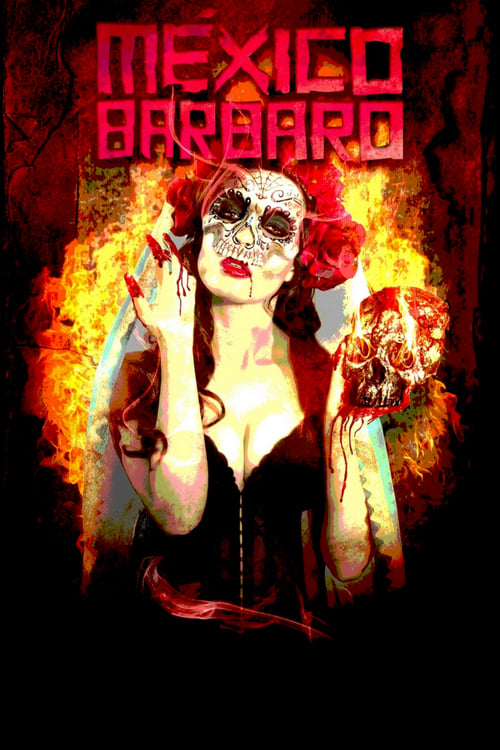









Popular
What are the main storylines explored in Barbarous Mexico?
Who are the key characters in the film and what are their motivations?
How does the film portray the impact of violence on its characters?
What role does the setting play in the characters' lives and decisions?
How do the different stories in Barbarous Mexico connect with each other?
Should I watch it?
Ask Your Own Question

What is the plot?
The film Barbarous Mexico (2014) opens as a chilling anthology of eight distinct horror tales rooted deeply in Mexican folklore, urban legends, and contemporary brutal realities. Each segment unfolds in a different setting, with unique characters, but all share a visceral connection to Mexico's dark cultural myths and violent modern truths.
The first story, "Tzompantli", begins with the voice of an older narrator, Antonio Monroi, who recounts a harrowing episode from his youth in 2014. The young journalist Marco Zapata is eager and ambitious, arranging a rare interview with Memo Villegas, an informant who claims insider knowledge of the brutal cartel atrocities responsible for a spate of missing teenagers. The atmosphere is tense as Marco presses Memo for answers. Memo warns grimly, "You don't want to know what happened to those kids," foreshadowing the horror to come. As Memo leads Marco to a remote shrine, the scene darkens--an altar grotesquely reminiscent of ancient Aztec tzompantli, or skull racks, adorned with human remains and cartel symbols. The revelation is sickening: the cartel's cruelty mirrors the barbaric rituals of Aztec sacrifices, with kidnapped teens as victims. Marco's horror intensifies as he witnesses the shrine's revolting display, leaving him traumatized and forever changed by the brutal truth behind the disappearances.
The narrative shifts abruptly to "Jaral de Berrios", where two banditos, Javier and Valeria, are fugitives fleeing after a robbery. Javier is critically injured, and they seek refuge in the dilapidated Hacienda del Jaral de Berrios in San Felipe. The hacienda's eerie, haunted atmosphere is palpable--its walls whisper of an ancient curse. Valeria's anxiety grows as they settle in; she chastises Javier bitterly, saying she hates "giving up her virginity to a man who cannot protect her." Their fragile hope for safety shatters when an old gardener-like man warns them ominously not to leave valuables outside, hinting at lurking dangers. Soon, demonic imps emerge--ghastly, grotesque creatures that torment the couple. Javier is brutally killed by these spectral thieves, his death violent and surreal. Valeria is abducted and assaulted in a grotesquely unsexy, nightmarish manner by the imps, leaving her traumatized and alone in the cursed hacienda.
From the haunted hacienda, the story moves to the desert oasis in "Siete Veses Siete", where a scarred-faced cowboy digs up a corpse under the harsh sun. Over several nights, he performs a ritualistic resurrection, using ancient rites to bring the dead man back to life. The ritual is intense, filled with symbolic gestures and eerie silence broken only by the desert wind. The cowboy's true relationship to the corpse is gradually revealed--he is enacting a personal revenge, binding life and death in a supernatural confrontation. When the corpse finally awakens, the cowboy faces it with steely resolve, his intentions clear but grim. This segment is a slow burn of tension, culminating in a ritualistic showdown that blurs the line between vengeance and the unnatural.
The tone shifts to a bustling urban strip club in "Día de los Muertos", where women prepare in a communal dressing room for a night of performance. The atmosphere is thick with anticipation and a hint of menace as the domineering Madame oversees the strippers. The club is decorated with vibrant Day of the Dead makeup and costumes, blending celebration with eerie undertones. As the women take the stage, their performances reveal a supernatural edge--they are avenging spirits punishing lascivious men with ruthless efficiency. The camera lingers on their faces painted like calaveras, their eyes burning with otherworldly fire. The men who catcall and harass them are met with brutal, often fatal retribution. The strippers' supernatural nature is revealed as they exact justice, turning the club into a nightmarish arena of reckoning.
In "Lo que importa es lo de adentro", the focus narrows to a small apartment building where Laura, a girl with special needs, lives in fear of the building's custodian. She calls him the boogeyman, one of the few words she can articulate, but her family dismisses her terror. The custodian's presence is ominous, his shadow lurking in hallways and stairwells. Laura's fear escalates as the custodian's true nature is revealed--he is a malevolent entity preying on the vulnerable. In a tense confrontation, Laura faces him, but she is attacked, her screams echoing through the building. The family is left paralyzed by fear, haunted by the realization that the boogeyman is real and close to home.
The sixth segment, "El Aullido del Diablo", follows a woman who is battered, bloody, and desperate, hiding in a remote rural house from a pursuer. Her exhaustion and fear are palpable as she moves silently through the house, trying to evade capture. The pursuer's identity is gradually revealed to be supernatural, a relentless force embodying evil. The woman confronts this dark entity in a climactic moment filled with tension and dread. Her fate remains ambiguous, the film leaving viewers uncertain if she survives or succumbs to the malevolent presence.
In "La Caja", a man living in an urban apartment receives a mysterious box. His curiosity leads him to open it, unleashing a supernatural entity that defies understanding. The entity's presence distorts reality around him, filling the apartment with a suffocating dread. Despite his attempts to confront or control it, the man is ultimately overpowered and killed by the entity, his death a chilling reminder of the dangers of meddling with unknown forces.
The final story, "La Ofrenda", centers on a young woman who steals a cigarette from a corpse's fingers in a dark urban hallway. This seemingly small act triggers a terrifying encounter with a spectral figure--a bizarre, bent male form emerging from the shadows. The figure speaks in a disturbing, almost hypnotic tone: "You don't have to be afraid. You have a choice: either drain the blood from your mother's vagina, or it will suck your soul from your anus." The young woman is forced into a surreal and horrifying dilemma, her fate left ambiguous as the spectral figure's offer hangs in the air. The segment ends on a visually stunning but deeply unsettling note, blending sensuality with grotesque horror.
Each story in Barbarous Mexico builds tension through vivid, often shocking imagery and confrontations that blend the supernatural with the brutal realities of Mexican culture and folklore. Deaths are frequent and graphic: the missing teenagers sacrificed by the cartel in "Tzompantli"; Javier killed by demonic imps and Valeria abducted in "Jaral de Berrios"; the man in "La Caja" killed by the unleashed entity; and the custodian's attack on Laura in "Lo que importa es lo de adentro." Revelations about the true nature of characters and entities--such as the cartel's ritualistic brutality, the haunted hacienda's curse, the strippers' supernatural vengeance, and the boogeyman custodian--drive the narratives forward.
The anthology closes with the lingering unease of "La Ofrenda," leaving the audience with a haunting sense of unresolved horror and the inescapable presence of Mexico's barbarous myths and legends in the modern world. The final scene fades out with the young woman's fate uncertain, a spectral figure's chilling ultimatum echoing as the screen darkens.
Barbarous Mexico thus weaves a tapestry of horror that is as culturally rich as it is viscerally terrifying, each segment a dark mirror reflecting the brutal and supernatural facets of Mexican identity.
More Movies Like This
Browse All Movies →

![[REC]³ Genesis (2012) poster](https://image.tmdb.org/t/p/w500/tI1534q0Up7PBcLdXdFerLmIXn3.jpg)




What is the ending?
In the ending of "Barbarous Mexico," the film culminates in a series of violent and tragic events that reflect the harsh realities of life in Mexico. The characters face their fates as the consequences of their actions come to a head, leading to a somber conclusion that underscores the themes of violence and despair.
As the film progresses towards its conclusion, we see the characters grappling with their choices and the environment around them. The narrative builds tension as the characters' paths converge, leading to a violent climax. The main characters, who have been embroiled in a world of crime and desperation, face the repercussions of their lives. The ending leaves a haunting impression, showcasing the cyclical nature of violence and the inescapable fate that befalls those caught in its grip.
In a more detailed narrative:
The final act of "Barbarous Mexico" begins with a palpable tension in the air, as the characters are drawn deeper into their respective conflicts. The camera captures the gritty streets of Mexico, filled with shadows and the echoes of gunfire, setting a foreboding tone.
We first see the character of a young man, whose desperation has led him to make choices that have spiraled out of control. He is haunted by the ghosts of his past decisions, and as he navigates through the chaos, his internal struggle is evident. He seeks redemption but is met with the harsh reality of his surroundings.
Simultaneously, another character, a woman who has been fighting for her survival, finds herself cornered by the consequences of her involvement in the criminal underworld. Her determination to escape her fate is palpable, and the audience can feel her fear and resolve as she makes a final stand against the forces that threaten to consume her.
As the climax unfolds, the characters converge in a violent confrontation. The scene is chaotic, with gunfire ringing out and the camera capturing the frantic movements of the characters as they try to navigate the danger. The emotional weight of the moment is heavy, as each character faces their own mortality and the choices that have led them to this point.
In the midst of the chaos, the young man makes a desperate attempt to save the woman, driven by a mix of guilt and a desire for redemption. However, their efforts are met with overwhelming violence, and the consequences of their actions become tragically clear. The camera lingers on their faces, capturing the fear, desperation, and fleeting hope as they confront their fates.
As the dust settles, the aftermath is stark. The young man lies wounded, a victim of the very violence he sought to escape. The woman, too, faces a grim reality, her dreams of a better life shattered. The film closes on a haunting note, with the streets of Mexico continuing to echo the cycle of violence, leaving the audience with a sense of despair and the realization that the characters' struggles are emblematic of a larger societal issue.
In the end, the fates of the main characters serve as a poignant reminder of the harsh realities they inhabit, and the film leaves viewers with lingering questions about the nature of violence and survival in a world that often feels unforgiving.
Is there a post-credit scene?
"Barbarous Mexico," produced in 2014, does not feature a post-credit scene. The film concludes its narrative without any additional scenes or content after the credits roll. The focus remains on the intense and intertwining stories presented throughout the film, which explores the dark and violent realities of life in Mexico through a series of vignettes. Each story stands on its own, contributing to the overarching themes of brutality and survival, but there is no further content or resolution provided in a post-credit sequence.
What are the main storylines explored in Barbarous Mexico?
Barbarous Mexico weaves together multiple narratives that delve into the harsh realities of life in Mexico, focusing on themes of violence, crime, and the struggles of everyday people. Each segment presents a different perspective, showcasing the interconnectedness of these stories against the backdrop of a society plagued by corruption and brutality.
Who are the key characters in the film and what are their motivations?
The film features a variety of characters, each with their own motivations. For instance, a young woman may be driven by the desire to escape her violent surroundings, while a gang member might be motivated by loyalty to his peers and the need for survival in a ruthless environment. These motivations often lead to conflicts that highlight the desperation and moral dilemmas faced by individuals in a lawless society.
How does the film portray the impact of violence on its characters?
Barbarous Mexico vividly illustrates the psychological and emotional toll of violence on its characters. Scenes depict the aftermath of brutal encounters, showcasing characters grappling with trauma, fear, and the loss of loved ones. This portrayal emphasizes the pervasive nature of violence in their lives and how it shapes their decisions and relationships.
What role does the setting play in the characters' lives and decisions?
The setting of Barbarous Mexico is integral to the narrative, as it reflects the socio-political climate of the country. The gritty urban landscapes, filled with crime and decay, serve as a constant reminder of the dangers the characters face. This environment influences their choices, pushing them towards desperate measures and highlighting the stark contrast between their aspirations and harsh realities.
How do the different stories in Barbarous Mexico connect with each other?
The various storylines in Barbarous Mexico are interconnected through shared themes and characters that cross paths throughout the film. These connections often reveal the ripple effects of violence and crime, illustrating how one character's actions can impact another's life. The intertwining narratives create a tapestry of experiences that collectively depict the struggles faced by individuals in a tumultuous society.
Is this family friendly?
"Barbarous Mexico," produced in 2014, is not considered family-friendly. The film contains several potentially objectionable or upsetting scenes that may be distressing for children or sensitive viewers.
-
Violence: The film depicts graphic violence, including scenes of murder and brutality that are integral to its narrative about crime and corruption in Mexico.
-
Drug-related themes: There are strong references to drug trafficking and its consequences, which may be unsettling for younger audiences.
-
Death and suffering: The portrayal of characters experiencing trauma, loss, and suffering can be emotionally intense and may evoke strong reactions.
-
Dark themes: The overall tone of the film is bleak, exploring themes of despair, hopelessness, and the impact of violence on society, which may be heavy for sensitive viewers.
-
Language: The film includes strong language that may not be appropriate for children.
These elements contribute to a mature viewing experience, making it unsuitable for younger audiences or those who are sensitive to such content.









