
⭐ Featured
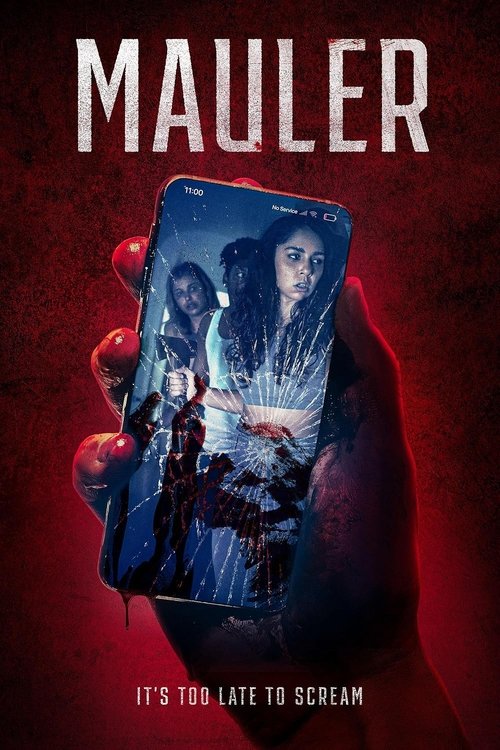
Desperate for cash, five young friends enter a creepy murder house for a $25K dark web contest, only to end up in a brutal fight for their lives against a 7-foot-tall religious maniac with a sledgehammer who's out to kill all sinners.

The film opens in a jolting prologue set twenty years before the main story, in a cramped home where young Lucas walks in on his father strangling his mother. In a flash of panic and rage, Lucas grabs a sledgehammer and brings it down on his father, killing him outright, but by the time the violence stops, it is already too late to save his mother. The scene is brutal and blunt, establishing from the first minutes that this is a story born from trauma, blood, and a child's irreversible crossing into violence.
The aftermath is even more disturbing because it is not met with horror in the usual sense. Lucas's grandmother, Grandma Tara, arrives and is unnervingly calm about the carnage. Instead of calling the police or rushing the child away from the scene, she takes one look at the bodies and treats the murders as something almost providential, effectively deciding that God has a plan for Lucas and that she will be the one to shape it. That decision becomes the film's hidden wound: Tara removes Lucas from the world and raises him in isolation, not as a traumatized boy who might heal, but as a vessel for her own violent religious worldview.
From there, the opening credits and time jump transform the murder scene into legend. Newspaper clippings imply that Lucas grows into a mysterious serial killer, and over the next twenty years his name mutates into a kind of local urban myth. By the time the main timeline begins, he is known online as "Mauler," a nickname that sticks because of his habit of using a hammer-like weapon to kill. The legend grows larger than the man, but the sources agree that the adult Lucas is not a myth at all: he is real, massive, silent, and still living inside the same house where the nightmare began.
The present-day plot shifts to five cash-strapped friends who are desperate enough to gamble their safety for money. The group is drawn into a dark-web contest promising $25,000, but the first challenge is not a simple game; they must document spending the night in a "murder house." If they survive that round, they can move on to the next stage, so the house itself becomes both bait and trap. The ringleader is Stevo, the one who thinks he has outsmarted everyone else by using his realtor father's records to research the property. Through those records, he learns that Grandma Tara has recently died, and that decades earlier a couple were killed on the premises. That history is enough for him to believe the house is empty, or at least empty enough to exploit.
What Stevo does not understand is that the official story is a lie. The "murder house" legend says that a couple was killed and their child was taken, but the truth is far more twisted: the child killed his bickering parents, and his creepy grandmother abducted him afterward and turned him into a religious zealot with a strict moral code. That revelation redefines everything about the house. It is not the site of a mysterious kidnapping. It is the birthplace of a killer, and the grandmother the outside world might have assumed was a rescuer is in fact the architect of his corruption.
When the friends arrive, they step into the trap with confidence that curdles almost immediately into dread. They expect silence, emptiness, decay. Instead, they hear sounds coming from inside. The house is occupied. The adult Lucas, now seven feet tall and still carrying the same murderous aura from childhood, is there as Mauler, and he has not lost his taste for the sledgehammer. The name "Mauler" becomes instantly literal once the friends realize that the local legend has been standing in the dark all along, listening to them enter his home.
The tension escalates as the group's money-making scheme collapses into panic. The house, which they intended to use as a backdrop for a staged night of fear, becomes a closed killing field. One review notes that the group believes the house to be empty until they discover the seven-foot-tall Mauler inside, while another says that when one of them is snatched, the rest must fight their way deeper inside to rescue their friend. The survival dynamic is clear: the friends are no longer contestants in a challenge, they are prey, and the house is the maze in which Mauler hunts them.
As the friends scramble through the rooms, the story keeps tightening around the original childhood violence. The hammer remains central, not merely as a weapon but as a symbol of continuity. Lucas used a sledgehammer to kill his father as a boy, and as an adult he still relies on a mallet or hammer-like tool to enforce his will. The movie's evil is generational and circular: the weapon that first defined him is the same one he now uses to preserve the nightmare his grandmother built around him.
The friends' individual roles remain only partially detailed in the available material, but the broad shape of the conflict is consistent across the reviews. There are five of them, and they are all in the house because of the lure of easy money. Stevo is the planner, the one with access to the records and the one who believes he has found a shortcut to wealth. The others follow, out of desperation, loyalty, or poor judgment, and once they realize the truth, they are forced into a frantic fight for survival against a killer who knows every inch of the space better than they do.
At some point in the middle of the film, the horror becomes more intimate and more personal as one of the friends is taken by Mauler, forcing the others to choose between escape and rescue. That moment is important because it strips away whatever remains of the contest fantasy. They cannot simply flee and claim defeat; a friend is inside the house, and Mauler is now actively hunting them in close quarters. The emotional stakes sharpen: what began as greed becomes guilt, then fear, then a desperate scramble to keep one another alive.
The sources do not provide a full scene-by-scene accounting of the kills, but they do establish the confirmed deaths in the film's backstory and the shape of the present-day violence. The first confirmed death is Lucas's father, killed by young Lucas with the sledgehammer in the prologue. The second is Lucas's mother, who dies in the same incident after Lucas fails to save her. Those two deaths are the origin point of the entire film's horror, because every later act of violence is framed as a consequence of that childhood night. The sources do not clearly confirm which of the five friends die during the main timeline, but they do make clear that the confrontation turns into a brutal fight for their lives.
Grandma Tara's role lingers over the present tense of the story even after the timeline jumps ahead. She is already dead by the time the friends arrive, and Stevo's research into his father's records tells him she has died only a few days earlier. Her death matters because it removes the last living figure who shaped Lucas into Mauler, but it also leaves behind the creature she made. In a bitter irony, Tara's absence does not free Lucas; it leaves him alone in the house with the full force of her indoctrination still governing his behavior. The house becomes, in effect, a shrine to the violence she sanctified.
The climax arrives as the contest collapses entirely into survival horror. The friends are trapped inside with a seven-foot-tall killer, and the earlier "murder house" challenge is exposed as a grotesque miscalculation. The dark-web prize of $25,000 is meaningless now, a cruel joke hanging over a slaughterhouse where money no longer matters and every corridor can hide death. The reviews consistently describe the final stretch as a slasher battle, with Mauler pursuing the intruders through the house, sledgehammer in hand, while the remaining survivors fight back however they can.
Because the available sources stop short of a complete beat-by-beat climax, the exact order of every final confrontation is not fully documented in the material at hand. What is clear is that the movie does not resolve with a subtle twist or a last-second reveal about an outside mastermind. Its last emotional and narrative movement is the direct collision between the five friends and the adult Lucas/"Mauler," whose identity as both traumatized child and indoctrinated killer is now fully exposed. The final conflict is not about whether the house is haunted or whether the legend is real. It is about whether anyone can survive a man who has lived his entire life in the shadow of the first murder he ever committed.
The ending therefore lands as a grim release of the premise rather than a clever reversal. Lucas's past is no longer hidden, Grandma Tara's role is no longer misunderstood, and the friends' mistake is no longer salvageable. The house's secrets have all been dragged into the open: the parents were not murdered by some unknown intruder, the child was not simply taken, and the grown-up killer is not an urban legend but the inevitable result of the childhood scene that opens the film. By the time the final confrontation plays out, the story has already revealed its central truth: Mauler is what happens when trauma is converted into doctrine, and doctrine into murder.
What the sources do not decisively provide is the exact final survival count, the last blow, or the final image. They do, however, establish the shape of the resolution: the movie ends in a brutal, house-bound struggle against the adult Lucas, with the friends forced to confront the living consequence of the prologue's violence. The emotional endpoint is not mystery but recognition. The audience has seen where Mauler comes from, how Grandma Tara shaped him, why the house matters, and why the dark-web challenge was doomed from the start. The story closes on the terrifying inevitability of that knowledge, with the sledgehammer still serving as the blunt, merciless emblem of everything the film has been building toward.
The ending of Mauler (2025) is a bloody last fight inside the house, where the friends are forced to face the grown-up Lucas, now known as Mauler, after the truth about the house and his twisted upbringing has already come out. By the end, the struggle stops being about the cash prize and becomes a fight to survive, with the people who came into the house for a dare being hunted one by one.
Chronological ending, in simple narrative form:
Inside the house, the friends discover that the threat is real and that the man living there is not just some legend. The adult Lucas, Mauler, attacks them with his sledgehammer, and the group's plan collapses into panic and running, hiding, and trying to get back to one another. One of the friends is taken by Mauler, and the others are forced to move back into the house to try to rescue that person. The final part of the movie becomes a brutal struggle through the house as Mauler keeps pursuing them and punishing anyone he sees as sinful. The ending closes with the survivors no longer thinking about the reward, only about getting out alive.
Expanded chronological narrative:
The final stretch begins after the group has already entered the murder house for the dark web contest and realized that the place is not empty. What they thought was an abandoned dare location is actually the home where Lucas, the child from the earlier tragedy, survived and grew up under his grandmother's religious control. By this point, the movie has made clear that Lucas became Mauler, a seven-foot-tall killer who uses a sledgehammer and believes he is carrying out judgment against sinners.
As the ending moves forward, the friends are inside the house, and Mauler is already attacking from within it. The group's original purpose, which was to win the $25,000 contest, disappears the moment the violence starts. Their movement through the house becomes frantic and broken, with the story turning into a chase rather than a plan. The friends try to stay together, but Mauler's presence keeps pulling them apart.
During the final conflict, one of the friends is seized by Mauler. That capture forces the others to stop trying to flee and instead go back into the house to recover the person taken from them. The ending is described as a brutal fight for survival, not a clean victory, and Mauler remains the central danger through the last scenes. The house itself functions as the place where all of the conflict comes together: the old family tragedy, the dark web dare, and the killer's violent mission.
The final fate of the main characters, based on the available plot summaries, is this:
The available sources do not provide a full scene-by-scene account of the last minutes or a complete survivor list, so the exact fate of each friend cannot be stated with certainty from the material provided.
There is no evidence in the provided results that Mauler (2025) has a post-credit scene. The results only include reviews and plot descriptions for the film, and none of them mention an end-credits, mid-credits, or post-credits scene.
If you want, I can also help verify whether the film has any credits scene by checking additional sources beyond the ones shown here.
Lucas is presented as the central figure behind the killer identity known as the Mauler, and the film's backstory focuses on childhood trauma that shapes him. In the origin material described by reviewers, he is a child in a household where his bickering parents are killed, after which his creepy grandmother abducts him and raises him with a strict religious code that turns him into a zealot.
A group of five friends enters Lucas's old house as part of a $25,000 dark web contest, apparently hoping to win money by documenting that they can spend the night in a murder house. The setup is driven by desperation for cash, and one review identifies Stevo as the ringleader who thinks the challenge is an easy get-rich-quick opportunity.
The friend group is played by Kate Noel, Skyylar Perdomo, Sebastian Betancur, Sarah Siverson, and Jayden Stith. One review singles out Stevo, played by Sebastian Betancur, as the ringleader who pushes the plan to enter the house and chase the prize money.
The Mauler is not an ordinary urban legend but a real, active threat inside the house when the teens arrive. He is described as a 7-foot-tall masked or religiously driven executioner armed with a sledgehammer, and sources characterize him as a religious maniac or an Old Testament-style moral avenger.
The house's history is tied to a grim family incident: one review says that ten years earlier a couple were killed and their child was kidnapped, but the real twist is that the child himself killed his bickering parents before his grandmother took him away and indoctrinated him. That background is what connects the house, Lucas, and the Mauler persona.
No, Mauler (2025) is not family friendly. It is a horror/slasher film built around a violent home-invasion setup, a "7-foot-tall religious maniac" with a sledgehammer, and characters being hunted in a murder house.
Potentially objectionable or upsetting elements for children or sensitive viewers include:
I did not find evidence in these results of sexual content, but the film is clearly centered on violence, fear, and sustained menace, so it is best treated as not suitable for children.