


Popular
Should I watch it?
Ask Your Own Question

What is the plot?
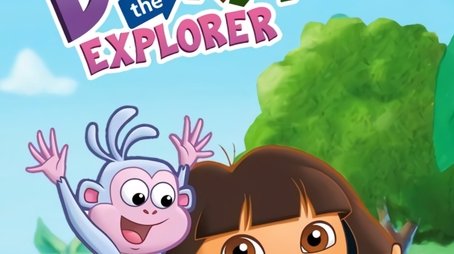
Dora the Explorer begins with Dora, a young Latina girl, introducing herself to the audience. She is excited to embark on an adventure and invites viewers to join her. She is accompanied by her talking backpack, Backpack, and her monkey friend, Boots. The trio sets off on their journey, often asking for help from the audience to solve problems and navigate obstacles.
In the first episode, "Lost and Found," Dora and Boots are on their way to the big birthday party of their friend, Benny the Bull. As they walk through the forest, they discover that they need to find Benny's lost birthday present, a special piñata. Dora explains that they must go through the various locations on the map to find it. The map, a talking character, provides guidance and outlines the path they need to take.
The first location they encounter is the "Muddy River." Dora and Boots must figure out how to cross it. They decide to use a bridge, but they need to find the right path to get there. Along the way, they encounter a group of playful ducks who help them by showing them the way. After some fun interactions, they successfully cross the river and continue on their journey.
Next, they arrive at "The Tall Mountain." Dora and Boots need to climb the mountain to get a better view of where the piñata might be. They face challenges such as steep slopes and rocky paths. With encouragement from the audience, they work together to climb the mountain, using teamwork and determination. Once they reach the top, they spot the piñata in the distance, but it is stuck in a tree.
To retrieve the piñata, they must go to "The Enchanted Forest." In the forest, they encounter a mischievous fox named Swiper, who tries to swipe the piñata. Dora and Boots must outsmart Swiper by using the phrase "Swiper, no swiping!" After repeating this phrase three times, Swiper is thwarted, and they can continue their quest.
As they navigate through the Enchanted Forest, they meet various friendly animals who offer assistance. They solve riddles and puzzles presented by the animals, which helps them gain clues about the piñata's location. Each interaction is filled with vibrant visuals and engaging dialogue, keeping the audience involved.
Finally, they reach the location where the piñata is stuck. Dora and Boots work together to devise a plan to get it down. They use a combination of teamwork and creativity, employing a slingshot made from vines and rocks to knock the piñata free. After several attempts, they successfully retrieve the piñata, and it falls to the ground with a satisfying thud.
With the piñata in hand, Dora and Boots rush back to Benny's birthday party. They arrive just in time, and Benny is overjoyed to see his lost present. The party is filled with laughter, games, and the excitement of breaking the piñata. Dora and her friends celebrate their successful adventure, and the episode concludes with a cheerful song that recaps their journey and the importance of friendship and teamwork.









What is the ending?
In the ending of "Dora the Explorer," Dora and her friends successfully complete their adventure, often celebrating their achievements with a song and dance. They return home, having learned valuable lessons along the way, and Dora expresses gratitude for her friends and the help they received from the audience.
Now, let's delve into the ending in a more detailed narrative fashion.
As the episode nears its conclusion, Dora, Boots, and their friends find themselves at the final destination of their adventure. The vibrant colors of the forest surround them, and the sun begins to set, casting a warm golden hue over the landscape. Dora, with her signature purple backpack slung over her shoulder, turns to her friends with a bright smile, her eyes sparkling with excitement.
"Look, we made it to the Big Red Barn!" she exclaims, pointing towards the large, cheerful structure that stands before them, its red paint gleaming in the fading light. The barn is surrounded by lush green grass and colorful flowers, creating a picturesque scene that feels like a reward for their hard work.
Boots, the enthusiastic monkey, jumps up and down, his tail swishing with joy. "We did it, Dora! We really did it!" His voice is filled with exuberance, reflecting the thrill of their accomplishment. Dora nods, her heart swelling with pride for her team. They had faced various challenges along the way, including crossing the wobbly bridge and solving the riddle of the talking tree, but their determination and teamwork had led them to this moment.
As they enter the barn, they are greeted by a chorus of friendly animals--cows, chickens, and pigs--all gathered to celebrate. The atmosphere is festive, with balloons and streamers adorning the barn. Dora and her friends are enveloped in a sense of belonging and joy, their earlier struggles fading into the background.
Dora takes a moment to reflect on their journey. "Thank you, everyone, for helping us along the way!" she says, her voice filled with gratitude. The audience, who have been engaged throughout the adventure, feel a sense of pride as they realize their contributions helped Dora and her friends succeed.
The scene shifts to a lively celebration inside the barn. Music begins to play, and Dora leads her friends in a cheerful dance. They twirl and spin, laughter echoing through the barn as they celebrate their victory. Boots claps his hands, and the animals join in, creating a joyful cacophony of sounds.
As the dance continues, Dora looks around at her friends--Boots, the wise Map, and the helpful Backpack. Each character has played a crucial role in their adventure, and Dora feels a deep sense of appreciation for their unique contributions. Map, with his friendly demeanor, reminds them of the path they took, while Backpack showcases the tools they used to overcome obstacles.
The celebration culminates in a heartfelt song, where Dora and her friends sing about friendship, teamwork, and the joy of adventure. The lyrics resonate with the lessons learned throughout their journey, emphasizing the importance of helping one another and believing in themselves.
As the song comes to an end, the camera pans out, showing the barn filled with laughter and happiness. Dora waves goodbye to the audience, her face beaming with joy. "See you next time!" she calls out, her voice echoing with warmth and sincerity.
In the final moments, the screen fades to black, leaving viewers with a sense of fulfillment and the promise of more adventures to come. Each character, having faced challenges and grown through their experiences, leaves the barn with a renewed sense of purpose and camaraderie, ready for whatever adventure awaits them next.
Is there a post-credit scene?
Dora the Explorer, produced in 2000, does not feature post-credit scenes. The episodes typically conclude with a wrap-up segment where Dora and her friends reflect on their adventure, often encouraging viewers to participate in a sing-along or a final interactive question. This segment serves to reinforce the educational themes of the episode and engage the audience, but there are no additional scenes after the credits. Each episode is designed to be self-contained, focusing on problem-solving and exploration without extending into post-credit narratives.
What is the significance of Boots the monkey in Dora's adventures?
Boots the monkey is Dora's best friend and constant companion, providing emotional support and comic relief throughout their adventures. His enthusiasm and loyalty help motivate Dora, and he often encourages her to solve problems and overcome obstacles. Boots also serves as a bridge for the audience, often asking questions that engage viewers and prompting them to participate in the adventure.
How does Swiper the Fox impact Dora's journey?
Swiper the Fox is the main antagonist in the series, known for his attempts to swipe items from Dora and her friends. His catchphrase, 'Swiper, no swiping!' is a recurring element that adds tension to the plot. Swiper's character introduces conflict and teaches children about the importance of problem-solving and teamwork, as Dora and her friends must find ways to outsmart him and retrieve their stolen items.
What role does Map play in guiding Dora on her adventures?
Map is a talking map that provides Dora with directions and helps her navigate through various landscapes. He is a crucial character who not only gives specific instructions but also reinforces the concept of spatial awareness and planning. Map's cheerful demeanor and catchy song make him a beloved character, and his guidance is essential for Dora to reach her destination.
How does Dora's character demonstrate problem-solving skills?
Dora is portrayed as a resourceful and determined young girl who faces challenges head-on. Throughout each episode, she encounters obstacles that require critical thinking and collaboration with her friends. Her ability to ask for help, think creatively, and use the tools available to her, such as Map and Backpack, showcases her problem-solving skills and encourages young viewers to adopt a similar mindset.
What is the role of Backpack in Dora's adventures?
Backpack is an animated backpack that carries various items that Dora and her friends need during their adventures. Each episode, Backpack introduces the items in a fun and engaging way, often through a song. The items serve practical purposes, helping Dora solve problems and overcome challenges. Backpack's character emphasizes the importance of being prepared and resourceful, teaching children about the value of having the right tools for different situations.
Is this family friendly?
"Dora the Explorer," produced in 2000, is designed as a family-friendly show aimed primarily at preschool-aged children. The series promotes problem-solving, teamwork, and basic educational concepts through interactive storytelling.
While the show is generally considered appropriate for young audiences, there are a few elements that some parents or sensitive viewers might find slightly concerning:
-
Mild Frustration or Conflict: Dora and her friends occasionally face obstacles or challenges that may lead to mild frustration. For example, they might encounter a tricky puzzle or a mischievous character that temporarily hinders their progress.
-
Encounters with Wild Animals: There are scenes where Dora and her friends meet various animals, some of which may appear intimidating or could be perceived as threatening, though they are usually portrayed in a non-threatening manner.
-
Emotional Moments: There are instances where characters express sadness or disappointment, such as losing an item or not being able to complete a task, which may evoke empathy in young viewers.
-
Mild Scares: Certain episodes may include moments that are designed to create suspense, such as dark forests or sudden appearances of characters, but these are typically resolved quickly and positively.
Overall, the show maintains a light-hearted tone and emphasizes positive resolutions, making it suitable for its target audience.