


Popular
What challenges does the Evans family face in their daily lives?
How does Florida Evans cope with the loss of her husband, James?
What is the significance of JJ's character and his art?
How does Thelma's character evolve throughout the series?
What role does Michael play in addressing social issues on the show?
Should I watch it?
Ask Your Own Question

What is the plot?
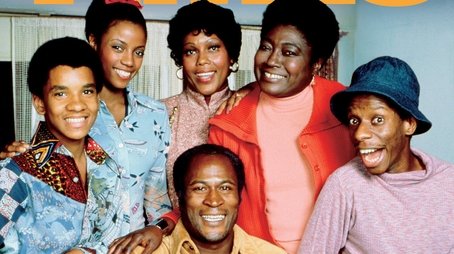
"Good Times" follows the lives of the Evans family, who live in a Chicago housing project. The family consists of Florida Evans, her husband James, their three children: J.J., Thelma, and Michael, and Florida's mother, who occasionally appears. The series begins with the family struggling to make ends meet while maintaining their dignity and love for one another.
In the pilot episode, we see Florida and James discussing their financial struggles. James is determined to find a better job to improve their living conditions. He is proud and wants to provide for his family, but Florida is worried about the stress it puts on him. Their children, J.J., Thelma, and Michael, each have their own personalities and aspirations, which add to the family dynamic. J.J. is the artistic one, often seen painting and joking around, while Thelma is more focused on her education and future, and Michael is the youngest, often questioning the world around him.
As the series progresses, we see James finally land a job, but it is short-lived due to the company going out of business. This event deeply affects the family, especially James, who feels he has failed them. Florida tries to keep the family's spirits up, but the tension of financial instability looms over them. The family often gathers in their small living room, where they share their dreams and frustrations, showcasing their close-knit bond.
In one significant episode, James and Florida have a heated argument about money. James feels emasculated by their financial situation, while Florida tries to remind him that their love is more important than material wealth. This argument leads to a moment of vulnerability where James admits his fears of not being able to provide for his family. The emotional weight of this scene highlights the struggles of many families in similar situations.
The series also explores the children's lives outside the home. J.J. often gets into trouble with his antics, but his charm and humor endear him to the audience. Thelma faces challenges with her relationships, particularly with her boyfriend, who does not always treat her well. Michael, being the youngest, often serves as the voice of reason, challenging societal norms and advocating for social justice, which reflects the show's themes of resilience and hope.
In a pivotal episode, James is offered a job that requires him to move away. The family is torn between the opportunity for a better life and the fear of being separated. After much discussion, James decides to take the job, believing it is the best decision for the family. However, this decision leads to a heartbreaking farewell scene where the family expresses their love and support for one another, showcasing the deep emotional connections they share.
As the series continues, James's character is written out after he dies in a tragic accident. This event profoundly impacts Florida and the children, leading to a period of mourning and adjustment. Florida struggles with her grief while trying to keep the family together. The children each cope in their own ways, with J.J. using humor to mask his pain, Thelma seeking solace in her studies, and Michael becoming more politically active.
In later seasons, Florida begins to date again, which brings its own set of challenges. The children are protective of their mother, and there are moments of tension as they navigate their feelings about her moving on. This storyline adds depth to Florida's character, showing her resilience and desire for happiness despite her loss.
Throughout the series, the Evans family faces various challenges, including issues of race, poverty, and family dynamics. Each episode often ends on a hopeful note, with the family coming together to support one another, reinforcing the show's central theme of love and perseverance in the face of adversity. The series concludes with the family still united, showcasing their strength and the enduring bonds of family.








What is the ending?
The ending of "Good Times" features the family facing a significant challenge as they deal with the loss of their home. The series concludes with a sense of resilience and hope, emphasizing the importance of family and community support.
In the final episode, titled "The End of the Rainbow," the scene opens in the Evans family's modest Chicago apartment. The atmosphere is heavy with tension as the family learns that they are being evicted due to financial struggles. Florida Evans, the matriarch, is visibly distressed, her face etched with worry as she tries to maintain a brave front for her children. James, her husband, is absent, having passed away earlier in the series, leaving Florida to shoulder the burden of the family's hardships.
As the family gathers in the living room, we see J.J., the artistic and carefree son, attempting to lighten the mood with his humor. He cracks jokes, but his laughter is tinged with sadness, reflecting his internal struggle to cope with the impending loss of their home. The camera captures the worried expressions of his siblings: Thelma, the eldest daughter, who is practical and nurturing, and Michael, the youngest son, who is idealistic and often challenges the status quo.
The scene shifts to a heartfelt conversation among the family members. Florida expresses her fears about their future, her voice trembling as she speaks about the possibility of being separated. Thelma reassures her mother, emphasizing the strength of their bond and the importance of sticking together, no matter where they end up. Michael, with his youthful optimism, suggests that they can find a way to overcome this obstacle, embodying the show's recurring theme of resilience in the face of adversity.
As the episode progresses, the family receives support from their neighbors and friends in the community. The scene transitions to a gathering in the apartment, where various characters from previous episodes come together to offer their help. This moment highlights the importance of community and the idea that they are not alone in their struggles. The warmth of the gathering contrasts with the earlier tension, showcasing the love and support that surrounds the Evans family.
In the final moments of the episode, Florida stands in the living room, looking around at her family and friends. The camera captures her emotional state as she reflects on their journey together. Despite the uncertainty of their future, she expresses gratitude for the love they share. The episode closes with a poignant moment as the family embraces, symbolizing their unity and determination to face whatever comes next.
The fate of each main character is left somewhat open-ended, but the emphasis is on their resilience and the strength of their familial bonds. Florida, while facing the challenges of being a single mother, remains a pillar of strength for her children. J.J. continues to pursue his artistic dreams, Thelma is poised to take on new responsibilities, and Michael's idealism suggests he will continue to fight for a better future. The series ends on a hopeful note, reinforcing the message that, despite life's hardships, love and family can help them endure.
Is there a post-credit scene?
"Good Times," the iconic sitcom that aired from 1974 to 1979, does not feature post-credit scenes. The show typically concluded with a closing theme song and credits, focusing on the lives of the Evans family as they navigated the challenges of life in a Chicago housing project. Each episode wrapped up its storyline within the main content, emphasizing the family's resilience, humor, and love for one another without any additional scenes after the credits. The format was consistent throughout its run, maintaining a straightforward approach to storytelling without the inclusion of post-credit sequences.
What challenges does the Evans family face in their daily lives?
The Evans family faces numerous challenges throughout the series, including financial struggles, systemic racism, and the pressures of living in a Chicago housing project. Each episode often highlights their efforts to make ends meet, cope with unemployment, and navigate the complexities of their environment while maintaining their dignity and family bonds.
How does Florida Evans cope with the loss of her husband, James?
Florida Evans experiences profound grief after the death of her husband, James, in the fourth season. Her emotional state is depicted through her struggles to maintain the household, support her children, and find a sense of normalcy. Florida often reflects on her memories with James, showcasing her vulnerability and strength as she tries to keep the family together.
What is the significance of JJ's character and his art?
JJ, the eldest son, is known for his artistic talent and comedic personality. His character often serves as a source of humor and lightness in the series, but he also grapples with the desire to be taken seriously as an artist. His catchphrase, 'Dy-no-mite!', and his flamboyant style reflect his larger-than-life personality, while his struggles with self-identity and ambition add depth to his character.
How does Thelma's character evolve throughout the series?
Thelma, the only daughter in the Evans family, evolves from a naive teenager to a more independent young woman. Her character experiences various romantic relationships, including a significant one with Keith, which showcases her growth and the challenges of young love. Thelma's journey often highlights her aspirations and the balancing act between family responsibilities and personal desires.
What role does Michael play in addressing social issues on the show?
Michael, the youngest son, often serves as the voice of social consciousness in the series. His character is portrayed as intelligent and politically aware, frequently questioning societal norms and advocating for change. Michael's discussions about race, poverty, and justice reflect the show's commitment to addressing real-life issues faced by African American families during the 1970s.
Is this family friendly?
"Good Times," produced in 1974, is generally considered a family-friendly show, but it does address some serious and potentially upsetting themes that may not be suitable for all children or sensitive viewers. Here are some aspects to consider:
-
Poverty and Struggles: The show frequently depicts the challenges of living in a low-income neighborhood, including financial struggles, which may be distressing for some viewers.
-
Death and Loss: Characters experience loss, including the death of loved ones, which can be emotionally heavy and may be difficult for younger audiences to process.
-
Racial Issues: The series tackles issues of racism and discrimination, which can be intense and may require context for younger viewers to understand.
-
Domestic Conflict: There are scenes of conflict within the family, including arguments and disagreements, which may be unsettling for some children.
-
Violence and Crime: The environment in which the characters live sometimes includes references to crime and violence, which could be alarming for sensitive viewers.
-
Substance Abuse: There are occasional references to drug use and its impact on the community, which may not be appropriate for all audiences.
While "Good Times" offers valuable lessons about resilience, family, and community, these themes may require parental guidance for younger viewers.