
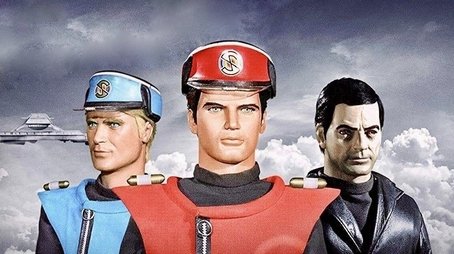


Popular
What is the significance of Captain Scarlet's ability to regenerate after death?
How does Captain Scarlet's relationship with Captain Blue evolve throughout the series?
What role does the Mysterons' threat play in the development of the plot?
What is the significance of the character of Colonel White in the series?
How do the Mysterons' methods of attack reflect their motivations?
Should I watch it?
Ask Your Own Question

What is the plot?
In the opening sequence of "Captain Scarlet and the Mysterons," a space probe is sent to Mars by the Earth's World Security Organization (WSO). The probe encounters a mysterious force, the Mysterons, who are revealed to be a sentient race capable of recreating objects and people. The Mysterons declare war on Earth, vowing to destroy it. The probe is destroyed, and the Mysterons take control of Captain Scarlet, a WSO agent, using him as their agent on Earth.
Captain Scarlet, now under the influence of the Mysterons, returns to Earth and attempts to assassinate Colonel White, the head of the WSO. However, during the assassination attempt, Scarlet is shot by a fellow agent, Captain Blue, but instead of dying, he regenerates due to the Mysterons' powers. This regeneration process reveals Scarlet's new abilities, including near invulnerability and the capacity to heal from fatal injuries.
Following this event, Captain Scarlet is taken into custody by the WSO. Colonel White, realizing that Scarlet is now a double agent, decides to use him to infiltrate the Mysterons. Scarlet, despite his Mysteron control, retains some of his original personality and loyalty to the WSO. He is conflicted but ultimately agrees to help thwart the Mysterons' plans.
The Mysterons launch their first major attack by recreating a Mysteron version of a prominent scientist, Dr. Fawn, who is tasked with sabotaging a vital WSO project. Captain Scarlet, along with Captain Blue and other agents, must track down the Mysteron version of Dr. Fawn. They engage in a tense confrontation at a research facility, where Scarlet's knowledge of the Mysterons proves invaluable. The agents manage to stop the Mysteron version of Dr. Fawn before he can complete his mission.
In subsequent episodes, the Mysterons continue their campaign against Earth, employing various tactics and recreating different individuals. Each time, Captain Scarlet and Captain Blue work together to uncover the Mysterons' plans. They face numerous challenges, including a Mysteron-controlled aircraft and a series of deadly traps set by the Mysterons.
As the series progresses, the emotional toll on Captain Scarlet becomes evident. He grapples with his dual identity as both a WSO agent and a Mysteron agent. His relationships with his fellow agents, particularly Captain Blue, are tested as they navigate the dangers posed by the Mysterons. Scarlet's determination to protect Earth and his comrades drives him to take increasingly risky actions.
In a climactic confrontation, the Mysterons attempt to destroy a major city using a bomb hidden in a Mysteron-controlled vehicle. Captain Scarlet and Captain Blue race against time to locate and defuse the bomb. They engage in a high-stakes chase, showcasing their skills and teamwork. Ultimately, they succeed in neutralizing the threat, but not without sustaining injuries.
The series concludes with Captain Scarlet continuing to battle the Mysterons, accepting his role as a protector of Earth despite the challenges he faces. His journey reflects the ongoing struggle between the WSO and the Mysterons, with each episode presenting new threats and moral dilemmas. The final scenes emphasize Scarlet's resilience and commitment to his mission, leaving the door open for future confrontations with the Mysterons.








What is the ending?
In the final episode of "Captain Scarlet and the Mysterons," titled "The Inquisition," Captain Scarlet and his fellow Spectrum agents face a dire situation as they confront the Mysterons' latest plot. The episode culminates in a tense showdown where Scarlet, despite being a Mysteron agent himself, fights against the Mysterons' control. The story concludes with the agents successfully thwarting the Mysterons' plans, but the battle against them continues, leaving the fate of the world hanging in the balance.
As the episode "The Inquisition" begins, the atmosphere is thick with tension. Spectrum agents are on high alert, aware that the Mysterons have once again targeted Earth. The scene opens in the Spectrum headquarters, where Captain Scarlet, a man of unwavering resolve, is briefed on the latest threat. His determination is palpable; he knows the stakes are high, and the Mysterons are relentless in their pursuit of destruction.
The narrative shifts to a darkened room where the Mysterons, with their eerie, disembodied voices, plot their next move. They reveal their intention to take control of Captain Scarlet, exploiting his unique connection to their technology. The agents are unaware of the full extent of the Mysterons' plan, but the tension is mounting as they prepare for the inevitable confrontation.
As the story unfolds, Captain Scarlet and his team, including Captain Blue and Colonel White, embark on a mission to intercept the Mysterons' latest weapon. The agents are equipped with advanced technology, and their camaraderie is evident as they strategize and support one another. Scarlet's internal struggle is highlighted; he grapples with the knowledge that he is a Mysteron agent, yet he remains fiercely loyal to Spectrum and his mission.
The scene transitions to a high-stakes encounter where the agents confront the Mysterons' forces. The action is intense, with explosions and gunfire echoing through the air. Scarlet's bravery shines as he leads the charge, his heart racing with the adrenaline of battle. He fights not only for his team but for the future of humanity, embodying the spirit of a true hero.
As the climax approaches, the Mysterons attempt to manipulate Scarlet, trying to turn him against his comrades. The internal conflict within him reaches a boiling point, and he must confront the duality of his existence. In a moment of clarity, he rejects the Mysterons' control, reaffirming his loyalty to Spectrum and his friends. This pivotal moment showcases his strength of character and determination to resist the darkness within.
The final confrontation is a whirlwind of action, with the agents working in unison to dismantle the Mysterons' plans. Scarlet's leadership is crucial as they navigate through the chaos, each agent playing a vital role in the fight. The stakes are higher than ever, and the emotional weight of their mission is felt deeply by all involved.
In the aftermath of the battle, the agents emerge victorious, but the victory is bittersweet. The Mysterons may have been thwarted this time, but the threat they pose remains ever-present. Captain Scarlet, though triumphant, is left with the haunting knowledge that the war against the Mysterons is far from over. His fate, along with that of his fellow agents, is uncertain as they prepare for the challenges that lie ahead.
Colonel White, Captain Blue, and the other agents stand together, united in their resolve to continue the fight. The episode closes with a sense of foreboding, as the Mysterons' ominous presence lingers in the air. The fate of Captain Scarlet is one of resilience; he remains a soldier in the ongoing battle, embodying the hope that humanity can prevail against the forces of darkness. The story ends, but the struggle continues, leaving viewers with a sense of anticipation for what is to come.
Is there a post-credit scene?
Captain Scarlet and the Mysterons, produced in 1967, does not feature post-credit scenes. The episodes typically conclude with a brief recap or a final statement related to the ongoing conflict between Spectrum and the Mysterons, but there are no additional scenes or content after the credits roll. Each episode stands alone, focusing on the narrative of Captain Scarlet's battles against the Mysterons and their attempts to conquer Earth. The storytelling is contained within the episode itself, emphasizing the tension and drama of the main plot without extending into post-credit material.
What is the significance of Captain Scarlet's ability to regenerate after death?
Captain Scarlet's ability to regenerate after death is a central plot element that defines his character and the series' narrative. This ability is a result of his being 'recreated' by the Mysterons, who are extraterrestrial beings capable of manipulating matter. This regeneration grants him superhuman resilience and makes him a key asset in the fight against the Mysterons, as he can survive situations that would be fatal to others. However, this power also brings emotional turmoil, as Scarlet grapples with the implications of his new existence and the loss of his former self.
How does Captain Scarlet's relationship with Captain Blue evolve throughout the series?
Captain Scarlet and Captain Blue share a deep bond that evolves throughout the series. Initially, they are comrades in the fight against the Mysterons, with Captain Blue often taking on a leadership role. As the series progresses, their relationship is tested by the dangers they face and the moral complexities of their missions. Captain Blue's loyalty to Scarlet is unwavering, even as he struggles with the implications of Scarlet's regeneration and the risks it poses. Their friendship is marked by moments of tension, but ultimately, they rely on each other, showcasing a profound sense of trust and camaraderie.
What role does the Mysterons' threat play in the development of the plot?
The Mysterons' threat is the driving force behind the plot of Captain Scarlet and the Mysterons. Their ability to carry out acts of revenge against humanity after an incident on Mars sets the stage for the conflict. Each episode typically revolves around a new Mysteron plot, which often involves the assassination of key figures or the sabotage of important missions. This constant threat creates a sense of urgency and tension, pushing the characters to their limits as they attempt to thwart the Mysterons' plans. The unpredictability of the Mysterons' actions keeps the narrative dynamic and engaging, as the Spectrum organization must adapt to their ever-evolving strategies.
What is the significance of the character of Colonel White in the series?
Colonel White serves as the commanding officer of Spectrum and is a pivotal character in Captain Scarlet and the Mysterons. His leadership style is characterized by a strong sense of duty and responsibility, often placing the safety of his team and the world above all else. He is portrayed as a father figure to his team, particularly to Captain Scarlet and Captain Blue, providing guidance and support. Colonel White's unwavering commitment to the fight against the Mysterons often puts him in difficult positions, forcing him to make tough decisions that weigh heavily on him. His character embodies the themes of sacrifice and leadership, as he navigates the complexities of war against an unseen enemy.
How do the Mysterons' methods of attack reflect their motivations?
The Mysterons' methods of attack are deeply reflective of their motivations, which stem from a desire for revenge against humanity for the destruction of their Martian city. They employ a variety of tactics, including the use of 'recreations' of deceased individuals, which serve to instill fear and confusion among their enemies. Their attacks are often symbolic, targeting figures of authority or technology that represent human advancement. This method not only showcases their advanced capabilities but also highlights their disdain for humanity's perceived arrogance. The Mysterons' actions are calculated and strategic, revealing a complex understanding of human psychology, as they exploit weaknesses and create chaos to achieve their goals.
Is this family friendly?
"Captain Scarlet and the Mysterons," produced in 1967, is generally considered suitable for older children, but it does contain some elements that may be objectionable or upsetting for younger viewers or sensitive individuals. Here are some aspects to consider:
-
Violence and Action: The series features frequent scenes of action and conflict, including gunfire, explosions, and physical confrontations. While the violence is not graphic, it may be intense for some viewers.
-
Death and Resurrection: The central theme involves the Mysterons' ability to kill and then recreate individuals, including Captain Scarlet himself. This concept of death and resurrection may be unsettling for younger audiences.
-
Menacing Villains: The Mysterons are portrayed as a threatening alien force with the ability to manipulate and control others, which could be frightening for sensitive viewers.
-
Tension and Suspense: Many episodes build suspense and tension, with characters in perilous situations. This may evoke anxiety in some children.
-
Dark Themes: The overarching narrative includes themes of betrayal, manipulation, and the struggle between good and evil, which may be complex for younger viewers to fully grasp.
While the show is crafted with a sense of adventure and heroism, these elements may warrant parental guidance for younger audiences.