






Popular
What motivates Nathan Explosion to lead Dethklok despite his often reckless behavior?
How does the character of Pickles the Drummer evolve throughout the series?
What is the significance of the character Toki Wartooth's backstory?
How does the relationship between Skwisgaar Skwigelf and the other band members develop?
What role does the character of Mr. Salacia play in the overarching plot of Metalocalypse?
Should I watch it?
Ask Your Own Question

What is the plot?
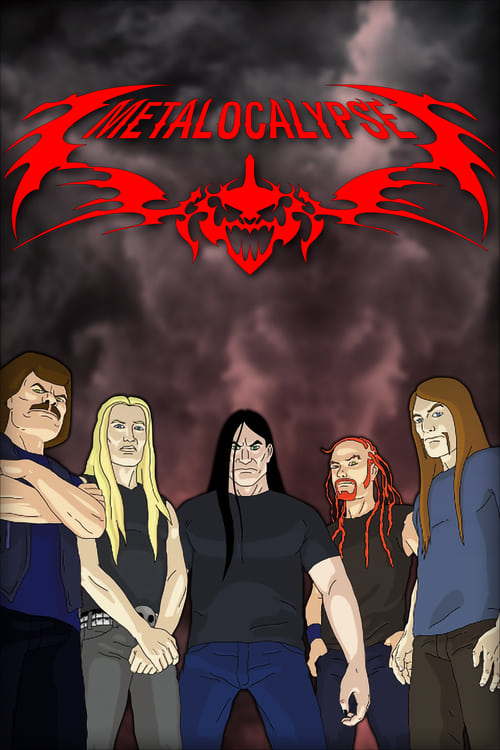
In the beginning of Metalocalypse, we are introduced to Dethklok, a fictional death metal band that has achieved immense popularity and wealth. The band members include Nathan Explosion, the lead vocalist; Skwisgaar Skwigelf, the lead guitarist; Toki Wartooth, the rhythm guitarist; William Murderface, the bassist; and Pickles the Drummer. The series opens with the band performing a concert in front of thousands of fans, showcasing their brutal music style and the chaotic energy of their performances. The sheer scale of their fame is highlighted by the extreme lengths fans go to in order to see them, including a scene where a fan dies in a mosh pit.
Following the concert, the band members are shown in their lavish mansion, where they live a life of excess. However, they are largely oblivious to the consequences of their actions and the world around them. The band is managed by their loyal but inept manager, Charles Foster Offdensen, who tries to keep them in check. The first episode sets the tone for the series, establishing the dark humor and absurdity that will characterize the show.
In the second episode, "Dethfashion," the band is invited to a fashion show, which they initially dismiss. However, they soon realize that their image is crucial to their brand. They decide to create a new look that reflects their music style, leading to a series of humorous and grotesque fashion choices. The episode explores the absurdity of the fashion industry while showcasing the band's lack of understanding of the world outside of their music.
As the series progresses, the band faces various challenges, including rival bands and the consequences of their fame. In "The Metalocalypse Has Begun," the band learns that their music has a direct impact on the world, as their songs are linked to a series of catastrophic events. This revelation leads to a sense of urgency as they grapple with the idea that their art may be causing destruction.
In "The Curse of Dethklok," the band is haunted by a curse that seems to follow them wherever they go. They experience a series of misfortunes, including accidents and injuries, which they attribute to the curse. This episode delves into the superstitions surrounding the band and their music, highlighting their paranoia and fear.
The plot thickens in "Dethwater," where the band discovers that their music is being used to control the minds of their fans. They confront the idea that their art is being manipulated for nefarious purposes, leading to a confrontation with the shadowy organization behind the scenes. This episode emphasizes the band's struggle for autonomy and the consequences of their fame.
In "Murderface," the focus shifts to William Murderface, who grapples with his self-image and the perception of his bandmates. He seeks validation and recognition, leading to a series of comedic yet poignant moments as he tries to prove his worth. This character-driven episode highlights the internal conflicts within the band and their relationships with one another.
As the series continues, the band faces increasingly absurd and dangerous situations, including encounters with supernatural forces and rival bands. In "The Gears," they are forced to confront their own mortality as they face a powerful enemy that threatens their existence. The stakes are raised as they must band together to survive, showcasing their loyalty to one another despite their differences.
In the climactic episodes, the band learns that their music is tied to an ancient prophecy that foretells their rise and fall. They must navigate the complexities of their fame while confronting the darker aspects of their art. The series culminates in a dramatic showdown where the band must face the consequences of their actions and the impact of their music on the world.
Throughout the series, the characters undergo significant development, grappling with their identities and the implications of their fame. The absurdity of their situations is juxtaposed with moments of genuine emotion, creating a unique blend of humor and darkness that defines Metalocalypse. The final events of the series leave the fate of the band uncertain, as they confront the reality of their existence and the legacy they will leave behind.







What is the ending?
In the ending of Metalocalypse, the band Dethklok faces a catastrophic event that leads to their downfall. The final episode culminates in a massive battle against the forces of the Tribunal, resulting in the destruction of the band and their world. The fate of each character is sealed in tragedy, with the band members meeting their demise in various ways, leaving a haunting legacy behind.
As the final episode unfolds, the scene opens with the members of Dethklok--Nathan Explosion, Skwisgaar Skwigelf, Toki Wartooth, William Murderface, and Pickles--gathered in their opulent yet dark mansion. The atmosphere is tense, filled with an impending sense of doom. The Tribunal, a shadowy organization that has been manipulating events from behind the scenes, has finally decided to take action against the band, viewing them as a threat to their control over the world.
The camera pans to Nathan, who is grappling with the weight of leadership. He feels the pressure of the band's fame and the expectations that come with it. His internal struggle is palpable as he tries to rally his bandmates for what is to come. Skwisgaar, ever the narcissist, is more concerned about his image than the impending danger, while Toki, with his childlike innocence, is oblivious to the gravity of the situation. William Murderface, filled with self-loathing, expresses his doubts about their survival, and Pickles, the drummer, tries to lighten the mood with humor, though it falls flat in the face of the looming threat.
As the Tribunal's forces descend upon them, the scene shifts to a chaotic battlefield. The band members are thrust into a fight for their lives, surrounded by an army of soldiers and monstrous creatures. The animation is frenetic, with heavy metal music blaring in the background, amplifying the chaos. Each member of Dethklok showcases their unique skills in combat, but the odds are stacked against them. Nathan fights fiercely, channeling his rage into powerful attacks, while Skwisgaar uses his speed and agility to evade enemies. Toki, despite his fear, shows bravery, and Pickles uses his drumming skills to create distractions.
As the battle rages on, the Tribunal reveals their true power, unleashing devastating weapons that wreak havoc on the battlefield. One by one, the band members begin to fall. Skwisgaar is struck down by a powerful blast, his last moments filled with disbelief. Toki, in a desperate attempt to save his friends, charges into danger but is ultimately overwhelmed. Pickles, trying to protect Nathan, is caught in an explosion, leaving Nathan alone to face the Tribunal's wrath.
In a climactic moment, Nathan confronts the leader of the Tribunal, filled with rage and despair. He realizes that their fight was not just for survival but for the very essence of their music and identity. However, the Tribunal's power proves too great, and Nathan is ultimately defeated, collapsing to the ground as the world around him crumbles.
The final scenes depict the aftermath of the battle. The once-mighty Dethklok is reduced to ruins, their legacy tarnished. The camera lingers on the desolate landscape, a stark reminder of the cost of their fame and the manipulation they faced. The screen fades to black, leaving the audience with a haunting sense of loss and the realization that the world of Dethklok has come to an end.
In the closing moments, a chilling silence envelops the scene, emphasizing the void left by the band's demise. The fate of each character is sealed in tragedy, with Nathan, Skwisgaar, Toki, Pickles, and Murderface all meeting their ends in the chaos, leaving behind a legacy that will echo through the annals of metal history, forever marked by their struggle against the forces that sought to control them.
Is there a post-credit scene?
In the show "Metalocalypse," there are no traditional post-credit scenes that follow the credits in the way many contemporary shows do. However, the series often features humorous and absurd short clips or gags that play during the credits of certain episodes. These moments typically involve the band Dethklok engaging in various antics or showcasing their over-the-top lifestyle, which aligns with the show's satirical take on the heavy metal genre and the absurdity of fame.
For example, in some episodes, you might see the band members in bizarre situations, such as engaging in ridiculous promotional activities or interacting with their fans in exaggerated ways. These scenes serve to enhance the comedic tone of the series and provide additional entertainment after the main storyline has concluded, but they are not structured as traditional post-credit scenes that advance the plot or character arcs. Instead, they are more like comedic vignettes that reflect the band's chaotic and often darkly humorous world.
What motivates Nathan Explosion to lead Dethklok despite his often reckless behavior?
Nathan Explosion, the lead vocalist of Dethklok, is driven by a deep desire for fame and success, which often overshadows his sense of responsibility. His reckless behavior stems from a combination of his passion for heavy metal and a lack of awareness of the consequences of his actions. He is emotionally invested in the band's image and the extreme lifestyle that comes with it, often leading to chaotic situations that he fails to fully comprehend.
How does the character of Pickles the Drummer evolve throughout the series?
Pickles the Drummer starts as a somewhat carefree and party-loving character, often indulging in the rockstar lifestyle. However, as the series progresses, he faces personal struggles, including his relationships with the other band members and his own insecurities. His evolution is marked by moments of vulnerability, particularly in episodes where he confronts his past and the pressures of fame, leading him to seek a deeper connection with his bandmates.
What is the significance of the character Toki Wartooth's backstory?
Toki Wartooth's backstory is significant as it reveals the trauma and hardships he faced growing up in Norway, where he was subjected to abuse and isolation. This history shapes his character, making him both innocent and naive, yet deeply passionate about music. His journey throughout the series highlights themes of friendship and redemption, as he learns to overcome his past and find his place within Dethklok, often serving as the emotional heart of the band.
How does the relationship between Skwisgaar Skwigelf and the other band members develop?
Skwisgaar Skwigelf, the lead guitarist, initially comes off as arrogant and self-centered, often flaunting his talent and beauty. However, as the series unfolds, his interactions with the other band members reveal a more complex character. His relationships are marked by a mix of rivalry and camaraderie, particularly with Toki, whom he often mentors despite their competitive nature. Skwisgaar's character development is highlighted in moments where he shows vulnerability, revealing his insecurities and desire for acceptance within the group.
What role does the character of Mr. Salacia play in the overarching plot of Metalocalypse?
Mr. Salacia serves as a key figure in the background of Dethklok's operations, acting as the band's manager and a representative of the corporate interests that seek to exploit their fame. His character embodies the tension between the band's artistic integrity and the commercial pressures they face. Throughout the series, Mr. Salacia's manipulative nature and hidden agendas create conflicts that challenge the band, often leading to absurd and catastrophic situations that reflect the darker side of the music industry.
Is this family friendly?
"Metalocalypse," produced in 2006, is not considered family-friendly. The show features a variety of potentially objectionable or upsetting scenes and aspects, including:
-
Graphic Violence: The series often depicts extreme violence, including battles, deaths, and gore, which can be unsettling for younger viewers.
-
Dark Humor: The humor is heavily laced with dark themes, including death and destruction, which may not be suitable for sensitive audiences.
-
Adult Themes: The show explores themes such as drug use, sexual content, and existential dread, which are not appropriate for children.
-
Language: There is frequent use of strong language and profanity throughout the series.
-
Morbid Situations: Characters often find themselves in bizarre and morbid situations that can be disturbing or unsettling.
-
Satirical Portrayals: The show satirizes the music industry and celebrity culture, often in a way that can be harsh or cynical.
These elements contribute to a tone that is more suited for mature audiences rather than children or sensitive viewers.