











Popular
What is the significance of the sunflower in Samurai Champloo?
How does Jin's past influence his character development in Samurai Champloo?
What role does Fuu play in the dynamic between Mugen and Jin?
What is the backstory of Mugen and how does it shape his actions throughout the series?
How does the episode 'The Art of Altercation' highlight the differences between Mugen and Jin?
Should I watch it?
Ask Your Own Question

What is the plot?
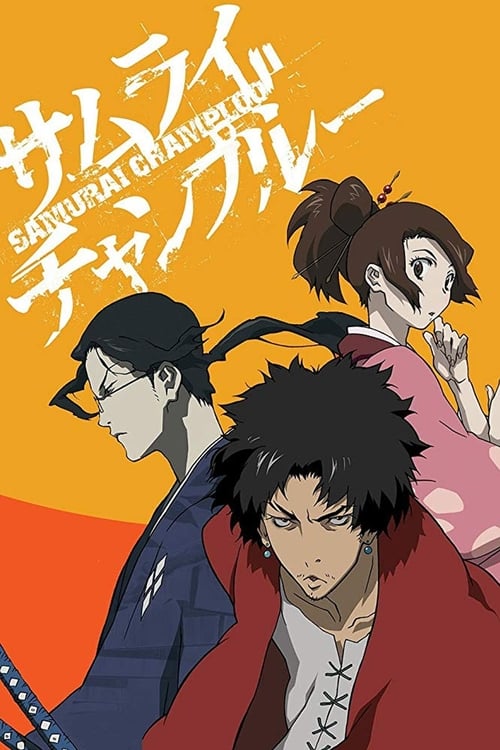
In the opening scene of Samurai Champloo, we are introduced to a young woman named Fuu, who works in a tea house. One day, she is confronted by a group of rowdy samurai who attempt to harass her. In the chaos, she is saved by Mugen, a wild and unpredictable swordsman with a unique fighting style that combines acrobatics and street fighting. Mugen's unorthodox methods quickly dispatch the samurai, but his actions draw the attention of the local authorities. As he escapes, he inadvertently sets fire to the tea house, leading to a series of events that force him to flee.
Meanwhile, another skilled swordsman, Jin, arrives at the scene. He is calm and composed, contrasting sharply with Mugen's chaotic nature. Jin engages in a duel with Mugen, and their fight is intense, showcasing their respective fighting styles. The duel is interrupted when the authorities arrive, and both Mugen and Jin are captured. Fuu, seeing an opportunity, decides to rescue them. She sneaks into the prison where they are held and manages to free them, convincing them to help her find a samurai who smells of sunflowers.
The trio sets off on their journey, with Fuu acting as the mediator between the two warriors, who are often at odds due to their differing personalities. Their first stop is a town where they encounter a group of bandits. Mugen and Jin reluctantly team up to fight the bandits, showcasing their skills in a well-coordinated battle. After defeating the bandits, they learn that Fuu's quest is to find her father, who disappeared when she was a child.
As they continue their journey, they face various challenges, including a confrontation with a group of samurai who are hunting Mugen for his past crimes. In a tense standoff, Mugen's reckless nature leads to a fight, and Jin is forced to step in to help him. The fight is brutal, with both Mugen and Jin showcasing their skills against the samurai. They manage to escape, but not without sustaining injuries.
The group then travels to a village plagued by a mysterious illness. Fuu takes it upon herself to help the villagers, while Mugen and Jin are initially skeptical. However, they soon find themselves drawn into the conflict when they discover that the illness is caused by a corrupt official. Mugen's impulsive nature leads him to confront the official directly, resulting in a fierce battle. Jin, ever the strategist, devises a plan to take down the official's guards, allowing Mugen to face the official one-on-one.
As they continue their journey, they encounter a former friend of Fuu's father, who provides them with clues about his whereabouts. This leads them to a confrontation with a group of skilled fighters who are also searching for Fuu's father. The fight is intense, with Mugen and Jin working together to take down their opponents. However, they are ultimately outnumbered and forced to retreat.
The trio's journey takes them to a festival where they encounter a group of performers. Fuu is drawn to the festivities, but Mugen and Jin remain wary. During the festival, they learn that Fuu's father may be involved with the performers. Mugen's jealousy of Jin's calm demeanor leads to a confrontation between the two, but they are interrupted by an attack from a rival group. The ensuing battle is chaotic, with Mugen and Jin fighting side by side, showcasing their growth as a team.
As they draw closer to finding Fuu's father, they face increasingly dangerous foes, including a powerful samurai who has a personal vendetta against Mugen. This samurai challenges Mugen to a duel, and the fight is brutal and emotionally charged. Mugen's reckless nature is put to the test as he fights for his life, while Jin watches, torn between his loyalty to Mugen and his desire to protect Fuu.
In the climax of their journey, they finally locate Fuu's father, only to discover that he has become a different man, consumed by his past. Fuu is heartbroken as she confronts him, and the emotional weight of their reunion leads to a confrontation with the samurai who has been pursuing them. Mugen and Jin step in to protect Fuu, leading to a final showdown that tests their skills and resolve.
The series concludes with the trio reflecting on their journey. Fuu has grown stronger and more independent, while Mugen and Jin have developed a deeper understanding of each other. The final scenes depict their paths diverging, with Fuu setting off to forge her own destiny, while Mugen and Jin continue their journey as wandering samurai, forever changed by their experiences together.








What is the ending?
In the ending of Samurai Champloo, Mugen, Jin, and Fuu reach their final destination, where Fuu hopes to find the samurai who smells of sunflowers. After a series of confrontations, Mugen and Jin face off against each other in a duel, leading to a tragic conclusion. Ultimately, Fuu is left alone, reflecting on her journey and the bonds formed along the way.
As the final episodes of Samurai Champloo unfold, the trio of Fuu, Mugen, and Jin find themselves nearing the end of their journey. They arrive in a small town where Fuu believes she will finally find the samurai who smells of sunflowers. The atmosphere is tense, filled with anticipation and a sense of closure. Fuu's eyes shine with hope, but there is an underlying current of uncertainty as she leads Mugen and Jin through the streets.
Scene breaks reveal the emotional weight of their journey. Fuu, who has grown from a naive girl into a determined young woman, is eager to fulfill her quest. Mugen, with his brash and impulsive nature, is torn between his loyalty to Fuu and his complex relationship with Jin. Jin, the stoic and disciplined swordsman, grapples with his own sense of honor and the bond he has formed with his companions.
As they search for the elusive samurai, tensions rise between Mugen and Jin. Their rivalry, which has simmered throughout their travels, reaches a boiling point. The two men, each representing different philosophies of life and combat, find themselves unable to coexist peacefully. The atmosphere thickens with unspoken words and unresolved conflicts, leading to a fateful confrontation.
In a secluded area, the two warriors face off in a duel. The clash of their swords echoes through the air, a symphony of steel that reflects their inner turmoil. Mugen fights with wild abandon, his movements unpredictable and fierce, while Jin counters with calculated precision, embodying the discipline of a true samurai. The fight is not just a physical battle; it is a culmination of their conflicting ideologies and the emotional stakes of their journey together.
As the duel intensifies, Fuu watches from a distance, her heart heavy with the realization that her quest has led to this moment of violence between her two closest companions. She calls out to them, pleading for them to stop, but her voice is drowned out by the sound of clashing swords. The fight reaches its climax when Mugen, in a moment of desperation, lands a fatal blow on Jin. Time seems to slow as Jin falls to the ground, his expression a mix of surprise and acceptance.
In the aftermath, Mugen stands over Jin, panting heavily, the weight of his actions crashing down upon him. Fuu rushes to Jin's side, her eyes filled with tears as she cradles his head in her lap. Jin, with his last breaths, expresses his gratitude to Fuu and Mugen, acknowledging the bond they shared despite the conflict. His final words resonate with a sense of peace, as he accepts his fate.
With Jin's death, the emotional landscape shifts dramatically. Mugen, now burdened with guilt and sorrow, realizes the cost of their journey. Fuu, heartbroken and alone, is left to confront the reality of her quest. The samurai who smells of sunflowers remains an elusive figure, a symbol of her lost dreams and the friendships that have been irrevocably altered.
In the closing scenes, Fuu stands at the edge of a field, the sun setting behind her, casting a golden hue over the landscape. She reflects on her journey, the laughter, the struggles, and the bonds formed with Mugen and Jin. The weight of loss hangs heavy in the air, but there is also a sense of resilience. Fuu, now a woman shaped by her experiences, walks away from the battlefield, carrying the memories of her companions with her.
The series concludes with a poignant silence, leaving viewers to ponder the complexities of friendship, the inevitability of conflict, and the bittersweet nature of journeys that shape who we are. Each character's fate is sealed in the choices they made, and the story of Samurai Champloo closes with a haunting reminder of the fragility of life and the enduring impact of those we hold dear.
Is there a post-credit scene?
Samurai Champloo does not have a post-credit scene. The series concludes with its final episode, "Evanescent Encounter," which wraps up the journey of the main characters: Mugen, Jin, and Fuu. The ending is poignant and reflective, focusing on the themes of friendship, loss, and the passage of time. After the last episode, there are no additional scenes or content that follow the credits. The series leaves viewers with a sense of closure regarding the characters' arcs, emphasizing the bittersweet nature of their adventures together.
What is the significance of the sunflower in Samurai Champloo?
The sunflower serves as a crucial symbol throughout the series, particularly representing the journey of the main characters. It is tied to the character of Mugen, who has a deep connection to the sunflower field from his past. The sunflower symbolizes hope and the fleeting nature of life, reflecting the characters' struggles and aspirations as they search for their own paths.
How does Jin's past influence his character development in Samurai Champloo?
Jin's past as a samurai trained in the strict traditions of the samurai code heavily influences his character. His experiences, including the loss of his master and the brutal world he navigates, create a sense of internal conflict. Jin often grapples with his sense of honor versus the chaotic world around him, leading to moments of introspection and growth as he learns to adapt to the unpredictability of his journey with Mugen and Fuu.
What role does Fuu play in the dynamic between Mugen and Jin?
Fuu acts as the emotional anchor of the trio, balancing the contrasting personalities of Mugen and Jin. Her determination to find the samurai who smells of sunflowers drives the plot forward, while her kindness and optimism often diffuse the tension between the two men. Fuu's presence challenges Mugen and Jin to confront their own flaws and insecurities, ultimately fostering a bond that transcends their initial animosity.
What is the backstory of Mugen and how does it shape his actions throughout the series?
Mugen's backstory is rooted in his upbringing on the fringes of society, where he learned to fight and survive in a lawless environment. His wild, unpredictable fighting style reflects his rebellious nature and disdain for authority. Mugen's past influences his impulsive decisions and his struggle to find a place in a world that often feels constricting. His journey with Jin and Fuu forces him to confront his past and consider the consequences of his actions.
How does the episode 'The Art of Altercation' highlight the differences between Mugen and Jin?
In 'The Art of Altercation,' the contrasting fighting styles and philosophies of Mugen and Jin are put on full display. Mugen's chaotic, instinctual approach to combat clashes with Jin's disciplined, calculated techniques. This episode not only showcases their physical differences but also emphasizes their differing worldviews. Mugen's carefree attitude towards life and combat is juxtaposed with Jin's adherence to tradition and honor, leading to a deeper exploration of their characters and the tensions that arise from their partnership.
Is this family friendly?
Samurai Champloo, while visually stunning and rich in storytelling, contains several elements that may not be suitable for children or sensitive viewers. Here are some potentially objectionable aspects:
-
Violence: The series features frequent sword fights, battles, and graphic depictions of violence. Characters often engage in intense combat, leading to injuries and deaths that are portrayed in a stylized manner.
-
Blood and Gore: Many fight scenes include bloodshed, with characters sustaining visible wounds. The depiction of blood can be graphic at times, which may be unsettling for younger viewers.
-
Mature Themes: The show explores complex themes such as revenge, loss, and existential struggles. These themes may be difficult for younger audiences to fully grasp or process.
-
Language: There are instances of strong language and profanity throughout the series, which may not be appropriate for children.
-
Sexual Content: Some episodes contain suggestive themes, innuendos, and scenes that imply sexual situations, which may be inappropriate for younger viewers.
-
Substance Use: Characters are occasionally shown drinking alcohol or engaging in other forms of substance use, which may not be suitable for children.
-
Emotional Turmoil: The characters experience significant emotional struggles, including feelings of loneliness, betrayal, and despair, which could be distressing for sensitive viewers.
Overall, while Samurai Champloo is a critically acclaimed series with deep character development and artistic merit, it contains elements that may not be family-friendly. Viewer discretion is advised.