


Popular
What are the main character Sharkey's motivations throughout the series?
How does Sharkey's relationship with his crew evolve over the series?
What role does the character of Seaman McHale play in the series?
What are some key comedic moments involving Sharkey and his superior officers?
How does the character of Gunner's Mate Bingham contribute to the show's dynamics?
Should I watch it?
Ask Your Own Question

What is the plot?
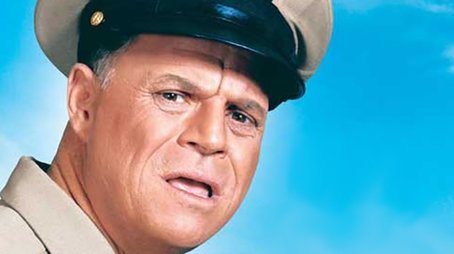
C.P.O. Sharkey begins with Chief Petty Officer (C.P.O.) Sharkey, played by Don Rickles, who is a tough and often abrasive leader in the U.S. Navy. The series is set aboard a naval training ship, where Sharkey is responsible for training a group of new recruits. The show opens with Sharkey addressing his recruits, establishing his no-nonsense attitude and his penchant for using humor to mask his frustrations. He often finds himself at odds with the recruits, who are a mix of personalities, each bringing their own quirks and challenges.
In the first episode, Sharkey is introduced to his new recruits, including the eager but naive Seaman Tinker, who is enthusiastic about military life but often finds himself in over his head. Sharkey's interactions with Tinker set the tone for their relationship, as Sharkey frequently berates him while also showing a begrudging fondness. The recruits are shown struggling with the rigors of military training, and Sharkey's tough love approach is evident as he pushes them to their limits.
As the episode progresses, Sharkey faces a challenge when a new recruit, Seaman McHale, arrives. McHale is confident and somewhat cocky, which immediately puts him at odds with Sharkey. The tension escalates when McHale questions Sharkey's authority in front of the other recruits, leading to a confrontation. Sharkey, feeling undermined, decides to teach McHale a lesson by assigning him extra duties, which only fuels McHale's rebellious spirit.
In a pivotal scene, Sharkey organizes a training exercise that involves a mock battle scenario. The recruits are split into teams, and Sharkey takes on the role of the commanding officer. During the exercise, McHale's team devises a clever strategy that catches Sharkey off guard. This unexpected turn of events forces Sharkey to confront his own shortcomings as a leader, as he realizes that he may have underestimated the recruits' abilities.
Following the training exercise, Sharkey's frustration boils over, and he confronts McHale directly. The two engage in a heated argument, with Sharkey accusing McHale of being a show-off and McHale retorting that Sharkey is out of touch with the new generation of sailors. This confrontation serves as a turning point for both characters, as Sharkey begins to reflect on his leadership style and McHale starts to see Sharkey as more than just a strict authority figure.
As the episode nears its climax, Sharkey decides to hold a morale-boosting event for the recruits, hoping to foster camaraderie among them. He organizes a talent show, encouraging the recruits to showcase their skills. The event is filled with comedic moments, as each recruit presents their unique talents, ranging from singing to magic tricks. Sharkey, initially skeptical, finds himself enjoying the performances and begins to bond with the recruits.
In the final act, tensions rise again when McHale's performance in the talent show draws attention and admiration from the other recruits. Sharkey, feeling overshadowed, confronts McHale once more, leading to a moment of vulnerability where Sharkey admits he is struggling to adapt to the changing dynamics of military life. McHale, in turn, acknowledges Sharkey's experience and the importance of his leadership.
The episode concludes with a newfound respect between Sharkey and McHale, as they shake hands, signaling a truce. Sharkey realizes that he can learn from his recruits, while McHale understands the value of Sharkey's guidance. The camaraderie among the recruits is solidified, and Sharkey's character development is evident as he embraces a more balanced approach to leadership. The closing scene features Sharkey humorously reflecting on the day's events, setting the stage for future episodes filled with similar challenges and growth.









What is the ending?
The ending of C.P.O. Sharkey features a comedic resolution where Sharkey, after a series of misadventures and misunderstandings, manages to bring his crew together, showcasing their growth and camaraderie. The episode concludes with a light-hearted moment that reinforces the bond between Sharkey and his men.
As the final episode of C.P.O. Sharkey unfolds, the scene opens in the familiar confines of the barracks, where the air is thick with tension. Sharkey, played by Don Rickles, is pacing back and forth, his brow furrowed with concern. He has just received news that a high-ranking officer is coming to inspect the base, and he feels the weight of responsibility on his shoulders. His internal struggle is palpable; he wants to impress the officer but is also aware of the antics of his crew, which could jeopardize everything.
The camera shifts to the crew, who are gathered in a corner, whispering and plotting their next prank. They are a motley group, each with distinct personalities: the bumbling but lovable Seaman McHale, the overly serious Seaman McGowan, and the laid-back Seaman O'Reilly. Their camaraderie is evident, but so is their penchant for mischief. Sharkey, oblivious to their scheming, continues to fret about the impending inspection.
As the day of the inspection arrives, the atmosphere is charged with anticipation. Sharkey stands at attention, his uniform crisp and his demeanor serious. The crew, however, is struggling to maintain their composure, exchanging glances and stifling laughter. The high-ranking officer, a stern-looking Captain, enters the barracks, and Sharkey's anxiety peaks. He tries to maintain order, barking orders at his crew, who are barely able to contain their amusement.
In a series of comedic mishaps, the crew's antics begin to unfold. A misplaced bucket of water spills onto the Captain, causing an uproar of laughter from the crew. Sharkey's face turns crimson as he tries to salvage the situation, but the chaos only escalates. The Captain, initially furious, begins to crack a smile as he witnesses the crew's undeniable bond and their ability to find humor in the most serious of situations.
As the inspection continues, Sharkey realizes that he must embrace the chaos rather than fight against it. He takes a deep breath and decides to join in on the fun, turning the inspection into a light-hearted affair. The crew rallies around him, and together they showcase their unique talents, from singing to slapstick comedy, much to the Captain's surprise.
The episode culminates in a heartwarming moment where the Captain, now fully engaged in the spirit of the barracks, commends Sharkey and his crew for their teamwork and camaraderie. Sharkey, relieved and proud, beams with joy as he realizes that despite the chaos, they have created a memorable experience together.
As the scene fades, the crew gathers around Sharkey, celebrating their victory. Each character shares a moment of reflection, acknowledging their growth and the bond they have formed. Sharkey, once a strict leader, has learned to appreciate the lighter side of life, while the crew has come to respect Sharkey's leadership in a new light.
The episode closes with laughter echoing through the barracks, a testament to the enduring friendships forged in the face of adversity. The final shot lingers on Sharkey, a satisfied smile on his face, as he realizes that his crew is not just a group of misfits but a family. The screen fades to black, leaving viewers with a sense of warmth and camaraderie that defines the essence of C.P.O. Sharkey.
Is there a post-credit scene?
"C.P.O. Sharkey," which aired in 1976, does not feature post-credit scenes. The show, a military comedy starring Don Rickles as Chief Petty Officer Leonard Sharkey, typically concluded its episodes without any additional scenes after the credits rolled. Each episode wrapped up its storyline within the main content, focusing on the comedic interactions and misadventures of Sharkey and his crew. The humor often stemmed from Sharkey's tough-love approach to training his recruits, leading to various humorous situations and character dynamics, but there were no post-credit sequences to extend the narrative beyond the episode's conclusion.
What are the main character Sharkey's motivations throughout the series?
Sharkey, played by Don Rickles, is a Chief Petty Officer in the Navy who is driven by a desire to maintain order and discipline among his crew. His motivations often stem from a mix of personal pride in his position and a genuine care for the young sailors under his command. He struggles with the balance between being a strict authority figure and a mentor, often leading to comedic situations as he navigates the challenges of leadership.
How does Sharkey's relationship with his crew evolve over the series?
Initially, Sharkey's relationship with his crew is marked by a strict, no-nonsense approach, often leading to friction and misunderstandings. However, as the series progresses, moments of vulnerability and humor reveal a more compassionate side of Sharkey. He learns to appreciate the individuality of his crew members, leading to a more supportive and understanding dynamic, even as he maintains his tough exterior.
What role does the character of Seaman McHale play in the series?
Seaman McHale, portrayed by a young actor, serves as a foil to Sharkey's character. He embodies the carefree, rebellious spirit of youth, often challenging Sharkey's authority. Their interactions are filled with comedic tension, as McHale's antics frequently put him at odds with Sharkey's strict rules. However, McHale also represents the potential for growth and learning, as he often teaches Sharkey valuable lessons about flexibility and understanding.
What are some key comedic moments involving Sharkey and his superior officers?
Throughout the series, Sharkey finds himself in a series of humorous predicaments with his superior officers, particularly with Captain McHale. One memorable moment occurs when Sharkey attempts to impress his superiors with a drill, only for it to devolve into chaos due to the crew's antics. These scenes highlight Sharkey's frustration and determination, often leading to slapstick humor that showcases his character's resilience and comedic timing.
How does the character of Gunner's Mate Bingham contribute to the show's dynamics?
Gunner's Mate Bingham, portrayed as a no-nonsense character, often serves as Sharkey's right-hand man and voice of reason. His interactions with Sharkey provide a grounding influence, as he balances Sharkey's impulsive decisions with practical advice. Bingham's deadpan humor and loyalty to Sharkey create a dynamic that adds depth to the series, often leading to moments of camaraderie amidst the chaos of Navy life.
Is this family friendly?
"C.P.O. Sharkey," produced in 1976, is a military comedy series that primarily revolves around the character Chief Petty Officer (C.P.O.) Sharkey, played by Don Rickles, and his interactions with a group of misfit recruits. While the show is generally light-hearted and comedic, there are a few aspects that might be considered objectionable or upsetting for children or sensitive viewers:
-
Military Humor: The humor often includes sarcasm and insults, particularly from Sharkey, which may not be suitable for younger audiences who might not understand the context or the intent behind the jokes.
-
Conflict and Rivalry: The show features themes of rivalry and conflict among the recruits, which can lead to emotional tension. Some scenes may depict bullying or harsh treatment, albeit in a comedic context.
-
Mild Language: There are instances of mild profanity and slang that may not be appropriate for children, reflecting the military setting and the characters' personalities.
-
Emotional Struggles: Characters occasionally deal with feelings of inadequacy, failure, or frustration, which could resonate with sensitive viewers, especially in scenes where Sharkey's tough love approach leads to emotional moments.
-
Stereotypes: The show may include outdated stereotypes or portrayals of certain characters that could be viewed as insensitive by modern standards.
Overall, while "C.P.O. Sharkey" is designed to be a comedic take on military life, these elements may warrant consideration for family viewing, particularly for younger children or those who are sensitive to such themes.