


Popular
What are the main legal cases that Bobby Donnell handles throughout the series?
How does the character of Lindsay Dole evolve over the course of the series?
What is the significance of the character Eugene Young in the series?
How does the relationship between Bobby Donnell and Lindsay Dole develop?
What role does the character of Rebecca Washington play in the firm?
Should I watch it?
Ask Your Own Question

What is the plot?
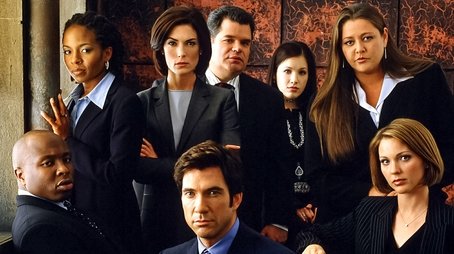
The Practice begins with the introduction of the law firm of Donnell, Young, Dole & Frutt, located in Boston. The firm is primarily focused on criminal defense, and the main characters include Bobby Donnell, the passionate and often conflicted senior partner; Lindsay Dole, a strong-willed attorney who is also Bobby's love interest; Eugene Young, a principled lawyer with a strong moral compass; and Ellenor Frutt, a sharp and ambitious attorney. The series opens with a case involving a young man accused of murder, setting the tone for the ethical dilemmas and personal struggles that will unfold throughout the series.
In the pilot episode, Bobby Donnell takes on the case of a man named David, who is accused of killing his wife. As Bobby investigates, he discovers that David had a troubled marriage and a history of domestic disputes. Bobby's commitment to defending David is tested when he learns that the evidence against him is substantial, including a 911 call where David appears to confess. Despite the overwhelming evidence, Bobby believes in David's innocence and fights to uncover the truth.
As the trial progresses, Bobby faces significant challenges, including pressure from the prosecution and the media. He struggles with his own doubts about David's guilt, which leads to tension between him and his colleagues. Lindsay, who is also working on the case, tries to support Bobby but becomes frustrated with his emotional investment. The courtroom scenes are intense, showcasing the high stakes of the trial and the personal toll it takes on the lawyers involved.
In a pivotal moment, Bobby discovers that the 911 call was manipulated, leading him to believe that David may not be guilty after all. He confronts the prosecution with this new evidence, but they dismiss it, insisting that the case against David is solid. Bobby's determination to prove David's innocence intensifies, and he begins to dig deeper into the victim's past, uncovering secrets that could change the course of the trial.
As the trial nears its conclusion, Bobby faces a moral dilemma when he learns that David had a motive to kill his wife, but he also uncovers evidence that suggests she was involved in an affair. This revelation complicates Bobby's feelings about the case, as he grapples with the idea of defending a man who may have committed a crime, even if it was in a moment of passion. The emotional weight of the case begins to take a toll on Bobby, leading to sleepless nights and strained relationships with his colleagues.
In the final moments of the trial, Bobby delivers a passionate closing argument, appealing to the jury's sense of justice and urging them to consider the possibility of reasonable doubt. The jury deliberates, and the tension in the courtroom is palpable. When the verdict is finally announced, it is a shocking twist: David is found not guilty. The relief is palpable, but Bobby is left with mixed emotions, questioning whether justice was truly served.
Following the trial, the series delves into the personal lives of the characters, exploring their relationships, ethical dilemmas, and the impact of their work on their mental health. Bobby and Lindsay's relationship becomes more complicated as they navigate their feelings for each other amidst the pressures of their careers. Eugene faces his own challenges as he takes on cases that test his moral beliefs, while Ellenor's ambition leads her to make decisions that sometimes conflict with her values.
As the series progresses, various cases are introduced, each highlighting different aspects of the legal system and the personal struggles of the attorneys. The characters face a range of ethical dilemmas, from defending clients they believe to be guilty to dealing with the consequences of their decisions in the courtroom. The emotional stakes are high, and the series does not shy away from depicting the toll that the legal profession takes on its practitioners.
Throughout the seasons, the firm faces internal conflicts, including power struggles and differing philosophies on how to approach cases. Bobby's leadership is often challenged, and he must navigate the complexities of running a law firm while maintaining his integrity. The relationships between the characters evolve, with friendships tested and new alliances formed as they confront the challenges of their profession.
The series culminates in a series of dramatic events that test the characters' loyalties and beliefs. Bobby faces a personal crisis that forces him to reevaluate his priorities, while Lindsay grapples with her own demons. The final episodes bring closure to various storylines, with characters making significant decisions about their futures and the paths they choose to take.
In the end, The Practice leaves viewers with a sense of the complexities of the legal system and the personal sacrifices made by those who work within it. The characters' journeys are marked by triumphs and failures, and the series concludes with a poignant reflection on the nature of justice and the human experience.









What is the ending?
The ending of "The Practice" culminates in a dramatic courtroom showdown where the characters face the consequences of their choices. Bobby Donnell, the lead attorney, grapples with the moral complexities of defending a client who may be guilty. The series concludes with significant character developments, particularly for Bobby, who is left questioning his career and the ethical dilemmas he has faced.
In the final episodes, the tension builds as Bobby Donnell finds himself embroiled in a high-stakes case involving a murder trial. The courtroom is tense, filled with the weight of the evidence presented against their client. Bobby, portrayed with a mix of determination and vulnerability, struggles with the implications of defending someone he suspects may be guilty. His internal conflict is palpable; he is torn between his duty as a defense attorney and his moral compass.
As the trial progresses, the audience witnesses the emotional toll it takes on Bobby. He is seen pacing in his office, running his hands through his hair, and engaging in heated discussions with his colleagues, including the fiercely passionate Lindsay Dole. Lindsay, who has her own battles with the law and her personal life, stands by Bobby, offering support but also challenging his decisions. Their relationship is tested as they navigate the murky waters of justice and personal ethics.
In a pivotal scene, the jury delivers its verdict. The courtroom is silent, the tension thick in the air. Bobby's heart races as he awaits the outcome, his face a mask of anxiety. When the verdict is read, it is a moment of both relief and despair. The client is found not guilty, but the victory feels hollow to Bobby. He grapples with the realization that the system he has devoted his life to may not always serve justice.
As the series draws to a close, Bobby reflects on his journey. He stands alone in the empty courtroom, the echoes of the trial lingering in his mind. The camera captures his contemplative expression, revealing a man who has dedicated himself to defending the accused but is now questioning the very foundation of his career. The weight of his choices hangs heavily on him, and he is left to ponder what it means to be a lawyer in a flawed system.
Lindsay, too, faces her own crossroads. She has fought valiantly alongside Bobby, but the emotional toll of the cases they have taken on begins to wear her down. In a quiet moment, she confides in Bobby about her fears and doubts, revealing her vulnerability. Their bond deepens, but it is clear that both characters are at a turning point in their lives.
The series ends with a sense of ambiguity. Bobby and Lindsay share a moment of connection, but the future remains uncertain. The audience is left with the impression that while they have fought for justice, the battle is far from over. Each character is left to confront their own demons, and the moral complexities of their profession linger in the air, leaving viewers to ponder the true nature of justice and the sacrifices made in its pursuit.
Is there a post-credit scene?
The Practice, which aired from 1997 to 2004, does not feature post-credit scenes in the traditional sense that many modern shows do. Each episode typically concludes with a final scene that wraps up the storylines presented in that episode, but there are no additional scenes that play after the credits roll. The focus remains on the legal and personal dramas faced by the characters, such as Bobby Donnell, Lindsay Dole, and Eugene Young, without the inclusion of post-credit content. The show emphasizes character development and the moral dilemmas of practicing law, leaving viewers with a sense of closure at the end of each episode.
What are the main legal cases that Bobby Donnell handles throughout the series?
Bobby Donnell, portrayed by Dylan McDermott, is the central character and a defense attorney who takes on various challenging legal cases throughout the series. Notable cases include defending a man accused of murder in the pilot episode, representing a woman charged with killing her abusive husband, and taking on a high-profile case involving a police officer accused of excessive force. Each case not only tests his legal skills but also his moral compass, often leading to intense courtroom drama and personal dilemmas.
How does the character of Lindsay Dole evolve over the course of the series?
Lindsay Dole, played by Lisa Gay Hamilton, begins as a fresh associate at the firm, eager to prove herself. As the series progresses, she faces numerous challenges, including her tumultuous relationship with Bobby Donnell and her struggles with the ethical dilemmas of being a defense attorney. Her character evolves from an idealistic lawyer to one who grapples with the complexities of the law and her own personal beliefs, particularly when she defends clients she personally finds morally reprehensible.
What is the significance of the character Eugene Young in the series?
Eugene Young, portrayed by Steve Harris, is a pivotal character who serves as both a colleague and a moral compass for Bobby Donnell. His character is significant for his strong sense of justice and his commitment to defending the underprivileged. Throughout the series, Eugene often finds himself at odds with the legal system and the ethical implications of their cases, which leads to intense internal conflict. His journey reflects the struggles of balancing personal beliefs with professional responsibilities.
How does the relationship between Bobby Donnell and Lindsay Dole develop?
The relationship between Bobby Donnell and Lindsay Dole is complex and fraught with tension. Initially, they share a romantic connection, but as the series progresses, their relationship is tested by personal and professional challenges. Lindsay's ambition and Bobby's commitment to his work often create friction, leading to moments of vulnerability and conflict. Their relationship encapsulates the struggles of balancing love and career in a high-pressure legal environment, culminating in significant emotional scenes that highlight their deep connection and the pain of their misunderstandings.
What role does the character of Rebecca Washington play in the firm?
Rebecca Washington, played by Chyler Leigh, is introduced as a new associate at the firm and quickly becomes a key player in the legal team. Her character brings a fresh perspective and youthful energy, often challenging the established norms of the firm. Throughout her time on the show, Rebecca faces various ethical dilemmas and personal challenges, including her relationships with her colleagues and her struggle to find her place in a male-dominated environment. Her journey reflects the challenges faced by women in the legal profession and adds depth to the firm's dynamics.
Is this family friendly?
"The Practice," which aired from 1997, is a legal drama that often delves into complex and mature themes. While it features compelling storytelling and character development, it may not be considered family-friendly for younger audiences or sensitive viewers due to several potentially objectionable aspects:
-
Legal and Ethical Dilemmas: The show frequently explores morally ambiguous situations, including cases involving murder, assault, and other serious crimes, which may be distressing for some viewers.
-
Violence and Crime: There are scenes depicting violence, including graphic descriptions of crimes and the aftermath, which can be unsettling.
-
Adult Themes: The series addresses themes such as infidelity, addiction, and mental health issues, which may be inappropriate for children.
-
Strong Language: The dialogue sometimes includes strong language and adult conversations that may not be suitable for younger audiences.
-
Emotional Turmoil: Characters often experience intense emotional struggles, including grief, betrayal, and moral conflict, which can be heavy and potentially upsetting.
-
Courtroom Drama: The courtroom scenes can be intense, with high stakes that may evoke anxiety or distress, particularly for younger viewers.
Overall, while "The Practice" is a critically acclaimed series, its mature content and themes make it more suitable for adult audiences.