


Popular
What is the relationship between Albert Steptoe and Harold Steptoe?
How does Harold Steptoe's desire for a better life manifest in the series?
What are some of the key comedic situations that arise from the Steptoe's rag-and-bone business?
How does Albert Steptoe's character contribute to the show's humor?
What role do secondary characters play in the dynamics between Harold and Albert Steptoe?
Should I watch it?
Ask Your Own Question

What is the plot?
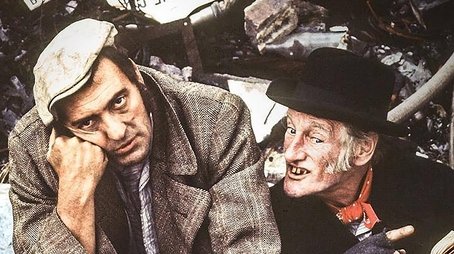
In the first episode of "Steptoe and Son," we are introduced to the main characters, Albert Steptoe and his son Harold. The scene opens in their cluttered and chaotic junkyard, where Albert, a scruffy and cantankerous old man, is busy sorting through piles of junk. Harold, dressed in a smart suit, enters the scene, clearly frustrated with his father's lack of ambition and their living conditions. Harold dreams of a better life and is eager to escape the confines of their junkyard existence.
As the episode progresses, Harold reveals his desire to improve his social status and find a girlfriend. He expresses his frustration with Albert, who seems content with their current lifestyle. Albert, on the other hand, is resistant to change and enjoys the simple pleasures of their life together. This sets up a conflict between the two characters, highlighting Harold's aspirations and Albert's complacency.
The tension escalates when Harold decides to take action to improve their situation. He announces that he has arranged for a date with a woman named Jean, who he believes could be the key to his escape from the junkyard. Albert, feeling threatened by the prospect of Harold leaving him, becomes increasingly antagonistic. He tries to sabotage Harold's plans by making snide comments and reminding him of the realities of their life.
On the day of the date, Harold is nervous but excited. He dresses up and prepares to impress Jean. Albert, however, is determined to ruin the evening. He makes a series of clumsy attempts to embarrass Harold, including showing up unexpectedly and making inappropriate remarks. Despite Albert's efforts, Harold manages to leave for his date, albeit with a heavy heart due to his father's behavior.
The scene shifts to the restaurant where Harold meets Jean. He is anxious but hopeful, trying to present himself as a successful and charming man. However, the evening takes a turn for the worse when Albert unexpectedly arrives at the restaurant, having followed Harold. He disrupts the date by loudly announcing their relationship and making a scene, much to Harold's embarrassment.
Harold's frustration reaches a boiling point, and he confronts Albert in front of Jean. He expresses his deep-seated resentment towards his father for holding him back and ruining his chances at happiness. Albert, feeling hurt and rejected, retaliates by reminding Harold of all the sacrifices he has made for him. This emotional confrontation lays bare the complexities of their relationship, revealing both love and resentment.
After the confrontation, Harold returns home, dejected and angry. He reflects on the evening and the ongoing struggle between his desire for independence and his loyalty to his father. Albert, meanwhile, is left alone in the junkyard, feeling the weight of his son's rejection. The episode concludes with both characters in their respective emotional turmoil, highlighting the ongoing conflict between their dreams and their reality.








What is the ending?
In the final episode of "Steptoe and Son," titled "The Last Will and Testament of Harold Steptoe," Harold Steptoe, the son, learns that his father, Albert Steptoe, has passed away. Harold is left to deal with the aftermath of his father's death, reflecting on their tumultuous relationship and the life they shared. The episode concludes with Harold contemplating his future, feeling a mix of relief and sorrow as he faces the reality of being alone.
As the episode begins, the scene is set in the familiar cluttered surroundings of the Steptoe's junkyard. Harold is seen sorting through old items, a task that feels both mundane and heavy with emotional weight. The atmosphere is thick with the unspoken tension that has characterized their relationship over the years. Harold's demeanor is one of resignation; he is aware that his father's health has been declining, and the inevitability of this moment looms over him.
The scene shifts to Albert, who is in his usual grumpy state, bickering with Harold about the state of their business and the future. Their exchanges are laced with humor, but there is an underlying sadness as Harold tries to assert his independence while Albert clings to his old ways. The audience can sense Harold's frustration, as he yearns for a life beyond the junkyard, yet feels tethered to his father's expectations and the familial bond that has defined his existence.
As the episode progresses, the tension escalates when Albert collapses. Harold rushes to his side, panic etched on his face. The urgency of the moment contrasts sharply with their previous bickering, highlighting the deep-seated love and concern Harold has for his father, despite their constant conflicts. The scene is poignant, filled with a sense of impending loss that hangs heavily in the air.
Following Albert's collapse, the narrative takes a somber turn. Harold is left to grapple with the reality of his father's death. The scene transitions to Harold sitting alone in the junkyard, surrounded by the remnants of their life together. The camera lingers on his face, capturing the myriad of emotions swirling within him--grief, relief, and a profound sense of loneliness. He reflects on the years spent in the shadow of his father's domineering personality, realizing that he is now free yet painfully aware of the void left behind.
In the final moments of the episode, Harold stands amidst the junk, contemplating his future. The weight of his father's legacy presses down on him, and he is faced with the daunting task of carving out a new identity without Albert. The scene fades out, leaving Harold in a state of introspection, symbolizing the complex nature of their relationship and the bittersweet reality of moving forward.
The episode concludes with Harold's fate hanging in the balance. He is left to navigate a world without his father, filled with uncertainty but also the possibility of newfound freedom. The emotional depth of the ending resonates with the audience, encapsulating the essence of "Steptoe and Son"--a story of love, conflict, and the intricate ties that bind family together, even in the face of loss.
Is there a post-credit scene?
"Steptoe and Son," produced in 1962, does not feature post-credit scenes. The show typically concludes with the final scene of the episode, often leaving viewers with a poignant or humorous moment that encapsulates the themes of the episode. The focus is on the dynamic between the two main characters, Albert Steptoe and his son Harold, and their often tumultuous relationship, rather than on additional content after the credits. Each episode wraps up with a strong emotional or comedic punch, making a post-credit scene unnecessary in the context of the show's format.
What is the relationship between Albert Steptoe and Harold Steptoe?
Albert Steptoe is the father of Harold Steptoe, and their relationship is characterized by a mix of love, resentment, and dependency. Albert is a grumpy, old-fashioned rag-and-bone man who often tries to control Harold's life, while Harold, who aspires for a better life and often feels trapped by his father's domineering nature, seeks independence.
How does Harold Steptoe's desire for a better life manifest in the series?
Harold Steptoe's desire for a better life is often depicted through his attempts to engage in romantic relationships and his aspirations for social mobility. He frequently dreams of escaping the drudgery of their rag-and-bone business, which leads to comedic situations where he tries to impress women or pursue new opportunities, only to be thwarted by his father's interference.
What are some of the key comedic situations that arise from the Steptoe's rag-and-bone business?
The rag-and-bone business serves as a backdrop for many comedic situations, such as Harold's attempts to sell unwanted items, the bizarre customers they encounter, and the absurdity of their daily lives. For instance, there are episodes where they find themselves in ridiculous predicaments while trying to collect junk, leading to humorous misunderstandings and conflicts.
How does Albert Steptoe's character contribute to the show's humor?
Albert Steptoe's character contributes significantly to the show's humor through his cantankerous personality, stubbornness, and old-fashioned views. His interactions with Harold often lead to witty banter and physical comedy, as he refuses to adapt to modern life and instead clings to his traditional ways, creating a constant source of conflict and laughter.
What role do secondary characters play in the dynamics between Harold and Albert Steptoe?
Secondary characters, such as neighbors and customers, play crucial roles in highlighting the dynamics between Harold and Albert Steptoe. They often serve as foils to the main characters, providing contrasting perspectives on their lives. For example, characters who represent the outside world often emphasize Harold's aspirations and Albert's resistance to change, adding depth to the central conflict.
Is this family friendly?
"Steptoe and Son," produced in 1962, is a British sitcom that revolves around the lives of a father-and-son duo, Albert and Harold Steptoe, who run a rag-and-bone business. While the show is often humorous, it does contain elements that may not be considered family-friendly for younger audiences or sensitive viewers.
-
Themes of Poverty and Class Struggle: The show frequently addresses issues of poverty, social class, and the struggles of working-class life, which may be distressing for some viewers.
-
Conflict and Tension: The relationship between Albert and Harold is marked by frequent arguments, manipulation, and emotional conflict, which can be intense and may upset sensitive viewers.
-
Dark Humor: The humor often leans towards the darker side, with jokes that may not be suitable for children, including references to death and aging.
-
Physical Comedy: There are instances of slapstick and physical altercations that, while comedic, may be perceived as aggressive or inappropriate for younger audiences.
-
Social Stigmas: The show sometimes touches on themes of social stigma and embarrassment, particularly regarding Harold's aspirations and his father's lack of ambition, which could resonate negatively with some viewers.
Overall, while "Steptoe and Son" is celebrated for its wit and character-driven humor, its themes and comedic style may not be suitable for all children or sensitive individuals.