



Popular
What is the significance of Peter Parker's relationship with Gwen Stacy in The Spectacular Spider-Man?
How does the character of Eddie Brock evolve throughout the series?
What role does the Green Goblin play in Peter Parker's life in The Spectacular Spider-Man?
How does the series portray the character of Mary Jane Watson?
What is the impact of the character of Venom on Spider-Man's journey in the series?
Should I watch it?
Ask Your Own Question

What is the plot?
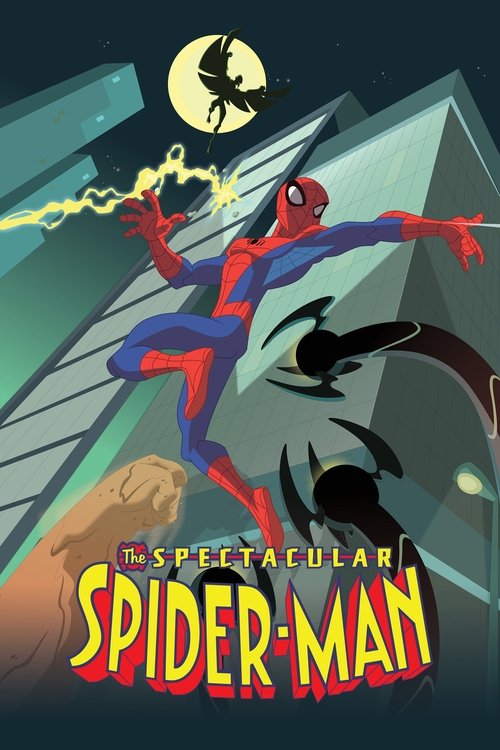
The series begins with Peter Parker, a high school student, who is bitten by a radioactive spider during a field trip. This bite grants him superhuman abilities, including enhanced strength, agility, and the ability to cling to walls. Peter struggles to balance his new powers with his responsibilities as a student and his personal life, particularly his feelings for Mary Jane Watson.
Peter's life becomes more complicated when he discovers that his best friend, Harry Osborn, is the son of billionaire industrialist Norman Osborn. Norman is conducting experiments to create a super-soldier serum, which ultimately leads to his transformation into the Green Goblin after a failed test. The Goblin becomes a major threat to Spider-Man, leading to a series of confrontations between the two.
In the first major conflict, the Green Goblin attacks a school bus full of children, and Spider-Man intervenes, saving them but revealing his identity to the Goblin. This sets off a personal vendetta, as the Goblin targets Peter's loved ones, including Aunt May. Peter's internal struggle intensifies as he grapples with the consequences of his dual life.
As the series progresses, Peter faces various villains, including Doctor Octopus, who is introduced as a brilliant scientist with mechanical tentacles fused to his body after an accident. Octopus seeks revenge on those he blames for his misfortunes, leading to a series of battles with Spider-Man. During their encounters, Peter learns more about responsibility and the impact of his actions on others.
The introduction of the symbiote, an alien organism that bonds with Peter, adds another layer of complexity. Initially, the symbiote enhances Peter's powers, but it also amplifies his darker impulses. This leads to a confrontation with Eddie Brock, a rival photographer who becomes Venom after being rejected by the symbiote. Their battle culminates in a fierce showdown, where Peter must confront the darker side of his personality.
Throughout the series, Peter's relationships evolve. His friendship with Gwen Stacy deepens, creating tension with Mary Jane. The love triangle complicates Peter's emotional state, as he struggles to choose between his feelings for both girls while dealing with the pressures of being Spider-Man.
The series also explores the dynamics of Peter's friendships, particularly with Harry, who becomes increasingly influenced by his father's legacy. Harry's descent into villainy as the New Goblin creates a rift between him and Peter, leading to a heartbreaking confrontation where Peter must fight his best friend.
In the final arc, the series builds towards a climactic battle against the combined forces of the Green Goblin, Doctor Octopus, and Venom. Peter, feeling overwhelmed, must rally his allies, including Gwen and Mary Jane, to confront the villains. The battle takes place in a chaotic showdown that tests Peter's resolve and his commitment to protecting those he loves.
The series concludes with Peter making a significant sacrifice to save his friends and the city. He ultimately chooses to embrace his role as Spider-Man, accepting the loneliness that comes with it. The final scenes depict Peter standing resolute, ready to face whatever challenges lie ahead, embodying the spirit of a true hero.








What is the ending?
In the ending of The Spectacular Spider-Man, Peter Parker faces off against the Green Goblin, who has taken Mary Jane Watson hostage. After a fierce battle, Peter manages to save Mary Jane and defeat the Green Goblin, but not without significant emotional and physical tolls. The series concludes with Peter grappling with the responsibilities of being Spider-Man and the impact it has on his relationships, particularly with Mary Jane and his friends.
As the final episodes unfold, the tension escalates. The scene opens with Peter Parker, now fully aware of the weight of his dual identity as Spider-Man, preparing for the confrontation with the Green Goblin. The atmosphere is thick with anticipation, and Peter's internal struggle is palpable. He knows that this battle is not just about defeating a villain; it's about protecting those he loves.
The scene shifts to the Green Goblin's lair, where Mary Jane is held captive. The Goblin, a twisted reflection of Peter's own struggles, taunts him, revealing his knowledge of Peter's secret identity. This revelation adds a layer of urgency to Peter's mission. The stakes are higher than ever, as the Goblin threatens to harm Mary Jane if Peter does not comply with his demands.
As Peter arrives, the battle begins. The animation captures the fluidity of Spider-Man's movements as he swings into action, dodging the Goblin's attacks with agility and grace. The fight is intense, filled with dramatic moments where Peter narrowly escapes danger. Each punch and web-slinging maneuver is infused with the weight of Peter's determination to save Mary Jane, showcasing his growth as a hero.
During the confrontation, Peter's emotional state fluctuates between fear, anger, and resolve. He reflects on his responsibilities and the sacrifices he has made as Spider-Man. The Goblin, embodying chaos and destruction, represents the darker side of Peter's life, forcing him to confront the consequences of his choices.
In a climactic moment, Peter manages to outsmart the Goblin, using his intelligence and quick thinking to turn the tide of the battle. He frees Mary Jane, and their reunion is filled with relief and gratitude. However, the victory is bittersweet. The Goblin, in a final act of desperation, attempts to escape but ultimately meets his demise, leaving Peter to grapple with the loss of a foe who was once his friend, Harry Osborn.
As the dust settles, Peter and Mary Jane share a moment of vulnerability. They acknowledge the challenges they face in their relationship, understanding that Peter's life as Spider-Man will always cast a shadow over their happiness. The emotional weight of their conversation highlights the sacrifices they must make for each other and the world around them.
The series concludes with Peter standing atop a building, looking out over the city. He reflects on his journey, the friends he has lost, and the responsibilities that come with his powers. The final scene encapsulates the essence of Spider-Man's mantra: "With great power comes great responsibility." Peter's resolve to continue fighting for justice is evident, but so is the understanding that he must navigate the complexities of his personal life alongside his heroic duties.
In the aftermath, Peter's relationships with his friends, including Gwen Stacy and his Aunt May, are left in a state of uncertainty. Each character has been affected by the events that transpired, and while Peter remains committed to his role as Spider-Man, the emotional scars of his battles linger. The series ends on a note of hope, with Peter ready to face whatever challenges lie ahead, embodying the spirit of resilience and determination that defines him as a hero.
Is there a post-credit scene?
In "The Spectacular Spider-Man," there is no traditional post-credit scene as seen in many modern superhero films. However, the series does have a unique storytelling style that often leaves viewers with cliffhangers or hints at future developments within the episodes themselves.
The final episode, "Final Curtain," concludes with a significant moment that sets the stage for potential future conflicts. After the climactic battle with the Green Goblin, Peter Parker reflects on his dual life as Spider-Man and the personal sacrifices he has made. The emotional weight of his responsibilities is palpable as he grapples with the consequences of his choices, particularly regarding his relationships with friends and loved ones.
The series ends on a note of uncertainty and anticipation, with Peter looking out over the city, symbolizing both his role as a protector and the challenges that lie ahead. This moment encapsulates the essence of Spider-Man's journey, emphasizing the ongoing struggle between his personal desires and his commitment to being a hero. While there is no post-credit scene, the conclusion leaves viewers with a sense of hope and the promise of more adventures to come.
What is the significance of Peter Parker's relationship with Gwen Stacy in The Spectacular Spider-Man?
Peter Parker's relationship with Gwen Stacy is central to his emotional development throughout The Spectacular Spider-Man. Initially, Peter is infatuated with Gwen, who represents a sense of normalcy and happiness in his life. Their relationship is marked by moments of joy, such as their shared experiences at school and their budding romance. However, Peter's dual life as Spider-Man creates tension, as he struggles to balance his responsibilities as a hero with his desire to be a good boyfriend. This conflict is poignantly illustrated in episodes like 'Intervention,' where Peter's guilt over his secret life leads to misunderstandings and emotional distance between them. Gwen's eventual discovery of Peter's secret identity adds layers of complexity to their relationship, showcasing themes of trust, sacrifice, and the challenges of love in the face of danger.
How does the character of Eddie Brock evolve throughout the series?
Eddie Brock's evolution in The Spectacular Spider-Man is a compelling arc of jealousy and ambition. Initially introduced as a rival to Peter Parker, Eddie is portrayed as a talented photographer who is envious of Peter's success and popularity. His resentment grows, particularly after Peter's relationship with Gwen Stacy flourishes, leading to feelings of inadequacy. This jealousy culminates in Eddie's transformation into Venom after he bonds with the alien symbiote, which amplifies his darker emotions and desire for revenge against Spider-Man. The series explores Eddie's internal struggle, showcasing his conflict between his human side and the monstrous urges of Venom. In episodes like 'Intervention,' viewers witness Eddie's desperation and anger, making his eventual confrontation with Spider-Man not just a physical battle, but an emotional one as well.
What role does the Green Goblin play in Peter Parker's life in The Spectacular Spider-Man?
The Green Goblin, primarily Norman Osborn, plays a pivotal role in Peter Parker's life, serving as both a formidable adversary and a personal threat. Norman's transformation into the Green Goblin is rooted in his obsession with power and his desire to prove himself, which leads to a tragic downfall. His dual identity creates a complex dynamic with Peter, as Norman is also the father of Harry Osborn, Peter's best friend. This relationship adds emotional stakes to their confrontations, as Peter grapples with the knowledge that he is fighting against the father of someone he cares about deeply. The Green Goblin's manipulations and schemes, particularly in episodes like 'The Night Gwen Stacy Died,' force Peter to confront his own values and the consequences of his actions, highlighting the personal cost of being Spider-Man.
How does the series portray the character of Mary Jane Watson?
Mary Jane Watson's portrayal in The Spectacular Spider-Man is nuanced and multifaceted, showcasing her as a strong, independent character who is not merely a love interest. Initially introduced as a popular and confident girl, Mary Jane is depicted as someone who is aware of her own worth and is not afraid to speak her mind. Her interactions with Peter Parker reveal her depth, as she often challenges him to be more honest and open about his feelings. Throughout the series, particularly in episodes like 'The Uncertainty Principle,' Mary Jane's character evolves as she becomes more involved in Peter's life, demonstrating her loyalty and support. However, her relationship with Peter is complicated by his secret life as Spider-Man, leading to moments of tension and misunderstanding. Mary Jane's resilience and determination to understand Peter's struggles make her a compelling character in her own right.
What is the impact of the character of Venom on Spider-Man's journey in the series?
Venom's impact on Spider-Man's journey in The Spectacular Spider-Man is profound, serving as a dark reflection of Peter Parker's own struggles. The character of Venom, born from Eddie Brock's jealousy and anger, embodies the consequences of unchecked emotions and the dangers of obsession. When Eddie becomes Venom, he not only gains incredible powers but also a deep-seated vendetta against Spider-Man, which forces Peter to confront his own vulnerabilities. The battles between Spider-Man and Venom are not just physical confrontations; they are also psychological, as Venom taunts Peter with his insecurities and fears. Episodes like 'Intervention' highlight the emotional stakes of their conflict, as Peter must grapple with the realization that Venom is a manifestation of his own darker impulses. This struggle ultimately leads to significant character growth for Peter, as he learns to accept his flaws and the responsibilities that come with his powers.
Is this family friendly?
"The Spectacular Spider-Man," produced in 2008, is generally considered family-friendly, but it does contain some scenes and themes that may be potentially objectionable or upsetting for children or sensitive viewers. Here are a few aspects to consider:
-
Violence and Action Sequences: The show features numerous fight scenes between Spider-Man and various villains. While the violence is not graphic, it can be intense, with characters getting injured or in perilous situations.
-
Emotional Turmoil: Characters often face significant emotional challenges, including loss, betrayal, and the struggle to balance personal lives with superhero responsibilities. These themes can be heavy for younger viewers.
-
Villainous Behavior: Some villains display menacing behavior, including threats and intimidation. The portrayal of characters like Venom and the Green Goblin can be frightening due to their aggressive nature.
-
Bullying and Peer Pressure: The series addresses themes of bullying and social dynamics in high school, which may resonate with children but could also be upsetting for those who have experienced similar situations.
-
Moral Dilemmas: Characters frequently confront moral choices that can lead to complex emotional situations, which might be challenging for younger audiences to fully understand.
Overall, while the show is designed for a younger audience and contains positive messages about responsibility and friendship, parents may want to preview episodes to gauge their suitability for their children.