
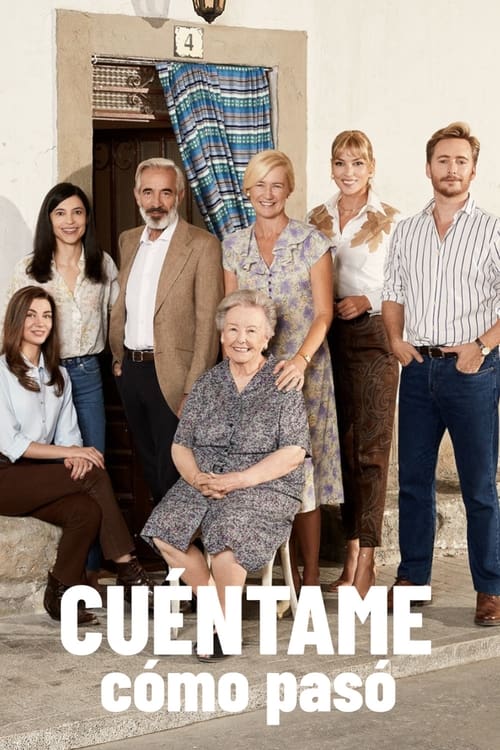










Popular
What are the main challenges faced by Antonio Alcántara in the first season?
How does the character of Mercedes evolve throughout the first season?
What role do the children play in the family dynamics of the Alcántara household?
What significant events impact the Alcántara family in the first season?
How does the show depict the relationship between Antonio and his father, Don Pablo?
Should I watch it?
Ask Your Own Question

What is the plot?
The story begins in Madrid in the early 1960s, focusing on the Alcántara family, particularly Antonio, the father, who works as a civil servant, and his wife, Mercedes, a housewife. The family consists of their three children: the eldest, Toni, a rebellious teenager; the middle child, the sensitive and artistic Inés; and the youngest, the precocious and curious little brother, Carlos. The series opens with the family navigating the complexities of life under the Franco regime, highlighting the social and political tensions of the time.
As the episodes progress, the family faces various challenges. Antonio struggles with his job and the pressures of providing for his family while adhering to the strict societal norms of the era. He often finds himself at odds with his boss, who represents the oppressive regime. Meanwhile, Mercedes deals with the monotony of housework and the expectations placed on her as a woman in a patriarchal society. She yearns for more freedom and often expresses her frustrations to Antonio.
Toni, seeking independence, becomes involved with a group of friends who are politically active and rebellious. He begins to question the status quo and becomes increasingly disillusioned with the regime. His actions lead to conflicts with his father, who wants him to focus on his studies and secure a stable future. This generational clash creates tension within the family, as Toni's desire for change contrasts sharply with Antonio's more conservative views.
Inés, the middle child, grapples with her identity and her aspirations as an artist. She faces societal pressures to conform to traditional gender roles, which frustrates her. Her artistic pursuits often lead her to explore themes of freedom and self-expression, and she finds solace in her friendships with other creative individuals. Inés's journey reflects the struggles of young women during this period, as she seeks to carve out her own path amidst societal expectations.
Carlos, the youngest, provides a lens of innocence and curiosity. His interactions with his siblings and parents often highlight the generational divide and the impact of the political climate on family dynamics. He is fascinated by the world around him and often asks questions that challenge the adults' perspectives, serving as a reminder of the hope for a better future.
As the series unfolds, significant historical events impact the Alcántara family. The political climate becomes increasingly tense, and the family must navigate the repercussions of the regime's actions. Antonio's job becomes more precarious as he is forced to make difficult decisions that affect his family's livelihood. The family's struggles are compounded by the societal changes occurring around them, including the rise of youth culture and the push for greater freedoms.
Throughout the series, the Alcántara family experiences moments of joy and sorrow, love and conflict. They celebrate milestones such as birthdays and weddings, but also face tragedies that test their bonds. The family's resilience is a central theme, as they support one another through the ups and downs of life in a repressive society.
As the seasons progress, the characters evolve, and their relationships deepen. Toni's political activism leads him to confront the authorities, resulting in a series of escalating confrontations that put him at risk. Inés's artistic journey takes her to new heights, but she also faces setbacks that challenge her resolve. Carlos continues to grow, learning from the experiences of his siblings and parents, and begins to understand the complexities of the world around him.
The series culminates in a series of dramatic events that force the Alcántara family to confront their values and beliefs. The political landscape shifts, and the family must decide how to respond to the changing times. Each character faces pivotal moments that define their futures, leading to a resolution that reflects their growth and the enduring strength of family ties.
In the final episodes, the Alcántara family comes together to face the challenges ahead, united by their shared experiences and the love that binds them. The series concludes with a sense of hope for the future, as the characters look toward a new era filled with possibilities, embodying the spirit of resilience and the desire for change that has defined their journey.









What is the ending?
The ending of "Cuéntame cómo pasó" sees the Alcántara family facing the challenges of the early 1970s in Spain. Antonio, the patriarch, continues to navigate the complexities of his job and family life, while his wife, Merche, deals with her own struggles and aspirations. The children, Carlos and Toni, confront their own paths toward adulthood, with Carlos finding his footing in a changing society. The series concludes with a sense of continuity and the enduring bonds of family, despite the societal upheavals around them.
As the final episodes unfold, we find ourselves in the early 1970s, a time of significant change in Spain. The Alcántara family is at the heart of this transformation, and the narrative begins with Antonio, who is grappling with the pressures of his job at the local bank. He is portrayed as a man caught between tradition and the modern world, feeling the weight of responsibility on his shoulders. His internal conflict is palpable; he wants to provide for his family while also yearning for a sense of personal fulfillment.
In the next scene, we see Merche, Antonio's wife, who is increasingly aware of her own desires beyond the domestic sphere. She is depicted as a woman who has sacrificed much for her family, yet she begins to explore her own identity. This exploration leads her to engage in activities that challenge the traditional roles expected of her, showcasing her emotional struggle for independence and self-actualization.
Meanwhile, their son Carlos is navigating the tumultuous waters of adolescence. He is portrayed as a sensitive and thoughtful young man, trying to understand his place in a society that is rapidly changing. His interactions with friends and romantic interests highlight his internal battles with identity and belonging. In one poignant scene, Carlos attends a political rally, which serves as a catalyst for his awakening to the social issues of the time. This moment is significant as it marks his transition from boyhood to a more conscious engagement with the world around him.
Toni, the older brother, is depicted as a rebellious spirit, often clashing with his father over differing views on life and politics. His character embodies the youthful defiance of the era, and his journey reflects the generational divide within the family. In a climactic scene, Toni confronts Antonio about his conservative views, leading to a heated argument that underscores the tension between the old and new ways of thinking. This conflict is not just personal; it symbolizes the broader societal changes occurring in Spain.
As the series approaches its conclusion, the family faces a series of challenges that test their bonds. A significant event occurs when Antonio loses his job, which sends shockwaves through the family. This moment is filled with emotional weight, as it forces each member to confront their fears and insecurities. Antonio's sense of failure is palpable, and Merche's support becomes crucial as they navigate this crisis together.
In the final scenes, we witness a family gathering that serves as a poignant reminder of their unity. Despite the struggles they have faced, the Alcántara family comes together to celebrate their resilience. The atmosphere is filled with a mix of nostalgia and hope, as they reflect on their journey and the changes that lie ahead. Each character's fate is intertwined with the others, showcasing the strength of familial bonds in the face of adversity.
Antonio ultimately finds a new job, symbolizing a fresh start, while Merche continues to pursue her interests, embodying her growth as an individual. Carlos and Toni, having faced their own challenges, emerge with a deeper understanding of themselves and their roles in a changing society. The series concludes with a sense of continuity, leaving viewers with the impression that while the world may change, the essence of family remains a steadfast anchor amidst the turbulence of life.
Is there a post-credit scene?
"Cuéntame cómo pasó," which premiered in 2001, does not feature post-credit scenes. The show typically concludes its episodes without additional content after the credits roll. Instead, it focuses on the narrative arcs and character developments throughout the episodes, immersing viewers in the lives of the Alcántara family during the tumultuous years of Spain's transition to democracy. Each episode wraps up its storylines, leaving viewers with a sense of closure until the next installment.
What are the main challenges faced by Antonio Alcántara in the first season?
In the first season of 'Cuéntame cómo pasó', Antonio Alcántara faces several challenges that reflect the socio-political climate of Spain in the early 1960s. He struggles with the pressures of providing for his family while working as a civil servant, dealing with the bureaucracy and corruption of the Franco regime. Additionally, he grapples with the changing dynamics of his family, particularly the tension with his wife, Mercedes, as they navigate their differing views on modernity and tradition. Antonio's internal conflict is heightened by his desire to maintain a stable home life while also yearning for personal fulfillment.
How does the character of Mercedes evolve throughout the first season?
Mercedes, Antonio's wife, begins the first season as a traditional housewife, embodying the values of the era. However, as the season progresses, she becomes increasingly aware of her own desires and aspirations. Her character evolves as she confronts the limitations placed on her by society and her marriage. She experiences moments of rebellion, such as when she seeks to engage more actively in her children's lives and expresses her opinions more openly. This evolution is marked by her emotional struggles, as she balances her role as a mother and wife with her growing sense of self.
What role do the children play in the family dynamics of the Alcántara household?
The children, especially Toni and Merche, play crucial roles in the family dynamics of the Alcántara household. Toni, the eldest son, embodies the youthful spirit of rebellion against the conservative values of his parents, often clashing with Antonio over his desire for independence and modern ideals. Merche, the younger daughter, represents innocence but also begins to question societal norms as she grows. Their interactions with Antonio and Mercedes highlight the generational divide and the evolving family structure, showcasing the tension between tradition and the emerging modernity of Spain.
What significant events impact the Alcántara family in the first season?
Several significant events impact the Alcántara family in the first season, including the political unrest in Spain, which serves as a backdrop to their personal struggles. The family's financial difficulties become apparent when Antonio faces job-related challenges, leading to stress and tension at home. Additionally, the arrival of new neighbors and the changing social landscape introduce conflicts and opportunities for growth. A pivotal moment occurs when the family must confront their differing views on the future, particularly as Toni begins to explore his identity and beliefs, causing rifts and discussions that shape their relationships.
How does the show depict the relationship between Antonio and his father, Don Pablo?
The relationship between Antonio and his father, Don Pablo, is complex and layered throughout the first season. Don Pablo represents the older generation, steeped in traditional values and expectations. His interactions with Antonio often reveal a mix of admiration and disappointment, as Antonio struggles to meet his father's expectations while also forging his own path. The show depicts moments of tension, such as when Don Pablo criticizes Antonio's choices, juxtaposed with moments of vulnerability where they share their fears and hopes. This dynamic illustrates the generational conflict and the emotional weight of familial expectations.
Is this family friendly?
"Cuéntame cómo pasó" is generally considered family-friendly, but it does contain some themes and scenes that may be sensitive for children or more sensitive viewers. Here are a few aspects to consider:
-
Historical Context: The show is set during the late 1960s and early 1970s in Spain, a time of political tension and social change. Some discussions around the Franco regime and its impact on society may be complex and potentially upsetting.
-
Family Conflicts: The series often portrays realistic family dynamics, including arguments, misunderstandings, and emotional conflicts that can be intense and may resonate with viewers who have experienced similar situations.
-
Social Issues: The show addresses various social issues, including class differences, gender roles, and the struggles of the working class, which may prompt discussions that could be challenging for younger viewers.
-
Romantic Relationships: There are depictions of romantic relationships that include themes of infidelity, heartbreak, and the complexities of love, which may be more suitable for older children or teens.
-
Death and Loss: Characters experience loss and grief throughout the series, which can be emotionally heavy and may be difficult for younger audiences to process.
-
Cultural References: Some cultural references and humor may not be fully understood by younger viewers, potentially leading to confusion or misinterpretation.
Overall, while the show is rich in family values and humor, parents may want to preview episodes to gauge their appropriateness for their children based on individual sensitivities.