


Popular
What is Yancy Derringer's relationship with his sidekick, Pahoo-Ka-Ta-Wah?
How does Yancy Derringer typically resolve conflicts in the series?
What role does the setting of New Orleans play in Yancy Derringer's adventures?
Who are some of the recurring antagonists that Yancy Derringer faces?
What is the significance of Yancy's signature weapon, the derringer pistol?
Should I watch it?
Ask Your Own Question

What is the plot?
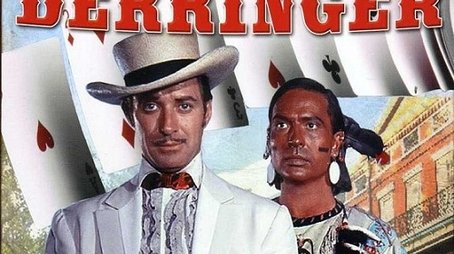
Yancy Derringer, a charming and resourceful man, operates in New Orleans during the 19th century. The series opens with Yancy, dressed in a stylish suit, riding his horse through the vibrant streets of the city. He is known for his quick wit and ability to navigate the complexities of life in a post-Civil War society. Yancy is often seen in the company of his loyal friend, Pahoo-Ka-Ta-Wah, a Native American who serves as his protector and confidant. Their bond is strong, and Pahoo's stoic demeanor contrasts with Yancy's flamboyant personality.
In the pilot episode, Yancy is approached by the local authorities, who inform him of a series of robberies plaguing the city. The robberies are linked to a notorious gang led by a man named "The Baron." Yancy, intrigued by the challenge and motivated by a sense of justice, decides to investigate the matter further. He uses his connections in the city to gather information about the gang's activities, showcasing his resourcefulness and charm.
As Yancy delves deeper into the investigation, he encounters various colorful characters, including a beautiful woman named Madame Francine, who runs a popular gambling house. Yancy is drawn to her, and their flirtation adds a layer of tension to the story. Madame Francine provides Yancy with crucial information about the gang's next target, a wealthy merchant who is rumored to be in possession of a valuable artifact.
Yancy and Pahoo devise a plan to protect the merchant. They set up a trap at the merchant's estate, where they anticipate the gang will strike. The night of the robbery arrives, and Yancy and Pahoo hide in the shadows, waiting for the gang to make their move. As the gang breaks in, a tense confrontation ensues. Yancy and Pahoo spring into action, engaging in a fierce fight with the gang members. The choreography of the fight is dynamic, with Yancy using his agility and quick thinking to outmaneuver the thugs, while Pahoo displays his strength and combat skills.
During the confrontation, Yancy manages to capture The Baron, but not before the gang leader reveals a shocking twist: he has planted explosives throughout the estate. With time running out, Yancy must make a quick decision. He chooses to release The Baron in exchange for information on how to disarm the explosives. The Baron reluctantly agrees, and Yancy learns the location of the detonator.
With Pahoo's help, Yancy races against the clock to disarm the explosives. The tension escalates as they navigate through the estate, dodging gang members who are still trying to thwart their efforts. Yancy's determination and quick thinking shine as he successfully disarms the explosives just in time, saving the merchant and the estate from destruction.
In the aftermath, Yancy and Pahoo reflect on their victory. The gang is apprehended, and order is restored to the city. Yancy's reputation as a hero grows, and he receives gratitude from the merchant and the local authorities. However, the episode ends on a note of uncertainty as Yancy receives a mysterious letter hinting at a new adventure on the horizon, leaving viewers eager for what comes next.







What is the ending?
In the final episode of "Yancy Derringer," titled "The Last of the Big Time," Yancy faces off against a notorious gang of outlaws who threaten New Orleans. With the help of his loyal friend Pahoo, Yancy devises a plan to thwart the gang's criminal activities. The episode culminates in a tense showdown, where Yancy's quick thinking and bravery lead to the capture of the gang members. In the end, Yancy and Pahoo emerge victorious, restoring peace to the city, while Yancy's charm and wit remain intact.
As the episode begins, the sun sets over the vibrant streets of New Orleans, casting long shadows that dance across the cobblestones. Yancy Derringer, dressed in his signature attire, strolls through the bustling market, his keen eyes scanning the crowd. He senses an undercurrent of tension; whispers of a gang terrorizing the local merchants reach his ears. Yancy's internal motivation is clear: he feels a deep responsibility to protect his beloved city and its people.
Scene shifts to a dimly lit tavern where Yancy meets Pahoo, his steadfast companion. Pahoo, a Native American with a stoic demeanor, listens intently as Yancy outlines the threat posed by the gang. The camaraderie between them is palpable; Yancy's playful banter lightens the mood, but the gravity of their mission looms large. Pahoo's unwavering loyalty is evident as he nods in agreement, ready to assist Yancy in any way necessary.
The next scene unfolds in a hidden lair where the gang convenes, plotting their next move. The leader, a ruthless figure with a menacing presence, exudes confidence as he discusses their plans to rob the local bank. The tension in the room is thick, and the stakes are high. The camera captures the gang members' anxious glances, revealing their fear of failure. This moment highlights the contrast between Yancy's bravery and the gang's desperation.
Back in the streets, Yancy and Pahoo gather information from the townsfolk, who share their fears and experiences with the gang. Yancy's charm shines through as he reassures them, promising to take action. His determination is fueled by a sense of justice, and he feels the weight of the community's trust on his shoulders. The emotional stakes rise as Yancy reflects on the impact of the gang's reign of terror on the lives of innocent people.
As night falls, Yancy and Pahoo prepare for the confrontation. They devise a clever plan to lure the gang into a trap. The scene is tense, filled with anticipation as they position themselves strategically. The atmosphere is electric, and the audience can feel the adrenaline coursing through Yancy's veins. He knows that failure is not an option; the safety of New Orleans hangs in the balance.
The climactic showdown occurs in a deserted warehouse, where the gang arrives, unsuspecting of the trap laid for them. Yancy and Pahoo spring into action, engaging in a fierce battle. The choreography of the fight is dynamic, showcasing Yancy's agility and Pahoo's strength. Each punch and kick is executed with precision, and the stakes escalate as the gang fights back fiercely. The tension peaks as Yancy faces off against the gang leader, their confrontation a battle of wits and strength.
In a moment of sheer determination, Yancy outsmarts the leader, using his quick thinking to turn the tide of the fight. The gang members are apprehended, and the sense of victory is palpable. Yancy stands tall, a hero in the eyes of the townsfolk, while Pahoo stands by his side, a silent guardian. The camera captures their expressions of relief and triumph, solidifying their bond as partners in justice.
As the episode concludes, the streets of New Orleans are once again filled with laughter and life. Yancy and Pahoo walk through the market, greeted by grateful townspeople. Yancy's charm is on full display as he exchanges pleasantries, embodying the spirit of the city he loves. The final scene fades out with Yancy and Pahoo sharing a light-hearted moment, their friendship stronger than ever.
In the end, Yancy Derringer's fate is one of continued adventure and heroism, while Pahoo remains his loyal companion, ready for whatever challenges lie ahead. The episode closes with a sense of hope and resilience, emphasizing the importance of friendship, bravery, and the fight for justice in the face of adversity.
Is there a post-credit scene?
The television show "Yancy Derringer," which aired in 1958, does not feature post-credit scenes. The episodes typically concluded with a final scene that wrapped up the story, but there were no additional scenes or credits that followed. Each episode focused on the adventures of Yancy Derringer, a charming and resourceful gambler in post-Civil War New Orleans, and concluded with a sense of resolution to the plot presented. The format of the show adhered to the standard practices of the time, which did not include post-credit sequences as a storytelling device.
What is Yancy Derringer's relationship with his sidekick, Pahoo-Ka-Ta-Wah?
Yancy Derringer, portrayed by Jock Mahoney, shares a deep bond with his sidekick Pahoo-Ka-Ta-Wah, a Native American played by X Brands. Their relationship is built on mutual respect and loyalty, with Pahoo often acting as Yancy's moral compass. Pahoo's wisdom and skills complement Yancy's charm and resourcefulness, creating a dynamic partnership that navigates the challenges of New Orleans in the 19th century.
How does Yancy Derringer typically resolve conflicts in the series?
Yancy Derringer often resolves conflicts through a combination of wit, charm, and physical prowess. He frequently finds himself in dangerous situations, but instead of resorting to violence, he uses his intelligence and charisma to outsmart his adversaries. This approach not only showcases his cleverness but also highlights his desire to avoid unnecessary bloodshed, reflecting his character's moral code.
What role does the setting of New Orleans play in Yancy Derringer's adventures?
The setting of New Orleans is integral to Yancy Derringer's adventures, providing a vibrant backdrop filled with intrigue, culture, and danger. The city's unique blend of French, Spanish, and Creole influences creates a rich tapestry for Yancy's escapades, from the bustling streets to the mysterious bayous. The atmosphere of the city enhances the narrative, as Yancy navigates through its colorful characters and treacherous situations.
Who are some of the recurring antagonists that Yancy Derringer faces?
Throughout the series, Yancy Derringer encounters a variety of recurring antagonists, including corrupt politicians, ruthless criminals, and rival treasure hunters. These characters often embody the lawlessness of the era, challenging Yancy's sense of justice. Notable villains include the cunning and manipulative figures who seek to exploit the chaos of post-Civil War New Orleans, forcing Yancy to confront both their schemes and his own moral dilemmas.
What is the significance of Yancy's signature weapon, the derringer pistol?
Yancy Derringer's signature weapon, the derringer pistol, symbolizes his quick thinking and resourcefulness. The small, easily concealable firearm reflects Yancy's character--he is a man who prefers to rely on his wits and charm, but is always prepared to defend himself when necessary. The derringer becomes a crucial tool in his adventures, often used in tense situations where a show of force is required, yet it also represents the duality of his character: a gentleman with a hidden edge.
Is this family friendly?
"Yancy Derringer," produced in 1958, is generally considered family-friendly, but it does contain some elements that may be potentially objectionable or upsetting for children or sensitive viewers. Here are a few aspects to consider:
-
Violence: The show features gunfights and physical confrontations typical of Westerns, which may include scenes of characters being shot or injured. While not graphic, the implications of violence may be unsettling for some viewers.
-
Crime and Corruption: The narrative often revolves around themes of crime, including theft and deception, as Yancy navigates the underbelly of New Orleans. This may introduce children to concepts of dishonesty and moral ambiguity.
-
Mature Themes: The show occasionally touches on themes of betrayal, revenge, and the darker sides of human nature, which may be complex for younger audiences to fully grasp.
-
Romantic Undertones: Yancy's interactions with various female characters often include flirtation and romantic tension, which may not be suitable for very young viewers.
-
Cultural Depictions: The portrayal of certain characters and situations may reflect stereotypes or outdated views of different cultures, which could be sensitive for some audiences.
Overall, while "Yancy Derringer" is not overtly inappropriate, parents may want to preview episodes to determine their suitability for younger viewers.