
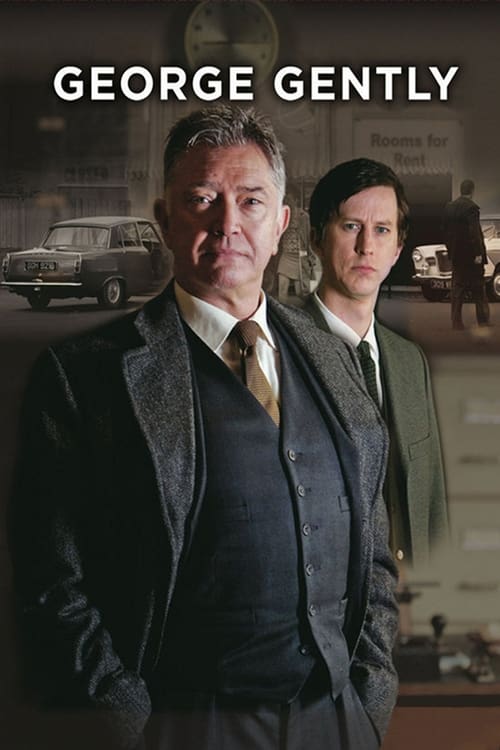






Popular
What is the significance of the relationship between Inspector Gently and Sergeant Bacchus?
How does the character of Inspector Gently reflect the social changes of the 1960s?
What role does the setting of Northumberland play in the series?
How does Gently's past influence his character and decisions throughout the series?
What are some key cases that Gently and Bacchus investigate, and how do they develop as characters through these cases?
Should I watch it?
Ask Your Own Question

What is the plot?
In the first episode of Inspector George Gently, set in 1964, the story begins with the discovery of a young woman's body in a field. The victim is identified as a local schoolgirl named Anne, who has been brutally murdered. Inspector George Gently, a seasoned detective, is called to the scene. He arrives with his new partner, Detective Sergeant John Bacchus, who is eager but somewhat inexperienced. Gently is portrayed as a man of principle, deeply affected by the violence of the crime.
As Gently and Bacchus investigate, they learn that Anne was last seen at a local dance. They interview her friends and family, uncovering that she had a troubled home life and was known to be rebellious. The detectives also discover that Anne had been involved with a local boy, which leads them to question him. The boy, however, has an alibi, and the investigation takes a turn when they find out that Anne had been seen arguing with a man at the dance.
The investigation deepens as Gently and Bacchus track down the man, a local mechanic named Joe, who has a history of violence. They confront him, but he denies any involvement in Anne's death. Gently, sensing that Joe is hiding something, decides to keep a close watch on him. Meanwhile, Bacchus struggles with the pressure of the case and his desire to prove himself to Gently.
As the detectives dig deeper, they uncover a web of secrets in the small town. They learn that Anne had been involved in a secret relationship with a teacher at her school, which complicates the investigation further. Gently and Bacchus interview the teacher, who appears nervous and evasive. They suspect he may know more than he is letting on, but he maintains his innocence.
The plot thickens when another girl goes missing, raising the stakes for Gently and Bacchus. They realize they are racing against time to find her before it's too late. The detectives intensify their efforts, conducting more interviews and searching for any leads. Tensions rise as the community becomes increasingly anxious about the safety of their children.
In a pivotal moment, Gently receives a tip-off about a possible suspect who has been seen lurking around the area. They track down the man, who turns out to be a drifter with a criminal record. Gently and Bacchus confront him, and during the interrogation, the man breaks down and confesses to having seen Anne the night she was killed. He claims he witnessed a fight between her and Joe, which leads Gently to believe that Joe is indeed involved.
The detectives confront Joe again, this time with the new evidence. Under pressure, Joe finally admits to having had a confrontation with Anne but insists he did not kill her. Gently, however, is not convinced and continues to press him for the truth. The tension escalates as Gently's determination to solve the case clashes with Joe's defiance.
As the investigation reaches its climax, Gently and Bacchus discover a hidden connection between Joe and the teacher. They realize that the two men were involved in a cover-up regarding Anne's death. In a dramatic confrontation, Gently and Bacchus corner both men, leading to a tense standoff. Joe, feeling trapped, attempts to flee but is apprehended by Bacchus.
In the final moments of the episode, Gently reflects on the case and the impact it has had on him. He grapples with the harsh realities of the world he inhabits, where innocence is often lost. The episode concludes with Gently and Bacchus standing together, ready to face the challenges that lie ahead in their partnership and the cases they will tackle in the future.
🔥 Trending TV Shows Now
Browse All TV Shows →








What is the ending?
In the final episode of Inspector George Gently, titled "Gently Between Friends," Gently faces a personal and professional crisis as he investigates the murder of a young woman. The episode culminates in a tense confrontation that reveals deep-seated corruption and betrayal, leading to a resolution that impacts Gently and his team profoundly.
As the episode unfolds, Gently and his loyal partner, Sergeant John Bacchus, delve into the case of the murdered woman, uncovering a web of deceit that connects to a local crime syndicate. The investigation leads them to confront not only the criminals but also the moral ambiguities within the police force itself. Gently's steadfast commitment to justice is tested as he navigates the murky waters of loyalty and betrayal.
In the climax, Gently confronts the main antagonist, a corrupt officer who has been manipulating events from behind the scenes. The confrontation is fraught with tension, as Gently's determination to uphold the law clashes with the darker elements of the police force. Ultimately, Gently's integrity prevails, but not without personal cost.
The episode concludes with Gently reflecting on the toll that the case has taken on him and his team. Bacchus, who has grown throughout the series, stands by Gently, indicating a bond forged through shared trials. The ending leaves Gently contemplating his future, hinting at the inevitable changes that come with time and the weight of his experiences.
In a more detailed narrative:
The episode opens with a somber atmosphere, the camera panning over a quiet, fog-laden street in the North East of England. Inspector George Gently, portrayed by Martin Shaw, is seen walking with a heavy heart, the weight of his years in the force evident in his furrowed brow. He is called to the scene of a murder, where the body of a young woman has been discovered. The grim reality of the crime scene sets the tone for the investigation that follows.
As Gently and Sergeant John Bacchus, played by Lee Ingleby, begin their inquiry, they are met with resistance from the local community, who are wary of the police. The duo interviews witnesses, each interaction revealing layers of fear and complicity. Gently's calm demeanor contrasts with Bacchus's more impulsive nature, showcasing their differing approaches to policing. Gently's patience and empathy shine through as he seeks to understand the victim's life, while Bacchus's frustration grows as they encounter roadblocks.
The investigation leads them to a local pub, a hub of gossip and secrets. Here, they meet a key witness who hints at a connection between the victim and a notorious crime syndicate. The tension escalates as Gently realizes that the case is not just about a murder but also about the corruption that runs deep within the police force itself. The stakes are raised when Gently discovers that a fellow officer is involved in the criminal activities, a betrayal that shakes his faith in the institution he has dedicated his life to.
As the plot thickens, Gently and Bacchus find themselves in a race against time. They gather evidence, but the corrupt officer, who has been manipulating the investigation, becomes increasingly desperate. In a pivotal scene, Gently confronts this officer in a dimly lit warehouse, the atmosphere thick with tension. The confrontation is charged with emotion, as Gently's unwavering commitment to justice clashes with the officer's self-serving motives. The dialogue is sharp, revealing the moral complexities of their respective positions.
In the climax, a violent altercation ensues, and Gently's resolve is tested. He fights not just for the truth but for the very principles that define him as a detective. The struggle culminates in a moment of clarity for Gently, who realizes that the fight for justice is often fraught with personal sacrifice. The corrupt officer is apprehended, but not without consequences that ripple through Gently's life.
As the dust settles, Gently and Bacchus stand together, the bond between them solidified through their shared experiences. Gently reflects on the toll the case has taken on him, the emotional weight evident in his eyes. Bacchus, having matured throughout the series, offers a sense of hope and camaraderie, suggesting that despite the darkness they face, there is still light in their partnership.
The episode closes with Gently looking out over the landscape, a contemplative expression on his face. The camera lingers on him, capturing the essence of a man who has dedicated his life to seeking justice in a world that often seems unjust. The final scene leaves viewers with a sense of closure, yet also an understanding that Gently's journey is far from over, hinting at the inevitable changes that come with time and the weight of his experiences.
Is there a post-credit scene?
The TV show "Inspector George Gently," which aired from 2008 to 2017, does not feature post-credit scenes. Each episode concludes with a resolution to the case at hand, followed by a brief wrap-up of the characters' emotional states and relationships, but there are no additional scenes or content after the credits roll. The focus remains on the narrative and character development throughout the episodes, rather than on teasing future storylines or providing extra content in a post-credit format.
What is the significance of the relationship between Inspector Gently and Sergeant Bacchus?
The relationship between Inspector George Gently and Sergeant John Bacchus is central to the series, showcasing a mentor-mentee dynamic. Gently, portrayed as a seasoned and principled detective, often finds himself at odds with Bacchus's more impulsive and sometimes morally ambiguous approach to policing. This tension highlights the generational differences in policing methods and ethics, with Gently representing the old guard's values of integrity and thoroughness, while Bacchus embodies the more modern, sometimes reckless attitude of the younger generation. Their evolving relationship is marked by moments of conflict, mutual respect, and personal growth, particularly as Bacchus learns from Gently's steadfast commitment to justice.
How does the character of Inspector Gently reflect the social changes of the 1960s?
Inspector Gently is a reflection of the social changes of the 1960s, particularly in his approach to crime and justice. As a detective, he often confronts issues such as class disparity, gender roles, and the shifting moral landscape of post-war Britain. His character embodies a sense of duty and traditional values, which often clash with the emerging counterculture and changing societal norms. Gently's investigations frequently reveal the darker undercurrents of society, such as corruption and prejudice, forcing him to navigate a world that is rapidly evolving. His steadfastness in the face of these changes highlights the struggle between maintaining order and adapting to new realities.
What role does the setting of Northumberland play in the series?
The setting of Northumberland plays a crucial role in 'Inspector George Gently,' providing a picturesque yet often stark backdrop for the series. The rural landscapes, small towns, and close-knit communities create a contrast to the crimes Gently investigates, emphasizing the idea that evil can lurk in even the most idyllic settings. The region's historical and cultural context enriches the narrative, as Gently often encounters local customs and tensions that inform the cases he works on. The isolation of certain areas also heightens the sense of urgency and danger, as Gently and Bacchus navigate both the physical terrain and the intricate social dynamics of the communities they serve.
How does Gently's past influence his character and decisions throughout the series?
Gently's past significantly influences his character and decisions throughout the series, particularly his experiences during World War II. His wartime service has instilled in him a strong sense of justice and a deep understanding of human nature, which informs his investigative techniques and interactions with suspects and witnesses. Gently's memories of loss and trauma often surface, shaping his empathetic approach to victims and their families. This background also drives his commitment to solving cases with integrity, as he seeks to bring closure to those affected by crime. His past serves as a constant reminder of the complexities of morality and the impact of personal history on one's professional life.
What are some key cases that Gently and Bacchus investigate, and how do they develop as characters through these cases?
Throughout the series, Gently and Bacchus investigate several key cases that serve as catalysts for their character development. One notable case involves the murder of a young woman, which uncovers a web of deceit and betrayal within a seemingly peaceful community. As they delve deeper, Gently's methodical approach contrasts with Bacchus's more instinctive, sometimes reckless tactics, leading to tension between them. Another significant case revolves around a series of violent crimes linked to a local gang, forcing both men to confront their own biases and the darker aspects of human nature. These investigations not only challenge their professional skills but also test their moral compasses, ultimately leading to growth in their partnership and individual characters.
Is this family friendly?
"Inspector George Gently," produced in 2008, is a crime drama set in the 1960s, and while it is a well-crafted series, it does contain elements that may not be suitable for children or sensitive viewers. Here are some potentially objectionable or upsetting aspects:
-
Violence and Crime Scenes: The show often depicts murder investigations, which can include graphic descriptions of crime scenes and the aftermath of violence. There are moments where bodies are discovered, and the impact of crime on victims and their families is explored.
-
Themes of Corruption and Injustice: The series delves into themes of police corruption, societal issues, and moral ambiguity, which may be complex and unsettling for younger viewers.
-
Emotional Turmoil: Characters frequently experience grief, loss, and trauma, which can evoke strong emotional responses. The portrayal of these feelings may be intense for sensitive viewers.
-
Social Issues: The show addresses issues such as class disparity, racism, and sexism, reflecting the societal attitudes of the 1960s. Some discussions and portrayals may be uncomfortable or distressing.
-
Language: There are instances of strong language and adult themes that may not be appropriate for younger audiences.
Overall, while "Inspector George Gently" is a compelling series with rich storytelling, its mature themes and content may not be suitable for children or those who are sensitive to such topics.