
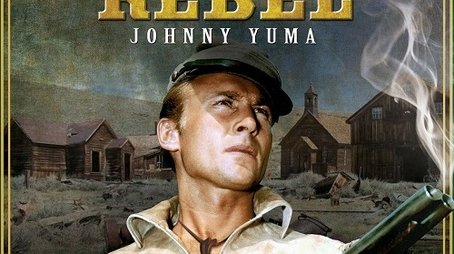


Popular
What motivates Johnny Yuma to become a drifter and rebel against society?
How does Johnny Yuma's relationship with his father influence his actions throughout the series?
What are some key conflicts Johnny Yuma faces in his encounters with lawmen?
How does the character of Johnny Yuma evolve over the course of the series?
What role do women play in Johnny Yuma's journey throughout the series?
Should I watch it?
Ask Your Own Question

What is the plot?
The Rebel begins with the introduction of the main character, Johnny Yuma, a former Confederate soldier who has become a drifter in the post-Civil War American West. The series opens with Johnny riding through a desolate landscape, reflecting on his past and the war that has left him disillusioned. He is haunted by memories of the conflict and the choices he made, which sets the tone for his character's internal struggle throughout the series.
In the first episode, Johnny arrives in a small town where he witnesses a confrontation between a local sheriff and a group of outlaws. The sheriff, a man named Sheriff McCulloch, is struggling to maintain order in the town, which is plagued by crime and corruption. Johnny, seeing the sheriff's plight, decides to intervene when the outlaws threaten the townspeople. He steps in, showcasing his quick reflexes and combat skills, which impresses the sheriff and the townsfolk.
After the confrontation, Johnny is invited to stay in the town by Sheriff McCulloch, who sees potential in him as a protector. However, Johnny is reluctant to settle down, still grappling with his past and the idea of responsibility. He spends time with the townspeople, particularly a young woman named Sarah, who is drawn to his mysterious nature. Their interactions reveal Johnny's vulnerability and desire for connection, but he remains guarded.
As the days pass, the outlaws return, led by a ruthless leader named Black Jack. They seek revenge against Johnny for his earlier interference. The tension escalates when Black Jack kidnaps Sarah, using her as leverage to force Johnny into a confrontation. Johnny is torn between his instinct to protect Sarah and his fear of becoming embroiled in violence again. Ultimately, he decides to confront Black Jack, driven by a sense of duty and the emotional connection he has developed with Sarah.
The showdown occurs in a dusty canyon outside of town. Johnny, armed with his revolver, faces off against Black Jack and his gang. The scene is tense, with the sun setting in the background, casting long shadows. Johnny uses his knowledge of the terrain to his advantage, employing stealth and strategy rather than brute force. He manages to outmaneuver the outlaws, taking them by surprise. A gunfight ensues, with bullets flying and dust kicking up around them. Johnny's determination and skill shine through as he takes down several of Black Jack's men.
In the climax of the confrontation, Johnny confronts Black Jack directly. The two engage in a fierce duel, exchanging gunfire and taunts. Johnny's internal conflict is palpable as he fights not just for Sarah's safety but also to prove to himself that he can be a hero despite his past. In a decisive moment, Johnny gains the upper hand, disarming Black Jack and forcing him to surrender. The townspeople, who have gathered to witness the showdown, cheer for Johnny, solidifying his role as a protector.
After the dust settles, Johnny is hailed as a hero by the townsfolk, but he remains conflicted about his place in the world. Sheriff McCulloch offers him a permanent position as a deputy, but Johnny declines, feeling that he cannot stay in one place for too long. He shares a heartfelt goodbye with Sarah, who expresses her admiration for him. Johnny rides off into the sunset, a lone figure against the vast landscape, symbolizing his ongoing journey and the internal battles he continues to face.
The series continues with Johnny encountering various challenges and moral dilemmas in each episode, but the core of his character remains the same: a man seeking redemption and purpose in a world that often feels chaotic and unforgiving. Each story arc builds on his past experiences, revealing more about his motivations and the emotional scars left by the war.









What is the ending?
The ending of "The Rebel" features Johnny Yuma confronting the corrupt forces in the town, ultimately leading to a resolution that sees him reclaiming his sense of justice and purpose. The episode concludes with Yuma riding off into the sunset, symbolizing his ongoing quest for freedom and justice.
In the final scenes of "The Rebel," the narrative unfolds with Johnny Yuma, a former Confederate soldier, returning to a town that has been plagued by corruption and lawlessness. As he rides into the dusty streets, the sun casts long shadows, emphasizing the tension that hangs in the air. The townsfolk, weary and oppressed, look on with a mix of hope and fear, knowing that Yuma has a reputation for standing up against tyranny.
Scene 1: Yuma arrives in town, his weathered face reflecting the burdens of his past. He dismounts from his horse, the sound of hooves echoing against the wooden buildings. The local sheriff, a man with a hardened demeanor, approaches him, wary of Yuma's intentions. Their conversation is terse, filled with unspoken animosity. Yuma's determination is palpable; he is here to confront the injustices that have taken root in this community.
Scene 2: As Yuma investigates the town, he learns of a gang that has been terrorizing the residents, led by a ruthless outlaw. The townspeople share their stories of loss and fear, their eyes filled with desperation. Yuma's heart aches for them, and he feels a deep sense of responsibility to help. He decides to confront the gang, knowing that it could lead to a violent showdown.
Scene 3: The confrontation takes place in the town square, where the gang has gathered, flaunting their power. Yuma stands tall, his presence commanding attention. He calls out the leader, challenging him to a duel. The tension is thick, and the townsfolk watch with bated breath, hoping for a miracle. Yuma's internal struggle is evident; he is fighting not just for the town but also for his own redemption.
Scene 4: The duel is intense, with both men drawing their guns in a heartbeat. The sound of gunfire shatters the silence, and Yuma's aim is true. He takes down the outlaw, and the gang disperses in fear. The townspeople erupt in cheers, their spirits lifted by Yuma's bravery. However, Yuma's expression remains somber; he knows that violence is not the answer, yet he feels a sense of duty to protect those who cannot protect themselves.
Scene 5: In the aftermath, Yuma speaks to the townsfolk, encouraging them to stand together against oppression. He emphasizes the importance of unity and resilience, urging them to take back their town. The sheriff, once skeptical, acknowledges Yuma's impact and offers him a position as a deputy, but Yuma declines, preferring to remain a wanderer, free to pursue his own path.
Scene 6: As the sun sets, casting a golden hue over the landscape, Yuma mounts his horse once more. The townspeople gather to bid him farewell, their gratitude evident in their eyes. Yuma rides away, a solitary figure against the vast horizon, embodying the spirit of the rebel. His journey continues, a testament to his unwavering quest for justice and freedom.
In the end, Johnny Yuma remains a symbol of hope and resilience, leaving behind a town that has begun to reclaim its strength. The sheriff, now more committed to justice, stands with the townsfolk, ready to face the challenges ahead. The episode closes with Yuma riding off into the distance, a reminder that the fight for justice is never truly over, and that the spirit of rebellion lives on in the hearts of those who dare to stand against tyranny.
Is there a post-credit scene?
The Rebel, produced in 1959, does not feature post-credit scenes. The show, which stars Nick Adams as Johnny Yuma, a Confederate soldier turned drifter, typically concludes each episode with a final scene that wraps up the story. These endings often reflect Johnny's internal struggles and his quest for redemption, but there are no additional scenes after the credits. Each episode stands alone, focusing on Johnny's encounters and the moral dilemmas he faces in the post-Civil War American West.
What motivates Johnny Yuma to become a drifter and rebel against society?
Johnny Yuma, portrayed by Nick Adams, is driven by a deep sense of injustice and a desire for freedom. After witnessing the harsh realities of life during and after the Civil War, including the loss of his father, he becomes disillusioned with the societal norms that dictate behavior. His internal conflict is fueled by a need to find his own path, often leading him to confront authority figures and fight for those who cannot defend themselves.
How does Johnny Yuma's relationship with his father influence his actions throughout the series?
Johnny's relationship with his father, a Confederate soldier, profoundly shapes his character. His father's ideals of honor and justice instill in Johnny a strong moral compass, compelling him to stand up against oppression. The emotional weight of his father's legacy drives Johnny to seek redemption and justice, often putting him at odds with the law and societal expectations.
What are some key conflicts Johnny Yuma faces in his encounters with lawmen?
Throughout the series, Johnny Yuma frequently clashes with lawmen who embody the oppressive structures he despises. These encounters often escalate into tense standoffs, where Johnny's quick wit and sharpshooting skills are put to the test. His conflicts reveal his disdain for corrupt authority and highlight his struggle to maintain his principles while navigating a world that often punishes those who defy the status quo.
How does the character of Johnny Yuma evolve over the course of the series?
As the series progresses, Johnny Yuma evolves from a vengeful young man into a more complex character grappling with the consequences of his actions. His experiences on the road expose him to various facets of humanity, leading him to reflect on his choices and the impact they have on others. This evolution is marked by moments of vulnerability, where he questions his path and seeks to reconcile his rebellious nature with a desire for connection and belonging.
What role do women play in Johnny Yuma's journey throughout the series?
Women in 'The Rebel' often serve as catalysts for Johnny Yuma's actions and decisions. They represent both the challenges and the emotional connections he seeks. Whether it's a love interest or a victim of circumstance, these female characters evoke empathy in Johnny, prompting him to act heroically. Their presence highlights the complexities of his character, as he navigates his feelings of attraction, protectiveness, and the societal expectations placed upon him.
Is this family friendly?
"The Rebel," produced in 1959, is generally considered family-friendly, but it does contain some themes and scenes that may be potentially objectionable or upsetting for children or sensitive viewers. Here are a few aspects to consider:
-
Violence and Conflict: The show often depicts confrontations and conflicts, including physical altercations. While not graphic, the tension can be intense and may be unsettling for younger viewers.
-
Themes of Injustice: The protagonist, Johnny Yuma, frequently encounters themes of injustice and moral dilemmas. These situations can evoke strong emotions and may be difficult for children to fully understand.
-
Loss and Grief: There are moments in the series that touch on loss, such as the impact of war and the consequences of violence. These themes can be heavy and might resonate deeply with sensitive viewers.
-
Mature Situations: Some episodes explore adult themes, including betrayal, loyalty, and the struggles of living on the fringes of society. While not explicit, the implications of these situations may be more suitable for older audiences.
-
Emotional Turmoil: The character of Johnny Yuma often grapples with his past and the weight of his experiences, leading to moments of introspection and emotional conflict that may be complex for younger viewers to process.
Overall, while "The Rebel" is not overtly inappropriate, parents may want to preview episodes to gauge their suitability for younger audiences.