


Popular
What is the significance of the epitaph in Umineko: When They Cry?
Who is Beatrice and what role does she play in the story?
What are the motivations behind Battler Ushiromiya's actions throughout the series?
How does the character of Maria Ushiromiya contribute to the story's themes?
What is the relationship between the Ushiromiya siblings and how does it affect the plot?
Should I watch it?
Ask Your Own Question

What is the plot?
In the year 1986, the wealthy Ushiromiya family gathers on the isolated Rokkenjima island for their annual family conference. The head of the family, Kinzo Ushiromiya, is gravely ill and obsessed with the occult, particularly the legend of the Golden Witch, Beatrice. Kinzo has promised his fortune to whoever can solve the riddle of the Golden Witch, which sets the stage for a tense family dynamic filled with greed and suspicion. The family members include Kinzo's children: Krauss, Natsuhi, Rudolf, and Rosa, along with their respective spouses and children, including the young protagonist, Battler Ushiromiya.
As the family discussions unfold, tensions rise over the inheritance and the family's future. During a storm, the family is cut off from the outside world, and the atmosphere becomes increasingly claustrophobic. Battler, who is skeptical of the supernatural, challenges the existence of Beatrice, leading to a confrontation with her. Beatrice appears as a beautiful, enigmatic figure, claiming to be the one who will decide the fate of the family. She presents a game to Battler, where he must prove that she is not real and that the murders that will occur are not the work of magic.
The first night of the conference, a series of gruesome murders begins. The family members are killed one by one in a manner that seems to defy logic, with the first victims being the servants, including Kumasawa and Genji. The remaining family members are thrown into chaos, trying to figure out who the murderer is while also grappling with the possibility of Beatrice's involvement. Battler's determination to uncover the truth intensifies as he witnesses the horror unfold.
As the murders continue, the family members are forced to confront their own secrets and betrayals. Natsuhi, Krauss's wife, struggles with her own insecurities and the pressure of her husband's expectations. Rudolf and Rosa's strained relationship comes to light, revealing deep-seated resentments. Battler, meanwhile, becomes more involved in the game with Beatrice, who taunts him with her magical abilities and the impossibility of the murders.
The second day brings more deaths, including that of Rosa and her daughter, Maria. The remaining family members, now in a state of panic, attempt to barricade themselves and figure out a way to escape the island. Battler continues to argue with Beatrice, trying to find logical explanations for the murders. He begins to piece together clues, but Beatrice's magical interventions complicate his reasoning.
As the game progresses, Battler learns more about the backstory of the Ushiromiya family and the tragic events that led to their current situation. He discovers that Beatrice is tied to the family's past, particularly to Kinzo's obsession with the occult and the tragic death of his first love. The emotional weight of these revelations weighs heavily on Battler, who feels a growing connection to the family despite their flaws.
The climax of the story occurs when Battler confronts Beatrice in a final showdown. He challenges her to reveal the truth behind the murders and the nature of her magic. In a dramatic twist, Beatrice reveals that she is a manifestation of the family's collective guilt and the unresolved traumas that haunt them. Battler realizes that the true nature of the game is not just about proving Beatrice's existence but understanding the pain and suffering that the family has endured.
In the end, Battler's determination to save the family leads to a resolution where he must make a choice: to accept the truth of the family's dark history or to continue fighting against the inevitability of their fate. The story concludes with a sense of ambiguity, leaving the audience to ponder the nature of truth, love, and the consequences of the past. The final scenes depict the aftermath of the events on Rokkenjima, with the surviving characters grappling with their losses and the haunting memories of the tragedy that unfolded.







What is the ending?
In the ending of "Umineko: When They Cry," the story culminates in a confrontation between Battler Ushiromiya and Beatrice, the witch. Battler rejects the notion of magic and the existence of Beatrice as a true witch, leading to a final showdown in the realm of the game. The narrative reveals the truth behind the murders on Rokkenjima, showcasing the tragic fates of the Ushiromiya family members. Ultimately, Battler's acceptance of the truth leads to a resolution, but it leaves lingering questions about the nature of love, loss, and the boundaries between reality and fantasy.
As the final arc of "Umineko: When They Cry" unfolds, the atmosphere is thick with tension and unresolved emotions. The scene opens in the ethereal realm of the Golden Land, where Battler Ushiromiya stands resolute, facing Beatrice, the golden witch. The vibrant colors of the landscape contrast sharply with the dark undertones of their confrontation. Battler, filled with determination, declares that he will not accept the existence of magic or the witch's power over him. His internal struggle is palpable; he grapples with the weight of his family's tragic history and the burden of their deaths.
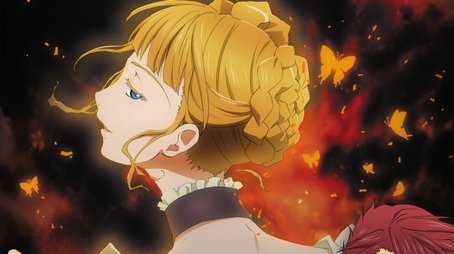
Beatrice, adorned in her elegant, yet haunting, golden dress, embodies both allure and despair. Her eyes reflect a deep sadness as she confronts Battler's rejection. The dialogue between them is charged with emotion, revealing Beatrice's longing for recognition and love, as well as Battler's desire to uncover the truth behind the murders that plagued Rokkenjima. The tension escalates as they engage in a battle of wits, each trying to outmaneuver the other in a game that transcends mere logic.
As the confrontation progresses, the narrative shifts to flashbacks of the Ushiromiya family, showcasing their final moments on the island. The scenes are filled with chaos and despair as the family members fall victim to the mysterious murders. Each character's fate is revealed: Krauss, the ambitious patriarch, meets a tragic end; Natsuhi, his wife, is consumed by her own insecurities; and the younger generation, including Jessica and George, face their own harrowing fates. The emotional weight of their deaths hangs heavily in the air, underscoring the tragedy of their familial bonds.
In a pivotal moment, Battler begins to piece together the truth behind the events on Rokkenjima. He realizes that the murders were not the result of supernatural forces but rather the culmination of human emotions--greed, jealousy, and despair. This revelation is a turning point for Battler, as he confronts the reality of his family's dysfunction and the impact of their choices. The visuals shift to a somber palette, reflecting the gravity of his discoveries.
As Battler's understanding deepens, he confronts Beatrice with newfound clarity. He acknowledges her pain and the love she sought from him, which had been obscured by the facade of magic. In a moment of vulnerability, Beatrice reveals her own tragic backstory, her desire for acceptance, and the loneliness that has defined her existence. The emotional exchange between them is raw and poignant, as Battler extends a hand of compassion, breaking the cycle of hatred and despair.
In the climax of their confrontation, Battler's acceptance of Beatrice's humanity leads to a transformative moment. The Golden Land begins to dissolve, symbolizing the end of their game. Beatrice, once a figure of fear and mystery, is revealed to be a tragic character shaped by her experiences. As she fades away, Battler is left with a sense of loss but also a newfound understanding of love and forgiveness.
The final scenes depict Battler returning to the real world, where he must confront the aftermath of the tragedy on Rokkenjima. The fates of the remaining family members are left ambiguous, but the emotional scars linger. Battler's journey concludes with a sense of hope, as he vows to carry the memories of his family and the lessons learned from his encounter with Beatrice.
In the end, "Umineko: When They Cry" leaves viewers with a haunting reflection on the complexities of human relationships, the nature of truth, and the enduring power of love, even in the face of tragedy. The story closes with Battler standing alone, gazing out at the horizon, embodying both the weight of his family's legacy and the possibility of a new beginning.
Is there a post-credit scene?
In the 2009 anime adaptation of "Umineko: When They Cry," there is no post-credit scene. The series concludes with the final episode, which wraps up the intense and complex narrative surrounding the Ushiromiya family and the mysterious events on Rokkenjima. The ending leaves viewers with a sense of ambiguity and unresolved questions, characteristic of the series' themes of mystery and the nature of truth. The absence of a post-credit scene reinforces the open-ended nature of the story, inviting viewers to reflect on the intricate layers of the plot and the fates of the characters.
What is the significance of the epitaph in Umineko: When They Cry?
The epitaph serves as a crucial puzzle within the narrative, providing clues to the mystery of the murders on Rokkenjima. It is a riddle that hints at the location of the hidden gold of the Ushiromiya family, which is central to the conflict among the family members. The characters' interpretations of the epitaph reveal their motivations and desires, as they seek to uncover the truth behind the murders and the family's dark history.
Who is Beatrice and what role does she play in the story?
Beatrice is a central character in Umineko: When They Cry, often referred to as the Golden Witch. She embodies the themes of magic and mystery, challenging the other characters to confront their beliefs about reality and fantasy. Her interactions with Battler Ushiromiya, in particular, drive much of the narrative, as she seeks to prove the existence of magic while Battler strives to uncover the truth behind the murders. Beatrice's complex personality, oscillating between playful and tragic, adds depth to the story.
What are the motivations behind Battler Ushiromiya's actions throughout the series?
Battler Ushiromiya's primary motivation is to uncover the truth behind the murders occurring on Rokkenjima and to challenge the concept of magic presented by Beatrice. He is driven by a desire to protect his family and to confront the painful truths of their past. Battler's internal struggle is marked by his determination to reject the supernatural explanations for the events, which leads to intense confrontations with Beatrice and other characters, revealing his emotional turmoil and the weight of his family's legacy.
How does the character of Maria Ushiromiya contribute to the story's themes?
Maria Ushiromiya, the young niece of Battler, plays a significant role in the narrative, embodying innocence and the belief in magic. Her unwavering faith in Beatrice and the world of witches contrasts sharply with the skepticism of other characters. Maria's emotional state, often fluctuating between joy and despair, highlights the impact of the family's dark history on the younger generation. Her character serves as a catalyst for exploring themes of belief, childhood innocence, and the consequences of trauma.
What is the relationship between the Ushiromiya siblings and how does it affect the plot?
The Ushiromiya siblings--Battler, Rosa, and the others--have a complex and often strained relationship, shaped by their family's history and the inheritance conflict over the family fortune. Their interactions are marked by jealousy, resentment, and a struggle for power, which intensifies as the murders unfold. This familial tension not only drives the plot forward but also reveals deeper emotional scars and motivations, as each sibling grapples with their past and the implications of their actions during the deadly game on Rokkenjima.
Is this family friendly?
"Umineko: When They Cry" is not considered family-friendly and contains several potentially objectionable or upsetting scenes and themes that may be distressing for children or sensitive viewers. Here are some aspects to be aware of:
-
Violence and Murder: The series features graphic depictions of violence, including murder and bloodshed, which can be quite intense and disturbing.
-
Psychological Horror: The show delves into themes of psychological manipulation, despair, and existential dread, which may be unsettling for younger audiences.
-
Death and Trauma: Characters experience significant trauma and loss, with scenes that explore the emotional aftermath of death and betrayal.
-
Dark Themes: The narrative includes themes of betrayal, family conflict, and the struggle for power, which can be heavy and complex.
-
Supernatural Elements: The presence of witches and supernatural occurrences may be frightening for some viewers, especially younger children.
-
Mature Language: There are instances of strong language and adult themes that may not be suitable for all audiences.
Overall, the series is best suited for mature viewers who can handle its darker themes and graphic content.