










Popular
What is the relationship between Tenma Tsukamoto and Oji Karasuma?
How does Harima Kenji's character develop throughout the series?
What role does Eri Sawachika play in the love triangle involving Harima and Tenma?
What are some key comedic moments involving the character of Imadori Kyousuke?
How does the character of Yakumo Tsukamoto influence the story?
Should I watch it?
Ask Your Own Question

What is the plot?
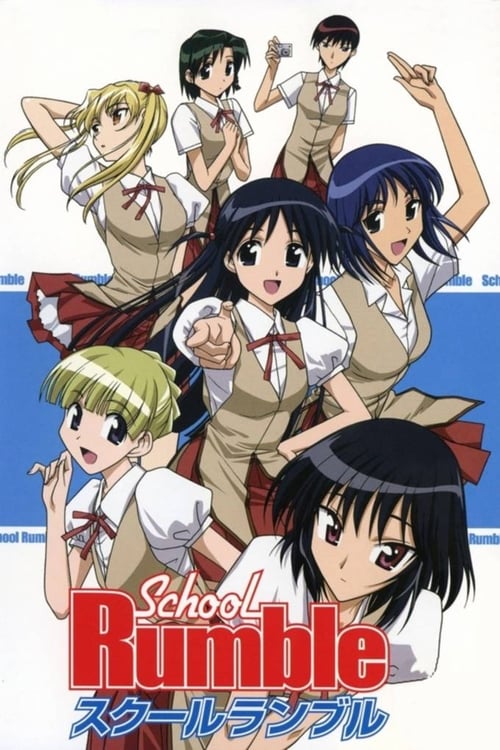
The story begins with Harima Kenji, a delinquent high school student, who is secretly in love with his classmate, Tsukamoto Tenma. Harima is often misunderstood due to his tough exterior and reputation, but he has a soft heart, especially when it comes to Tenma. The series opens with Harima trying to confess his feelings to Tenma, but he is interrupted by various comedic mishaps, including a misunderstanding involving a love letter that he wrote.
Meanwhile, Tenma is infatuated with the popular and charming Karasuma Oji, who is oblivious to her feelings. Tenma's crush leads her to make several awkward attempts to get closer to Karasuma, including trying to impress him with her cooking, which ends in disaster. Despite her efforts, Karasuma remains indifferent, focusing more on his own interests, particularly his love for curry.
As the school year progresses, Harima's attempts to confess to Tenma become increasingly complicated. He often finds himself in humorous situations, such as when he tries to help Tenma with her studies, only to end up in a series of misunderstandings that further complicate their relationship. Harima's friend, Eri Sawachika, a wealthy and beautiful girl, also develops feelings for him, adding another layer of complexity to the love triangle.
In one significant event, Harima decides to take action and confess his feelings to Tenma during a school festival. However, his plan goes awry when he accidentally gets into a fight with another student, leading to a chaotic scene that distracts everyone from his confession. This incident highlights Harima's internal struggle between his tough persona and his genuine feelings for Tenma.
As the story unfolds, Tenma's feelings for Karasuma are tested when she learns that he is moving away. This revelation sends her into a panic, and she realizes that she must confess her feelings to him before it's too late. In a series of comedic yet heartfelt moments, Tenma gathers the courage to express her love, but her attempts are continually thwarted by misunderstandings and interruptions.
Harima, witnessing Tenma's struggles, becomes more determined to support her, even if it means putting his own feelings aside. He begins to understand the importance of friendship and loyalty, which leads him to help Tenma in her quest to win over Karasuma. This decision showcases Harima's growth as a character, as he learns to prioritize Tenma's happiness over his own desires.
The climax of the series occurs during the school sports festival, where various characters face their feelings head-on. Harima participates in a relay race, hoping to impress Tenma. However, during the race, he gets distracted by thoughts of her and ends up falling, which leads to a comedic yet poignant moment of self-reflection. Meanwhile, Tenma finally gathers the courage to confess to Karasuma, but her confession is interrupted once again, leaving her feelings unresolved.
As the series progresses towards its conclusion, the characters face their final challenges. Harima's rivalry with other boys intensifies, particularly with his friend, who also has feelings for Tenma. This rivalry culminates in a series of comedic confrontations, where misunderstandings lead to humorous yet heartfelt moments of realization for all involved.
In the final episodes, Tenma's feelings for Karasuma come to a head as she prepares to say goodbye. Harima, realizing that he may never have a chance with Tenma, decides to step back and let her pursue her happiness. This decision is bittersweet for him, as he grapples with his own feelings of love and loss.
The series concludes with a sense of unresolved tension, as Tenma's fate with Karasuma remains uncertain. Harima, while still harboring feelings for Tenma, finds solace in his friendships and the experiences he has shared with his classmates. The final scenes leave viewers with a mix of hope and ambiguity, as the characters continue to navigate their complex relationships and the challenges of adolescence.
🔥 Trending TV Shows Now
Browse All TV Shows →






What is the ending?
In the ending of "School Rumble," the story culminates in a series of misunderstandings and emotional confrontations. Tenma Tsukamoto finally realizes her feelings for Karasuma, while Harima Kenji confronts his own feelings for Tenma. The series concludes with a sense of unresolved tension, as characters are left in a state of uncertainty regarding their relationships.
As the final episodes unfold, we find ourselves in the familiar setting of the school, where the characters are preparing for the upcoming cultural festival. The atmosphere is charged with excitement and anxiety, as Tenma is determined to confess her feelings to Karasuma before he leaves for America.
Scene 1: The Cultural Festival Preparations The students bustle around the school, setting up booths and decorations. Tenma, with her signature pigtails bouncing, is filled with a mix of hope and nervousness. She daydreams about confessing to Karasuma, imagining a romantic scenario where he reciprocates her feelings. Meanwhile, Harima, who has been struggling with his own emotions, is seen sketching Tenma in his notebook, his brow furrowed in concentration. He is determined to make his feelings known but is plagued by self-doubt.
Scene 2: The Confession As the festival begins, Tenma finally gathers the courage to approach Karasuma. The scene is vibrant, filled with laughter and the sounds of festivities. Tenma's heart races as she finds him at the food stall, his eyes focused on the takoyaki. She stumbles over her words, her cheeks flushed, but just as she is about to confess, a sudden commotion interrupts them. Harima, in a fit of frustration, accidentally knocks over a stack of boxes, drawing attention away from Tenma.
Scene 3: Harima's Moment Harima, feeling the weight of the moment, decides to take action. He steps forward, his voice trembling but resolute, and declares his feelings for Tenma in front of the crowd. The declaration is met with shock, and Tenma is left speechless. The tension in the air is palpable as she looks between Harima and Karasuma, her heart torn.
Scene 4: The Aftermath After the festival, the characters find themselves in a quiet moment at the school rooftop. Tenma, still processing the events, confesses to Harima that she appreciates his feelings but ultimately realizes that her heart belongs to Karasuma. Harima, though heartbroken, shows maturity and understanding, telling her that he will always support her happiness.
Scene 5: Karasuma's Departure As the school year comes to a close, Karasuma prepares to leave for America. Tenma rushes to the train station, her heart pounding. She finally manages to tell him how she feels, but he responds with his usual calm demeanor, saying he will always remember her. The train pulls away, leaving Tenma standing on the platform, tears in her eyes, feeling a mix of sadness and relief.
Scene 6: The Final Moments In the closing scenes, we see Harima sitting alone, sketching again, but this time with a sense of peace. He reflects on his journey and the friendships he has formed. Tenma, though heartbroken, smiles as she remembers the moments shared with her friends. The series ends with a montage of the characters moving forward, hinting at new beginnings and the complexities of young love.
In the end, Tenma is left with a bittersweet feeling as she learns to navigate her emotions, while Harima grows from his experience, showing resilience and maturity. The unresolved nature of their relationships leaves the audience with a sense of hope and the understanding that life continues, filled with both challenges and opportunities for growth.
Is there a post-credit scene?
In the anime "School Rumble," produced in 2004, there is indeed a post-credit scene that adds a humorous touch to the series. After the final episode, viewers are treated to a light-hearted moment featuring the main characters.
As the credits roll, the scene opens with Harima Kenji, the series' protagonist, sitting in a classroom, looking somewhat disheveled and lost in thought. He is reflecting on his complicated feelings for Tenma Tsukamoto, the girl he has a crush on, while also grappling with his aspirations as a manga artist. The atmosphere is filled with a mix of nostalgia and uncertainty, capturing Harima's internal struggle.
Suddenly, the door swings open, and Tenma bursts in, her usual cheerful demeanor shining through. She is holding a large, colorful cake, which she excitedly announces is for Harima's birthday, even though it's not actually his birthday. This moment encapsulates Tenma's obliviousness and her endearing nature, as she often misinterprets situations.
Harima, caught off guard, is initially flustered but can't help but smile at Tenma's enthusiasm. The scene shifts to a playful exchange between them, filled with light banter and laughter. Harima's internal monologue reveals his deep affection for Tenma, despite the chaos that often surrounds their interactions.
As the scene progresses, other characters from the series, like Eri Sawachika and Yakumo Tsukamoto, join in, adding to the festive atmosphere. The camaraderie among the characters is palpable, showcasing the bonds they have formed throughout the series.
The post-credit scene concludes with a comedic twist, as Harima accidentally gets cake all over his face, leading to a round of laughter from his friends. This moment serves as a fitting end to the series, highlighting the themes of friendship, love, and the humorous misadventures that define "School Rumble." The light-heartedness of the scene leaves viewers with a warm feeling, encapsulating the spirit of the show.
What is the relationship between Tenma Tsukamoto and Oji Karasuma?
Tenma Tsukamoto harbors a deep crush on Oji Karasuma, a quiet and somewhat aloof boy in her class. Throughout the series, Tenma's feelings for Karasuma are characterized by her clumsy attempts to get his attention, often leading to humorous misunderstandings. Despite her affection, Karasuma remains largely oblivious to her feelings, which causes Tenma a mix of frustration and determination as she navigates her emotions.
How does Harima Kenji's character develop throughout the series?
Harima Kenji starts as a delinquent with a passion for manga and a crush on Tenma. Initially, he is portrayed as rough around the edges, often getting into fights and struggling with his feelings. As the series progresses, Harima's character evolves; he becomes more introspective and sensitive, particularly as he deals with his unrequited love for Tenma and his friendship with other characters like Eri Sawachika. His journey is marked by comedic misadventures and moments of vulnerability, showcasing his growth from a brash teenager to a more mature individual.
What role does Eri Sawachika play in the love triangle involving Harima and Tenma?
Eri Sawachika is introduced as a popular and wealthy girl who initially appears to be a rival to Tenma for Harima's affections. Eri has her own complicated feelings for Harima, which she struggles to acknowledge due to her pride and social status. Throughout the series, Eri's interactions with both Harima and Tenma create tension and comedic situations, as she oscillates between jealousy and a desire to support Tenma. Her character adds depth to the love triangle, highlighting themes of rivalry, friendship, and the complexities of teenage romance.
What are some key comedic moments involving the character of Imadori Kyousuke?
Imadori Kyousuke is known for his lecherous behavior and comedic antics, often providing comic relief in the series. One notable moment occurs when he attempts to impress girls with his exaggerated stories and over-the-top flirting, leading to humorous failures. His interactions with other characters, particularly his attempts to woo various girls, often result in slapstick situations, such as getting caught in embarrassing predicaments or being thwarted by his friends. Imadori's antics serve to highlight the absurdities of high school life and the often misguided nature of teenage crushes.
How does the character of Yakumo Tsukamoto influence the story?
Yakumo Tsukamoto, Tenma's younger sister, plays a significant role in the narrative as a quiet and observant character with a talent for reading people's emotions. Her ability to sense the feelings of those around her often leads her to intervene in the romantic entanglements of her sister and their friends. Yakumo's calm demeanor contrasts with Tenma's more chaotic personality, and her subtle support for Tenma's crush on Karasuma adds depth to their sibling relationship. Additionally, Yakumo's own feelings for Harima create further layers of complexity in the story, as she navigates her emotions while trying to help those she cares about.
Is this family friendly?
"School Rumble," produced in 2004, is generally considered a family-friendly anime, but it does contain some elements that may be objectionable or upsetting for children or sensitive viewers. Here are a few aspects to consider:
-
Romantic Misunderstandings: The series is filled with romantic tension and misunderstandings, which can lead to awkward situations. Some scenes may involve characters expressing their feelings in exaggerated or comedic ways that could be uncomfortable for younger viewers.
-
Mild Suggestive Humor: There are instances of mild suggestive jokes and innuendos that may not be suitable for all audiences. These moments are often played for comedic effect but could be seen as inappropriate by some.
-
Physical Comedy and Slapstick: The show features a fair amount of slapstick humor, including characters getting hurt in exaggerated ways. While this is typically lighthearted, it may be upsetting for some viewers who are sensitive to physical comedy.
-
Bullying and Social Anxiety: Some characters experience bullying or social anxiety, which can be distressing. The portrayal of these themes is often comedic, but they may resonate differently with sensitive viewers.
-
Character Quirks and Rivalries: The characters often engage in rivalry and competitive behavior, which can lead to emotional outbursts. While these are usually humorous, they can also touch on themes of jealousy and insecurity.
Overall, while "School Rumble" is primarily a comedy with a lighthearted tone, these elements may warrant consideration for younger or more sensitive viewers.