












Popular
What are the main motivations behind Cesare Borgia's actions throughout the series?
How does Lucrezia Borgia's character evolve throughout the series?
What role does Pope Alexander VI play in the political landscape of Italy during the series?
What is the significance of the relationship between Cesare Borgia and his sister Lucrezia?
How does the character of Juan Borgia impact the family dynamics within the Borgia household?
Should I watch it?
Ask Your Own Question

What is the plot?
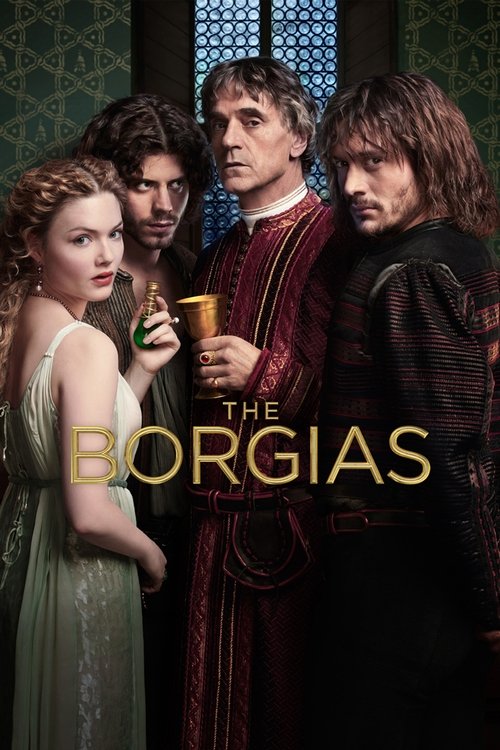
In the year 1492, the series opens with Rodrigo Borgia, a cardinal in the Catholic Church, who is ambitious and desires to become Pope. He is shown to be a manipulative figure, willing to use any means necessary to achieve his goals. Rodrigo's desire for power is evident as he engages in a secret affair with a beautiful young woman named Vannozza, with whom he has several children, including Cesare, Lucrezia, and Giovanni. The series establishes the Borgia family's complex dynamics and their ambitions.
As the conclave to elect a new Pope begins, Rodrigo employs various strategies to secure votes from other cardinals. He uses bribery, intimidation, and promises of power to sway their decisions. The tension builds as rival factions within the Church vie for control. Ultimately, Rodrigo's machinations pay off when he is elected Pope Alexander VI, a moment marked by both triumph and the weight of the moral compromises he has made.
Once in power, Pope Alexander VI begins to consolidate his influence. He appoints his son Cesare as a cardinal, despite Cesare's desire for a military career. Cesare is initially conflicted, feeling the pressure of his father's expectations while also yearning for a life of honor and glory. Meanwhile, Lucrezia, his sister, is married off to Giovanni Sforza, a political alliance that is fraught with tension. Lucrezia's marriage is a strategic move by Rodrigo to strengthen the Borgia family's position, but it becomes clear that she is unhappy in her new life.
As the story progresses, Cesare becomes increasingly disillusioned with the Church and his father's methods. He begins to take matters into his own hands, leading to a series of violent confrontations. Cesare's ambition grows, and he decides to leave the Church to pursue a military career, which leads to a rift between him and Rodrigo. This decision is pivotal, as it marks Cesare's transformation into a ruthless leader willing to do whatever it takes to achieve power.
Lucrezia's situation worsens as her marriage to Giovanni becomes more strained. Giovanni is portrayed as weak and ineffectual, and Lucrezia finds herself drawn to the charismatic and ambitious Cesare. Their relationship becomes increasingly complicated, filled with both familial loyalty and forbidden desire. The tension escalates when Giovanni discovers Lucrezia's infidelity, leading to a violent confrontation that results in Giovanni's death.
In the wake of Giovanni's murder, Lucrezia is left to navigate the fallout. Rodrigo attempts to protect his daughter, but the scandal threatens to unravel the Borgia family's carefully constructed facade. Lucrezia's emotional turmoil is palpable as she grapples with her role in the chaos and the consequences of her family's actions.
As Cesare rises to power, he begins to eliminate his enemies, employing brutal tactics to secure his position. He orchestrates the assassination of key rivals, including the powerful Duke Valentino, showcasing his willingness to embrace violence for the sake of ambition. Cesare's transformation into a feared military leader is marked by a series of bloody battles and strategic alliances, further entrenching the Borgia family's grip on power.
The series also delves into the political landscape of Italy, highlighting the rivalries between various city-states and noble families. The Medici, the Sforza, and other factions become embroiled in the Borgia's schemes, leading to a web of intrigue and betrayal. Rodrigo's attempts to maintain control over the papacy are challenged by external forces, including the rise of reformist movements within the Church.
As the narrative unfolds, the personal and political intertwine, leading to a climactic confrontation between the Borgia family and their enemies. Cesare's ambition ultimately leads to a betrayal that fractures the family, as Lucrezia is forced to choose between her loyalty to her brother and her desire for a life free from the Borgia legacy.
In the final episodes, the consequences of the Borgia family's actions come to a head. Rodrigo's health deteriorates, and he faces challenges from within the Church and outside forces. Cesare's ruthless pursuit of power leads to a series of tragic events, culminating in a dramatic showdown that leaves the Borgia family fractured and vulnerable.
The series concludes with the fall of the Borgia dynasty, as the weight of their sins and ambitions catches up with them. The once-mighty family is left to grapple with the consequences of their actions, leading to a poignant and tragic end that encapsulates the rise and fall of one of history's most infamous families.









What is the ending?
In the ending of The Borgias, the series culminates in a dramatic confrontation of power, betrayal, and the consequences of ambition. Cesare Borgia's quest for dominance leads to a tragic downfall, while Lucrezia Borgia seeks a new life away from her family's dark legacy. The series concludes with the Borgia family's grip on power slipping away, leaving them vulnerable to their enemies.
As the final episodes unfold, we see Cesare Borgia, once a formidable force, grappling with the consequences of his ruthless ambition. He is increasingly isolated, having lost the support of his allies and facing betrayal from within his own ranks. His relationship with his father, Pope Alexander VI, becomes strained as the Pope's health deteriorates, and Cesare's dreams of a united Italy begin to crumble.
In a pivotal scene, Cesare confronts his father, expressing his frustration and desperation. The Pope, weakened and aware of his own mortality, tries to impart wisdom to his son, but the bond between them is frayed. Cesare's ambition blinds him to the reality of their situation, and he continues to pursue his goals, even as the walls close in around him.
Meanwhile, Lucrezia Borgia, who has endured her own share of suffering and manipulation, seeks to break free from the toxic environment of her family. She finds solace in her new marriage to Alfonso d'Aragona, hoping for a fresh start. However, the shadow of her family's legacy looms large, and she is forced to navigate the treacherous waters of political intrigue and familial loyalty.
As the series reaches its climax, Cesare's downfall is swift. Betrayed by those he once trusted, he is left to face the consequences of his actions alone. In a haunting scene, he is confronted by his enemies, and the once-mighty warrior is reduced to a desperate fugitive. His fate is sealed as he is ultimately captured and killed, a tragic end to his relentless pursuit of power.
Lucrezia, on the other hand, finds a glimmer of hope as she embraces her new life. She is determined to distance herself from the Borgia name and the bloodshed that has defined her family's legacy. In her final moments on screen, she reflects on her past, filled with both sorrow and resilience, as she looks toward a future that holds the promise of peace and redemption.
The series concludes with the Borgia family's power dismantled, leaving behind a legacy marked by ambition, betrayal, and the heavy toll of their choices. The final scenes serve as a poignant reminder of the fragility of power and the enduring quest for redemption amidst the chaos of their lives.
Is there a post-credit scene?
The Borgias, produced in 2011, does not feature a post-credit scene. The series concludes with its final episode, wrapping up the intricate and tumultuous story of the Borgia family without any additional scenes after the credits. The narrative focuses on the political machinations, personal betrayals, and the quest for power that defined the lives of characters like Pope Alexander VI, Cesare Borgia, and Lucrezia Borgia, culminating in a dramatic and poignant ending that leaves the audience reflecting on the fates of these historical figures.
What are the main motivations behind Cesare Borgia's actions throughout the series?
Cesare Borgia is driven by a complex mix of ambition, loyalty to his family, and a desire for power. His initial motivation stems from his father's aspirations for the Borgia family, particularly to secure the Papal States. As the series progresses, Cesare's ambition grows, leading him to make ruthless decisions, including betrayal and murder, to achieve his goals. His relationship with his father, Pope Alexander VI, is both a source of strength and conflict, as he seeks to prove himself worthy of his father's legacy while grappling with his own moral compass.
How does Lucrezia Borgia's character evolve throughout the series?
Lucrezia Borgia begins as a naive and innocent young woman, caught in the political machinations of her family. Initially, she is used as a pawn in her father's schemes, particularly in her marriage to Giovanni Sforza. However, as the series progresses, Lucrezia becomes more aware of the brutal realities of her family's ambitions. Her character evolves from a sheltered girl into a more politically astute and resilient woman, ultimately seeking agency in her own life. Her relationships, particularly with Cesare and her husbands, shape her transformation, as she navigates love, betrayal, and the quest for power.
What role does Pope Alexander VI play in the political landscape of Italy during the series?
Pope Alexander VI, born Rodrigo Borgia, plays a pivotal role in the political landscape of Italy as he seeks to consolidate power for the Borgia family and the Papacy. His papacy is marked by corruption, nepotism, and a willingness to engage in morally questionable alliances. He uses his position to manipulate political situations, often employing bribery and coercion to achieve his ends. Alexander's ambition is not only to strengthen the Papal States but also to elevate his children, particularly Cesare and Lucrezia, into positions of power. His actions often create enemies, leading to conflicts with rival families and factions, which further complicates the political dynamics of the time.
What is the significance of the relationship between Cesare Borgia and his sister Lucrezia?
The relationship between Cesare Borgia and Lucrezia is complex and multifaceted, characterized by deep familial loyalty and underlying tension. Cesare often acts as Lucrezia's protector, demonstrating a fierce loyalty to her well-being amidst the treacherous political landscape. However, their bond is also strained by the manipulations of their father, Pope Alexander VI, and the political marriages that Lucrezia is forced into. Cesare's ambition sometimes leads him to prioritize his own goals over his sister's happiness, creating a rift between them. This dynamic highlights the themes of power, sacrifice, and the personal costs of their family's ambitions.
How does the character of Juan Borgia impact the family dynamics within the Borgia household?
Juan Borgia, the eldest son of Pope Alexander VI, significantly impacts the family dynamics within the Borgia household through his contrasting personality and ambitions. Initially portrayed as a charming and charismatic figure, Juan's character is marred by his arrogance and sense of entitlement. His relationship with Cesare is particularly strained, as Cesare's ambition often overshadows Juan's position as the heir. Juan's reckless behavior and inability to navigate the political landscape effectively lead to tensions within the family, especially as Cesare begins to eclipse him in both power and influence. Ultimately, Juan's downfall serves as a catalyst for Cesare's rise, highlighting the ruthless nature of their family's quest for dominance.
Is this family friendly?
"The Borgias," produced in 2011, is not considered family-friendly due to its mature themes and content. Here are some potentially objectionable or upsetting aspects that may affect children or sensitive viewers:
-
Graphic Violence: The series includes scenes of brutal violence, including assassinations, battles, and torture, which are depicted in a visceral manner.
-
Sexual Content: There are numerous explicit sexual scenes, including infidelity, seduction, and sexual manipulation, which are integral to the plot and character relationships.
-
Political Intrigue and Betrayal: The show portrays intense political maneuvering, betrayal, and moral corruption, which may be distressing for younger viewers.
-
Religious Themes: The series explores themes of corruption within the Catholic Church, including the exploitation of power and moral ambiguity, which may be unsettling for some.
-
Death and Betrayal: Characters face betrayal and death, often in shocking ways, which can evoke strong emotional responses.
-
Substance Abuse: There are instances of characters engaging in drinking and drug use, reflecting the excesses of the time.
These elements contribute to a mature viewing experience, making it more suitable for adult audiences.