
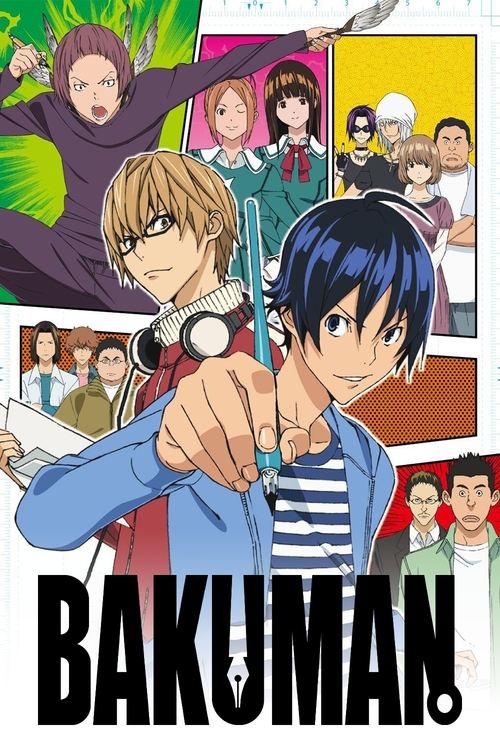










Popular
What motivates Mashiro Moritaka to become a manga artist?
How does the relationship between Mashiro and Azuki evolve throughout the series?
What challenges do Mashiro and Takagi face while trying to get their manga serialized?
What role does Eiji Nizuma play in Mashiro and Takagi's journey?
How does the theme of friendship manifest in the relationship between Mashiro, Takagi, and their peers?
Should I watch it?
Ask Your Own Question

What is the plot?
In the beginning of "Bakuman," we are introduced to a high school student named Moritaka Mashiro, who has a passion for drawing but lacks the motivation to pursue it seriously. He is disillusioned by the idea of becoming a manga artist after witnessing the struggles of his uncle, a failed manga creator. One day, he leaves his notebook in class, which is discovered by his classmate Akito Takagi, a talented writer. Takagi proposes that they team up to create a manga together, believing in Mashiro's artistic talent.
Initially hesitant, Mashiro is inspired to pursue this path after a conversation with his crush, Azuki Miho, who dreams of becoming a voice actress. She expresses her desire to voice a character in a manga adaptation, which ignites Mashiro's determination. He agrees to collaborate with Takagi, and they set a goal to get serialized in the prestigious magazine "Weekly Shōnen Jump."
The duo begins their journey by creating their first manga, titled "Zetman." They face numerous challenges, including the pressure of deadlines and the harsh realities of the manga industry. After submitting their work to "Jump," they receive critical feedback, which leads them to realize they need to improve their storytelling and art. They decide to take a step back and refine their skills before submitting again.
As they continue to work on their craft, Mashiro and Takagi develop a strong friendship, sharing their dreams and aspirations. They create a new manga called "Detective Trap," which they believe has potential. They submit it to "Jump" and receive a positive response, leading to their first serialization. This success brings them joy but also introduces new pressures, including the need to maintain their popularity and meet tight deadlines.
During this time, Mashiro's relationship with Azuki deepens. They promise to support each other's dreams, with Azuki vowing to voice a character in Mashiro's future work. However, their relationship is complicated by the demands of their respective careers. Azuki is determined to succeed as a voice actress, and her commitment to her craft often keeps her away from Mashiro.
As "Detective Trap" gains popularity, Mashiro and Takagi face competition from other manga artists, including the talented and ambitious Eiji Nizuma. Nizuma's work is innovative and captures the attention of readers, pushing Mashiro and Takagi to elevate their own storytelling. They experience self-doubt and pressure to outdo themselves, leading to intense creative struggles.
In a pivotal moment, Mashiro and Takagi decide to create a new series called "Bakuman," which reflects their own experiences as manga creators. This meta-narrative allows them to explore the challenges and triumphs of the manga industry while also connecting with their audience on a deeper level. The series is well-received, and they begin to gain recognition as serious contenders in the manga world.
As their careers progress, Mashiro and Takagi face personal challenges. Mashiro's uncle, who had once discouraged him from pursuing manga, becomes a source of inspiration as he reflects on his own failures. Meanwhile, Azuki faces her own struggles in the voice acting industry, leading to moments of tension between her and Mashiro as they navigate their ambitions.
The story takes a dramatic turn when Mashiro and Takagi's serialization is threatened by declining readership. They must confront their fears of failure and work tirelessly to revitalize their series. This leads to a series of late nights and intense brainstorming sessions, showcasing their dedication and passion for their craft.
In the climax of the series, Mashiro and Takagi face a critical decision regarding the future of "Bakuman." They must choose between continuing their current story arc or taking a bold risk to innovate and capture the audience's attention. They ultimately decide to take the risk, leading to a dramatic shift in the narrative that reinvigorates their series.
As the series concludes, Mashiro and Takagi achieve their dreams of becoming successful manga artists, but not without sacrifices. Their friendship is tested, and they learn the importance of perseverance and collaboration. Azuki's dream also comes to fruition as she lands a role in an anime adaptation of "Bakuman," fulfilling her promise to Mashiro.
The final scenes depict Mashiro and Takagi reflecting on their journey, celebrating their achievements while acknowledging the challenges they faced along the way. Their growth as individuals and creators is evident, and they look forward to the future with hope and determination. The series ends on a note of optimism, emphasizing the power of dreams and the bonds formed through shared passions.







What is the ending?
In the ending of Bakuman, Mashiro and Takagi finally achieve their dream of having their manga serialized in a major magazine. They face various challenges, including rivalries and personal struggles, but ultimately, they find success and fulfillment in their passion for creating manga. The series concludes with a sense of hope and determination for the future, as the characters continue to pursue their dreams.
As the final episodes unfold, we see Mashiro and Takagi, now seasoned manga creators, reflecting on their journey. They have faced numerous obstacles, including fierce competition from other aspiring mangaka, particularly Eiji Nizuma, who has become a formidable rival. Eiji's talent and dedication push Mashiro and Takagi to improve their craft, leading to intense moments of self-doubt and determination.
In a pivotal scene, Mashiro and Takagi receive the news that their manga, "Bakuman," has been officially serialized in the Shonen Jump magazine. The moment is filled with a mix of disbelief and joy, as they realize that their hard work has finally paid off. The scene captures their emotional release, with Mashiro's eyes shining with tears of happiness and Takagi's laughter echoing in the room. They embrace, overwhelmed by the weight of their achievement.
As the series progresses, we witness the evolution of their relationships. Mashiro's love for Azuki, who has been a constant source of inspiration and support, culminates in a heartfelt moment where they promise to pursue their dreams together. Azuki, who has her own aspirations of becoming a voice actress, expresses her unwavering belief in Mashiro's talent. Their bond strengthens, symbolizing the importance of mutual support in the pursuit of one's dreams.
Meanwhile, we see Eiji Nizuma, who has been a rival throughout the series, achieving his own success. His relentless pursuit of excellence serves as a reminder of the competitive nature of the manga industry. In the final scenes, Eiji acknowledges Mashiro and Takagi's growth, hinting at a newfound respect between rivals. This moment emphasizes the theme of camaraderie that can exist even amidst competition.
The series concludes with a montage of Mashiro and Takagi working on their next project, showcasing their growth as artists. They are no longer the inexperienced boys who started their journey; they have matured into confident creators, ready to face whatever challenges lie ahead. The final shot captures them in their studio, surrounded by sketches and storyboards, embodying the spirit of perseverance and creativity.
In the end, Mashiro and Takagi's journey is a testament to the power of dreams, friendship, and the relentless pursuit of one's passion. Each character finds their place in the world of manga, with Mashiro and Takagi achieving their goal of serialization, Azuki pursuing her voice acting career, and Eiji continuing to push the boundaries of his talent. The series closes on a hopeful note, leaving viewers inspired by the characters' dedication and resilience.
Is there a post-credit scene?
In the 2010 anime adaptation of Bakuman, there is no post-credit scene following the final episode. The series concludes with a resolution to the main characters' arcs, particularly focusing on the culmination of Mashiro Moritaka and Akito Takagi's journey as aspiring manga artists. The final moments emphasize their growth, the challenges they faced, and their determination to succeed in the manga industry, leaving viewers with a sense of closure regarding their ambitions and relationships. The absence of a post-credit scene allows the emotional weight of the finale to resonate without additional content.
What motivates Mashiro Moritaka to become a manga artist?
Mashiro Moritaka, a talented artist, is motivated to become a manga artist primarily due to his late uncle, who was a successful manga artist. After discovering his uncle's unfinished work, Mashiro feels a deep sense of responsibility to fulfill that dream. Additionally, his desire to work alongside his classmate Akito Takagi, who aspires to be a writer, fuels his ambition. The emotional weight of his uncle's legacy and the bond with Takagi drive him to pursue a career in manga, despite the challenges and pressures of the industry.
How does the relationship between Mashiro and Azuki evolve throughout the series?
Mashiro's relationship with Azuki Miho evolves from childhood friends to a deeper romantic connection. Initially, they share a mutual understanding of their dreams; Azuki wants to become a voice actress, and Mashiro wants to be a manga artist. They promise to support each other's aspirations, which creates a strong emotional bond. As the series progresses, their relationship faces challenges, including misunderstandings and the pressures of their respective careers. However, their commitment to each other remains steadfast, culminating in a heartfelt resolution where they reaffirm their dreams and love.
What challenges do Mashiro and Takagi face while trying to get their manga serialized?
Mashiro and Takagi face numerous challenges in their quest to get their manga serialized. Initially, they struggle with creating a compelling story and art that meets the standards of the Shonen Jump editors. They endure harsh criticism and multiple rejections, which test their resolve. Additionally, they confront the competitive nature of the manga industry, dealing with rival creators like Eiji Nizuma, who poses a significant threat with his talent. The pressure to produce consistent quality work while balancing their personal lives adds to their struggles, forcing them to adapt and grow as creators.
What role does Eiji Nizuma play in Mashiro and Takagi's journey?
Eiji Nizuma serves as both a rival and a source of inspiration for Mashiro and Takagi. His exceptional talent and innovative storytelling push them to elevate their own work. Nizuma's success and unique approach to manga create a sense of urgency for Mashiro and Takagi, motivating them to refine their craft. Despite being a competitor, Nizuma respects their dedication and often challenges them to think outside the box. His presence in the story highlights the themes of rivalry and growth, as Mashiro and Takagi learn to embrace competition as a means to improve their artistry.
How does the theme of friendship manifest in the relationship between Mashiro, Takagi, and their peers?
The theme of friendship is central to the relationship between Mashiro, Takagi, and their peers, particularly with characters like Akira Hattori and other manga artists. Their bond is characterized by mutual support, collaboration, and shared aspirations. They celebrate each other's successes and provide encouragement during failures, creating a strong sense of camaraderie. This friendship is tested through the pressures of the manga industry, but ultimately, it strengthens their resolve to succeed. The emotional stakes of their relationships highlight the importance of teamwork and loyalty in achieving their dreams.
Is this family friendly?
"Bakuman," produced in 2010, is generally considered family-friendly, but it does contain some elements that may be sensitive for children or more sensitive viewers. Here are a few aspects to consider:
-
Depictions of Stress and Pressure: The series portrays the intense pressure and stress that comes with pursuing a career in manga creation. Characters often experience anxiety and emotional turmoil, which may be unsettling for some viewers.
-
Workplace Competition: The competitive nature of the manga industry is a central theme, leading to moments of rivalry and conflict between characters. This can include harsh criticism and feelings of inadequacy.
-
Romantic Relationships: There are romantic subplots that involve teenage relationships, including moments of jealousy and misunderstandings. Some scenes may touch on themes of love and heartbreak.
-
Parental Conflict: There are instances of family dynamics that may involve conflict or disagreement, particularly regarding career choices and aspirations, which could resonate differently with younger viewers.
-
Mature Themes: While not explicit, the series does explore themes of ambition, failure, and the sacrifices made for one's dreams, which may be heavy for younger audiences to fully grasp.
Overall, while "Bakuman" is suitable for a wide audience, parents may want to consider these elements when deciding if it's appropriate for younger viewers.