







Popular
Should I watch it?
Ask Your Own Question

What is the plot?
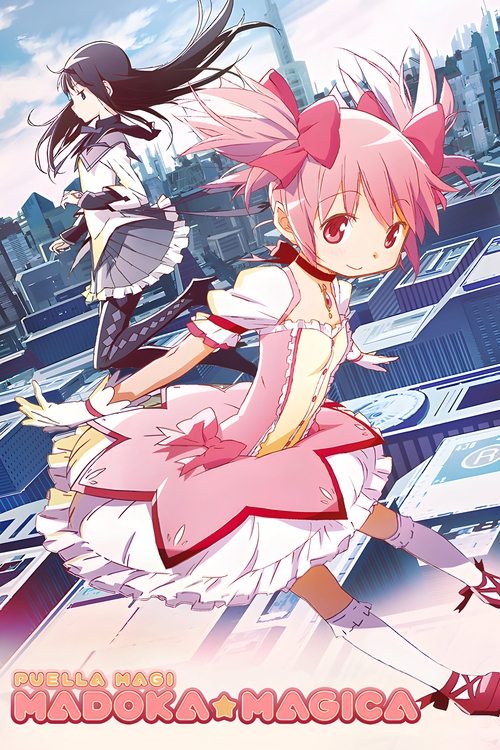
Madoka Kaname, a middle school girl, begins her story in a seemingly ordinary world. One day, she has a strange dream where she meets a mysterious girl named Homura Akemi, who warns her about becoming a magical girl. The next day, Madoka and her friend Sayaka Miki encounter a creature called Kyubey, a small, cat-like being that offers them the chance to become magical girls in exchange for granting one wish. Kyubey explains that they will gain magical powers and fight witches, malevolent beings that spread despair.
Madoka is intrigued but hesitant, while Sayaka is more enthusiastic. They meet Mami Tomoe, an experienced magical girl who saves them from a witch. Mami explains the responsibilities and dangers of being a magical girl, showcasing her powers in a dramatic battle against a witch. After defeating the witch, Mami invites Madoka and Sayaka to join her in fighting witches, but Madoka remains conflicted about the decision.
As Madoka contemplates her choice, she witnesses Mami's tragic fate when she is killed by a powerful witch during a battle. This event deeply traumatizes Madoka and Sayaka, making them question the reality of being a magical girl. Despite the fear, Sayaka decides to become a magical girl, wishing to heal the hand of her crush, Kyousuke Kamijo, who is suffering from an injury. Madoka, still uncertain, watches as Sayaka embraces her new powers.
Sayaka's transformation into a magical girl leads her to confront her first witch, but she quickly realizes the emotional toll of her wish. As she fights, she becomes increasingly disillusioned with the nature of her powers and the sacrifices required. Meanwhile, Madoka continues to struggle with her feelings about becoming a magical girl, torn between her desire to help others and the fear of the consequences.
Homura Akemi, who has been observing Madoka, reveals her own tragic backstory. She is a time traveler who has repeatedly tried to save Madoka from the fate of becoming a magical girl. Each time she fails, she returns to the past, determined to protect Madoka from the dark path that lies ahead. Homura's motivations become clearer as she expresses her deep bond with Madoka and her willingness to fight against the cycle of despair.
As the story progresses, Sayaka's mental state deteriorates. She becomes increasingly isolated and frustrated, feeling betrayed by Kyousuke, who does not reciprocate her feelings. In a moment of desperation, she confronts a witch, but her emotional turmoil leads to her downfall. Sayaka's transformation into a witch is a heartbreaking moment, showcasing the tragic consequences of their choices.
Madoka, witnessing the loss of her friends and the despair surrounding her, begins to understand the true nature of being a magical girl. She learns that each wish comes with a heavy price, and the magical girls eventually succumb to despair, becoming witches themselves. This realization drives her to make a pivotal decision.
In a climactic moment, Madoka decides to make a wish to save all magical girls from their tragic fates. She wishes to rewrite the laws of the universe, allowing magical girls to fight witches without the risk of becoming one. This wish transforms her into a powerful being known as the "Law of Cycles," granting her the ability to save magical girls from despair and granting them peace after their battles.
As a result of Madoka's wish, the world changes dramatically. Magical girls are no longer doomed to become witches, and their souls are freed from the cycle of despair. However, this transformation also erases Madoka from the memories of her friends and family, as she becomes a distant, almost mythical figure. Homura, who remembers Madoka, is left to carry the burden of their shared past and the weight of her own choices.
In the final scenes, Homura confronts the new reality, determined to protect Madoka's legacy. She becomes a guardian of sorts, fighting against the remnants of despair in the world. The story concludes with a bittersweet sense of hope, as Madoka's sacrifice brings a new dawn for magical girls, but at the cost of her own existence in the memories of those she loved.









What is the ending?
In the ending of Puella Magi Madoka Magica, Madoka Kaname makes a selfless wish to save all magical girls from their tragic fates, transforming into a god-like entity. She erases the existence of witches and rewrites the rules of the universe, allowing magical girls to live without succumbing to despair. As a result, her friends, including Homura Akemi, are left with memories of her sacrifice. The series concludes with Madoka's presence felt in the world, while Homura, now alone, vows to protect Madoka's legacy.
As the final episodes unfold, the atmosphere is heavy with tension and despair. The scene opens in a desolate landscape, where the remnants of the previous battles linger. Homura Akemi stands resolute, her heart burdened with the weight of her repeated time loops. She has witnessed the tragic fates of her friends, particularly Madoka, and is determined to save her at any cost.
In a pivotal moment, Madoka confronts the truth of the magical girl system. She learns that the transformation into a witch is an inevitable fate for all magical girls, a cruel cycle that Homura has fought against tirelessly. The emotional stakes rise as Madoka grapples with the implications of her own potential future. Her compassion for her friends drives her to make a monumental decision.
In a climactic scene, Madoka makes her wish. She wishes to eliminate all witches, which fundamentally alters the fabric of the universe. The visual representation of her wish is breathtaking; a radiant light envelops her, signifying her transformation into a god-like being. As she ascends, she becomes a beacon of hope, her essence spreading throughout the cosmos. The audience witnesses the eradication of witches, a profound change that reverberates through the lives of all magical girls.
The narrative shifts to the aftermath of Madoka's wish. The world is transformed; magical girls no longer face the threat of becoming witches. However, this comes at a cost. Madoka's existence is altered; she is no longer a part of the world in the same way. Her friends, including Sayaka Miki and Mami Tomoe, are freed from their tragic fates, but they are left with a haunting emptiness, aware of the sacrifice Madoka made for them.
Homura, who has fought so hard to protect Madoka, is left alone in a world where Madoka is a distant memory. The emotional weight of her solitude is palpable. She remembers the moments they shared, the laughter, and the bonds they formed. Homura's determination solidifies; she vows to protect Madoka's legacy, even if it means standing alone against the darkness.
In the final scenes, the audience sees glimpses of a new world where magical girls can live without fear. The camera pans over a serene landscape, symbolizing hope and renewal. Yet, the bittersweet nature of Madoka's sacrifice lingers. The series closes with a poignant reminder of the bonds formed through struggle and the enduring impact of selflessness.
Each character's fate is intricately tied to Madoka's wish. Sayaka and Mami are liberated from their tragic destinies, able to live on without the threat of becoming witches. Homura, however, remains in a state of longing, her heart forever tied to Madoka, who exists now as a guardian spirit, watching over the world she saved. The ending encapsulates the themes of sacrifice, friendship, and the complexities of hope in a world filled with despair.
Is there a post-credit scene?
Yes, "Puella Magi Madoka Magica" features a post-credit scene that adds a poignant layer to the story.
As the credits roll, the scene opens with a serene view of a vast, starry sky, evoking a sense of calm and wonder. The camera slowly pans down to reveal a tranquil landscape, where we see a small, white figure--Kyubey--sitting on a hill, gazing up at the stars. His expression is inscrutable, as always, but there is a sense of stillness around him.
The scene shifts to a close-up of Kyubey, who begins to speak directly to the audience. He explains the nature of the universe and the cycle of hope and despair that the magical girls endure. His voice is calm and almost clinical, reflecting his detached perspective on the events that have transpired. He mentions how the energy generated from the despair of magical girls is essential for the survival of his species, hinting at the larger, darker implications of the magical girl system.
As he continues, the visuals transition to a montage of the various magical girls, including Madoka, Homura, Sayaka, and Mami, showcasing their struggles and sacrifices. The imagery is both beautiful and haunting, underscoring the emotional weight of their journeys.
The scene concludes with a final shot of the night sky, filled with stars, as Kyubey's voice fades out, leaving the audience with a lingering sense of unease and contemplation about the true cost of becoming a magical girl. This post-credit moment encapsulates the series' themes of sacrifice, hope, and the often harsh realities of the choices made by the characters.
What are the conditions for becoming a magical girl in Puella Magi Madoka Magica?
In Puella Magi Madoka Magica, the conditions for becoming a magical girl involve making a contract with a being known as Kyubey. A girl must express a strong desire or wish, which Kyubey will grant in exchange for her becoming a magical girl. This transformation grants her magical powers to fight against witches, but it also comes with the burden of fighting and the eventual risk of succumbing to despair.
What is the significance of Madoka's wish?
Madoka's wish is pivotal to the narrative. Initially, she wishes to save her friend Homura Akemi from suffering, but as the story unfolds, her wish evolves. Ultimately, she wishes to eliminate all witches and save all magical girls from their tragic fates. This wish transforms her into a god-like figure, known as the 'Law of Cycles,' who ensures that magical girls are freed from their despair and can find peace.
How does Homura's character develop throughout the series?
Homura Akemi's character undergoes significant development throughout Puella Magi Madoka Magica. Initially introduced as a mysterious transfer student, her true motivations are revealed as the series progresses. Homura is deeply in love with Madoka and is willing to go to extreme lengths, including resetting time multiple times, to protect her. This obsession leads to a complex portrayal of her character, showcasing her loneliness, determination, and the heavy burden of her repeated failures.
What role do witches play in the story?
Witches in Puella Magi Madoka Magica serve as the primary antagonists that magical girls must confront. Each witch is a manifestation of a magical girl's despair, representing the tragic outcomes of their battles and the emotional turmoil they endure. The witches are depicted through surreal and often grotesque visual designs, and their labyrinths serve as both a physical and psychological battleground for the magical girls, highlighting the themes of despair and the consequences of their choices.
What is the relationship between Sayaka Miki and Kyousuke Kamijo?
Sayaka Miki's relationship with Kyousuke Kamijo is central to her character arc. Sayaka harbors deep feelings for Kyousuke, a talented violinist, and wishes to heal his injured hands as her wish when she becomes a magical girl. However, as the story progresses, her unrequited love and the harsh realities of being a magical girl lead her to despair. This relationship highlights the themes of sacrifice, love, and the painful consequences of her choices, ultimately contributing to her tragic downfall.
Is this family friendly?
"Puella Magi Madoka Magica" is not considered family-friendly due to its dark themes and mature content. Here are some potentially objectionable or upsetting aspects that may affect children or sensitive viewers:
-
Violence and Death: The series features graphic scenes of violence, including battles between magical girls and witches, which often result in death or severe injury.
-
Psychological Trauma: Characters experience intense emotional and psychological struggles, including despair, betrayal, and the burden of their choices, which can be distressing.
-
Existential Themes: The show explores heavy themes such as the nature of hope and despair, the consequences of wishes, and the loss of innocence, which may be difficult for younger viewers to comprehend.
-
Dark Transformations: The transformation sequences of magical girls can be unsettling, as they often involve a stark contrast between their cute appearances and the grim realities they face.
-
Suicide and Self-Sacrifice: There are moments that touch on themes of self-sacrifice and the desire to escape pain, which can be triggering for some viewers.
-
Mature Relationships: The dynamics between characters can include manipulation and betrayal, which may not be suitable for younger audiences.
Overall, the series delves into complex emotional and moral dilemmas that may not be appropriate for children or those sensitive to darker narratives.