













Popular
What is Olivia Pope's relationship with President Fitzgerald Grant throughout the series?
How does the character of Mellie Grant evolve throughout the series?
What are the key events surrounding the assassination of President Grant?
What role does the character of Huck play in the series?
What is the significance of the 'Gladiators in Suits' phrase in the series?
Should I watch it?
Ask Your Own Question

What is the plot?
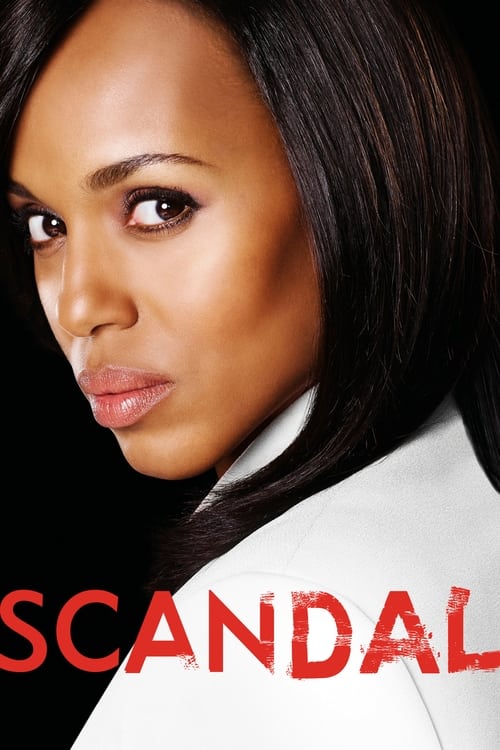
Olivia Pope, a former White House Communications Director, starts her own crisis management firm, Olivia Pope & Associates, in Washington, D.C. She is introduced as a strong, determined woman who is dedicated to fixing the public images of powerful people. The series opens with Olivia handling a high-profile case involving a senator, while also dealing with her complicated relationship with President Fitzgerald Grant, who is in a tumultuous marriage with First Lady Mellie Grant.
As the story unfolds, Olivia's team includes her loyal associates: Huck, a former CIA operative with a dark past; Abby, a sharp and ambitious young woman; and Quinn, a new recruit with a mysterious background. The dynamics within the team are complex, with personal and professional boundaries often blurred. Olivia's relationship with Fitz is revealed to be an affair, which complicates her professional life and personal ethics.
In the first season, Olivia is drawn into a conspiracy involving the murder of a young woman named Amanda Tanner, who had an affair with Fitz. Olivia's investigation reveals that Amanda was killed to cover up the affair, leading her to confront powerful figures, including the Vice President, who is revealed to be involved in the conspiracy. The tension escalates as Olivia and her team race against time to uncover the truth while protecting their clients and themselves.
As the season progresses, Olivia's past comes back to haunt her when her father, Eli Pope, a powerful and manipulative figure, is introduced. He is the head of a secret organization known as B613, which operates outside the law. Eli's presence adds layers of danger and intrigue, as he tries to control Olivia's life and decisions. Olivia struggles with her loyalty to her father and her desire to do what is right.
The season culminates in a shocking twist when it is revealed that Fitz's presidential campaign was built on a lie, and he is not the man Olivia thought he was. The revelation of the truth about Amanda's murder and the extent of the conspiracy leads to a dramatic confrontation between Olivia and Fitz, where she must choose between her love for him and her commitment to justice.
In the second season, the stakes are raised as Olivia and her team face new challenges, including the fallout from the previous season's events. Olivia is forced to confront the consequences of her decisions, both personally and professionally. The introduction of new characters, such as the enigmatic and ruthless command of B613, adds further complexity to the narrative.
As the season progresses, Olivia's relationship with Fitz becomes increasingly strained due to the pressures of his presidency and the secrets they both keep. The tension between them reaches a breaking point when Olivia discovers that Fitz has been keeping secrets about his past and his political ambitions. This revelation leads to a series of confrontations that test their relationship and force Olivia to reevaluate her priorities.
The season also delves deeper into the lives of Olivia's associates, revealing their backstories and motivations. Huck's struggle with his violent past and Abby's determination to prove herself as a capable crisis manager add depth to the narrative. Quinn's mysterious origins are explored, revealing her connection to B613 and the implications it has for her relationship with Olivia.
As the season nears its conclusion, a major plot twist occurs when Olivia is kidnapped by a group connected to B613. This event forces her to confront her father's influence and the dark world of political manipulation. The rescue operation led by her team showcases their loyalty and determination to protect Olivia at all costs.
The season finale leaves viewers on the edge of their seats as Olivia makes a bold decision to confront her father and take control of her own destiny. The emotional weight of her choices is palpable as she grapples with the implications of her actions on her relationships and her future.
In the third season, the narrative shifts as Olivia grapples with the aftermath of her decisions. The political landscape becomes even more treacherous as Fitz faces new challenges in his presidency, including a scandal involving a Supreme Court nominee. Olivia's role as a crisis manager becomes increasingly complicated as she navigates the murky waters of political intrigue and personal betrayal.
The introduction of new characters, such as the ambitious and cunning Vice President, adds further tension to the story. Olivia's relationship with Fitz is tested as they both face external pressures and internal conflicts. The emotional stakes are heightened as Olivia must confront her feelings for Fitz while also dealing with the consequences of her past decisions.
As the season progresses, Olivia's team faces new challenges, including a high-profile case involving a powerful senator accused of sexual misconduct. The investigation reveals deep-seated corruption and complicity within the political system, forcing Olivia to confront the moral implications of her work. The tension between Olivia and her team members escalates as they grapple with their own ethical dilemmas.
The season culminates in a dramatic showdown between Olivia and her father, Eli, as she seeks to break free from his control. The confrontation is intense and emotional, showcasing Olivia's growth as a character and her determination to forge her own path. The fallout from this confrontation reverberates throughout the season, impacting Olivia's relationships and her professional life.
In the fourth season, the narrative takes a darker turn as Olivia becomes embroiled in a conspiracy that threatens to unravel everything she has worked for. The introduction of new antagonists, including a powerful and ruthless political operative, raises the stakes for Olivia and her team. The tension between Olivia and Fitz reaches new heights as they navigate the complexities of their relationship amidst the chaos of the political landscape.
As the season progresses, Olivia's moral compass is tested as she is forced to make difficult choices that challenge her principles. The emotional toll of her decisions weighs heavily on her, leading to moments of vulnerability and self-doubt. The dynamics within her team shift as they grapple with their own loyalties and motivations.
The season finale leaves viewers with a shocking cliffhanger as Olivia's world is turned upside down. The consequences of her actions come to a head, forcing her to confront the reality of her choices and the impact they have on those around her. The emotional stakes are at an all-time high as Olivia must navigate the fallout from her decisions and the uncertain future that lies ahead.
In the fifth season, the narrative explores the aftermath of the previous season's events, focusing on Olivia's struggle to regain control of her life and her career. The political landscape continues to shift as new challenges arise, forcing Olivia to confront her past and the consequences of her actions. The tension between Olivia and Fitz remains palpable as they navigate their complicated relationship amidst the chaos of the political world.
As the season progresses, Olivia's team faces new challenges, including a high-profile case involving a powerful corporation accused of corruption. The investigation reveals deep-seated issues within the political system, forcing Olivia to confront the moral implications of her work. The emotional stakes are heightened as Olivia grapples with her own ethical dilemmas and the impact of her decisions on her relationships.
The season culminates in a dramatic showdown between Olivia and her enemies, showcasing her resilience and determination to fight for what she believes in. The emotional weight of her choices is palpable as she confronts the consequences of her actions and the impact they have on those she loves. The season ends with a powerful moment of self-discovery for Olivia, as she embraces her identity and her role in the world of politics.
In the sixth and final season, the narrative reaches its climax as Olivia faces the ultimate test of her character and her convictions. The political landscape is more treacherous than ever, with new threats emerging that challenge Olivia's resolve. The tension between Olivia and Fitz reaches a breaking point as they confront the realities of their relationship and the impact of their choices on their futures.
As the season progresses, Olivia's team faces new challenges, including a high-stakes election that threatens to upend everything they have worked for. The emotional stakes are heightened as Olivia grapples with her own identity and the legacy she wants to leave behind. The dynamics within her team shift as they navigate their own loyalties and motivations, leading to moments of tension and conflict.
The series concludes with a powerful and emotional finale that brings closure to Olivia's journey. The choices she makes in the final moments reflect her growth as a character and her commitment to fighting for justice and truth. The emotional weight of her decisions resonates as she embraces her identity and her role in the world, leaving viewers with a sense of hope and resolution.








What is the ending?
In the final episode of "Scandal," titled "Over a Cliff," Olivia Pope confronts the consequences of her actions and the tangled web of relationships that have defined her life. The series culminates in a dramatic showdown involving the fate of the presidency, the lives of her friends and enemies, and Olivia's own quest for power and redemption.
As the episode unfolds, Olivia is faced with the reality of her choices, leading to a series of confrontations that ultimately reshape her future and the future of those around her. The episode concludes with Olivia taking control of her narrative, but at a significant personal cost.
The final episode of "Scandal" opens with a tense atmosphere in the Oval Office, where Olivia Pope, played by Kerry Washington, is grappling with the fallout from her past decisions. The camera pans across the room, capturing the weight of the moment as Olivia stands at the center, embodying both strength and vulnerability. She is determined to confront the chaos that has enveloped her life and the lives of those she loves.
Scene by scene, the narrative unfolds. Olivia's former lover and the sitting president, Fitzgerald Grant, portrayed by Tony Goldwyn, is embroiled in a political crisis that threatens to unravel his administration. The stakes are high, and the tension is palpable as Olivia navigates the treacherous waters of political intrigue and personal betrayal.
In a pivotal moment, Olivia meets with her father, Eli Pope, played by Joe Morton, who has been a constant source of manipulation and control throughout her life. Their conversation is charged with emotion, revealing the deep-seated conflicts between them. Eli's ruthless nature clashes with Olivia's desire for autonomy, and the scene is filled with a sense of impending doom as Olivia realizes the extent of her father's influence.
As the episode progresses, Olivia's team, known as "Gladiators," including Huck, Quinn, and Abby, rally around her. Each character is portrayed with a sense of urgency, their loyalty to Olivia evident as they prepare for the final showdown. Huck, played by Guillermo Díaz, is particularly conflicted, torn between his loyalty to Olivia and the violent past that haunts him. Quinn, portrayed by Katie Lowes, has evolved from a naive intern to a fierce warrior, embodying the spirit of resilience that defines the group.
The narrative builds to a climactic confrontation in the White House, where Olivia faces off against her political adversaries. The tension escalates as secrets are revealed, and alliances shift. Olivia's determination to reclaim her narrative is palpable, and the stakes reach a fever pitch as she confronts the consequences of her actions.
In a heart-wrenching moment, Olivia must make a choice that will alter the course of her life and the lives of those around her. The emotional weight of her decision is captured in her expression, a mixture of resolve and sorrow. As she steps into her new role, the camera lingers on her face, highlighting the complexity of her character--a woman who has fought tirelessly for power but at a great personal cost.
The episode concludes with a montage that encapsulates the fates of the main characters. Olivia, now in a position of power, stands alone, reflecting on her journey. Fitz, having lost the presidency, is left to grapple with the consequences of his choices. Huck and Quinn, having fought alongside Olivia, find themselves at a crossroads, uncertain of their future. Abby, portrayed by Darby Stanchfield, is left to navigate the aftermath of the political turmoil, her loyalty to Olivia unwavering.
As the screen fades to black, the series leaves viewers with a sense of closure yet ambiguity, encapsulating the complex nature of power, love, and sacrifice. The final moments serve as a poignant reminder of the intricate web of relationships that have defined Olivia's life, leaving a lasting impact on both her and the audience.
Is there a post-credit scene?
The TV show "Scandal," which premiered in 2012, does not feature post-credit scenes in the traditional sense that some films or series do. Each episode typically concludes with a dramatic moment or cliffhanger, leading directly into the next episode without any additional scenes after the credits roll. The focus remains on the intense storytelling and character development throughout the episodes, rather than on post-credit content.
If you have any specific episodes or plot points you'd like to discuss, feel free to ask!
What is Olivia Pope's relationship with President Fitzgerald Grant throughout the series?
Olivia Pope, played by Kerry Washington, has a complex and tumultuous relationship with President Fitzgerald Grant, portrayed by Tony Goldwyn. Their affair begins before the series starts, rooted in a deep emotional connection and mutual attraction. As the series progresses, their relationship is marked by intense passion, political complications, and personal sacrifices. Olivia often struggles with her role as a fixer and her feelings for Fitz, leading to moments of both intimacy and conflict. Their relationship is further complicated by Fitz's marriage to Mellie Grant and the political ramifications of their affair, which creates a constant tension between personal desires and public responsibilities.
How does the character of Mellie Grant evolve throughout the series?
Mellie Grant, played by Bellamy Young, starts as the seemingly cold and ambitious First Lady, often overshadowed by her husband's infidelity with Olivia Pope. As the series unfolds, Mellie's character evolves significantly. Initially portrayed as a victim of her husband's betrayal, she gradually reveals her own political acumen and determination. Her journey includes moments of vulnerability, such as her struggles with motherhood and her desire for power. Mellie's transformation into a formidable political figure culminates in her own presidential campaign, showcasing her resilience and ambition, as she learns to navigate the treacherous waters of Washington politics on her own terms.
What are the key events surrounding the assassination of President Grant?
The assassination of President Fitzgerald Grant is a pivotal plot point in 'Scandal.' It occurs in Season 4, when Fitz is shot during a public event. The event is orchestrated by a conspiracy involving various characters, including the B613 organization and the influence of powerful political figures. The aftermath of the assassination attempt leads to a national crisis, with Olivia and her team working tirelessly to uncover the truth behind the attack. The emotional toll on Fitz, who survives but is deeply affected by the attempt on his life, adds layers to his character and his relationship with Olivia, as they grapple with the implications of power, loyalty, and survival.
What role does the character of Huck play in the series?
Huck, played by Guillermo Diaz, is a former operative for B613 who becomes a key member of Olivia Pope's team. His character is marked by a traumatic past, having undergone intense psychological conditioning and torture during his time with B613. Throughout the series, Huck struggles with his violent tendencies and the moral implications of his past actions. His loyalty to Olivia and the team is unwavering, often putting him in dangerous situations. Huck's journey is one of redemption, as he seeks to reconcile his past with his desire to protect those he cares about, particularly his son, whom he longs to reconnect with. His character adds depth to the themes of loyalty, trauma, and the quest for personal redemption.
What is the significance of the 'Gladiators in Suits' phrase in the series?
The phrase 'Gladiators in Suits' is a defining motto for Olivia Pope and her team of crisis managers. It symbolizes their role as fierce protectors of their clients, often navigating the murky waters of political scandals and personal crises. The term reflects their commitment to fighting for justice and truth, even when faced with overwhelming odds. Each member of the team embodies this spirit in their own way, showcasing their unique skills and dedication. The phrase also highlights the high-stakes environment of Washington, D.C., where the team operates, emphasizing the blend of glamour and danger that characterizes their work. It serves as a rallying cry for the team, reinforcing their bond and shared mission in a world rife with deception and betrayal.
Is this family friendly?
"Scandal," produced in 2012, is not considered family-friendly due to its mature themes and content. Here are some potentially objectionable or upsetting aspects that may affect children or sensitive viewers:
-
Graphic Violence: The show includes scenes of physical violence, including shootings and assaults, which can be intense and disturbing.
-
Sexual Content: There are numerous instances of sexual situations, including affairs and explicit dialogue, which may not be suitable for younger audiences.
-
Political Corruption and Manipulation: The series delves into dark themes of political intrigue, betrayal, and manipulation, which can be complex and unsettling.
-
Emotional Turmoil: Characters often experience intense emotional struggles, including trauma, loss, and moral dilemmas, which may be distressing for sensitive viewers.
-
Strong Language: The dialogue includes profanity and harsh language, which may not be appropriate for children.
-
Themes of Infidelity and Betrayal: The exploration of relationships marked by infidelity and betrayal can be uncomfortable and may not align with family values.
These elements contribute to the show's rating and indicate that it is more suitable for mature audiences.