
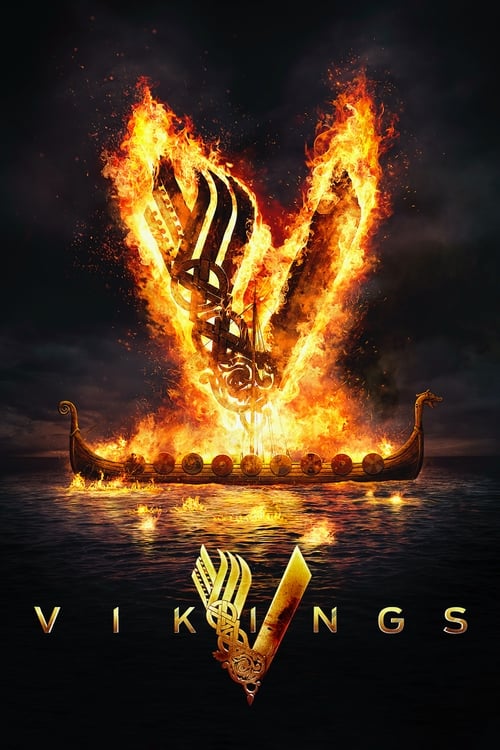








Popular
What motivates Ragnar Lothbrok to raid England in the first season?
How does Lagertha's character evolve throughout the series?
What is the significance of the relationship between Ragnar and Athelstan?
What events lead to the downfall of King Ecbert?
How does Bjorn Ironside's character develop throughout the series?
Should I watch it?
Ask Your Own Question

What is the plot?
In the beginning of "Vikings," we are introduced to Ragnar Lothbrok, a legendary Norse hero and farmer, who is restless and dreams of exploring the west. He is frustrated with the current leadership of Earl Haraldson, who is more focused on raiding the east. Ragnar's ambition is fueled by his desire to discover new lands and riches, particularly the fabled land of England. He confides in his wife, Lagertha, a shieldmaiden, who supports his dreams. Ragnar's brother, Rollo, is also introduced, who is torn between loyalty to Ragnar and his own ambitions.
Ragnar decides to build a new type of ship, a longship, which can navigate the open sea. He enlists the help of Floki, a skilled shipbuilder and eccentric friend. After much effort, they successfully construct the longship, which is a significant advancement over the traditional vessels. Ragnar's determination to raid the west leads him to confront Earl Haraldson, who is dismissive of Ragnar's plans. This confrontation escalates when Ragnar and his men, including Rollo, decide to go against the Earl's orders and set sail for England.
Upon arriving in England, Ragnar and his crew raid a monastery at Lindisfarne, where they encounter little resistance. They are shocked by the wealth they find, including gold and silver, and they capture several monks as prisoners. This successful raid marks the beginning of Ragnar's reputation as a formidable raider. However, upon returning home, they face the wrath of Earl Haraldson, who is furious about Ragnar's disobedience. A power struggle ensues, leading to a confrontation between Ragnar and the Earl.
Ragnar challenges Earl Haraldson to a duel for leadership. The duel is intense, with both men fighting fiercely. Ultimately, Ragnar emerges victorious, killing the Earl and claiming his title. This victory solidifies Ragnar's position as a leader among the Vikings, but it also creates tension with Rollo, who feels overshadowed by Ragnar's success. Rollo's jealousy begins to fester, leading to a rift between the brothers.
As Ragnar's fame grows, he decides to marry Lagertha in a traditional ceremony, solidifying their bond. However, their relationship is tested when Ragnar becomes increasingly obsessed with his ambitions and the lure of exploration. He begins to neglect his family, which causes strain in their marriage. Meanwhile, Lagertha becomes pregnant, and Ragnar's focus on raiding and conquest creates a sense of distance between them.
Ragnar's next raid takes him to the kingdom of Wessex, where he encounters King Aelle. The raid is met with fierce resistance, and Ragnar's forces suffer losses. During this time, he also meets Athelstan, a captured monk who becomes a pivotal character in Ragnar's life. Athelstan's knowledge of Christianity and the English culture intrigues Ragnar, and he begins to see him as a valuable ally.
As Ragnar continues to raid, he faces challenges from rival factions, including the Saxons and other Viking leaders. Rollo's jealousy culminates in a betrayal when he allies himself with the Saxons, leading to a confrontation between the brothers. This betrayal deeply wounds Ragnar, who feels betrayed by his own blood. The conflict escalates into a battle, where Ragnar's forces clash with Rollo's new allies.
In the aftermath of the battle, Ragnar's family faces personal tragedies. Lagertha suffers a miscarriage, which devastates her and strains her relationship with Ragnar further. Meanwhile, Ragnar's relationship with Athelstan deepens, as they share a bond over their differing cultures. Athelstan becomes a trusted advisor to Ragnar, helping him navigate the complexities of leadership and faith.
As Ragnar's ambitions grow, he decides to explore the east, leading to a journey to the Mediterranean. This journey introduces new characters and challenges, including encounters with the Byzantine Empire. Ragnar's quest for knowledge and power leads him to make alliances with various leaders, but it also puts him at odds with his own people, who question his loyalty and decisions.
Back in Scandinavia, Lagertha, feeling neglected, takes matters into her own hands and leads her own raid, proving her strength as a warrior. This act of independence earns her respect but also creates tension with Ragnar, who struggles to balance his ambitions with his responsibilities as a husband and father.
As the series progresses, Ragnar's quest for power leads to further conflicts with Rollo, who continues to seek his own path. The brothers' rivalry culminates in a series of battles that test their loyalty and love for one another. Ragnar's internal struggles with his identity and the weight of leadership become increasingly apparent, leading to moments of introspection and doubt.
The series also explores the themes of fate and destiny, as Ragnar grapples with prophecies and visions that foretell his future. These elements add a layer of complexity to his character, as he seeks to understand his place in the world and the legacy he will leave behind.
As Ragnar's story unfolds, he faces numerous challenges, including betrayals, losses, and the ever-present threat of war. His relationships with Lagertha, Rollo, and Athelstan evolve, reflecting the changing dynamics of power and loyalty within the Viking community. The series culminates in a dramatic conclusion, where Ragnar's journey comes full circle, leading to a final confrontation that tests his resolve and the bonds he has forged throughout his life.
In the end, Ragnar's legacy is cemented, not just through his conquests, but through the impact he has on those around him, shaping the future of the Viking world and leaving a lasting mark on history.







What is the ending?
In the final episode of "Vikings," titled "The Last Act," the story culminates in a series of intense confrontations and resolutions. Ragnar Lothbrok's sons, particularly Ivar the Boneless, take center stage as they seek revenge against King Alfred and the Saxons. The episode concludes with significant losses on both sides, and the legacy of Ragnar's lineage is solidified as they continue to forge their own paths.
As the episode begins, we find Ivar the Boneless, now a formidable leader, rallying his brothers and their forces for a final assault against the Saxons. The tension is palpable as they prepare for battle, driven by a mix of vengeance for their father's death and a desire to claim their place in history. Ivar's ambition is clear; he is determined to prove himself as a warrior and a ruler, despite his physical limitations.
The scene shifts to the battlefield, where the Viking forces clash with the Saxons. The chaos of war is vividly depicted, with the sounds of clashing swords, the cries of warriors, and the visceral imagery of combat. Ivar fights fiercely, embodying both the rage of his lineage and the strategic mind that sets him apart from his brothers. His brothers, Bjorn Ironside, Hvitserk, and Ubbe, each play their roles in the battle, showcasing their unique fighting styles and motivations.
As the battle rages on, we see the emotional turmoil within Ivar. He grapples with the weight of his father's legacy and the expectations placed upon him. His desire for power is matched by a deep-seated fear of failure, which drives him to push his limits. The conflict is not just external; it is a struggle for identity and purpose.
In a pivotal moment, Ivar confronts King Alfred, the Saxon king who represents everything the Vikings oppose. Their encounter is charged with tension, as Ivar seeks to avenge his father's death and assert his dominance. However, Alfred, embodying the resilience of the Saxon people, stands firm against Ivar's aggression. The clash between their ideologies--Viking ambition versus Saxon perseverance--underscores the larger conflict at play.
As the battle reaches its climax, the Vikings suffer significant losses. The emotional weight of these losses is felt deeply by the characters, particularly Ivar, who must confront the reality of leadership and the sacrifices it demands. The aftermath of the battle leaves the Vikings in a precarious position, with their future uncertain.
In the final scenes, we witness the fates of the main characters. Ivar, despite his victories, is left grappling with the consequences of his actions and the heavy burden of leadership. Bjorn Ironside, having fought valiantly, is also faced with the reality of loss and the need to forge a new path for his people. Hvitserk and Ubbe, while still loyal to their brother, begin to question the direction in which Ivar is leading them.
The episode concludes with a sense of ambiguity. The legacy of Ragnar Lothbrok lives on through his sons, but the path forward is fraught with challenges. The final moments leave viewers with a poignant reminder of the cyclical nature of conflict and the enduring struggle for power, identity, and legacy within the Viking saga. Each character is left to navigate their own destinies, shaped by the choices they have made and the history they carry with them.
Is there a post-credit scene?
The TV show "Vikings," produced in 2013, does not feature post-credit scenes in the traditional sense that many modern films or series do. Each episode concludes with a final scene that wraps up the narrative of that episode, but there are no additional scenes or teasers that play after the credits roll. The focus remains on the story arcs and character developments throughout the episodes, with each season building upon the events of the previous ones without the use of post-credit content.
What motivates Ragnar Lothbrok to raid England in the first season?
Ragnar Lothbrok, portrayed by Travis Fimmel, is driven by a deep desire for exploration and a thirst for glory. He feels constrained by the traditional ways of his village and is inspired by the tales of riches in the East. His ambition is fueled by a need to prove himself as a warrior and a leader, especially in the eyes of his wife Lagertha and his fellow Vikings. This motivation is evident in his determination to build a new ship, the Drakkar, which symbolizes his quest for adventure and conquest.
How does Lagertha's character evolve throughout the series?
Lagertha, played by Katheryn Winnick, begins as a strong shieldmaiden and the wife of Ragnar. Her character evolves significantly as she navigates the complexities of love, loyalty, and power. After facing betrayal and loss, she becomes a formidable leader in her own right, taking on the role of Earl and later a warrior in her own battles. Her emotional journey reflects her struggle between her love for Ragnar and her desire for independence, showcasing her resilience and strength as she fights for her place in a male-dominated society.
What is the significance of the relationship between Ragnar and Athelstan?
The relationship between Ragnar and Athelstan, played by George Blagden, is pivotal in the series. Athelstan, a Christian monk, becomes a bridge between the Viking and Christian worlds. Initially, Ragnar captures Athelstan during a raid, but he soon comes to respect him as a friend and advisor. Their bond represents the clash of cultures and beliefs, with Athelstan's faith challenging Ragnar's pagan beliefs. This relationship deepens as Athelstan struggles with his identity, torn between his loyalty to Ragnar and his Christian faith, ultimately leading to profound personal conflict and tragedy.
What events lead to the downfall of King Ecbert?
King Ecbert, portrayed by Linus Roache, experiences a gradual downfall due to his ambition and the shifting allegiances of those around him. Initially, he appears as a cunning and strategic ruler, forging alliances with Ragnar and the Vikings. However, his desire for power leads him to betray those alliances, particularly with the rise of his son Aethelwulf and the growing threat of the Viking invasions. His downfall is marked by the loss of his kingdom's stability, the betrayal of his own family, and the eventual invasion of the Vikings, culminating in a tragic end that reflects the consequences of his ruthless ambition.
How does Bjorn Ironside's character develop throughout the series?
Bjorn Ironside, played by Alexander Ludwig, undergoes significant development from a young boy to a legendary warrior. Initially, he is portrayed as the son of Ragnar and Lagertha, struggling with the expectations placed upon him. As he matures, he grapples with his identity, seeking to prove himself worthy of his father's legacy. His journey takes him across various lands, where he faces challenges that test his strength and leadership. Bjorn's character embodies the themes of bravery and exploration, as he ultimately strives to carve out his own path, balancing his Viking heritage with his personal ambitions.
Is this family friendly?
The TV show "Vikings," produced in 2013, contains several elements that may not be suitable for children or sensitive viewers. Here are some potentially objectionable aspects:
-
Violence and Warfare: The series features graphic battle scenes, including intense hand-to-hand combat, bloodshed, and depictions of death. Characters often engage in brutal fights, and the consequences of war are portrayed starkly.
-
Sexual Content: There are numerous scenes that include nudity and sexual situations. These moments often depict relationships, infidelity, and the complexities of love and power among characters.
-
Strong Language: The dialogue includes frequent use of profanity and harsh language, which may be inappropriate for younger audiences.
-
Themes of Betrayal and Revenge: The narrative explores dark themes such as betrayal, revenge, and the moral complexities of leadership, which may be unsettling for some viewers.
-
Religious and Cultural Conflict: The show delves into the clash between pagan beliefs and Christianity, showcasing rituals and practices that may be disturbing to some.
-
Emotional Turmoil: Characters experience significant emotional struggles, including loss, grief, and existential crises, which may be heavy for younger viewers to process.
These elements contribute to a mature tone throughout the series, making it more suitable for adult audiences.