
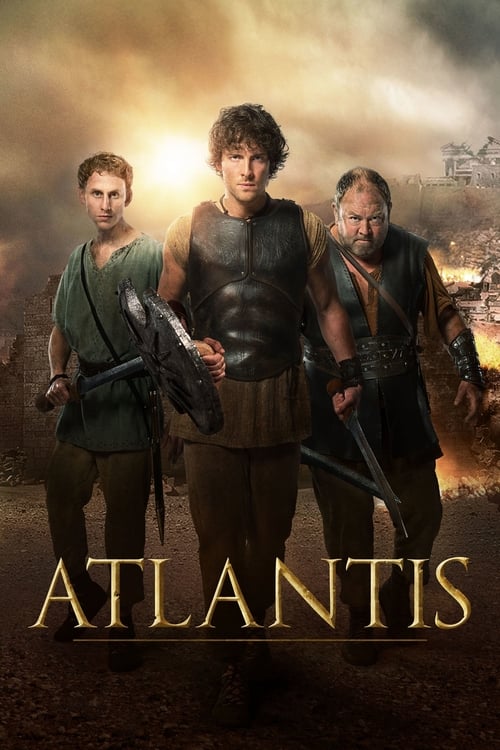













Popular
What is the significance of Jason's journey to Atlantis?
How does the relationship between Jason and Ariadne develop throughout the series?
What role does the character of Hercules play in Jason's journey?
What are the consequences of the Minotaur's presence in Atlantis?
How does the character of Pythagoras contribute to the group's dynamic?
Should I watch it?
Ask Your Own Question

What is the plot?
In the first episode, "The Earth and the Sky," we are introduced to Jason, a young man from modern-day England who is disillusioned with his life. He is drawn to the tales of the legendary city of Atlantis. After a chance encounter with a mysterious figure, he finds himself transported to the ancient world of Atlantis. Upon arrival, he is bewildered by the sights and sounds of the bustling city. He quickly meets Pythagoras, a clever and resourceful young man, and Hercules, a strong but somewhat simple-minded warrior. The trio forms an immediate bond, united by their shared sense of adventure.
As they explore Atlantis, they learn about the political tensions within the city, particularly the oppressive rule of King Minos. The trio witnesses a public execution, which deeply affects Jason, igniting his desire to challenge the injustices of this world. They soon find themselves embroiled in a plot to rescue a young woman named Ariadne, who is the daughter of King Minos. She is being forced into a marriage with a powerful suitor, and Jason feels a strong connection to her. The group devises a plan to infiltrate the palace and rescue her.
In the second episode, "A Boy of No Consequence," Jason, Pythagoras, and Hercules continue their efforts to help Ariadne. They learn that she is being held captive in the palace and that her life is in danger. The trio sneaks into the palace during a grand feast, where they encounter various guards and palace officials. Tension rises as they navigate the opulent halls, using their wits and skills to avoid detection. They finally reach Ariadne's chamber, but their escape is thwarted when they are discovered by the guards. A chaotic fight ensues, showcasing Hercules's strength as he takes on multiple guards while Jason and Pythagoras help Ariadne flee.
In the third episode, "The Price of Hope," the consequences of their actions begin to unfold. After the escape, Jason and his friends must hide from the king's men, who are searching for them. They seek refuge in the underbelly of Atlantis, where they meet a group of rebels who oppose King Minos's rule. The rebels share their grievances and plans for a revolt, and Jason is inspired to join their cause. Meanwhile, Ariadne struggles with her feelings for Jason and her duty to her family. She is torn between her loyalty to her father and her growing affection for Jason.
As the rebellion gains momentum, the group devises a plan to sabotage a public event hosted by King Minos. They aim to expose the king's tyranny and rally the citizens of Atlantis to their cause. During the event, Jason and his friends execute their plan, creating chaos and drawing attention to the injustices faced by the people. However, their actions lead to unforeseen consequences, and they must escape once again as the king's guards close in on them.
In the fourth episode, "The Dying of the Light," the stakes are raised as the rebellion faces internal strife. Jason grapples with the weight of leadership and the responsibility of his choices. Tensions rise between him and Pythagoras, who feels that Jason is becoming too reckless. Meanwhile, Hercules remains steadfast, providing support to both friends. The group learns of a powerful artifact that could turn the tide in their favor, but it is hidden deep within the labyrinthine tunnels beneath Atlantis.
The trio embarks on a perilous journey to retrieve the artifact, facing various traps and mythical creatures along the way. They confront their fears and insecurities, ultimately emerging stronger and more united. However, their victory is short-lived as they return to the surface to find that the king has retaliated against the rebels, leading to a brutal crackdown on dissenters.
In the fifth episode, "The Last of the Line," the rebellion reaches a critical point. Jason, Pythagoras, and Hercules must rally the remaining rebels to mount a final stand against King Minos. They devise a bold plan to infiltrate the palace once more, aiming to confront the king directly. As they prepare for the assault, Ariadne makes a difficult decision to stand by her father, believing she can influence him from within.
The assault on the palace is intense and fraught with danger. The trio fights their way through guards, showcasing their growth as warriors. Jason's leadership is tested as he must make quick decisions to protect his friends and the rebels. They finally confront King Minos in a climactic showdown, where Jason's resolve is put to the ultimate test. The battle is fierce, and sacrifices are made, leading to a dramatic conclusion that alters the fate of Atlantis.
In the final episode, "The Fall of Atlantis," the aftermath of the rebellion unfolds. The city is in chaos, and the power dynamics have shifted dramatically. Jason, Pythagoras, and Hercules must navigate the new landscape, dealing with the consequences of their actions. Ariadne's role becomes pivotal as she seeks to unite the factions within Atlantis and restore peace. The trio faces new challenges, including betrayal from unexpected allies and the looming threat of ancient prophecies.
As the story reaches its climax, the characters confront their destinies, and the fate of Atlantis hangs in the balance. Jason must reconcile his feelings for Ariadne with the reality of their situation, while Pythagoras and Hercules grapple with their own paths. The series concludes with a dramatic and emotional resolution, leaving the characters forever changed and the future of Atlantis uncertain.








What is the ending?
In the ending of the TV show Atlantis, the main characters face a climactic battle against the forces of the Minotaur and the dark god, Asterius. Jason, Pythagoras, and Hercules unite to confront their enemies, leading to a final showdown that tests their strength and resolve. Ultimately, they manage to defeat Asterius, but at a great cost. The series concludes with Jason making a significant choice about his future, while the fates of his friends are also revealed, leaving a bittersweet sense of closure.
As the final episode unfolds, the atmosphere in Atlantis is thick with tension. The city is on the brink of chaos, with the Minotaur's forces threatening to unleash destruction. Jason, Pythagoras, and Hercules gather in a dimly lit chamber, their faces etched with determination and fear. They know that the time has come to confront Asterius, the dark god who has manipulated events from the shadows.
Scene 1: The Gathering The trio stands together, their bond stronger than ever. Jason, with a fierce glint in his eye, speaks passionately about their mission. He reflects on their journey, the trials they have faced, and the friendships they have forged. Pythagoras, ever the thinker, shares his concerns about the power of Asterius, while Hercules, embodying strength and loyalty, reassures them that they will fight together, no matter the odds.
Scene 2: The Battle Begins As they prepare for battle, the scene shifts to the streets of Atlantis, where chaos reigns. Citizens flee in terror as the Minotaur's minions wreak havoc. The camera captures the fear in the eyes of the people, juxtaposed with the resolve of our heroes. Jason leads the charge, wielding his sword with precision, while Hercules uses his brute strength to protect the innocent. Pythagoras, using his intellect, devises a plan to outsmart their enemies.
Scene 3: Confronting Asterius The climax builds as they finally confront Asterius in a grand, shadowy arena. The dark god looms large, his presence suffocating. Jason steps forward, fueled by a mix of anger and determination. Asterius taunts them, revealing his true power and the sacrifices he has made to achieve his goals. The battle that ensues is fierce and chaotic, with each character showcasing their unique strengths. Hercules fights valiantly, but is momentarily overpowered, while Pythagoras uses his knowledge of the ancient texts to find Asterius's weakness.
Scene 4: The Turning Point In a pivotal moment, Jason faces Asterius alone. The tension is palpable as they exchange blows, each strike resonating with the weight of their shared history. Jason's internal struggle is evident; he fights not just for himself, but for the future of Atlantis and his friends. With a final surge of strength, he recalls the lessons learned throughout their journey and delivers a decisive blow to Asterius, vanquishing the dark god.
Scene 5: The Aftermath As the dust settles, the heroes stand amidst the ruins of the arena. The citizens of Atlantis begin to emerge, witnessing the defeat of their oppressor. Jason, Pythagoras, and Hercules share a moment of triumph, but it is tinged with sorrow. They have won the battle, but the cost of their victory weighs heavily on them. Hercules, though battered, smiles with pride, while Pythagoras reflects on the fragility of their world.
Scene 6: Choices and Farewells In the final moments, Jason faces a choice about his future. He contemplates his role in Atlantis and the responsibilities that come with it. The camera captures his conflicted emotions as he decides to stay and help rebuild the city, embracing his destiny as a leader. Pythagoras and Hercules, having fulfilled their own arcs, prepare to embark on new adventures, their friendship intact but their paths diverging.
The series concludes with a poignant sense of hope and renewal. The fate of each character is sealed: Jason remains in Atlantis, committed to its people; Pythagoras seeks knowledge beyond the city; and Hercules, ever the protector, vows to continue his journey, ready for whatever challenges lie ahead. The screen fades to black, leaving viewers with a bittersweet reminder of the bonds forged in the face of adversity and the enduring spirit of friendship.
Is there a post-credit scene?
The TV show "Atlantis," produced in 2013, does not feature a post-credit scene. The series concludes its narrative arcs within the episodes themselves, and there are no additional scenes or content presented after the credits roll. The final episode wraps up the storylines of the main characters, providing closure to their journeys without any further teasing or additional content in a post-credit format.
What is the significance of Jason's journey to Atlantis?
Jason's journey to Atlantis is pivotal as it marks the beginning of his transformation from a modern-day man into a hero of ancient myths. Initially, he is driven by a desire to find his missing father, but as he navigates the challenges of Atlantis, he discovers his own strength and leadership qualities. His encounters with characters like Pythagoras and Hercules deepen his understanding of friendship and loyalty, while his romantic interest in Ariadne complicates his motivations, as he grapples with the responsibilities of love and duty.
How does the relationship between Jason and Ariadne develop throughout the series?
The relationship between Jason and Ariadne evolves significantly over the course of the series. Initially, Ariadne is a princess bound by her royal duties, while Jason is an outsider. Their connection begins with mutual curiosity and attraction, but as they face various trials together, including political intrigue and personal sacrifices, their bond deepens. Ariadne's struggle between her feelings for Jason and her obligations to her family creates tension, especially as she is torn between her love for him and her loyalty to her kingdom.
What role does the character of Hercules play in Jason's journey?
Hercules serves as both a mentor and a friend to Jason throughout his journey in Atlantis. Initially portrayed as a legendary hero, Hercules embodies strength and bravery, but he also reveals vulnerabilities that make him relatable. His guidance helps Jason navigate the complexities of heroism, teaching him that true strength lies not just in physical prowess but in moral choices. Hercules' own struggles with his past and his desire for redemption resonate with Jason, reinforcing themes of friendship and the burdens of heroism.
What are the consequences of the Minotaur's presence in Atlantis?
The Minotaur's presence in Atlantis serves as a catalyst for conflict and fear within the city. As a creature born from a curse, it symbolizes the darker aspects of power and the consequences of hubris. The Minotaur's rampages create a sense of urgency for Jason and his friends to confront not only the beast but also the political machinations of King Minos. The hunt for the Minotaur forces characters to confront their fears and insecurities, ultimately leading to significant character development and the revelation of deeper truths about sacrifice and bravery.
How does the character of Pythagoras contribute to the group's dynamic?
Pythagoras is integral to the group's dynamic, providing both intellectual insight and comic relief. His background as a philosopher and mathematician allows him to approach problems with logic and creativity, often offering solutions that others might overlook. His friendship with Jason and Hercules adds depth to the trio, as he balances their more impulsive natures with his cautious and thoughtful demeanor. Pythagoras' loyalty and wit not only strengthen their bond but also highlight the importance of diverse perspectives in overcoming challenges.
Is this family friendly?
"Atlantis," produced in 2013, is generally considered family-friendly, but it does contain some elements that may be objectionable or upsetting for children or sensitive viewers. Here are a few aspects to be aware of:
-
Violence: The show features scenes of combat, including sword fights and battles, which can be intense. Characters may be injured or killed, and there are moments of bloodshed, though it is not excessively graphic.
-
Dark Themes: Some episodes explore themes of betrayal, sacrifice, and the struggle for power, which may be heavy for younger viewers. The emotional weight of these themes can be unsettling.
-
Supernatural Elements: The presence of mythical creatures and magical occurrences may be frightening for some children. Scenes involving monsters or dark magic can evoke fear.
-
Romantic Relationships: There are romantic subplots that include tension and emotional conflict. While not explicit, the portrayal of relationships may raise questions for younger audiences.
-
Moral Ambiguity: Characters often face moral dilemmas, and not all actions are clearly right or wrong. This complexity might be confusing for younger viewers trying to understand the motivations behind characters' choices.
Overall, while "Atlantis" is designed to be an adventure series suitable for a family audience, parents may want to preview episodes to gauge their appropriateness for their children.