
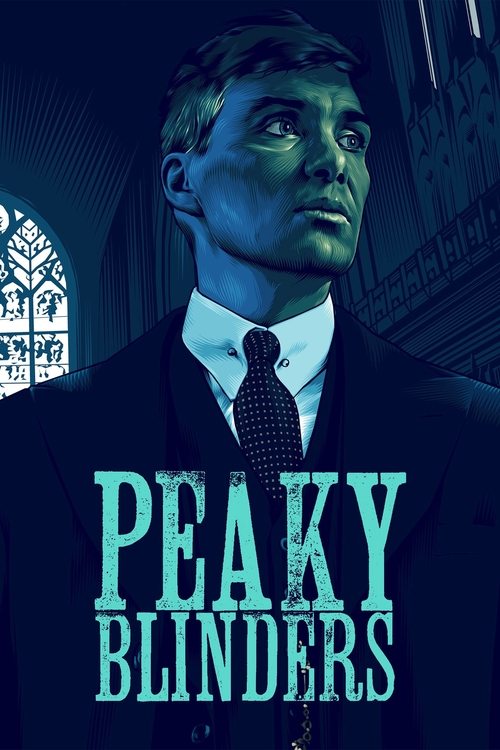





Popular
What motivates Thomas Shelby to expand the Peaky Blinders' operations into London?
How does the relationship between Thomas Shelby and Grace Burgess evolve throughout the series?
What role does Arthur Shelby play in the family dynamics of the Peaky Blinders?
What are the consequences of the Peaky Blinders' feud with the Sabini gang?
How does Polly Gray's character influence the Peaky Blinders' operations?
Should I watch it?
Ask Your Own Question

What is the plot?
In 1919, after World War I, the Peaky Blinders gang, led by Thomas "Tommy" Shelby, operates in Birmingham, England. The gang is known for their distinctive flat caps with razor blades sewn into the peaks. The story begins with Tommy returning from the war, haunted by his experiences and struggling to reintegrate into civilian life. He is determined to expand the family's betting business and gain more power in the city.
Tommy's ambitions lead him to steal a shipment of guns from the local police, intending to use them to strengthen his position. This act draws the attention of Inspector Chester Campbell, a former soldier sent from Belfast to clean up Birmingham and retrieve the stolen weapons. Campbell is determined to dismantle the Peaky Blinders and restore order, viewing Tommy as a significant threat.
As Tommy navigates the criminal underworld, he becomes involved with Grace Burgess, an undercover agent working for Campbell. Initially, Tommy is unaware of her true identity, and they develop a romantic relationship. Grace's presence complicates Tommy's life, as he grapples with his feelings for her while also trying to maintain control over his gang and business.
The Peaky Blinders face challenges from rival gangs, particularly the Sabini gang, who control the racecourses. A violent confrontation occurs at a horse race, where the Peaky Blinders assert their dominance. Tommy's strategic mind allows him to outmaneuver his enemies, but the violence escalates, leading to further bloodshed.
As the season progresses, Tommy learns of Grace's true allegiance to Campbell. Feeling betrayed, he confronts her, but their emotional connection complicates his decision. Despite the betrayal, Tommy still has feelings for Grace, which leads to a tumultuous relationship filled with tension and conflict.
Tommy's ambition leads him to seek political connections, and he becomes involved with the local politician, Mr. Campbell. However, Campbell's motives are not entirely aligned with Tommy's interests, leading to a power struggle. Tommy's desire for legitimacy clashes with his criminal activities, creating a rift within the gang.
The climax of the season occurs when Campbell orchestrates a plan to capture Tommy and the Peaky Blinders. A violent showdown ensues, resulting in significant casualties on both sides. Tommy's cunning and resourcefulness allow him to escape, but the confrontation leaves him more isolated and determined to solidify his power.
In the aftermath, Tommy's relationship with Grace becomes increasingly strained. He struggles with trust issues and the weight of his decisions. Despite their tumultuous past, Grace remains a pivotal figure in Tommy's life, and their bond is tested as they navigate the dangerous world around them.
The season concludes with Tommy solidifying his position as a formidable leader in Birmingham. He has successfully outmaneuvered his enemies, but the cost of his ambition weighs heavily on him. The final scenes depict Tommy standing alone, contemplating the consequences of his choices and the uncertain future that lies ahead for the Peaky Blinders.









What is the ending?
At the end of Peaky Blinders, Tommy Shelby faces the consequences of his actions and the weight of his past. He loses his son, Charles, to a tragic fate, and the series concludes with Tommy standing alone, contemplating his life choices and the future of the Peaky Blinders.
In the final season, the narrative unfolds with Tommy Shelby, now a Member of Parliament, grappling with the political landscape and the rise of fascism in England. The season begins with Tommy's determination to secure a future for his family and the Peaky Blinders, but he is haunted by the ghosts of his past, particularly the loss of his beloved Grace.
As the season progresses, Tommy's relationships become increasingly strained. He faces betrayal from within his own family, particularly from his brother Arthur, who struggles with his demons and the weight of their criminal legacy. Arthur's internal conflict culminates in a violent confrontation, showcasing his deep-seated issues with addiction and violence.
Meanwhile, Tommy's relationship with his son, Charles, becomes a focal point. Tommy is fiercely protective of Charles, wanting to shield him from the violent world he inhabits. However, the tragic turn of events occurs when Charles is kidnapped, leading to a desperate rescue mission. The emotional stakes are high as Tommy races against time, showcasing his determination and love for his son.
In a heart-wrenching climax, Tommy confronts the kidnappers, leading to a violent showdown. Despite his efforts, Charles is ultimately lost to the chaos, leaving Tommy devastated. This loss serves as a pivotal moment for Tommy, forcing him to confront the futility of his pursuits and the cost of his ambition.
The series concludes with Tommy standing alone in a field, reflecting on his life choices. The weight of his actions and the loss of his family weigh heavily on him. He is left to ponder the legacy of the Peaky Blinders and the future of his family, embodying the tragic hero archetype. The final scene captures Tommy's isolation, emphasizing the emotional toll of his journey and the sacrifices he has made.
As the screen fades to black, the fate of the main characters is revealed: Arthur, having faced his demons, finds a semblance of peace, while Tommy is left to navigate a world that feels increasingly alien to him. The series ends on a somber note, highlighting the complexities of loyalty, family, and the consequences of a life steeped in crime.
Is there a post-credit scene?
Peaky Blinders does not feature post-credit scenes in its episodes. The show typically concludes each episode with a dramatic moment or cliffhanger, but there are no additional scenes after the credits roll. The focus remains on the narrative and character development throughout the episodes, leaving viewers to reflect on the events that have transpired without any further content after the credits.
What motivates Thomas Shelby to expand the Peaky Blinders' operations into London?
Thomas Shelby, portrayed by Cillian Murphy, is driven by a combination of ambition, a desire for power, and the need to secure his family's legacy. After the Great War, he returns to Birmingham with a sense of disillusionment and a hunger for more than just local control. His encounters with London gangsters and the allure of greater wealth push him to expand the Peaky Blinders' influence, as he seeks to elevate his family's status and protect them from rival gangs.
How does the relationship between Thomas Shelby and Grace Burgess evolve throughout the series?
The relationship between Thomas Shelby and Grace Burgess is complex and fraught with tension. Initially, Grace is an undercover agent sent to infiltrate the Peaky Blinders, which creates a web of deceit. As she spends time with Thomas, genuine feelings develop, leading to a passionate but tumultuous romance. Their relationship is marked by betrayal, as Thomas struggles with his feelings for her while grappling with the implications of her true identity. Ultimately, their love story is one of tragedy, as Grace's past catches up with them, leading to heart-wrenching consequences.
What role does Arthur Shelby play in the family dynamics of the Peaky Blinders?
Arthur Shelby, played by Paul Anderson, serves as both the muscle and the emotional core of the Peaky Blinders. His character is deeply affected by the trauma of war, leading to struggles with violence and addiction. Arthur's loyalty to Thomas is unwavering, but his internal battles often put him at odds with the family's ambitions. His relationship with Thomas is complex; he admires his brother's leadership but also feels overshadowed by him. This dynamic creates tension, especially as Arthur grapples with his own identity and the expectations placed upon him as the eldest Shelby brother.
What are the consequences of the Peaky Blinders' feud with the Sabini gang?
The feud with the Sabini gang escalates tensions in the series, leading to violent confrontations and significant consequences for both sides. The Sabinis, led by the ruthless gangster Sabini, view the Peaky Blinders' expansion into London as a direct threat to their territory and power. This rivalry results in brutal clashes, including ambushes and assassinations, which not only heighten the stakes for Thomas and his family but also draw in law enforcement and political figures. The conflict forces the Peaky Blinders to navigate a treacherous landscape of alliances and betrayals, ultimately shaping their evolution as a criminal organization.
How does Polly Gray's character influence the Peaky Blinders' operations?
Polly Gray, portrayed by Helen McCrory, serves as the matriarch of the Shelby family and a key advisor in the Peaky Blinders' operations. Her wisdom and intuition are invaluable, as she often acts as the voice of reason amidst the chaos of gang life. Polly's strong moral compass and protective nature drive her to ensure the family's safety and success. She is deeply involved in the decision-making processes, often challenging Thomas's choices and advocating for the well-being of the family. Her character embodies resilience and strength, influencing the dynamics of the gang and the direction of their business ventures.
Is this family friendly?
"Peaky Blinders," produced in 2013, is not considered family-friendly due to its mature themes and content. Here are some potentially objectionable or upsetting aspects that may affect children or sensitive viewers:
-
Violence: The show features graphic depictions of violence, including fights, shootings, and brutal confrontations, often portrayed in a stylized manner.
-
Language: Strong language is prevalent throughout the series, with frequent use of profanity that may be inappropriate for younger audiences.
-
Substance Abuse: Characters are often shown drinking alcohol and smoking, reflecting the historical context but potentially glamorizing these behaviors.
-
Sexual Content: There are scenes that include nudity and sexual situations, which may be uncomfortable for younger viewers.
-
Themes of Crime and Morality: The narrative revolves around organized crime, betrayal, and moral ambiguity, which may be distressing for some viewers.
-
Mental Health Issues: Characters deal with trauma, PTSD, and other mental health struggles, which could be triggering for sensitive individuals.
-
Death and Loss: The series explores themes of loss and the impact of violence on families, which can be emotionally heavy.
Overall, "Peaky Blinders" is intended for a mature audience and contains numerous elements that may not be suitable for children or sensitive viewers.