




Popular
What is the relationship between Shinichi Izumi and Migi throughout the series?
How does Shinichi's character change after he becomes host to Migi?
What motivates the character of Satomi Murano in her relationship with Shinichi?
What is the significance of the character Goto in the series?
How does the series portray the conflict between humans and parasites through the character of Reiko Tamura?
Should I watch it?
Ask Your Own Question

What is the plot?
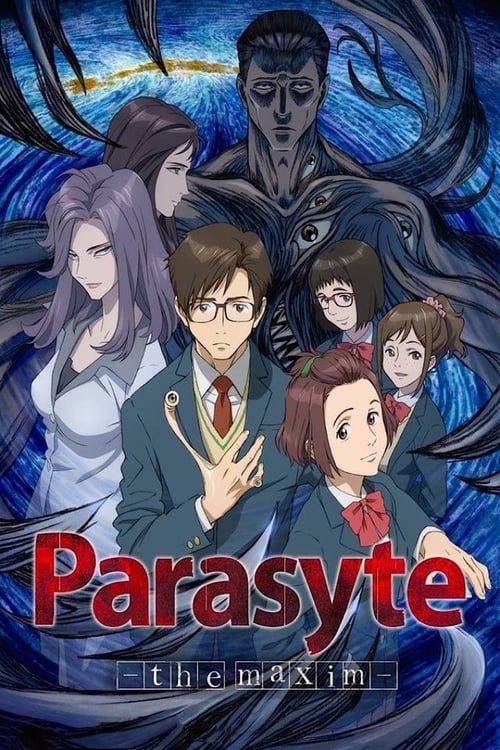
Shinichi Izumi, a high school student living in a quiet suburb of Tokyo, wakes up one night to find a strange noise outside his window. He discovers a parasitic creature attempting to invade his body through his right hand. In a panic, Shinichi manages to prevent the parasite from taking over his brain by using a pair of headphones to block its entry. The parasite, which he later names Migi, is forced to remain in his hand. This event marks the beginning of their unusual coexistence.
As Shinichi grapples with the reality of having a parasite living in his body, he learns that other parasites are infiltrating human society, taking over their hosts completely. Migi explains that they are predatory creatures that consume humans for sustenance. Shinichi struggles with the moral implications of his new situation, feeling both fear and a strange bond with Migi, who possesses incredible strength and abilities. Migi helps Shinichi defend himself against other parasites, showcasing their unique partnership.
The first major confrontation occurs when Shinichi encounters a parasite named Gotou, who is a formidable opponent with multiple parasites fused into one body. Gotou attacks Shinichi and his friends, leading to a tense battle. Shinichi, with Migi's assistance, manages to escape but is left shaken by the encounter. This event solidifies the danger posed by the parasites and the need for Shinichi to adapt to his new reality.
As Shinichi navigates his daily life, he begins to notice changes in his personality and emotions due to Migi's influence. He becomes more detached and pragmatic, which causes friction in his relationships, particularly with his girlfriend, Satomi. Shinichi struggles to maintain his humanity while also relying on Migi's cold logic to survive. This internal conflict deepens as he witnesses the brutal nature of the parasites, leading him to question his own identity.
The story escalates when Shinichi's friend, Murano, becomes a target of a parasite named Reiko Tamura, who is a highly intelligent and cunning creature. Reiko, who has taken on a human form, manipulates situations to her advantage, showcasing the parasites' ability to blend into society. Shinichi realizes that he must confront Reiko to protect his friends, leading to a tense showdown where he must balance his human emotions with Migi's ruthless survival instincts.
In a pivotal moment, Shinichi confronts Reiko in a battle that tests his resolve. He is forced to confront the reality of killing another being, even if it is a parasite. The fight is intense, with Shinichi using Migi's abilities to counter Reiko's attacks. Ultimately, he manages to defeat her, but not without significant emotional turmoil. This victory comes at a cost, as it further alienates him from his human friends and deepens his bond with Migi.
As the series progresses, Shinichi faces more parasites, each encounter revealing the complexities of their existence. He learns about the different motivations of the parasites, some of whom are more sympathetic than others. This exploration of morality and survival leads to further internal conflict for Shinichi, who must reconcile his human emotions with the cold logic of Migi.
The climax of the series occurs when Shinichi faces Gotou again, who has become an even more formidable foe. The battle is brutal and showcases Shinichi's growth as a fighter. He employs strategies learned from Migi while also relying on his own instincts. The fight is a test of endurance and will, pushing Shinichi to his limits. In a desperate moment, he manages to exploit Gotou's weaknesses, ultimately leading to his defeat.
In the aftermath of the battle, Shinichi is left to reflect on the nature of humanity and the choices he has made. He grapples with the loss of friends and the changes within himself. The emotional weight of his experiences culminates in a poignant moment with Satomi, where he must confront the reality of their relationship and the impact of his transformation.
The series concludes with Shinichi coming to terms with his identity as a hybrid of human and parasite. He acknowledges the complexities of life and the coexistence of different beings. The final scenes depict Shinichi's acceptance of his new reality, as he continues to navigate a world where he is both a part of humanity and separate from it. The story ends on a note of ambiguity, leaving Shinichi's future open to interpretation while highlighting the ongoing struggle between human emotions and survival instincts.









What is the ending?
In the ending of "Parasyte -the maxim-," Shinichi Izumi confronts the final threat posed by the Parasyte, Migi, who has evolved and become a more complex being. The climax unfolds with a battle against the Parasyte leader, and ultimately, Shinichi and Migi find a way to coexist, leading to a resolution that emphasizes the importance of humanity and the bond between them. The series concludes with Shinichi reflecting on his experiences and the nature of life, while Migi enters a dormant state, leaving Shinichi to navigate his future alone.
As the final episodes of "Parasyte -the maxim-" unfold, the tension escalates dramatically. The scene opens with Shinichi Izumi, now a young man deeply changed by his experiences, standing on the edge of a cliff overlooking a vast expanse of nature. The wind rustles through the trees, and the weight of his journey hangs heavily on him. He has faced numerous Parasytes, each encounter shaping his understanding of life and humanity.
In the following scene, Shinichi receives a call from his friend, who informs him about a gathering of Parasytes led by the formidable Parasyte, Gotou. The atmosphere is thick with dread as Shinichi prepares for the confrontation. He is acutely aware of the stakes; this battle is not just for his life but for the survival of humanity. His heart races, a mix of fear and determination coursing through him.
The scene shifts to a dark, abandoned warehouse where the Parasytes have gathered. The air is tense, filled with the low hum of anticipation. Shinichi arrives, his expression resolute, but inside, he grapples with the fear of losing everything he holds dear. Migi, his Parasyte companion, has become more than just a survival mechanism; he is a part of Shinichi's identity. As they prepare to face Gotou, a sense of unity forms between them, a bond forged through shared struggles.
The battle erupts with ferocity. Shinichi and Migi work in tandem, their movements fluid and synchronized. The animation captures the intensity of their fight, showcasing Shinichi's agility and Migi's strategic prowess. Each clash with Gotou reveals the evolution of Shinichi's character; he is no longer the passive boy he once was but a warrior fighting for his humanity. The stakes rise as Gotou reveals his own evolution, showcasing a terrifying blend of strength and intelligence.
As the fight reaches its climax, Shinichi faces a moment of despair when Gotou seemingly gains the upper hand. In a pivotal scene, Shinichi recalls the faces of those he has lost, the weight of their memories fueling his resolve. With a surge of determination, he and Migi execute a final, desperate plan. The scene is charged with emotion as they push their limits, culminating in a breathtaking moment where Shinichi's humanity shines through, allowing him to outsmart Gotou.
In the aftermath of the battle, the warehouse lies in ruins, a testament to the fierce struggle that has just unfolded. Shinichi stands amidst the debris, breathing heavily, the adrenaline slowly fading. Migi, having played a crucial role in their victory, begins to enter a dormant state, signaling a significant change in their relationship. Shinichi watches as Migi's form becomes less defined, a bittersweet realization washing over him. He understands that while Migi has been a part of him, their paths are diverging.
The final scenes depict Shinichi walking through a serene park, the sun setting in the background, casting a warm glow over the landscape. He reflects on his journey, the friends he has lost, and the lessons learned. The emotional weight of his experiences is palpable; he has fought not just for survival but for a deeper understanding of what it means to be human.
As the series concludes, Shinichi stands alone, yet he is not the same boy who once feared the Parasytes. He has grown, shaped by the trials he faced. Migi's presence lingers in his mind, a reminder of their shared journey. The screen fades to black, leaving viewers with a sense of hope and contemplation about the nature of coexistence and the complexities of life.
In the end, Shinichi emerges as a survivor, carrying the memories of his friends and the lessons learned from his battles. Migi, now dormant, symbolizes the duality of their existence--two beings intertwined yet distinct. The fate of each character is sealed in this moment of reflection, encapsulating the essence of their struggles and the enduring bond forged through adversity.
Is there a post-credit scene?
In "Parasyte -the maxim-", there is no post-credit scene. The series concludes with its final episode, wrapping up the story of Shinichi Izumi and his struggle against the parasitic beings that threaten humanity. The ending focuses on the resolution of Shinichi's internal conflict and his relationship with Migi, his parasitic partner. The absence of a post-credit scene allows the emotional weight of the finale to resonate without additional content, leaving viewers to reflect on the themes of coexistence, humanity, and the nature of life.
What is the relationship between Shinichi Izumi and Migi throughout the series?
Shinichi Izumi, a high school student, becomes host to Migi, a parasitic alien that failed to take over his brain. Initially, their relationship is one of necessity, as Migi provides Shinichi with enhanced abilities and survival skills against other parasites. However, as the series progresses, their bond evolves into a complex partnership. Shinichi struggles with his humanity and emotions, while Migi, who lacks human feelings, begins to understand them through Shinichi. This dynamic creates tension as Shinichi grapples with his identity and the moral implications of their actions.
How does Shinichi's character change after he becomes host to Migi?
After becoming Migi's host, Shinichi undergoes significant changes both physically and emotionally. Initially, he is a typical high school student, but as he gains Migi's abilities, he becomes more confident and capable in combat. However, this newfound power comes at a cost; he starts to lose touch with his emotions and humanity. The internal conflict intensifies as he faces moral dilemmas, particularly when he must confront other parasites and the threat they pose to humanity. His struggle to maintain his humanity while embracing his parasitic side is a central theme of his character development.
What motivates the character of Satomi Murano in her relationship with Shinichi?
Satomi Murano is deeply motivated by her feelings for Shinichi, which evolve throughout the series. Initially, she is portrayed as a caring and supportive friend, but as Shinichi's behavior changes due to his connection with Migi, she becomes increasingly concerned for his well-being. Satomi's love for Shinichi drives her to confront the changes in him, and she often finds herself torn between her affection and her fear of the person he is becoming. Her determination to understand and support him, despite the dangers posed by the parasites, highlights her emotional strength and loyalty.
What is the significance of the character Goto in the series?
Goto is a formidable antagonist introduced later in the series, representing a significant threat to both Shinichi and Migi. As a highly evolved parasite, Goto possesses multiple bodies and a strategic mind, making him a unique challenge. His character embodies the darker aspects of parasitic existence, showcasing the potential for intelligence and cruelty among parasites. Goto's encounters with Shinichi force the protagonist to confront the limits of his abilities and the moral implications of his actions, ultimately pushing him to evolve further in his fight for survival.
How does the series portray the conflict between humans and parasites through the character of Reiko Tamura?
Reiko Tamura, a parasite who takes on the guise of a human, serves as a complex representation of the conflict between humans and parasites. Initially, she appears to be a cold and calculating antagonist, but as the series progresses, her character reveals a more nuanced perspective. Reiko's motivations stem from her desire to understand humanity and her own existence as a parasite. Her interactions with Shinichi highlight the blurred lines between predator and prey, as she challenges him to reconsider his views on life and survival. This conflict ultimately raises questions about empathy, identity, and the nature of being.
Is this family friendly?
"Parasyte -the maxim-" is not considered family-friendly due to its mature themes and graphic content. Here are some potentially objectionable or upsetting aspects that may affect children or sensitive viewers:
-
Graphic Violence: The series features intense scenes of violence, including brutal killings and dismemberment, often depicted in a visceral manner.
-
Body Horror: The concept of parasitic creatures taking over human bodies leads to unsettling transformations and grotesque imagery, which can be disturbing.
-
Death and Loss: Characters experience significant trauma, including the loss of loved ones, which is portrayed with emotional weight and can be distressing.
-
Mature Themes: The show explores themes of identity, survival, and the nature of humanity, often delving into existential questions that may be too complex for younger audiences.
-
Blood and Gore: There are frequent depictions of blood and gore, particularly during confrontations between humans and parasites.
-
Psychological Tension: The series contains moments of intense psychological horror, where characters face moral dilemmas and existential threats, which can be anxiety-inducing.
These elements contribute to the overall tone of the series, making it more suitable for older teens and adults rather than children.