
















Popular
What is Arata Kasuga's relationship with the Trinity Seven?
How does the Breakdown Phenomenon affect the world and the characters?
What are the unique abilities of each member of the Trinity Seven?
What is the significance of the Grimoires in the story?
How does Arata's character evolve throughout the series?
Should I watch it?
Ask Your Own Question

What is the plot?
The story begins with Arata Kasuga, a seemingly ordinary high school student, who experiences a traumatic event when his cousin, Hijiri, is killed in a mysterious explosion known as the "Breakdown Phenomenon." This event shatters his world, and he is left with a deep sense of loss and confusion. In his grief, he discovers a grimoire that belonged to Hijiri, which allows him to summon her spirit. This act leads him to a hidden world of magic and sorcery.
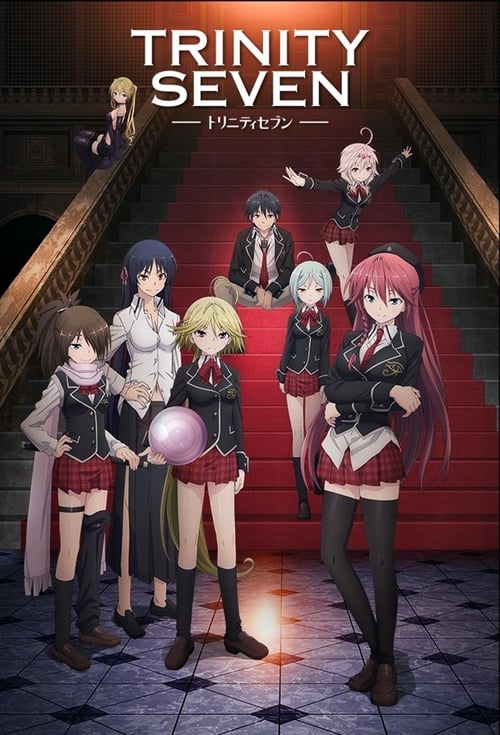
Arata is soon confronted by a group of powerful female mages known as the Trinity Seven, who are tasked with investigating the Breakdown Phenomenon. The group consists of seven unique individuals, each with their own magical abilities and personalities: Lilith Asami, the leader; Arin Kannazuki, the cheerful and energetic one; Mira Yamana, the stoic and serious mage; and others. They inform Arata that he must enroll in the Royal Biblia Academy, a school for magic users, to learn how to control his newfound powers and to uncover the truth behind the phenomenon.
Upon arriving at the academy, Arata meets the other members of the Trinity Seven and begins to form bonds with them. He learns about their individual abilities and the challenges they face. Arata's primary motivation is to find a way to bring Hijiri back, which drives him to push himself in his studies and training. He also discovers that he possesses a unique ability called "The Demon Lord's Grimoire," which allows him to manipulate magic in ways that others cannot.
As Arata trains, he faces various challenges, including battles against other magic users and confrontations with powerful entities that threaten the academy. One significant event occurs when Arata and the Trinity Seven are attacked by a rogue mage named Kagehira, who seeks to harness the power of the Breakdown Phenomenon for his own purposes. In this confrontation, Arata demonstrates his growing abilities, using his grimoire to protect his friends and fend off Kagehira's attacks.
Throughout the series, Arata's relationships with the Trinity Seven deepen, particularly with Lilith, who becomes a mentor and a source of emotional support for him. Their bond is tested when Arata's powers begin to attract unwanted attention from other factions within the magical world. The tension escalates when the group learns that the Breakdown Phenomenon is linked to a larger conspiracy involving powerful beings known as the "Demon Lords."
As the story progresses, Arata and the Trinity Seven uncover the truth about the Breakdown Phenomenon and its connection to Hijiri's death. They learn that Hijiri had been involved in a secret experiment to harness the power of the phenomenon, which ultimately led to her demise. This revelation weighs heavily on Arata, who grapples with feelings of guilt and responsibility for her fate.
In a climactic battle, Arata and the Trinity Seven confront the true mastermind behind the Breakdown Phenomenon, a powerful entity known as the "Demon Lord of the Abyss." This confrontation tests their abilities and their resolve, as they must work together to defeat this formidable foe. During the battle, Arata taps into the full potential of his grimoire, showcasing his growth as a mage and his determination to protect his friends.
After a fierce struggle, the Trinity Seven manages to defeat the Demon Lord, but not without significant sacrifices. The battle leaves them physically and emotionally drained, and Arata is forced to confront the reality of his situation. He realizes that while he cannot bring Hijiri back, he can honor her memory by continuing to fight for those he cares about.
In the aftermath, the group reflects on their journey and the bonds they have formed. Arata decides to remain at the academy, committed to mastering his powers and supporting his friends. The series concludes with a sense of hope and determination, as Arata and the Trinity Seven prepare for whatever challenges lie ahead, united in their quest for knowledge and strength.








What is the ending?
At the end of Trinity Seven, Arata Kasuga confronts the final battle against the Demon Lord, ultimately defeating him with the help of his friends. The world is restored, and the characters return to their normal lives, with Arata and the Trinity Seven girls continuing their studies together.
As the climax of Trinity Seven unfolds, the scene opens in a desolate landscape, the remnants of a fierce battle evident in the scorched earth and shattered structures. Arata Kasuga stands resolute, his heart pounding with determination. He has finally reached the confrontation with the Demon Lord, who looms before him, a figure of darkness and malice. The air crackles with tension as the Demon Lord taunts Arata, reminding him of the stakes at hand--the fate of his friends and the world hangs in the balance.
Arata's internal struggle is palpable; he recalls the moments spent with the Trinity Seven--his friends who have supported him through thick and thin. Each memory fuels his resolve, and he draws upon the power of his grimoire, the key to his abilities. As he channels his magic, the ground beneath him glows with energy, and he feels the presence of the Trinity Seven girls--Levi, Lilith, Arin, Mira, and the others--standing behind him in spirit, lending him their strength.
The battle erupts in a flurry of magic and might. Arata and the Demon Lord exchange powerful blows, each strike resonating with the weight of their conflicting ideals. The Demon Lord, embodying chaos and destruction, seeks to plunge the world into despair, while Arata fights for hope and the bonds he has forged. The clash of their powers sends shockwaves through the air, illuminating the dark sky with bursts of light.
As the fight intensifies, Arata taps into the full potential of his grimoire, unleashing a spectacular display of magic. He recalls the lessons learned from each of the Trinity Seven, their unique abilities and personalities merging with his own. In a climactic moment, he channels their collective strength, creating a powerful spell that overwhelms the Demon Lord. The scene is filled with vibrant colors and explosive energy, symbolizing the unity and friendship that Arata has cultivated.
With a final, desperate push, Arata delivers the finishing blow, shattering the Demon Lord's form and dispelling the darkness that has plagued their world. The landscape begins to heal, the skies clearing as light breaks through the clouds. Arata collapses to his knees, exhausted but triumphant, a sense of relief washing over him.
In the aftermath, the scene shifts to a serene setting where the Trinity Seven girls gather around Arata, their expressions a mix of joy and relief. They celebrate their victory, laughter echoing in the air as they reflect on their journey together. Each character finds closure in their own way--Levi, with her fierce determination, vows to continue protecting those she loves; Lilith, with her nurturing spirit, embraces her role as a mentor; and Mira, with her playful demeanor, teases Arata about his heroic deeds.
As the sun sets, casting a warm glow over the group, Arata realizes that their bonds have only grown stronger through their trials. The final scene shows them returning to their academy, ready to face new challenges together, their hearts filled with hope for the future. The series concludes with a sense of optimism, emphasizing the importance of friendship, perseverance, and the strength found in unity. Each character's fate is intertwined, their paths forever changed by the experiences they shared, and they look forward to the adventures that lie ahead.
Is there a post-credit scene?
Yes, "Trinity Seven" features a post-credit scene. After the main credits roll, the scene opens with a lighthearted moment that contrasts with the more serious themes of the series.
In this scene, we see Arata Kasuga, the protagonist, in a relaxed setting, surrounded by his friends from the Trinity Seven. The atmosphere is playful and filled with laughter, showcasing the bonds that have formed throughout their adventures. The girls, including Lilith Asami, Levi Kazama, and others, are engaged in a light-hearted argument about who is the best at magic, each trying to outdo the other with their abilities.
Arata, caught in the middle, tries to mediate but ends up being pulled into their antics. The scene captures his internal struggle between wanting to support his friends and the chaos that ensues from their competitive spirits. As the banter continues, the camera pans out, revealing the serene landscape around them, symbolizing the peace they have fought for and the camaraderie they have built.
The post-credit scene serves as a reminder of the friendships and light moments that persist even after the trials they faced, leaving viewers with a sense of hope and warmth as the series concludes.
What is Arata Kasuga's relationship with the Trinity Seven?
Arata Kasuga, the protagonist, has a complex relationship with the Trinity Seven, a group of seven powerful female mages. Initially, he is drawn to them due to his desire to save his cousin, Hijiri, who was lost in a magical phenomenon known as the Breakdown Phenomenon. As he interacts with each member, he develops unique bonds, particularly with Lilith Asami, who becomes his mentor and love interest, and with other members like Levi and Mira, who each have their own distinct personalities and abilities.
How does the Breakdown Phenomenon affect the world and the characters?
The Breakdown Phenomenon is a catastrophic event that causes the destruction of the world and the loss of many lives, including Arata's cousin, Hijiri. This event serves as the catalyst for Arata's journey into the world of magic and the Trinity Seven. The phenomenon creates a sense of urgency and desperation among the characters, driving Arata to seek power and knowledge to prevent further disasters. It also leads to the emergence of various antagonists who exploit the chaos for their own ends.
What are the unique abilities of each member of the Trinity Seven?
Each member of the Trinity Seven possesses unique magical abilities that reflect their personalities and roles within the group. For instance, Lilith Asami specializes in the 'Grimoire' magic, allowing her to manipulate reality; Levi Kazama has the power of 'Time Manipulation,' which she uses to control time; and Arin Kannazuki wields 'Illusion Magic,' enabling her to create powerful illusions. These abilities not only define their combat styles but also contribute to their character development and interactions with Arata.
What is the significance of the Grimoires in the story?
Grimoires are magical books that contain powerful spells and knowledge, central to the world of Trinity Seven. Each member of the Trinity Seven has their own Grimoire, which symbolizes their unique abilities and personal growth. For Arata, acquiring and mastering his own Grimoire becomes a pivotal part of his journey, as it represents his evolution from a regular boy into a capable mage. The Grimoires also serve as a plot device, driving conflicts and character motivations throughout the series.
How does Arata's character evolve throughout the series?
Arata's character undergoes significant evolution throughout Trinity Seven. Initially portrayed as a somewhat naive and impulsive boy, his experiences with the Trinity Seven and the challenges posed by the Breakdown Phenomenon force him to confront his fears and insecurities. As he learns more about magic and the responsibilities that come with it, he becomes more determined and confident. His relationships with the Trinity Seven, especially with Lilith, also deepen, adding layers to his emotional state and motivations as he strives to protect those he cares about.
Is this family friendly?
"Trinity Seven," produced in 2014, is an anime series that contains several elements that may not be considered family-friendly. Here are some potentially objectionable or upsetting aspects:
-
Ecchi Content: The series features numerous scenes with suggestive themes, including fan service that emphasizes the physical appearances of female characters in a sexualized manner.
-
Violence: There are instances of magical battles and confrontations that may include graphic depictions of violence, with characters using powerful spells that can lead to destruction and injury.
-
Mature Themes: The storyline involves darker themes such as the loss of loved ones, existential threats, and the consequences of power, which may be unsettling for younger viewers.
-
Romantic Situations: There are romantic subplots that may include inappropriate advances or situations that could be confusing or uncomfortable for children.
-
Character Dynamics: Some character interactions may involve manipulation, jealousy, or possessiveness, which could be concerning for sensitive viewers.
Overall, while "Trinity Seven" has an engaging fantasy narrative, its content may not be suitable for children or those who are sensitive to such themes.