
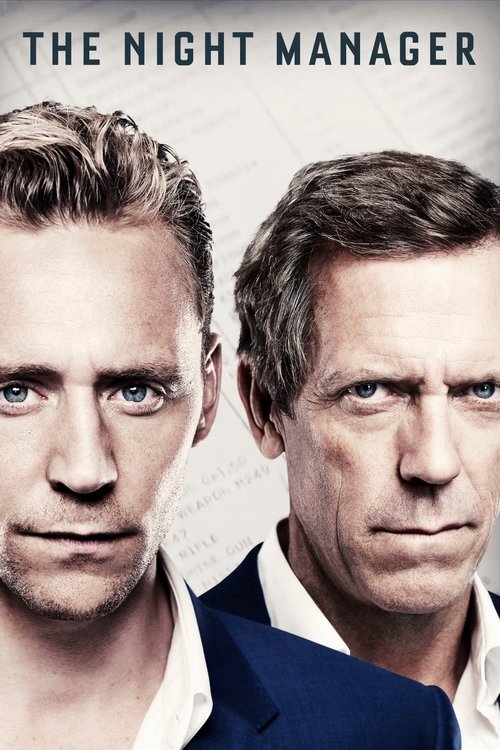
















Popular
What motivates Jonathan Pine to become involved in the world of arms dealing?
How does Angela Burr's character influence the plot?
What is the significance of the relationship between Jonathan Pine and Richard Roper?
What role does the setting of Cairo play in the story?
How does the character of Richard Roper embody the themes of power and corruption?
Should I watch it?
Ask Your Own Question

What is the plot?
The story begins in Egypt, where Jonathan Pine, a former British soldier working as a night manager at a luxury hotel, becomes embroiled in a dangerous situation. He witnesses a violent encounter between a wealthy guest, Richard Roper, and a local woman. Roper, a notorious arms dealer, is shown to have a ruthless side when he orders his men to intimidate the woman. This incident leaves a lasting impression on Pine, who is troubled by the moral implications of Roper's actions.
Later, Pine is approached by a woman named Sophie, who is involved with Roper. She confides in him about Roper's illegal arms dealings and expresses her fear for her safety. Pine becomes increasingly concerned for her well-being and is drawn into the world of espionage when Sophie is murdered shortly after their conversation. This event serves as a catalyst for Pine, igniting a desire for justice and revenge against Roper.
Pine is then recruited by Angela Burr, a British intelligence officer who is determined to take down Roper. Burr believes that Pine can infiltrate Roper's inner circle due to his experience in the hotel industry and his ability to blend in. Pine reluctantly agrees to the mission, motivated by his desire to avenge Sophie's death and to stop Roper's arms trade. He undergoes training and is given a new identity as a wealthy businessman.
Pine successfully gains Roper's trust and is invited to join him on a yacht in the Mediterranean. During this time, Pine observes Roper's operations and the extent of his criminal activities. He meets Roper's girlfriend, Jed, who is unaware of Roper's true nature. Pine finds himself developing feelings for Jed, complicating his mission and deepening his internal conflict.
As Pine becomes more entrenched in Roper's world, he witnesses a deal involving illegal arms sales. He gathers crucial evidence that could be used against Roper. However, Roper's paranoia grows, and he begins to suspect that there is a mole within his organization. Pine must navigate this dangerous environment while maintaining his cover.
Tensions escalate when Roper's men discover that Pine has been communicating with Burr. Roper confronts Pine, and in a tense exchange, Pine manages to convince Roper of his loyalty. However, the situation becomes increasingly precarious as Roper's suspicions mount. Pine is forced to act quickly to protect himself and his mission.
Burr, meanwhile, is working to gather enough evidence to bring Roper down. She faces bureaucratic obstacles and must contend with the political implications of Roper's connections. As Pine continues to gather intelligence, he realizes that he must take more drastic measures to ensure Roper's downfall.
In a pivotal moment, Pine orchestrates a plan to expose Roper's operations. He sets up a meeting with Burr to share the evidence he has collected. However, Roper's men are hot on his trail, and Pine must evade capture while trying to deliver the information. A tense chase ensues, showcasing Pine's resourcefulness and determination.
The climax of the story occurs when Pine finally confronts Roper directly. In a high-stakes showdown, Pine reveals his true identity and intentions. Roper, enraged, attempts to eliminate Pine, leading to a violent confrontation. Pine fights back, using his training and skills to outmaneuver Roper and his henchmen.
In the aftermath of the confrontation, Roper is apprehended, and Pine's mission is deemed a success. However, the emotional toll of the events weighs heavily on him. He has lost Sophie and has complicated feelings for Jed, who is left to grapple with the fallout of her relationship with Roper.
The series concludes with Pine reflecting on his journey and the choices he has made. He has achieved his goal of bringing Roper to justice, but the cost of his actions lingers in his mind. The final scenes leave Pine at a crossroads, contemplating his future and the impact of his experiences on his life.









What is the ending?
In the ending of The Night Manager, Jonathan Pine successfully infiltrates the inner circle of arms dealer Richard Roper. After a tense confrontation, Roper is arrested, but Pine's fate remains uncertain as he walks away from the chaos, leaving his future open-ended.
As the final episode unfolds, the tension escalates in a series of meticulously crafted scenes. The setting shifts to a luxurious villa in the Mediterranean, where Richard Roper, played by Hugh Laurie, is hosting a lavish party. The atmosphere is opulent, filled with laughter and the clinking of glasses, but beneath the surface, danger lurks. Jonathan Pine, portrayed by Tom Hiddleston, is now deeply embedded in Roper's world, having successfully gained his trust.
Scene by scene, the narrative reveals Pine's internal struggle. He is a man torn between his mission to bring down Roper and the personal connections he has formed, particularly with Roper's girlfriend, Jed, played by Elizabeth Debicki. As the party continues, Pine's demeanor is calm, but his eyes betray a sense of urgency and determination. He knows that the time for action is drawing near.
The tension reaches a boiling point when Pine receives a signal from his handler, Angela Burr, played by Olivia Colman. She has orchestrated a plan to capture Roper, and Pine is the key to its success. As the party winds down, Pine discreetly gathers evidence of Roper's illegal arms dealings, knowing that this information is crucial for the authorities.
In a pivotal moment, Pine confronts Roper in a private setting, where the facade of friendship crumbles. Roper, ever the charismatic manipulator, tries to charm Pine, but the atmosphere is thick with unspoken threats. Pine's resolve hardens as he realizes the extent of Roper's ruthlessness. The stakes are high, and the tension is palpable as Pine prepares to execute the final phase of his plan.
As dawn breaks, the scene shifts to a remote location where Burr and her team are waiting. The authorities are poised to make their move, and Pine's heart races with anticipation. He knows that the success of the operation hinges on his ability to maintain his cover while ensuring Roper's capture. The moment is fraught with danger, and Pine's internal conflict is evident as he grapples with the moral implications of his actions.
In a climactic sequence, the authorities storm Roper's villa, and chaos ensues. Pine's heart pounds as he watches the operation unfold, knowing that he has played a crucial role in bringing down one of the world's most dangerous arms dealers. Roper's arrest is swift, but the emotional fallout is profound. Pine's expression is a mix of relief and sorrow, as he realizes the cost of his mission.
As the dust settles, Pine shares a final, poignant moment with Jed. Their connection is undeniable, but the weight of their circumstances looms large. Jed is left to grapple with the reality of Roper's downfall and her own future. Pine, on the other hand, faces an uncertain path. He walks away from the chaos, leaving behind the life he has known, and the screen fades to black, leaving his fate ambiguous.
In the end, Jonathan Pine's journey is one of transformation, marked by sacrifice and moral complexity. Roper is apprehended, but the emotional scars linger for all involved. The narrative closes on a note of uncertainty, emphasizing the personal costs of espionage and the intricate web of relationships that define the characters' lives.
Who dies?
In the 2016 miniseries "The Night Manager," several characters meet their demise, each death serving to heighten the tension and illustrate the stakes involved in the world of espionage and arms dealing. Here are the key characters who die, along with the circumstances surrounding their deaths:
-
Richard Roper: The main antagonist, played by Hugh Laurie, meets his end in the final episode. After a tense confrontation with Jonathan Pine, the protagonist, Roper is shot in the chest. This occurs during a climactic scene where Pine, having infiltrated Roper's inner circle, finally takes action against the arms dealer. Roper's death is significant as it symbolizes the collapse of his criminal empire and the moral victory for Pine, who has been driven by a desire for justice and revenge for the wrongs Roper has committed.
-
Burt: A member of Roper's inner circle, Burt is killed in the second episode. He is shot by a group of armed men while trying to escape from a dangerous situation in the Middle East. His death serves to illustrate the violent world that Roper operates in and the risks involved in his dealings. It also foreshadows the dangers that Pine will face as he becomes more deeply involved in Roper's operations.
-
Jed Marshall: Played by Elizabeth Debicki, Jed is Roper's girlfriend and a key character who becomes emotionally entangled with Pine. While she does not die in the series, her fate is precarious throughout, and she faces significant danger due to her association with Roper. Her character's emotional turmoil and the threat of violence against her add to the tension of the narrative.
-
The Colonel: A minor character who is involved in the arms dealings, he is killed in a violent confrontation. His death occurs off-screen but is referenced, highlighting the ruthless nature of the arms trade and the lengths to which Roper will go to eliminate threats.
-
Various unnamed characters: Throughout the series, there are several instances of violence and death, particularly in the context of Roper's operations. These deaths often occur in the background, emphasizing the high stakes and the moral ambiguity of the world Pine is navigating.
Each of these deaths contributes to the overarching themes of betrayal, moral complexity, and the personal stakes involved in the fight against corruption and crime. The emotional weight of these losses resonates with Pine's journey, as he grapples with his own motivations and the consequences of his actions.
Is there a post-credit scene?
The Night Manager, produced in 2016, does not have a post-credit scene. The series concludes with its final episode, wrapping up the story without any additional scenes or content after the credits. The narrative ends on a note that ties up the main plot threads, focusing on the resolution of Jonathan Pine's mission and the fate of the characters involved, particularly the confrontation between Pine and the arms dealer Richard Roper. The absence of a post-credit scene allows the audience to reflect on the intense drama and moral complexities presented throughout the series.
What motivates Jonathan Pine to become involved in the world of arms dealing?
Jonathan Pine, played by Tom Hiddleston, is initially motivated by a sense of justice and a desire to protect the innocent. His experiences as a night manager at a luxury hotel in Cairo, where he witnesses the devastating effects of arms dealing on the local population, deeply affect him. The tragic death of his lover, Sophie, at the hands of arms dealer Richard Roper's associates propels him into a world of espionage, as he seeks to bring Roper to justice.
How does Angela Burr's character influence the plot?
Angela Burr, portrayed by Olivia Colman, is a determined and resourceful intelligence officer who plays a crucial role in the narrative. Her relentless pursuit of Richard Roper and her belief in Jonathan Pine's potential as an informant drive much of the plot. Burr's character embodies the moral complexities of espionage, as she navigates bureaucratic obstacles and personal risks to gather evidence against Roper, ultimately forming a partnership with Pine that is both strategic and emotionally charged.
What is the significance of the relationship between Jonathan Pine and Richard Roper?
The relationship between Jonathan Pine and Richard Roper, played by Hugh Laurie, is central to the tension of the series. Initially, Pine is an outsider, but as he infiltrates Roper's inner circle, he becomes both a confidant and a threat. Roper's charm and ruthlessness create a complex dynamic, as Pine grapples with his growing admiration for Roper's charisma while being repulsed by his criminal activities. This duality heightens the stakes, as Pine must maintain his cover while wrestling with his moral compass.
What role does the setting of Cairo play in the story?
Cairo serves as a pivotal backdrop in the early episodes of The Night Manager, establishing the tone and stakes of the narrative. The vibrant yet dangerous atmosphere of the city reflects the chaos of the arms trade and the personal turmoil of Jonathan Pine. The opulence of the hotel contrasts sharply with the violence outside, symbolizing the duality of wealth and suffering. This setting not only influences Pine's motivations but also foreshadows the larger geopolitical implications of the arms deals he becomes embroiled in.
How does the character of Richard Roper embody the themes of power and corruption?
Richard Roper is a quintessential representation of power and corruption in The Night Manager. His character is charismatic and sophisticated, yet he is deeply immoral, using his wealth and influence to manipulate others and evade justice. Roper's interactions with Pine reveal his ruthless nature, as he often masks his sinister intentions with charm. This duality highlights the seductive nature of power and the moral compromises that come with it, making Roper a compelling antagonist whose actions drive the narrative forward.
Is this family friendly?
"The Night Manager," produced in 2016, is a gripping espionage thriller that contains several elements that may not be suitable for children or sensitive viewers. Here are some potentially objectionable or upsetting aspects:
-
Violence: The series features scenes of gunfire, physical confrontations, and the aftermath of violent acts, which can be intense and graphic.
-
Mature Themes: The narrative delves into themes of arms dealing, betrayal, and moral ambiguity, which may be complex and unsettling for younger audiences.
-
Sexual Content: There are scenes that involve sexual situations and suggestive content, which may not be appropriate for children.
-
Drug Use: The show includes references to drug use and the drug trade, which may be disturbing for some viewers.
-
Emotional Turmoil: Characters experience significant emotional distress, including betrayal, loss, and moral conflict, which could be heavy for sensitive viewers.
Overall, the series is intended for a mature audience and contains elements that may be distressing or inappropriate for children.









