
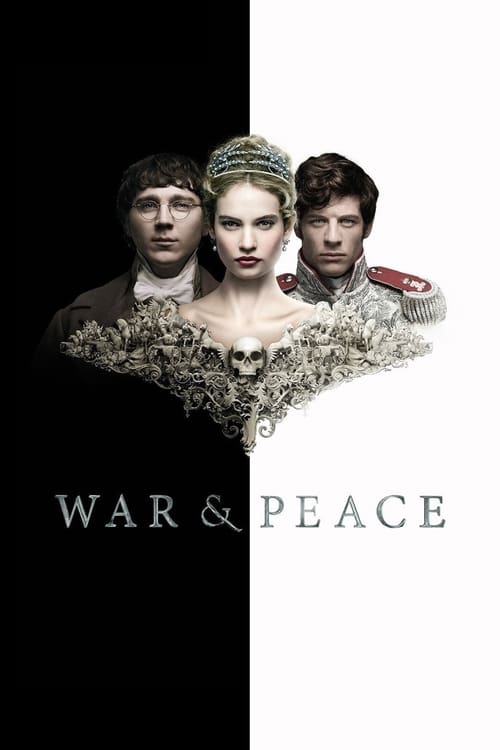





















Popular
What are the main conflicts faced by Pierre Bezukhov throughout the series?
How does Natasha Rostova's character evolve throughout the series?
What role does Prince Andrei Bolkonsky play in the lives of other characters?
What is the significance of the Battle of Borodino in the series?
How does the relationship between Pierre and Helene evolve throughout the series?
Should I watch it?
Ask Your Own Question

What is the plot?
In St. Petersburg, Russia, in the early 1800s, the story begins with a grand ball hosted by Anna Pavlovna, where the aristocracy gathers. Pierre Bezukhov, the illegitimate son of a count, awkwardly navigates the social scene, feeling out of place. He meets Prince Andrei Bolkonsky, who is disillusioned with high society and longs for a more meaningful life. Andrei's wife, Lise, is pregnant but feels neglected by her husband. Meanwhile, Natasha Rostova, a young noblewoman, is introduced, and her youthful charm captivates many, including Andrei.
As the war with Napoleon looms, Andrei decides to leave his family and join the army, seeking glory and purpose. He bids farewell to Lise, who is heartbroken but supportive. Pierre, having inherited a vast fortune after his father's death, struggles with his newfound status and the expectations that come with it. He befriends Prince Vassily Kuragin, who sees Pierre as a potential match for his daughter, Helene, despite her being manipulative and self-serving.
Natasha, meanwhile, becomes infatuated with Andrei, and they share a romantic connection. Their relationship deepens, and Andrei proposes to Natasha, who joyfully accepts. However, their engagement is soon tested when Natasha meets the charming but unscrupulous Anatole Kuragin, Prince Vassily's son. Anatole pursues Natasha, and despite her initial resistance, she is drawn to his flirtation.
In a moment of weakness, Natasha agrees to elope with Anatole, believing he truly loves her. However, the plan is thwarted when Andrei learns of the elopement and confronts Natasha. Heartbroken and devastated, Andrei breaks off their engagement, leaving Natasha in despair. The emotional turmoil leads Natasha to a state of deep depression, and she struggles to cope with the consequences of her actions.
As the war intensifies, Andrei is severely wounded in battle, and he reflects on his life and choices. He encounters Pierre on the battlefield, and they share a moment of connection, discussing their views on life and love. Pierre, now more mature, begins to understand the weight of his responsibilities and the impact of his wealth.
Meanwhile, Natasha, still reeling from her heartbreak, seeks redemption and forgiveness. She attempts to reconcile with Andrei, but he is distant and hurt. As the war progresses, Pierre becomes involved in the conflict, witnessing the horrors of battle and the suffering of soldiers. He grapples with his identity and purpose, ultimately finding solace in the idea of love and connection.
The narrative shifts to the aftermath of the war, where the characters face the consequences of their choices. Andrei, still recovering from his injuries, realizes he cannot hold onto the past and begins to let go of his feelings for Natasha. He finds a sense of peace in accepting his fate. Natasha, on the other hand, begins to heal and mature, learning from her mistakes.
In a twist of fate, Andrei dies from his wounds, leaving Natasha devastated once more. Pierre, now transformed by his experiences, seeks to support Natasha in her grief. Their bond deepens as they navigate their shared losses and the complexities of love. Pierre proposes to Natasha, and she accepts, finding hope in their future together.
The story culminates in a sense of resolution as the characters come to terms with their pasts. Pierre and Natasha marry, symbolizing a new beginning amidst the chaos of their lives. The final scenes reflect on the themes of love, loss, and the enduring human spirit, as the characters look toward a future filled with uncertainty but also possibility.






What is the ending?
In the ending of the 2016 adaptation of War and Peace, Pierre Bezukhov and Natasha Rostova finally unite in love after enduring personal struggles and the chaos of war. Prince Andrei Bolkonsky dies from his wounds, leaving a profound impact on Natasha. The story concludes with a sense of hope and renewal as Pierre and Natasha look forward to a future together, symbolizing the resilience of love amidst the turmoil of life.
As the final episodes unfold, we find ourselves in the aftermath of the Battle of Borodino. The air is thick with the scent of gunpowder and the cries of the wounded. Pierre Bezukhov, having been captured and later escaping, is deeply affected by the horrors he has witnessed. He wanders through the remnants of the battlefield, grappling with the futility of war and the loss of his friend, Prince Andrei Bolkonsky.
In a poignant scene, we see Andrei, gravely injured, lying in a makeshift hospital. His once proud demeanor is now replaced by vulnerability. He reflects on his life, his love for Natasha, and the choices he has made. In his final moments, he expresses a sense of peace, realizing that love is what truly matters. He passes away, leaving Natasha heartbroken and filled with regret for their lost potential.
Meanwhile, Natasha is in a state of despair, mourning Andrei's death. She feels lost and alone, haunted by her memories of him. However, as she navigates her grief, she begins to find solace in the idea of moving forward. The emotional weight of her past choices weighs heavily on her, but she is determined to honor Andrei's memory by living fully.
As the narrative progresses, Pierre and Natasha's paths converge once more. Pierre, having undergone a transformation through his experiences, seeks out Natasha. Their reunion is charged with emotion; they share their pain and their hopes for the future. In a tender moment, Pierre professes his love for Natasha, and she reciprocates, realizing that she can find happiness again.
The final scenes depict a serene landscape, symbolizing a new beginning. Pierre and Natasha stand together, hand in hand, looking out over the horizon. The sun sets, casting a warm glow over them, signifying hope and renewal. They are ready to embrace life together, having learned from their pasts and the tumultuous events that shaped them.
In the closing moments, we see glimpses of other characters: Prince Vassily Kuragin, who faces the consequences of his manipulations; and the Rostov family, who have endured their own trials but remain united. The narrative emphasizes the enduring power of love and the possibility of redemption, even in the face of overwhelming adversity.
Thus, the story concludes with Pierre and Natasha embarking on a new chapter, embodying the resilience of the human spirit amidst the backdrop of war and personal loss.
Is there a post-credit scene?
The 2016 adaptation of "War and Peace" does not include a post-credit scene. The series concludes with a powerful and emotional finale that wraps up the main character arcs and themes of love, loss, and the impact of war. The final moments focus on the characters' resolutions and the aftermath of the Napoleonic Wars, leaving viewers with a sense of closure rather than an additional scene after the credits. The emphasis is on the characters' journeys and the choices they make as they navigate their lives in the wake of conflict.
What are the main conflicts faced by Pierre Bezukhov throughout the series?
Pierre Bezukhov, the illegitimate son of a count, grapples with his identity and purpose throughout the series. Initially, he is awkward and unsure of himself, struggling with his newfound wealth after inheriting a fortune. His internal conflict intensifies as he seeks meaning in life, leading him to join the Freemasons in search of enlightenment. Pierre's emotional turmoil is further exacerbated by his tumultuous relationships, particularly with his wife, Helene, who is manipulative and unfaithful. His journey is marked by a quest for personal redemption and understanding amidst the chaos of war.
How does Natasha Rostova's character evolve throughout the series?
Natasha Rostova begins as a spirited and naive young woman, full of dreams and romantic ideals. Her initial infatuation with Prince Andrei Bolkonsky showcases her youthful passion, but her character faces significant trials. After a heartbreak caused by Andrei's departure and her subsequent ill-fated romance with the roguish Anatole Kuragin, Natasha experiences deep emotional turmoil. This leads to a period of despair and self-reflection, ultimately resulting in her growth into a more resilient and mature individual. By the end of the series, Natasha emerges as a woman who has learned from her experiences, finding strength in love and family.
What role does Prince Andrei Bolkonsky play in the lives of other characters?
Prince Andrei Bolkonsky serves as a pivotal figure in the lives of several characters, particularly Natasha Rostova and Pierre Bezukhov. Initially, he is disillusioned with society and seeks purpose through military service. His relationship with Natasha brings him a sense of hope and love, but their engagement is tragically interrupted by his injuries in battle and his subsequent emotional withdrawal. Andrei's interactions with Pierre also highlight themes of friendship and existential struggle, as they both seek meaning in a world ravaged by war. His eventual death serves as a catalyst for Natasha's transformation and Pierre's deeper understanding of life and love.
What is the significance of the Battle of Borodino in the series?
The Battle of Borodino is a crucial turning point in the series, symbolizing the brutal reality of war and its impact on the characters. The battle is depicted with intense visual detail, showcasing the chaos and carnage of the conflict. Pierre, who is present at the battle, experiences a profound awakening as he witnesses the horrors of war firsthand. This event serves as a backdrop for the personal struggles of the characters, particularly Andrei, who is gravely wounded, and Natasha, who is left to grapple with the consequences of their choices. The battle encapsulates the themes of sacrifice, loss, and the search for meaning amidst destruction.
How does the relationship between Pierre and Helene evolve throughout the series?
The relationship between Pierre Bezukhov and Helene Kuragin is fraught with tension and manipulation. Initially, Pierre is drawn to Helene's beauty and social status, leading him to marry her despite his reservations. However, Helene's true nature is revealed as she exhibits a cold and calculating demeanor, engaging in affairs and showing little regard for Pierre's feelings. As Pierre becomes increasingly disillusioned with their marriage, he seeks solace in friendships and philosophical pursuits. The emotional distance between them grows, culminating in Pierre's realization that he must break free from Helene's grasp to find his own path. Their relationship serves as a stark contrast to the more genuine connections depicted in the series.
Is this family friendly?
The 2016 adaptation of "War and Peace" contains several elements that may be considered objectionable or upsetting for children or sensitive viewers. Here are some aspects to be aware of:
-
Violence and War Scenes: The series depicts battles and the harsh realities of war, including scenes of soldiers fighting, injuries, and death. These moments can be intense and graphic, showcasing the brutality of conflict.
-
Death and Grief: Characters experience significant loss throughout the series, leading to emotional scenes of mourning and grief. The portrayal of death can be heavy and may evoke strong feelings.
-
Romantic Relationships: There are multiple romantic entanglements, some of which involve infidelity and complex emotional dynamics. These relationships can lead to tension and heartbreak, which may be difficult for younger viewers to process.
-
Mature Themes: The series explores themes of love, betrayal, and the impact of societal expectations, which may be more suitable for older teens and adults. The emotional depth and moral dilemmas faced by characters can be complex.
-
Social Class and Conflict: The show addresses issues of social class, privilege, and the struggles of the aristocracy during a tumultuous time, which may be challenging for younger audiences to fully understand.
Overall, while "War and Peace" is a visually stunning and narratively rich adaptation, its mature themes and intense scenes may not be appropriate for all viewers, particularly children.









