








Popular
What happens to Diane Lockhart after she loses her savings?
How does Reddick, Boseman & Lockhart handle the political climate?
What is the significance of the character Adrian Boseman?
How does Lucca Quinn's character evolve throughout the series?
What role does the character Marissa Gold play in the series?
Should I watch it?
Ask Your Own Question

What is the plot?
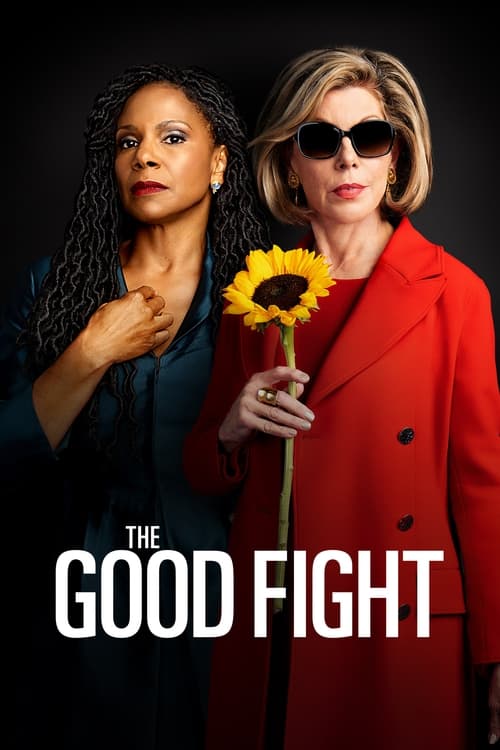
The Good Fight begins with a shocking event: a Ponzi scheme orchestrated by a prominent lawyer, which wipes out the life savings of Diane Lockhart's (played by Christine Baranski) goddaughter, a young woman named Maia Rindell (played by Rose Leslie). This event serves as the catalyst for the series, leading to Diane's professional downfall as she loses her savings and her job at a prestigious law firm. The opening scene sets a tone of betrayal and loss, as Diane grapples with the implications of the financial disaster.
Following the Ponzi scheme fallout, Diane is forced to start anew. She joins a new law firm, Reddick, Boseman & Lockhart, alongside her former colleague, the charismatic and ambitious attorney, Adrian Boseman (played by Delroy Lindo). The firm is a diverse and progressive environment, contrasting sharply with Diane's previous experiences. As she settles in, Diane faces the challenges of adapting to a new workplace while dealing with the emotional turmoil of her recent losses.
Maia, meanwhile, is also trying to find her footing. She becomes a junior associate at the same firm, but her past and her family's involvement in the Ponzi scheme haunt her. The tension between her and Diane is palpable, as Diane struggles to reconcile her feelings of betrayal with her desire to support Maia. This dynamic becomes a recurring theme throughout the series, as both women navigate their complicated relationship.
As the series progresses, the firm takes on various high-profile cases that reflect contemporary social issues. One significant case involves a police shooting, which ignites public outrage and forces the firm to confront systemic racism and injustice. The lawyers at Reddick, Boseman & Lockhart become deeply involved in the case, showcasing their commitment to fighting for justice while also dealing with the personal ramifications of their work.
Diane's character is further developed as she grapples with her own beliefs and the changing political landscape. She becomes increasingly involved in the fight against the Trump administration's policies, which adds a layer of urgency to her work. Her internal conflict is evident as she balances her professional responsibilities with her personal convictions, leading to moments of doubt and reflection.
The series also introduces a subplot involving a mysterious figure known as "The Good Fight" who appears to be manipulating events behind the scenes. This character's influence becomes more pronounced as the story unfolds, leading to twists and turns that challenge the characters' perceptions of justice and morality. The tension escalates as the firm faces threats from powerful adversaries, forcing them to make difficult decisions that test their integrity.
As the season progresses, Maia's past comes back to haunt her in unexpected ways. She faces legal challenges stemming from her family's actions, and her relationship with Diane becomes increasingly strained. The emotional stakes rise as both women confront their shared history and the impact of the Ponzi scheme on their lives.
In a pivotal moment, Diane and Adrian must decide whether to take on a case that could potentially expose corruption within the legal system. Their decision to pursue the case leads to a series of confrontations with powerful figures, including a ruthless attorney who will stop at nothing to protect his interests. The tension builds as the firm navigates the treacherous waters of legal ethics and personal loyalty.
The season culminates in a dramatic courtroom showdown, where the stakes are higher than ever. Diane and her team must confront not only their adversaries but also their own fears and insecurities. The courtroom scenes are intense, filled with emotional speeches and strategic maneuvering as the characters fight for justice.
In the final moments of the season, the characters are left to grapple with the consequences of their actions. Diane's journey of self-discovery continues as she reflects on her choices and the impact they have on her relationships. The season ends on a cliffhanger, leaving viewers eager to see how the characters will navigate the challenges that lie ahead.








What is the ending?
In the final episode of The Good Fight, the main characters face the culmination of their struggles against a corrupt legal system and the chaos of the political landscape. Diane Lockhart, Reddick, and Lockhart's team confront the implications of their choices, leading to a tense resolution that reflects their personal and professional battles. The series concludes with a sense of uncertainty, leaving the characters' futures open-ended.
As the final episode unfolds, we find Diane Lockhart in a state of turmoil. The episode opens with her grappling with the fallout from the previous season's events, particularly the implications of her involvement in a controversial case. The atmosphere is thick with tension as she prepares for a pivotal court appearance, her mind racing with the weight of her decisions. Diane's internal conflict is palpable; she is torn between her ideals and the harsh realities of the legal world.
In the courtroom, the stakes are high. Diane stands before the judge, her demeanor a mix of determination and vulnerability. The opposing counsel, a formidable adversary, presents a strong case against her. As the arguments unfold, Diane's passion for justice shines through, but she is also acutely aware of the precariousness of her position. The camera captures her expressions, revealing the fear and resolve battling within her.
Meanwhile, Reddick and Lockhart are dealing with their own challenges. They are faced with the consequences of their actions throughout the series, and their partnership is tested. The tension between them is evident as they navigate the complexities of their legal practice and the moral dilemmas that arise. Their conversations are charged with emotion, reflecting their deep-seated fears and hopes for the future.
As the episode progresses, the narrative shifts to the personal lives of the characters. Lucca Quinn, who has been a rising star in the firm, finds herself at a crossroads. She is confronted with a choice that could define her career. The weight of her decision is illustrated through her interactions with Diane and Reddick, who both serve as mentors and sources of conflict for her. Lucca's journey is marked by a blend of ambition and uncertainty, and her fate hangs in the balance as she contemplates her next steps.
The climax of the episode arrives as the courtroom drama reaches its peak. Diane delivers a powerful closing argument, her voice steady yet filled with emotion. The scene is charged with intensity as the jury deliberates, and the outcome feels uncertain. The camera pans across the faces of the jurors, capturing the tension in the room. Diane's fate, along with that of her colleagues, rests in their hands.
In the final moments, the verdict is revealed, and the reactions of the characters are immediate and visceral. Diane's expression shifts from hope to despair as the reality of the decision sinks in. Reddick's face reflects a mix of disappointment and resolve, while Lucca's reaction is one of shock and contemplation. The scene encapsulates the series' exploration of justice, morality, and the personal stakes involved in the legal profession.
As the episode draws to a close, the characters are left to grapple with the implications of the verdict. Diane, Reddick, and Lucca stand together, their futures uncertain but intertwined. The final shot lingers on their faces, capturing a moment of solidarity amidst the chaos. The screen fades to black, leaving viewers with a sense of unresolved tension and the understanding that the fight for justice is ongoing.
In summary, the fates of the main characters are left open-ended. Diane Lockhart faces the consequences of her choices, Reddick contemplates the future of their firm, and Lucca stands at a pivotal juncture in her career. The series concludes with a powerful reminder of the complexities of the legal world and the personal battles that define the characters' lives.
Is there a post-credit scene?
The Good Fight does not feature post-credit scenes in the traditional sense that many films or some television shows do. Each episode typically concludes with a final scene that wraps up the narrative of that episode, but there are no additional scenes that play after the credits roll. The focus remains on the storylines and character developments within the episodes themselves, allowing for a seamless transition into the next episode without the inclusion of extra content after the credits.
What happens to Diane Lockhart after she loses her savings?
After Diane Lockhart loses her savings due to a Ponzi scheme orchestrated by her former mentor, she finds herself at a crossroads. Stripped of her financial security, she is forced to start anew. Diane joins a new law firm, Reddick, Boseman & Lockhart, where she grapples with her identity and purpose as a lawyer. This transition is marked by her struggle to regain her footing in a world that feels increasingly chaotic and politically charged.
How does Reddick, Boseman & Lockhart handle the political climate?
Reddick, Boseman & Lockhart navigates the tumultuous political climate by taking on high-profile cases that often reflect real-world issues. The firm becomes embroiled in cases that challenge the status quo, such as those involving civil rights, immigration, and corporate corruption. The characters, particularly Diane and her colleagues, are deeply affected by the political landscape, leading to intense discussions and moral dilemmas that test their values and beliefs.
What is the significance of the character Adrian Boseman?
Adrian Boseman serves as a pivotal character in 'The Good Fight,' representing a voice of reason and moral integrity amidst the chaos. As a founding partner of the firm, he often finds himself balancing the demands of the law with ethical considerations. His character is significant for his ability to challenge Diane's perspectives, pushing her to confront her biases and assumptions, while also navigating his own struggles with race and identity in a predominantly white legal world.
How does Lucca Quinn's character evolve throughout the series?
Lucca Quinn's character evolves significantly throughout 'The Good Fight.' Initially introduced as a confident and ambitious associate, she faces various challenges that test her resilience and moral compass. As the series progresses, Lucca grapples with issues of loyalty, ambition, and the impact of her decisions on her career and personal life. Her relationships with other characters, particularly with Diane and Adrian, further shape her development, leading her to become a more nuanced and complex figure in the legal landscape.
What role does the character Marissa Gold play in the series?
Marissa Gold, the daughter of the beloved character David Lee, plays a crucial role in 'The Good Fight' as a private investigator. Her character brings a fresh perspective to the firm, often uncovering vital information that aids in legal cases. Marissa's interactions with the main characters, especially Diane, highlight her resourcefulness and determination. Throughout the series, she navigates her own challenges, including her relationships and the expectations placed upon her, adding depth to her character and the overall narrative.
Is this family friendly?
"The Good Fight," while a critically acclaimed series, is not considered family-friendly due to its mature themes and content. Here are some potentially objectionable or upsetting aspects that may be present in the show:
-
Strong Language: The series features frequent use of profanity, which may not be suitable for younger audiences.
-
Sexual Content: There are scenes that include sexual situations, innuendos, and discussions that may be inappropriate for children.
-
Violence: The show occasionally depicts violence, including physical confrontations and the emotional fallout from violent acts.
-
Political Themes: The series tackles complex and often controversial political issues, including racism, sexism, and corruption, which may be distressing for sensitive viewers.
-
Mental Health Issues: Characters deal with trauma, anxiety, and other mental health challenges, which could be triggering for some viewers.
-
Substance Abuse: There are references to drug and alcohol use, which may not be suitable for younger audiences.
-
Mature Themes: The show explores themes of betrayal, loss, and moral ambiguity, which can be heavy and complex.
Overall, "The Good Fight" is intended for an adult audience and contains elements that may be upsetting or inappropriate for children or sensitive viewers.