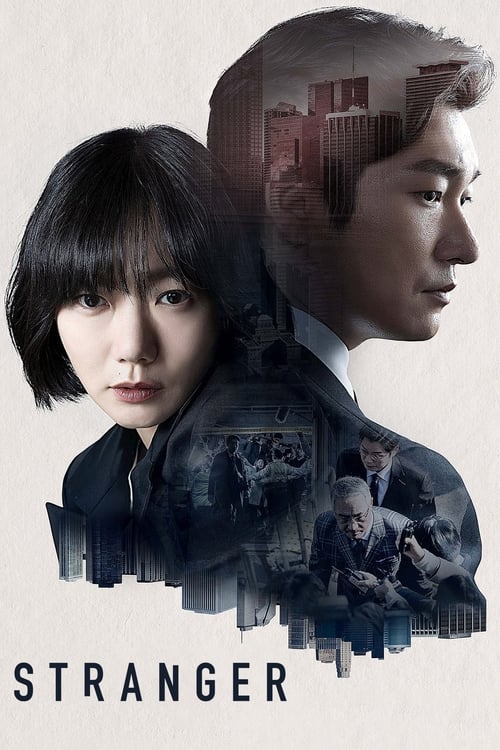

















Popular
What is the significance of the character Hwang Si-mok's emotional detachment?
How does the relationship between Hwang Si-mok and Han Yeo-jin develop throughout the series?
What role does the character Seo Dong-jae play in the unfolding mystery?
What are the implications of the corruption within the police force as depicted in the series?
How does the series explore the theme of justice through the character arcs of Hwang Si-mok and Han Yeo-jin?
Should I watch it?
Ask Your Own Question

What is the plot?
In the opening scene of "Stranger," we are introduced to a young woman named Jin Sun-mi, who is a prosecutor in South Korea. She is seen working diligently at her office, showcasing her dedication to her job. However, her life takes a dark turn when she is attacked by a mysterious figure in a parking lot. This incident leaves her shaken and sets the tone for the unfolding mystery.
As the story progresses, we meet Hwang Si-mok, a prosecutor who has undergone a surgery that removed his ability to feel emotions. This condition makes him exceptionally logical but also socially awkward. Si-mok is called to investigate a murder case involving a young woman, which leads him to cross paths with Sun-mi. Their initial interactions are marked by Si-mok's bluntness and lack of emotional understanding, which frustrates Sun-mi.
The investigation into the murder deepens as Si-mok discovers connections between the victim and a powerful conglomerate. He begins to uncover a web of corruption that involves high-ranking officials and business leaders. As he delves deeper, he faces resistance from various parties who want to protect their interests. Si-mok's relentless pursuit of the truth puts him at odds with his superiors, who are more concerned with maintaining the status quo.
Sun-mi, meanwhile, is also drawn into the investigation. She becomes increasingly aware of the dangers surrounding the case and the powerful people involved. Her determination to seek justice for the victim leads her to confront her own fears and the risks associated with her profession. As she and Si-mok work together, a complex relationship begins to form, marked by mutual respect and a shared commitment to uncovering the truth.
As the plot thickens, Si-mok receives anonymous tips that guide him toward crucial evidence. He discovers that the murder is linked to a series of other crimes, including bribery and cover-ups involving the police and government officials. The tension escalates when Si-mok realizes that his own life is in danger due to the powerful individuals he is investigating.
In a pivotal moment, Si-mok confronts a key suspect, who reveals the extent of the corruption and the lengths to which people will go to protect their interests. This confrontation is intense, with Si-mok using his logical reasoning to outmaneuver the suspect, but it also highlights his emotional detachment, which complicates his interactions with others.
As the investigation progresses, Sun-mi faces her own challenges. She is targeted by those who want to silence her, leading to a series of threatening encounters. Despite the danger, she remains resolute in her pursuit of justice, showcasing her bravery and commitment to her role as a prosecutor.
The climax of the story occurs when Si-mok and Sun-mi finally piece together the full extent of the conspiracy. They gather enough evidence to implicate several high-profile individuals, but their efforts are met with significant pushback. The duo must navigate a treacherous landscape filled with betrayal and deception, as they work to bring the truth to light.
In the final act, Si-mok and Sun-mi face a race against time to expose the corruption before they are silenced. They orchestrate a plan to reveal the evidence to the public, but not without facing numerous obstacles. The tension reaches its peak as they confront those who wish to stop them, leading to a dramatic showdown that tests their resolve and commitment to justice.
Ultimately, the story concludes with the fallout from their investigation. The powerful individuals involved are brought to justice, but not without significant personal cost to Si-mok and Sun-mi. The emotional toll of their journey is evident, as they reflect on the sacrifices made in the pursuit of truth. The series ends on a note of ambiguity, leaving the characters to grapple with the consequences of their actions and the ongoing struggle against corruption.









What is the ending?
In the ending of "Stranger," the main characters face the consequences of their actions as the truth about the corruption within the police force and the legal system is revealed. Prosecutor Hwang Si-mok confronts the mastermind behind the crimes, while the fates of the other characters intertwine, leading to a resolution that highlights the themes of justice and morality.
As the series concludes, Hwang Si-mok, having uncovered the deep-seated corruption, takes decisive action against those involved. The final scenes depict the fallout from the investigation, showcasing the impact on the lives of the characters, including the tragic fate of some and the hope for justice for others.
The final episodes of "Stranger" unfold with a palpable tension as Hwang Si-mok, the emotionally detached prosecutor, continues his relentless pursuit of justice. The narrative begins with Si-mok piecing together the evidence against the corrupt police officers and the influential figures behind the criminal activities. He is driven by a sense of duty, despite his struggles with emotional expression and the isolation that comes with his role.
In a pivotal scene, Si-mok confronts the police chief, Lee Chang-jun, who has been orchestrating much of the corruption. The confrontation is charged with intensity, as Si-mok lays out the evidence he has gathered, revealing the extent of the conspiracy. Lee, cornered and desperate, attempts to manipulate the situation, but Si-mok remains steadfast, embodying the moral clarity that has defined his character throughout the series.
Meanwhile, the narrative shifts to the character of Han Seo-kyung, the passionate and determined defense attorney. She has been a crucial ally to Si-mok, and her own journey of seeking justice culminates in a tense courtroom scene. As she presents her case, the stakes are high, and the emotional weight of the truth hangs heavily in the air. The audience can feel her determination, as she fights not just for her clients but for the integrity of the legal system itself.
As the investigation unfolds, the series also delves into the fate of the other characters. The corrupt officials face legal repercussions, and the audience witnesses the unraveling of their lives. Some characters, like the police officers involved, are arrested, while others, who had been complicit in the corruption, find themselves isolated and shunned by society. The consequences of their actions serve as a stark reminder of the moral complexities within the narrative.
In the final moments, Si-mok stands alone, reflecting on the journey he has taken. The camera captures his stoic expression, hinting at the emotional toll the pursuit of justice has taken on him. He has succeeded in exposing the truth, but the cost has been high. The series closes with a sense of ambiguity, leaving viewers to ponder the nature of justice and the sacrifices made in its name.
The fate of each main character is intertwined with the overarching themes of the series. Si-mok emerges as a figure of integrity, having navigated a treacherous landscape of corruption. Han Seo-kyung, having fought valiantly, finds a renewed sense of purpose in her role as a defender of justice. The corrupt officials, however, face the consequences of their actions, serving as a cautionary tale about the dangers of power and moral compromise.
In the end, "Stranger" leaves its audience with a complex tapestry of emotions, reflecting on the struggles for justice in a flawed system, and the personal sacrifices made by those who dare to confront the truth.
Is there a post-credit scene?
In the 2017 South Korean television series "Stranger" (also known as "Forest of Secrets"), there is no post-credit scene. The series concludes with a tightly woven narrative that wraps up the main plotlines and character arcs without any additional scenes after the credits. The final episodes focus on the resolution of the central mystery surrounding the corruption within the prosecutor's office and the murder case that drives the story.
The last moments of the series emphasize the emotional growth of the main characters, particularly Hwang Si-mok, a prosecutor who struggles with his lack of emotions due to a brain condition, and Han Yeo-jin, a police officer who becomes his ally. Their relationship evolves as they confront the truth behind the corruption and the personal sacrifices they must make. The series ends on a note of hope and justice, leaving viewers with a sense of closure rather than a cliffhanger or additional scene.
What is the significance of the character Hwang Si-mok's emotional detachment?
Hwang Si-mok, a prosecutor with a neurological condition that impairs his ability to feel emotions, serves as a lens through which the audience explores the complexities of morality and justice. His emotional detachment allows him to approach cases with a logical mindset, but it also isolates him from human connections, creating a profound internal conflict as he navigates the murky waters of corruption and crime.
How does the relationship between Hwang Si-mok and Han Yeo-jin develop throughout the series?
Hwang Si-mok and Han Yeo-jin, a police lieutenant, share a complex relationship that evolves from professional respect to a deeper emotional bond. Initially, their interactions are marked by Si-mok's cold rationality and Yeo-jin's warmth and empathy. As they collaborate to uncover the truth behind a series of murders and corruption, Yeo-jin's influence begins to challenge Si-mok's emotional barriers, leading to moments of vulnerability and connection.
What role does the character Seo Dong-jae play in the unfolding mystery?
Seo Dong-jae, a defense attorney, plays a pivotal role in the narrative as he becomes embroiled in the investigation surrounding the murder cases. His motivations are often self-serving, as he seeks to protect his clients and advance his career. However, his interactions with Si-mok and Yeo-jin reveal layers of complexity, as he grapples with ethical dilemmas and the consequences of his choices, ultimately impacting the trajectory of the investigation.
What are the implications of the corruption within the police force as depicted in the series?
The series portrays a deeply entrenched system of corruption within the police force, which serves as a critical backdrop to the main plot. This corruption manifests through various characters, including high-ranking officials who manipulate investigations for personal gain. The implications are far-reaching, as it not only complicates Si-mok and Yeo-jin's pursuit of justice but also highlights the moral decay within institutions meant to uphold the law, creating a pervasive sense of distrust.
How does the series explore the theme of justice through the character arcs of Hwang Si-mok and Han Yeo-jin?
The theme of justice is intricately woven through the character arcs of Hwang Si-mok and Han Yeo-jin. Si-mok's quest for justice is often hindered by his emotional detachment, leading him to question the very nature of right and wrong. In contrast, Yeo-jin embodies a more empathetic approach, advocating for victims and seeking to balance the scales of justice. Their differing perspectives create a dynamic tension that drives the narrative, ultimately forcing both characters to confront their beliefs about justice and morality.
Is this family friendly?
"Stranger," also known as "Secret Forest," is a South Korean crime thriller that delves into themes of corruption, murder, and moral ambiguity. While it is a gripping narrative, it contains several elements that may not be suitable for children or sensitive viewers.
-
Violence and Crime: The series features scenes of murder, physical altercations, and the aftermath of violent crimes, which can be graphic and unsettling.
-
Corruption and Ethical Dilemmas: The plot revolves around police corruption and the moral complexities faced by the characters, which may be difficult for younger audiences to fully comprehend.
-
Emotional Distress: Characters experience significant emotional turmoil, including grief, betrayal, and moral conflict, which can be intense and may resonate deeply with sensitive viewers.
-
Dark Themes: The overarching themes of the series include betrayal, the abuse of power, and the quest for justice in a flawed system, which can be heavy and thought-provoking.
-
Mature Language: There are instances of strong language and adult conversations that may not be appropriate for younger viewers.
Overall, while "Stranger" is a critically acclaimed series with a compelling narrative, its mature themes and content may not be suitable for a family-friendly viewing experience.