











Popular
What motivates Layton to lead the revolution against Wilford?
How does the relationship between Layton and Melanie evolve throughout the series?
What are the consequences of the discovery of the truth about the train's engine?
What role does the character of Ruth play in the story, and how does her loyalty shift?
How does the character of Wilford embody the themes of power and control in Snowpiercer?
Should I watch it?
Ask Your Own Question

What is the plot?
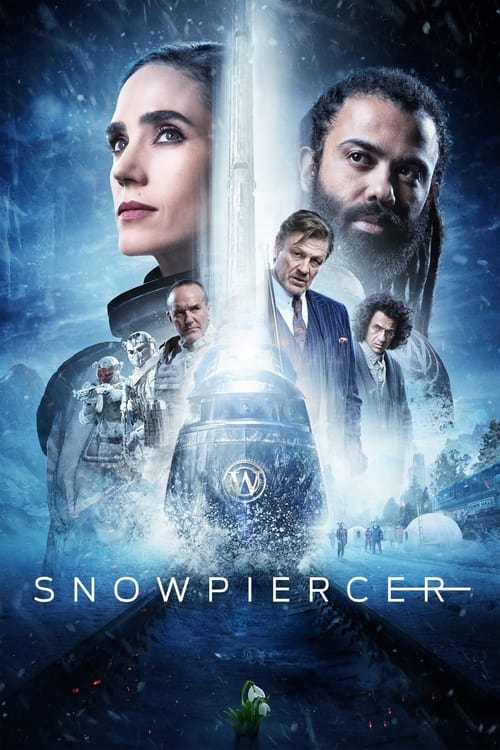
In the year 2026, the world has become a frozen wasteland due to a failed climate-change experiment. The last remnants of humanity survive aboard a massive train called the Snowpiercer, which endlessly circles the globe. The train is divided into distinct classes: the wealthy elite live in luxury at the front, while the impoverished masses are crammed into squalid conditions at the tail. The story begins with a focus on Andre Layton, a former detective from the tail section, who is pulled from his life of hardship to investigate a murder on the train.
As Layton begins his investigation, he is introduced to the train's oppressive social structure, ruled by the enigmatic Mr. Wilford, the train's creator. Layton's investigation leads him to uncover the dark secrets of the train, including the fact that the protein bars consumed by the tail section are made from ground-up insects and possibly human remains. This revelation fuels Layton's desire to incite a rebellion against the oppressive regime of the front section.
Meanwhile, Melanie Cavill, the train's head of hospitality and a key figure in maintaining order, is revealed to have her own motivations. She is determined to keep the train running and believes that the strict class divisions are necessary for survival. As Layton gathers evidence and support from other tail residents, he faces opposition from the train's security forces, led by the ruthless Roche.
The tension escalates when Layton discovers that the murder he is investigating is linked to a larger conspiracy involving the train's leadership. He learns that the train's resources are being hoarded by the elite, and the tail section is being systematically oppressed. Layton's investigation leads him to form alliances with other characters, including the resourceful and cunning Ruth Wardell, who serves as Wilford's right hand.
As Layton's rebellion gains momentum, he orchestrates a plan to infiltrate the front of the train. He and a group of tail residents, including his close ally, the fierce and determined Zara, make their way through the train, facing numerous obstacles and confrontations with security forces. They engage in a series of intense fights, using improvised weapons and their knowledge of the train's layout to outmaneuver their opponents.
During their journey, Layton and his group encounter various sections of the train, each with its own unique culture and challenges. They witness the stark contrast between the opulence of the front and the despair of the tail. The emotional weight of their struggle becomes palpable as they confront the realities of their situation and the sacrifices they must make for freedom.
As the rebellion reaches its climax, Layton confronts Melanie, who is torn between her loyalty to Wilford and her growing respect for Layton's cause. In a pivotal moment, Layton reveals the truth about the train's resources and the lies that have been perpetuated to maintain control. This revelation forces Melanie to reevaluate her position and ultimately leads her to side with Layton.
The final confrontation occurs when Layton and his allies launch a full-scale assault on the front of the train. They face off against Wilford's forces in a brutal battle, with both sides suffering casualties. The fight is chaotic, with characters displaying bravery and desperation as they fight for their lives and the future of the train.
In the aftermath of the battle, Layton emerges as a leader, but the victory is bittersweet. The train is left in disarray, and the survivors must grapple with the consequences of their actions. The final scenes depict the fragile state of the new order aboard the Snowpiercer, as Layton and Melanie work together to rebuild and redefine the train's society, while the threat of Wilford looms in the background, hinting at future conflicts.







What is the ending?
In the ending of the TV show Snowpiercer, the train finally reaches the end of its journey, revealing a new world outside. The survivors face a choice about how to move forward in this new environment, leading to a significant shift in their understanding of survival and community.
As the final episodes unfold, the tension escalates aboard the train. Layton, now the leader of the revolution, confronts the remnants of the oppressive regime led by Wilford. The train is divided, with factions forming around different ideologies about how to govern and survive. The conflict culminates in a climactic showdown between Layton and Wilford, where Layton's vision for a more equitable society is put to the test.
In the final moments, the train reaches a station where the survivors disembark into a world that is no longer frozen, revealing the potential for life beyond the confines of the train. The fate of the main characters is sealed as they step into this new reality, each carrying the weight of their past decisions and the hope for a better future.
As the final episodes of Snowpiercer unfold, the atmosphere aboard the train is thick with tension and uncertainty. The camera pans through the various classes, showcasing the stark differences in living conditions. The Tailies, led by Andre Layton, are determined to dismantle the oppressive regime of Mr. Wilford, who has maintained control over the train for years.
In a pivotal scene, Layton gathers his allies in the Tail, including the fierce and loyal Zara, and the resourceful engineer, Bennett. They strategize their next move, knowing that the stakes are higher than ever. Layton's internal struggle is palpable; he grapples with the weight of leadership and the moral implications of their rebellion. He is driven by a desire for justice and equality, but also haunted by the sacrifices that have been made along the way.
Meanwhile, Wilford, portrayed with chilling charisma, is plotting his own countermeasures. He manipulates the upper-class passengers, sowing seeds of doubt about Layton's leadership. In a tense confrontation, Wilford attempts to sway the passengers to his side, promising them safety and stability. His confidence is a stark contrast to Layton's growing desperation, highlighting the emotional stakes of their conflict.
As the train approaches the end of its journey, the atmosphere shifts. The passengers are informed that they are nearing the last station, a moment filled with both hope and dread. The camera captures the anxious faces of the characters, each reflecting on their past and what lies ahead. Layton's resolve strengthens as he prepares for the final confrontation with Wilford.
In a climactic showdown, Layton and Wilford face off in the engine room. The tension is palpable as they exchange heated words, each representing a different vision for the future. Layton's determination to create a fair society clashes with Wilford's authoritarian ideals. The scene is charged with emotion, as both men reveal their vulnerabilities and motivations. Layton ultimately prevails, but not without significant cost.
As the train finally comes to a halt, the survivors disembark into a world that is no longer the frozen wasteland they have known for so long. The camera captures the first glimpses of greenery and life, a stark contrast to the claustrophobic confines of the train. The characters step into this new reality, each carrying the weight of their choices.
Layton, now a symbol of hope and resilience, looks out at the horizon, contemplating the future. Zara stands by his side, embodying the spirit of the revolution. Bennett, having played a crucial role in the rebellion, finds a sense of purpose in this new world. The fate of the other characters, including the loyal but conflicted Ruth and the enigmatic Melanie, is left open-ended, allowing for reflection on their journeys.
In these final moments, the show emphasizes themes of survival, community, and the possibility of redemption. The characters, having endured immense hardship, now face the challenge of building a new society together, free from the chains of their past. The ending resonates with a sense of hope, as they step into the unknown, ready to forge a new path.
Is there a post-credit scene?
In the 2020 TV show "Snowpiercer," there is no post-credit scene at the end of the episodes. The series focuses on the ongoing struggles and dynamics within the train as it travels through a frozen wasteland, exploring themes of class struggle, survival, and the human condition. Each episode concludes with a focus on the characters' development and the unfolding plot, but there are no additional scenes or content after the credits. The narrative is tightly woven, and the absence of post-credit scenes allows for a more immersive experience in the world of "Snowpiercer."
What motivates Layton to lead the revolution against Wilford?
Layton's motivation to lead the revolution against Wilford stems from his deep-seated desire for justice and equality among the train's inhabitants. Initially a detective in the tail section, Layton witnesses the stark disparities between the classes aboard Snowpiercer. His personal experiences of loss and oppression fuel his determination to dismantle the oppressive regime of Wilford, who represents the elite class that hoards resources and power. As he navigates the complexities of leadership, Layton grapples with the moral implications of his choices, often reflecting on the sacrifices required for the greater good.
How does the relationship between Layton and Melanie evolve throughout the series?
The relationship between Layton and Melanie evolves from mutual distrust to a complex partnership marked by both collaboration and conflict. Initially, Layton views Melanie as a symbol of the oppressive elite, while Melanie sees Layton as a threat to the order she has established. As they face external challenges, including the threat of Wilford's return and the need to unite the train's factions, they begin to understand each other's motivations. Their dynamic shifts as they share moments of vulnerability, revealing their respective burdens and aspirations. This evolution is punctuated by moments of betrayal and alliance, ultimately leading to a fragile but necessary cooperation.
What are the consequences of the discovery of the truth about the train's engine?
The discovery of the truth about the train's engine has profound consequences for the inhabitants of Snowpiercer. When Layton and his allies uncover that the engine is not just a means of survival but also a tool of manipulation by Wilford, it shatters the illusion of safety and stability. This revelation ignites a sense of betrayal among the passengers, particularly those in the tail section who have long been oppressed. The knowledge that their lives are controlled by a singular entity leads to increased tensions and a desire for rebellion. The emotional fallout is palpable, as characters grapple with feelings of anger, hopelessness, and a newfound resolve to fight for their freedom.
What role does the character of Ruth play in the story, and how does her loyalty shift?
Ruth plays a pivotal role in the story as the head of hospitality, initially serving Wilford and upholding the status quo. Her loyalty is tested throughout the series as she witnesses the injustices faced by the tail section and the moral complexities of her position. As the narrative unfolds, Ruth's internal conflict becomes more pronounced; she struggles between her ingrained loyalty to Wilford and her growing empathy for Layton and the revolutionaries. This shift culminates in moments where she must choose between her past allegiance and her desire for a more equitable future, ultimately leading her to make decisions that reflect her evolving moral compass.
How does the character of Wilford embody the themes of power and control in Snowpiercer?
Wilford embodies the themes of power and control through his authoritarian rule over Snowpiercer. As the creator of the train and its systems, he represents the ultimate authority, manipulating the lives of its passengers to maintain his grip on power. His character is marked by charisma and ruthlessness, often using psychological tactics to instill fear and loyalty among the inhabitants. Wilford's interactions with other characters, particularly Layton and Melanie, highlight his belief in the necessity of control for survival. His willingness to sacrifice individuals for the sake of the greater good reveals the moral ambiguities of leadership and the lengths to which one will go to preserve their vision of order.
Is this family friendly?
The TV show "Snowpiercer," produced in 2020, is not considered family-friendly and contains several potentially objectionable or upsetting elements that may be distressing for children or sensitive viewers. Here are some aspects to be aware of:
-
Violence: The series features scenes of physical violence, including fights, shootings, and the aftermath of violent confrontations. The brutality of life on the train is often depicted graphically.
-
Death and Suffering: Characters experience significant loss, and there are scenes that depict death in various forms, including murder and the consequences of a harsh survival environment.
-
Social Inequality: The show explores themes of class struggle and oppression, showcasing the stark divide between the wealthy and the impoverished. This can be emotionally heavy and may provoke discomfort.
-
Mature Themes: The narrative delves into complex themes such as betrayal, survival, and moral ambiguity, which may be difficult for younger audiences to fully grasp.
-
Substance Abuse: There are instances of drug use and addiction, which are portrayed in a serious context.
-
Psychological Tension: The atmosphere is often tense and filled with paranoia, which can create a sense of unease.
-
Emotional Trauma: Characters deal with significant emotional and psychological trauma, which is explored in depth throughout the series.
Given these elements, "Snowpiercer" is more suitable for mature audiences and may not be appropriate for children or those who are sensitive to such content.