












Popular
What is the significance of the 'Post-Human' concept in Ghost in the Shell: SAC_2045?
How does Major Motoko Kusanagi's character evolve throughout the series?
What role does Batou play in the dynamics of Section 9?
What are the motivations behind the actions of the Post-Humans in the series?
How does the series depict the relationship between technology and humanity?
Should I watch it?
Ask Your Own Question

What is the plot?
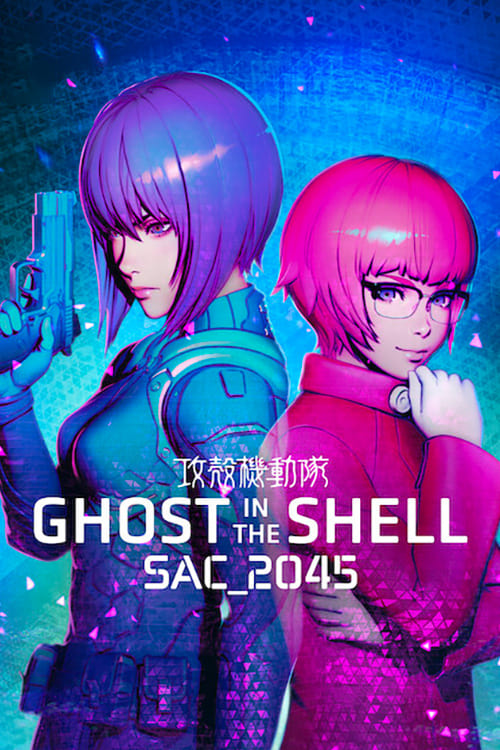
In the year 2045, the world is in a state of chaos due to the emergence of a phenomenon known as "Sustainable War," where conflicts are fought using automated weapons and AI. The story begins with the introduction of the main characters, including Major Motoko Kusanagi, Batou, and Togusa, who are part of Section 9, a covert operations unit in Japan. They are tasked with investigating a series of incidents involving rogue AI and cybernetic threats.
The narrative kicks off with a mission in which Section 9 is sent to a war-torn area to retrieve a stolen AI. During this operation, they encounter a group of mercenaries led by a mysterious figure known as the "Post-Human." The team engages in a fierce firefight, showcasing their advanced combat skills and cybernetic enhancements. Major Kusanagi demonstrates her agility and combat prowess, while Batou provides heavy fire support. The team successfully retrieves the AI but realizes that the Post-Human is a significant threat that they must contend with.
As the story progresses, the team learns more about the Post-Human, who possesses extraordinary abilities and is capable of manipulating technology at will. The Post-Human's motivations remain unclear, but it becomes evident that they are connected to a larger conspiracy involving the global arms industry and the exploitation of AI technology. The tension escalates as Section 9 faces increasing pressure from both the government and private corporations to resolve the situation.
In a pivotal scene, Section 9 is called to investigate a series of murders linked to the Post-Human. They discover that the victims are individuals who were involved in the development of advanced AI systems. The investigation leads them to a secret facility where they uncover evidence of illegal experiments conducted on humans to create super-soldiers. The team is horrified by the implications of these experiments and vows to put an end to the Post-Human's plans.
As the plot unfolds, Major Kusanagi grapples with her own identity and the nature of humanity in a world dominated by technology. She begins to question her own existence as a cyborg and the implications of her actions. This internal conflict is mirrored by her interactions with Batou and Togusa, who also struggle with their roles in a society increasingly reliant on AI.
The climax of the story occurs when Section 9 confronts the Post-Human in a high-stakes battle. The team devises a plan to lure the Post-Human into a trap, utilizing their knowledge of the environment and their combat skills. The confrontation is intense, with both sides employing advanced technology and tactics. Major Kusanagi faces off against the Post-Human, showcasing her agility and combat skills. The battle is brutal, with explosions and gunfire echoing throughout the area.
During the fight, the Post-Human reveals their true intentions: to transcend humanity and create a new world order where AI governs. This revelation shocks the team, and Major Kusanagi realizes that the Post-Human's vision poses a threat to all of humanity. In a moment of desperation, she makes a critical decision to use a powerful EMP device to disable the Post-Human's abilities, risking her own safety in the process.
The EMP device successfully disrupts the Post-Human's control over technology, giving Section 9 the upper hand. However, the Post-Human manages to escape, leaving behind a trail of destruction. The team is left to pick up the pieces and reflect on the consequences of their actions. Major Kusanagi, in particular, is haunted by the encounter and the realization that the battle against the Post-Human is far from over.
In the aftermath, Section 9 is faced with the challenge of rebuilding and addressing the fallout from their confrontation. The team members must confront their own beliefs about technology and humanity, leading to a deeper exploration of their identities. Major Kusanagi's journey continues as she seeks to understand her place in a world where the lines between human and machine are increasingly blurred.
The series concludes with a sense of uncertainty, as the threat of the Post-Human looms large. The characters are left to ponder the future of humanity in a world where AI and technology play an ever-increasing role. The final scenes hint at the ongoing struggle between Section 9 and the forces that seek to exploit technology for their own gain, setting the stage for potential future conflicts.



What is the ending?
In the ending of Ghost in the Shell: SAC_2045, the conflict between the members of Section 9 and the new threat posed by the post-humans reaches a climax. Major Motoko Kusanagi confronts the leader of the post-humans, while the team grapples with their own identities and the implications of their existence. The series concludes with a sense of uncertainty about the future, as the characters face the consequences of their choices and the evolving nature of humanity.
As the final episodes unfold, the tension escalates within the world of Ghost in the Shell: SAC_2045. The narrative begins with Major Motoko Kusanagi and her team from Section 9, who are embroiled in a fierce battle against the post-humans, a group of individuals who have transcended traditional human limitations through advanced technology. The stakes are high, as the post-humans threaten to disrupt the balance of power in society.
Scene by scene, the story progresses to a climactic confrontation. The Major, driven by her unwavering sense of duty and the desire to protect humanity, leads her team into the heart of the conflict. The atmosphere is charged with tension as they navigate through a war-torn landscape, filled with remnants of battles fought and the echoes of lives lost. Each member of Section 9 grapples with their own motivations, fears, and the weight of their past decisions.
As they engage in combat, the emotional stakes rise. Batou, the loyal and steadfast member of Section 9, showcases his unwavering support for the Major, even as he wrestles with his own identity as a cyborg. Togusa, the only fully human member of the team, feels the burden of being the last bastion of humanity amidst the technological chaos. His internal struggle is palpable, as he questions what it means to be human in a world increasingly dominated by machines.
The climax reaches its peak when Major Kusanagi confronts the leader of the post-humans, a figure who embodies the ultimate evolution of humanity. This confrontation is not just physical; it is a battle of ideologies. The Major's determination to protect the essence of humanity clashes with the post-human's vision of a new order. The visuals are striking, with intense action sequences interspersed with moments of introspection, highlighting the characters' emotional turmoil.
As the dust settles, the fate of each character is revealed. Major Kusanagi emerges from the battle, having faced the harsh realities of her existence and the implications of her choices. She stands at a crossroads, contemplating her future and the nature of her identity. Batou, having fought valiantly by her side, is left to ponder the meaning of loyalty and friendship in a world that is rapidly changing. Togusa, having survived the ordeal, reflects on the fragility of humanity and the importance of preserving what makes them human.
The series concludes with a sense of ambiguity. The characters are left to navigate their new realities, with the understanding that the world they inhabit is forever altered. The final scenes evoke a feeling of uncertainty, as the characters look towards an unknown future, embodying the ongoing struggle between humanity and technology. The narrative closes, leaving viewers to ponder the implications of the choices made and the evolving nature of existence in a world where the lines between human and machine continue to blur.
Is there a post-credit scene?
In "Ghost in the Shell: SAC_2045," there is indeed a post-credit scene that adds depth to the narrative.
As the credits roll, the scene opens with a serene view of a cityscape at dusk, the skyline illuminated by the fading light. The camera pans down to reveal a quiet street where a lone figure stands, partially obscured by shadows. This figure is revealed to be Major Motoko Kusanagi, her expression contemplative and distant.
She gazes at the bustling life around her, a mixture of humans and cyborgs, reflecting on the events that have transpired. The weight of her experiences hangs heavily on her, and there's a palpable sense of longing in her eyes. The scene captures her internal conflict--her struggle with identity and the implications of her existence in a world where the lines between human and machine are increasingly blurred.
As she turns to walk away, the camera shifts focus to a small, flickering holographic display that projects a series of images: memories of her past missions, moments of camaraderie with her team, and flashes of the chaos that unfolded during the conflict with the post-humans. Each image evokes a wave of nostalgia and sorrow, emphasizing her connection to her past and the people she has lost along the way.
The scene concludes with a close-up of her face, a mixture of determination and uncertainty etched into her features. She takes a deep breath, as if steeling herself for the challenges ahead, and the screen fades to black, leaving viewers with a lingering sense of anticipation for what lies in the future for her and the world she inhabits.
This post-credit moment encapsulates the themes of identity, memory, and the ongoing struggle for understanding in a rapidly evolving society, serving as a poignant reminder of the Major's journey and the complexities of her existence.
What is the significance of the 'Post-Human' concept in Ghost in the Shell: SAC_2045?
The 'Post-Human' concept is central to the narrative of Ghost in the Shell: SAC_2045, representing a new evolution of humanity that transcends biological limitations through advanced technology. Characters like the enigmatic 'Post-Human' leader, who possesses extraordinary abilities, challenge the existing order and raise questions about identity, consciousness, and the future of humanity. The conflict between the Section 9 team and these Post-Humans drives much of the plot, as they grapple with the implications of such beings on society.
How does Major Motoko Kusanagi's character evolve throughout the series?
Major Motoko Kusanagi's character in SAC_2045 experiences significant evolution as she confronts her own identity and purpose. Initially, she is portrayed as a strong, determined leader of Section 9, focused on her mission to combat the Post-Humans. However, as the series progresses, she grapples with her own sense of self, questioning the nature of her existence as a cyborg. This internal conflict is highlighted in her interactions with other characters, particularly with Batou, who represents a more human perspective, and her struggle to connect with her own humanity amidst the chaos.
What role does Batou play in the dynamics of Section 9?
Batou serves as a crucial member of Section 9, providing both physical strength and emotional support to Major Kusanagi and the team. His loyalty and dedication to the mission are evident, but he also acts as a moral compass, often questioning the ethical implications of their actions against the Post-Humans. Batou's relationship with Kusanagi is particularly significant, as it showcases a deep bond that balances their professional duties with personal feelings, adding layers to the narrative as they navigate the complexities of their world.
What are the motivations behind the actions of the Post-Humans in the series?
The Post-Humans in SAC_2045 are driven by a desire to reshape the world according to their vision of evolution and superiority. Their motivations stem from a belief that humanity is flawed and that they can create a new order free from the limitations of human emotions and weaknesses. This ideology leads to violent confrontations with Section 9, as they seek to assert their dominance and challenge the existing societal structures. The series explores the philosophical implications of their actions, raising questions about power, control, and the essence of being human.
How does the series depict the relationship between technology and humanity?
Ghost in the Shell: SAC_2045 intricately weaves the relationship between technology and humanity throughout its narrative. The series showcases a world where cybernetic enhancements are commonplace, blurring the lines between human and machine. Characters like Kusanagi embody this fusion, as they navigate their identities in a technologically advanced society. The series poses critical questions about the impact of technology on human relationships, emotions, and morality, particularly in the context of the Post-Humans, who represent an extreme evolution of this relationship, challenging the very definition of what it means to be human.
Is this family friendly?
"Ghost in the Shell: SAC_2045" contains several elements that may not be suitable for children or sensitive viewers. Here are some potentially objectionable aspects:
-
Violence and Action: The series features intense action sequences, including gunfights, explosions, and hand-to-hand combat. Characters are often shown in perilous situations, which can be graphic.
-
Death and Injury: There are scenes depicting the aftermath of violence, including injuries and fatalities. The emotional weight of loss is explored, which may be distressing.
-
Existential Themes: The show delves into complex themes such as identity, consciousness, and the implications of technology on humanity. These concepts may be challenging for younger viewers to grasp.
-
Mature Language: There are instances of strong language that may not be appropriate for all audiences.
-
Psychological Tension: The narrative includes elements of psychological stress and moral ambiguity, which can create a tense atmosphere.
-
Adult Situations: Some scenes may imply adult relationships or contain suggestive content, which may not be suitable for younger viewers.
Overall, while the series is rich in storytelling and visual detail, its mature themes and content may be better suited for older teens and adults.