









Popular
What motivates Jake Adelstein to pursue a career in journalism in Tokyo?
How does Jake's relationship with the Yakuza evolve throughout the series?
What role does the character of Sato play in Jake's journey?
How does the series depict the challenges Jake faces as a foreign journalist in Japan?
What is the significance of the character of Emi in Jake's life?
Should I watch it?
Ask Your Own Question

What is the plot?
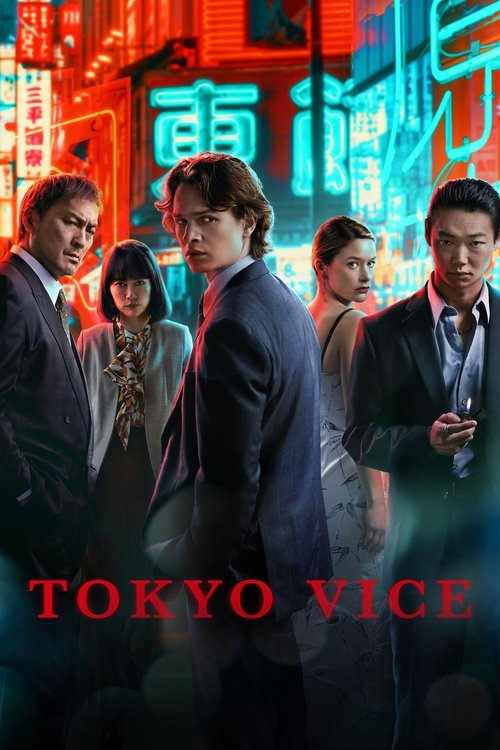
In the opening scenes of "Tokyo Vice," we are introduced to Jake Adelstein, an ambitious American journalist who has moved to Tokyo to work for a major newspaper. He is eager to prove himself in the competitive world of journalism and is particularly interested in covering the underbelly of Tokyo, including the yakuza. Jake's determination is evident as he navigates the complexities of the Japanese language and culture, often feeling like an outsider. His first day on the job is filled with excitement and anxiety as he meets his colleagues and begins to understand the challenges he will face.
Jake's initial assignment involves covering a murder case linked to the yakuza. He attends a press conference where he meets Detective Hiroto Katagiri, a seasoned police officer who is skeptical of Jake's intentions. Despite the tension, Jake is determined to gain Katagiri's trust and prove his worth as a journalist. He begins to dig deeper into the story, interviewing sources and gathering information, which leads him to the realization that the yakuza's influence runs deep in Tokyo.
As Jake continues his investigation, he encounters a young woman named Samantha, an American working as a hostess in a nightclub. Their relationship develops as they bond over their experiences in Tokyo. Samantha provides Jake with insights into the nightlife and the yakuza's involvement in it, further fueling his desire to uncover the truth. However, their relationship is complicated by the dangers that come with Jake's pursuit of the story.
Jake's persistence leads him to a yakuza member named Sato, who becomes a key source for his investigation. Sato is initially wary of Jake but eventually opens up about the inner workings of the yakuza. Their conversations reveal the brutal realities of organized crime in Japan, and Jake grapples with the moral implications of his reporting. He is torn between his journalistic integrity and the risks involved in getting too close to the yakuza.
As Jake's investigation intensifies, he faces increasing pressure from his superiors at the newspaper, who are concerned about the potential backlash from the yakuza. They urge him to tone down his reporting, but Jake is unwilling to back down. He becomes more determined to expose the truth, even as he realizes the personal dangers that come with it. His relationship with Katagiri deepens as they both navigate the treacherous waters of crime and corruption in Tokyo.
The tension escalates when Jake witnesses a violent confrontation between the yakuza and a rival gang. This event serves as a wake-up call for him, highlighting the real dangers of his investigation. He begins to understand the stakes involved and the potential consequences for himself and those around him. Despite the risks, Jake continues to pursue the story, driven by a sense of duty to uncover the truth.
As Jake delves deeper, he uncovers a major drug trafficking operation linked to the yakuza. This discovery puts him in direct conflict with powerful figures in the criminal underworld. He faces threats and intimidation as the yakuza attempt to silence him. Jake's determination to report the truth puts a strain on his relationships, particularly with Samantha, who fears for his safety.
In a pivotal moment, Jake decides to confront Sato about the drug operation. This confrontation is tense, with Jake demanding answers while Sato struggles with his loyalty to the yakuza. The scene is charged with emotion as both characters grapple with their choices and the consequences of their actions. Sato ultimately reveals critical information that propels Jake's investigation forward, but it also puts both of them in jeopardy.
As the story progresses, Jake's relationship with Katagiri becomes more complex. They work together to gather evidence against the yakuza, but their differing approaches create friction. Katagiri is cautious and strategic, while Jake is impulsive and driven by his desire for a big story. This tension culminates in a dramatic confrontation where they must decide whether to trust each other fully.
The climax of the series occurs when Jake's investigation leads to a major yakuza meeting. He manages to infiltrate the event, capturing crucial evidence that could expose the criminal organization. However, the situation quickly spirals out of control as the yakuza become aware of his presence. A violent confrontation ensues, with Jake narrowly escaping the chaos. The scene is intense, filled with action and suspense as he fights to get out alive.
In the aftermath of the confrontation, Jake faces the consequences of his actions. He is forced to confront the reality of the dangers he has put himself and others in. His relationship with Samantha reaches a breaking point as she struggles to understand his obsession with the story. Jake is left to reflect on the cost of his pursuit of truth and the impact it has had on his life.
The series concludes with Jake making a difficult decision about his future in Tokyo. He realizes that the world of journalism is fraught with peril, and he must weigh his passion for uncovering the truth against the risks involved. The final scenes leave Jake at a crossroads, contemplating his next steps as he navigates the complexities of life in a city where danger lurks around every corner.
More TV Shows Like This
Browse All TV Shows →








What is the ending?
In the ending of "Tokyo Vice," Jake Adelstein confronts the harsh realities of his investigative work, leading to a climactic showdown with the Yakuza. The series concludes with significant consequences for Jake, his relationships, and the world around him, leaving a lasting impact on his life and career.
As the final episodes unfold, Jake's pursuit of the truth about the Yakuza's activities intensifies. He finds himself increasingly entangled in the dangerous underbelly of Tokyo, where loyalties are tested, and the stakes are life and death. His relationship with the detective Hiroto Katagiri deepens, as they navigate the complexities of their respective roles in a corrupt system. Meanwhile, Jake's romantic involvement with Samantha, an American bar hostess, adds emotional weight to his journey, highlighting the personal sacrifices he makes for his career.
In the climactic scenes, Jake's investigation leads him to uncover a major drug trafficking operation linked to the Yakuza. As he gathers evidence, he faces threats from powerful figures within the organization. The tension escalates when Jake is confronted by the Yakuza, forcing him to make a choice between his safety and his commitment to uncovering the truth. The confrontation is fraught with danger, showcasing the brutal reality of the criminal world he has chosen to expose.
Ultimately, Jake's determination to report the truth comes at a high cost. He realizes that the world he is trying to expose is not just dangerous but also deeply entrenched in the fabric of society. The series ends with Jake reflecting on his journey, the sacrifices he has made, and the uncertain future that lies ahead. His relationship with Katagiri is left in a precarious state, as both men grapple with the implications of their choices.
Samantha's fate is also left ambiguous, as her struggles in the nightlife of Tokyo continue, highlighting the challenges faced by those caught in the city's underbelly. The series closes on a note of uncertainty, emphasizing the ongoing battle between truth and corruption, and the personal toll it takes on those who dare to confront it.
In summary, the ending of "Tokyo Vice" encapsulates the themes of ambition, danger, and the moral complexities of seeking justice in a world rife with corruption, leaving the audience with a poignant sense of the characters' struggles and the realities they face.
Is there a post-credit scene?
In the TV show "Tokyo Vice," there is no post-credit scene. The series concludes its narrative without any additional scenes after the credits roll. The final moments of the last episode focus on the culmination of the main characters' arcs, particularly Jake Adelstein's journey as a journalist navigating the complexities of Tokyo's underworld and his relationship with the Yakuza. The absence of a post-credit scene allows the emotional weight of the story to resonate without further distraction, leaving viewers to reflect on the themes of ambition, morality, and the consequences of one's choices in a city filled with shadows.
What motivates Jake Adelstein to pursue a career in journalism in Tokyo?
Jake Adelstein, an American journalist, is driven by a deep desire to uncover the truth and expose corruption within the Tokyo underworld. His ambition is fueled by a personal sense of justice and a fascination with the complexities of Japanese culture. As he navigates the challenges of being a foreigner in a foreign land, his determination to report on the Yakuza and the darker sides of society becomes a central theme in his character development.
How does Jake's relationship with the Yakuza evolve throughout the series?
Jake's relationship with the Yakuza is complex and fraught with tension. Initially, he is an outsider looking in, but as he gains their trust through his reporting, he becomes more entangled in their world. His interactions with characters like Sato, a young Yakuza member, reveal the moral ambiguities of his position. Jake struggles with the ethical implications of his work, often torn between his journalistic integrity and the dangerous allure of the Yakuza lifestyle.
What role does the character of Sato play in Jake's journey?
Sato serves as both a guide and a cautionary figure for Jake. As a young Yakuza member, Sato embodies the conflict between loyalty to the gang and personal ambition. His friendship with Jake highlights the cultural divide and the risks involved in their relationship. Sato's character development reflects the harsh realities of the Yakuza life, and his choices ultimately impact Jake's understanding of the consequences of his reporting.
How does the series depict the challenges Jake faces as a foreign journalist in Japan?
The series vividly portrays the cultural and professional challenges Jake faces as a foreign journalist. He grapples with language barriers, cultural misunderstandings, and the skepticism of both his peers and the subjects he covers. These obstacles are compounded by the dangers of reporting on the Yakuza, where his safety is constantly at risk. The emotional toll of isolation and the pressure to prove himself in a competitive environment are palpable throughout his journey.
What is the significance of the character of Emi in Jake's life?
Emi, a bar hostess, plays a crucial role in Jake's emotional landscape. She represents a connection to the local culture and offers him a glimpse into the lives of women affected by the Yakuza's influence. Their relationship is marked by intimacy and vulnerability, as Emi navigates her own struggles within the patriarchal society. Through Emi, Jake experiences the personal costs of the world he is investigating, deepening his understanding of the human impact of crime and corruption.
Is this family friendly?
"Tokyo Vice," produced in 2022, is not considered family-friendly due to its mature themes and content. Here are some potentially objectionable or upsetting aspects that may affect children or sensitive viewers:
-
Violence: The series includes scenes of physical violence, including fights and confrontations that can be graphic and intense.
-
Crime and Corruption: The narrative revolves around organized crime, which may include depictions of illegal activities, drug use, and the moral complexities of law enforcement.
-
Sexual Content: There are scenes that involve sexual situations and suggestive themes, which may be inappropriate for younger audiences.
-
Language: The dialogue contains strong language and profanity, which may not be suitable for children.
-
Emotional Turmoil: Characters experience significant emotional distress, including trauma and moral dilemmas, which could be upsetting for sensitive viewers.
-
Cultural Depictions: The portrayal of certain cultural aspects, particularly related to the Yakuza and crime, may be unsettling for some viewers.
Overall, the series deals with heavy and mature themes that are best suited for adult audiences.