
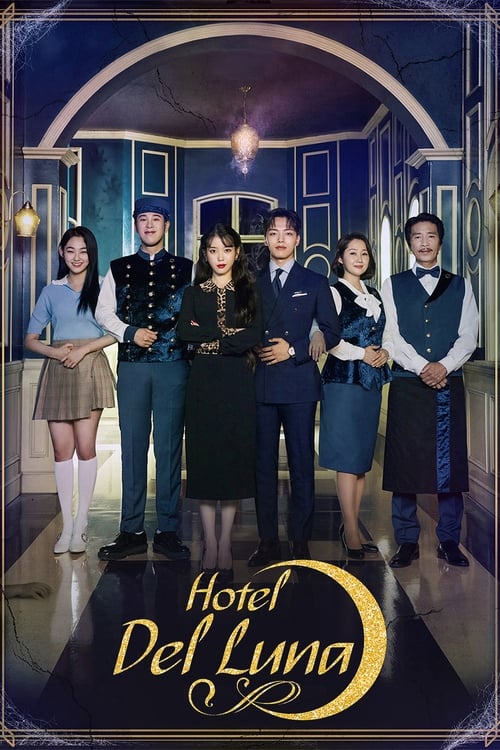


















Popular
What is the significance of the blue moon in Hotel Del Luna?
How does Jang Man-wol's past influence her character and actions throughout the series?
What role does Go Chung-myung play in Jang Man-wol's journey?
How does the character of Go Joon-pyo contribute to the story's development?
What is the significance of the various guests that visit Hotel Del Luna?
Should I watch it?
Ask Your Own Question

What is the plot?
The story begins with Jang Man-wol, the beautiful but cursed owner of Hotel Del Luna, a mystical hotel that caters to ghosts. Man-wol is trapped in a cycle of regret and anger due to her past sins, which include the betrayal and murder of her lover, Go Chung-myung, centuries ago. The hotel is located in a picturesque but eerie setting, with a facade that reflects the beauty and sorrow of its guests. Man-wol is portrayed as a strong yet emotionally scarred character, often displaying a cold demeanor while hiding her deep-seated pain.
One day, a new manager, Go Jung-seok, is introduced to the hotel. He is a young and ambitious man who has just returned from studying abroad. However, he is soon revealed to be the reincarnation of Go Chung-myung, Man-wol's long-lost love. This twist sets the stage for the unfolding drama, as Jung-seok's presence reignites Man-wol's buried emotions and unresolved issues from her past.
As Jung-seok begins his role at the hotel, he encounters various ghostly guests, each with their own stories and unresolved matters. Man-wol, while initially resistant to Jung-seok's presence, starts to develop a bond with him. Their interactions are filled with tension, as Man-wol struggles with her feelings and the memories of her past life. Jung-seok, on the other hand, is drawn to Man-wol's beauty and strength, but he is also wary of her dark past.
Throughout the series, the hotel serves as a backdrop for various ghostly tales, each episode focusing on a different guest. These stories often reflect themes of love, betrayal, and redemption, paralleling Man-wol's own journey. As Jung-seok helps the spirits find closure, he begins to uncover more about Man-wol's tragic history and the reasons behind her curse.
As the plot progresses, Man-wol's emotional walls begin to crumble. She reveals her past to Jung-seok, sharing the story of her betrayal and the pain that has kept her bound to the hotel for centuries. This revelation deepens their connection, and Jung-seok becomes determined to help Man-wol find peace and break her curse.
In a pivotal moment, Jung-seok learns that he must confront the truth of his past life as Go Chung-myung. He discovers that Man-wol's curse is tied to their unfinished love story, and he must make a choice: to forgive her for her past actions or to let her remain trapped in her sorrow. This internal conflict drives Jung-seok to seek out ways to help Man-wol heal.
As the series nears its climax, a powerful antagonist emerges in the form of a vengeful spirit, who seeks to destroy the hotel and all its inhabitants. This spirit is connected to Man-wol's past, and its presence threatens to unravel everything that Jung-seok and Man-wol have built together. A series of confrontations ensue, with Jung-seok and Man-wol fighting to protect the hotel and the spirits within it.
In a dramatic showdown, Jung-seok confronts the vengeful spirit, using his newfound understanding of love and forgiveness to weaken its hold. Man-wol, witnessing Jung-seok's bravery, is inspired to confront her own fears and regrets. Together, they manage to defeat the spirit, but not without significant emotional tolls.
The climax reaches its peak when Man-wol is faced with the choice of letting go of her past and moving on or remaining in the hotel forever. In a heart-wrenching moment, she decides to embrace her fate, allowing herself to forgive and be forgiven. This decision leads to a poignant farewell between her and Jung-seok, as they acknowledge their love but understand that they must part ways for her to find peace.
In the final scenes, Man-wol transforms into a beautiful light, symbolizing her release from the curse. She ascends to the afterlife, leaving behind the hotel and its memories. Jung-seok, now fully aware of his past and the love they shared, watches her go with a bittersweet smile, knowing that she has finally found her freedom.
The series concludes with Jung-seok taking over the management of Hotel Del Luna, now a place of healing and hope for the spirits that continue to visit. He carries Man-wol's memory with him, ensuring that her legacy lives on as he helps others find closure, mirroring the journey they took together.
More TV Shows Like This
Browse All TV Shows →








What is the ending?
In the ending of "Hotel Del Luna," Jang Man-wol finally confronts her past and the consequences of her actions. After a series of emotional revelations and sacrifices, she is able to let go of her long-held grudges and regrets. The hotel, which has served as a resting place for souls, is finally able to close its doors. Man-wol and Go Chung-myung, her long-lost love, are reunited in the afterlife, while the new manager, Go Joon-pyo, takes over the hotel, ensuring that it continues to serve its purpose.
As the story unfolds, the final episodes of "Hotel Del Luna" are rich with emotional depth and visual storytelling.
The first scene begins with Jang Man-wol, played by IU, standing on the rooftop of the hotel, gazing at the moon. The moonlight casts a soft glow on her face, reflecting her internal struggle. She is burdened by centuries of pain and regret, haunted by the memories of her past. The hotel, a beautiful yet eerie establishment, is filled with spirits who have unfinished business. Man-wol's role as the owner is both a privilege and a curse, as she has been trapped in this cycle for over a thousand years.
As the story progresses, we see Go Chung-myung, portrayed by Lee Do-hyun, re-entering Man-wol's life. He is a figure from her past, a love she lost due to her own choices. Their reunion is bittersweet, filled with longing and unresolved feelings. The emotional weight of their history is palpable, and the audience can feel the tension as they navigate their complex relationship.
In the following scenes, the hotel faces a crisis as the spirits begin to lose their way. Man-wol realizes that her inability to forgive herself is affecting the souls she is meant to guide. This revelation leads her to confront her past actions, particularly the betrayal that led to Chung-myung's death. The atmosphere is heavy with sorrow as she grapples with her guilt, and the visuals of the hotel reflect her turmoil--dark clouds gather, and the once-vibrant colors of the hotel fade.
As the climax approaches, Man-wol makes a pivotal decision. She chooses to sacrifice her own existence to save the souls trapped in the hotel. This moment is filled with emotional intensity; she stands before the spirits, her heart breaking as she bids them farewell. The hotel begins to transform, the walls shimmering with light as it prepares to close. The spirits, once lost, find peace and begin to ascend, leaving behind a sense of closure.
In the final scenes, Man-wol and Chung-myung share a poignant moment. They stand together, surrounded by the ethereal glow of the afterlife. Their love, which transcends time and space, is finally realized. Man-wol's face is illuminated with a serene smile as she embraces Chung-myung, symbolizing her acceptance of her past and her readiness to move on. The hotel fades into the night, its purpose fulfilled.
Meanwhile, Go Joon-pyo, played by Yeo Jin-goo, steps into his new role as the manager of the hotel. He is left with the responsibility of guiding the souls that will continue to arrive. His character, who has grown throughout the series, embodies hope and renewal. The final shot of him standing at the entrance of the hotel, ready to welcome the next guests, signifies a new beginning.
In conclusion, the ending of "Hotel Del Luna" encapsulates themes of love, sacrifice, and redemption. Jang Man-wol's journey comes full circle as she finds peace, while Go Joon-pyo's emergence as the new manager hints at the continuation of the cycle, ensuring that the hotel remains a sanctuary for lost souls. Each character's fate is intertwined with the overarching narrative of forgiveness and the importance of letting go.
Is there a post-credit scene?
Yes, "Hotel Del Luna" features a post-credit scene that adds a poignant touch to the story.
As the credits roll, the scene opens with a serene view of the hotel, now transformed into a beautiful, vibrant place, reflecting the peace that has settled after the tumultuous events of the series. The camera pans to the entrance of Hotel Del Luna, where a new sign hangs, indicating a fresh start for the establishment.
In this scene, we see a young woman, who is revealed to be the reincarnation of Jang Man-wol, the hotel's long-time owner. She is dressed in modern attire, suggesting a new era. The atmosphere is light and hopeful, contrasting with the heavy themes of the series.
As she steps into the hotel, she is greeted by the staff, who are now lively and welcoming. The warmth of their interactions hints at the new beginnings for both the hotel and its employees. The young woman's smile is bright, filled with a sense of purpose and a hint of nostalgia, as she seems to carry the memories of her past life.
The scene closes with her looking out at the beautiful view from the hotel, a soft breeze ruffling her hair, symbolizing the continuity of life and the cycles of love and loss. This moment encapsulates the essence of the series, leaving viewers with a sense of closure and hope for the future.
What is the significance of the blue moon in Hotel Del Luna?
The blue moon in Hotel Del Luna symbolizes the rare and special moments in life, particularly in the context of the hotel's operations. It is during a blue moon that the hotel can open its doors to the living, allowing them to interact with the spirits. This event is pivotal as it brings about significant plot developments, including the deepening relationship between Jang Man-wol and Go Chung-myung.
How does Jang Man-wol's past influence her character and actions throughout the series?
Jang Man-wol's past is steeped in tragedy and betrayal, having been cursed to run Hotel Del Luna for eternity due to her actions in life. Her emotional turmoil and longing for redemption drive her character, leading her to confront her past mistakes, particularly her relationship with Go Chung-myung, which is marked by love and regret. This internal conflict shapes her interactions with guests and her decisions as the hotel's owner.
What role does Go Chung-myung play in Jang Man-wol's journey?
Go Chung-myung serves as a pivotal figure in Jang Man-wol's journey, representing her lost love and the life she could have had. His reappearance in the present, as a spirit, forces Man-wol to confront her feelings of guilt and longing. Their relationship is central to the narrative, as it highlights themes of love, sacrifice, and the possibility of redemption, ultimately influencing Man-wol's choices and her path towards liberation.
How does the character of Go Joon-pyo contribute to the story's development?
Go Joon-pyo, as the new manager of Hotel Del Luna, brings a fresh perspective and a sense of normalcy to the supernatural environment. His character evolves from skepticism to acceptance of the hotel's unique nature, and his interactions with Jang Man-wol and the spirits help to bridge the gap between the living and the dead. His growth and understanding of the hotel's purpose add depth to the narrative, as he becomes an ally to Man-wol in her quest for closure.
What is the significance of the various guests that visit Hotel Del Luna?
The guests at Hotel Del Luna each have their own stories and unresolved issues, which reflect the broader themes of life, death, and the human experience. Each episode typically focuses on a different guest, allowing for exploration of their pasts and the reasons they are drawn to the hotel. These encounters not only serve to develop the overarching narrative but also provide insight into Jang Man-wol's character, as she often sees reflections of her own struggles in the guests' stories.
Is this family friendly?
"Hotel Del Luna" is a fantasy drama that contains several elements that may not be suitable for children or sensitive viewers. Here are some potentially objectionable or upsetting aspects:
-
Supernatural Themes: The show revolves around ghosts and the afterlife, which may be frightening for younger audiences. The portrayal of spirits and their backstories can be dark and emotional.
-
Death and Mourning: Many episodes explore themes of loss, grief, and the process of letting go, which can be heavy and may evoke strong emotions.
-
Violence: There are scenes that depict violence, including confrontations between characters and ghostly encounters that can be intense.
-
Romantic Relationships: The show includes romantic subplots that may involve mature themes, including unrequited love and complicated relationships.
-
Emotional Turmoil: Characters experience significant emotional struggles, including betrayal, loneliness, and existential crises, which may be difficult for younger viewers to process.
-
Visuals of the Supernatural: The aesthetic of the show includes eerie visuals and settings that may be unsettling, such as the depiction of the hotel itself and the spirits that inhabit it.
Overall, while "Hotel Del Luna" is rich in storytelling and character development, its themes and visuals may not be appropriate for all audiences, particularly children or those sensitive to darker content.









