
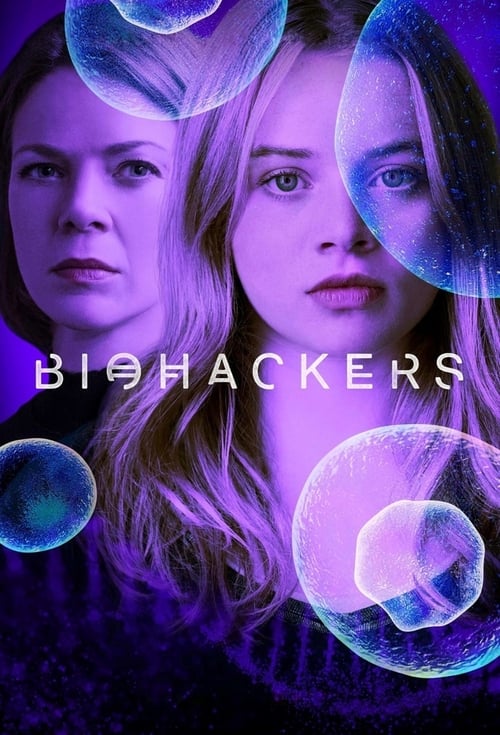










Popular
What motivates Mia to infiltrate the university's biohacking program?
How does Mia's relationship with her roommate, Jade, evolve throughout the series?
What role does the character of Niklas play in Mia's journey?
What is the significance of the 'CRISPR' technology in the plot?
How does the series portray the theme of friendship among the biohacking students?
Should I watch it?
Ask Your Own Question

What is the plot?
The series begins with Mia Akerlund, a young medical student, arriving in Germany to study at a prestigious university. She is determined to uncover the truth about her brother's mysterious death, which she believes is linked to biohacking. Mia is introduced to her new roommate, a quirky and intelligent student named Jasper, who is fascinated by the world of biohacking. They quickly bond over their shared interests, and Mia begins to settle into her new life.
Mia attends her first class, where she meets the enigmatic and brilliant professor, Tanja Lorenz. Tanja is a leading figure in the field of biohacking and genetic engineering. During the lecture, Mia is captivated by Tanja's passion for the subject, but she also senses an underlying tension in the room. The students are competitive, and Mia feels the pressure to prove herself. She begins to form a plan to get closer to Tanja and learn more about her research.
As Mia delves deeper into her studies, she discovers a secret biohacking group led by Tanja. The group conducts illegal experiments on human subjects, pushing the boundaries of ethics and science. Mia is both horrified and intrigued by the potential of biohacking. She decides to infiltrate the group to gather information about her brother's death, believing that Tanja may have answers.
Mia's investigation leads her to a series of clandestine meetings with the biohacking group. She witnesses their experiments, which include genetic modifications and enhancements. The atmosphere is tense, filled with excitement and danger. Mia's internal conflict grows as she grapples with the moral implications of their work. She becomes increasingly drawn to the thrill of biohacking, even as she remains focused on her ultimate goal.
During one of the experiments, Mia encounters a fellow student named Niklas, who is deeply involved in the biohacking community. He becomes a key ally for Mia, sharing information about Tanja's past and the dark secrets of the group. As they work together, Mia and Niklas develop a romantic connection, complicating Mia's mission. She struggles with her feelings for him while remaining determined to uncover the truth.
Mia's investigation takes a dangerous turn when she discovers that Tanja is involved in a cover-up regarding her brother's death. Tanja had been conducting experiments on him, and Mia realizes that her brother was a victim of the very biohacking she is now entangled in. Fueled by anger and betrayal, Mia confronts Tanja, demanding answers. Tanja reveals her motivations, explaining that she believed she was working towards a greater good, but Mia is unconvinced.
As tensions rise, Mia decides to expose Tanja and the biohacking group. She gathers evidence of their illegal activities and prepares to go public. However, Tanja and her followers catch wind of Mia's plan. In a dramatic confrontation, Mia is cornered by Tanja and the group, who threaten her to keep silent. A physical struggle ensues, and Mia narrowly escapes, determined to bring the truth to light.
In the aftermath of the confrontation, Mia faces the consequences of her actions. She is torn between her desire for justice and the fear of what Tanja and the group might do to her. With Niklas by her side, she decides to take her evidence to the authorities. They work together to compile a comprehensive report, detailing the unethical practices of the biohacking group.
The series culminates in a tense showdown as Mia and Niklas present their findings to the university and law enforcement. Tanja and her followers attempt to discredit Mia, but the evidence is overwhelming. The authorities launch an investigation into Tanja's practices, leading to her arrest. Mia feels a mix of relief and sorrow, knowing that she has achieved her goal but at a great personal cost.
In the final scenes, Mia reflects on her journey and the impact of biohacking on her life. She has uncovered the truth about her brother's death and exposed the dark side of scientific ambition. However, the experience has left her changed, grappling with the ethical dilemmas of biohacking and the consequences of her choices. The series ends with Mia looking towards the future, uncertain but resolute in her commitment to ethical science.
More TV Shows Like This
Browse All TV Shows →
What is the ending?
In the ending of "Biohackers," Mia discovers the truth about her brother's death and confronts the dark secrets of her mentor, Tanja. The series culminates in a tense showdown that leaves Mia and her friends in a precarious situation, ultimately leading to a cliffhanger that sets the stage for potential future conflicts.
As the final episode unfolds, the tension escalates in the dimly lit laboratory where Mia, played by Luna Wedler, confronts Tanja, portrayed by Jessica Schwarz. The air is thick with betrayal and unresolved emotions. Mia's heart races as she pieces together the horrifying truth about her brother's death, which she believes is linked to Tanja's unethical experiments. The camera captures Mia's determination, her eyes reflecting a mix of anger and sorrow.
In a flashback, we see Mia's brother, a bright and ambitious young man, engaging in a conversation with Tanja about the potential of biohacking. The scene is warm and hopeful, contrasting sharply with the present. Mia's memories haunt her, fueling her resolve to seek justice. She recalls the moments of laughter and dreams shared with her brother, now overshadowed by grief and a thirst for answers.
Back in the lab, Mia confronts Tanja, demanding to know the truth. Tanja, initially calm, begins to unravel under the pressure. The tension in the room is palpable as Mia accuses her of playing God with human lives. Tanja's facade cracks, revealing her desperation to protect her research at any cost. The emotional stakes rise as Mia's friends, including the loyal and resourceful Niklas, played by Adrian Julius Tillmann, and the tech-savvy and supportive friend, Chen, portrayed by Jing Xiang, stand by her side, ready to back her up.
As the confrontation escalates, Tanja reveals her own motivations, hinting at the sacrifices she made in the name of science. The dialogue is charged with emotion, each character's internal struggles laid bare. Mia's anger is palpable, but so is her fear of losing everything she holds dear. The camera zooms in on her face, capturing the conflict within her as she grapples with the desire for revenge versus the need for closure.
Suddenly, the situation spirals out of control. Tanja, feeling cornered, activates a security protocol that locks down the lab. The lights flicker ominously, and alarms blare, creating a chaotic atmosphere. Mia and her friends scramble to find a way out, their hearts pounding as they navigate the darkened corridors. The stakes have never been higher, and the sense of urgency is overwhelming.
In a climactic moment, Mia manages to confront Tanja one last time, demanding to know if her brother's death was truly an accident or a consequence of Tanja's experiments. Tanja's response is ambiguous, leaving Mia with more questions than answers. The emotional weight of the moment hangs heavy in the air, as Mia realizes that the truth may never be fully revealed.
As the group finally escapes the lab, they find themselves outside, the night air cool against their skin. However, the relief is short-lived. The final scene reveals a shadowy figure watching them from a distance, hinting at the ongoing threat posed by Tanja's research and the implications of their discoveries. The camera pans out, leaving viewers with a sense of foreboding and uncertainty about the future.
In the aftermath, Mia is left grappling with the emotional fallout of her confrontation with Tanja. She feels a mix of triumph and despair, knowing that while she has uncovered some truths, the battle is far from over. Niklas and Chen stand by her, their friendship solidified through the trials they faced together. The series ends on a cliffhanger, with Mia's fate uncertain and the potential for further conflict looming large, leaving audiences eager for more.
Is there a post-credit scene?
In the TV show "Biohackers," there is no post-credit scene. The series concludes its episodes without any additional scenes after the credits roll. The focus remains on the main narrative and character arcs throughout the episodes, leaving viewers with a sense of closure at the end of each installment. The story primarily revolves around Mia Akerlund, her quest for revenge, and the ethical dilemmas surrounding biohacking, rather than teasing future developments through post-credit sequences.
What motivates Mia to infiltrate the university's biohacking program?
Mia, the protagonist, is driven by a deep personal vendetta against the biohacker and professor, Tanja Lorenz. Her motivation stems from a tragic past involving her twin brother, who died due to an experimental treatment that Tanja was involved in. This emotional turmoil fuels her determination to uncover the truth about Tanja's research and to seek justice for her brother.
How does Mia's relationship with her roommate, Jade, evolve throughout the series?
Initially, Mia and Jade share a friendly but somewhat superficial relationship, with Jade being unaware of Mia's true intentions. As the series progresses, Jade becomes more entangled in Mia's secretive world of biohacking. Their bond is tested when Jade discovers Mia's hidden agenda, leading to feelings of betrayal and conflict, but ultimately, they find a way to reconcile as they face external threats together.
What role does the character of Niklas play in Mia's journey?
Niklas serves as both a love interest and a moral compass for Mia. He is a fellow student who is passionate about bioethics and often challenges Mia's more reckless approach to biohacking. His genuine concern for her well-being and his ethical stance create tension between them, especially as Mia becomes increasingly consumed by her quest for revenge. Niklas's character highlights the emotional stakes of Mia's choices and the potential consequences of her actions.
What is the significance of the 'CRISPR' technology in the plot?
CRISPR technology is central to the narrative, representing both the promise and peril of genetic manipulation. It is the tool that Mia and her peers use to experiment with biohacking, leading to groundbreaking discoveries but also dangerous consequences. The ethical dilemmas surrounding CRISPR are explored through various characters' actions, particularly Tanja's, as she pushes the boundaries of science for personal gain, which ultimately ties back to Mia's quest for justice.
How does the series portray the theme of friendship among the biohacking students?
The series intricately weaves the theme of friendship among the biohacking students, showcasing how their camaraderie is both a source of strength and vulnerability. As they collaborate on experiments, their bonds deepen, but the competitive nature of their ambitions often leads to jealousy and betrayal. The friendships are tested when secrets are revealed, particularly Mia's hidden motives, forcing the characters to confront their loyalties and the ethical implications of their work.
Is this family friendly?
"Biohackers," produced in 2020, is a German sci-fi thriller series that delves into themes of genetic engineering and ethical dilemmas surrounding biotechnology. While the show is engaging and thought-provoking, it contains several elements that may not be suitable for children or sensitive viewers.
-
Violence and Suspense: The series includes scenes of tension and conflict that may be intense for younger audiences. There are moments of physical confrontations and threats that can evoke fear.
-
Medical Experiments: The show features graphic depictions of scientific experiments, including genetic manipulation and biohacking practices. These scenes can be unsettling, particularly for those sensitive to medical or scientific imagery.
-
Moral Ambiguity: Characters often grapple with ethical dilemmas regarding human experimentation and the consequences of their actions. This complexity may be difficult for younger viewers to understand.
-
Dark Themes: The narrative explores themes of betrayal, loss, and the quest for power, which can be emotionally heavy and may not resonate well with a younger audience.
-
Language and Mature Content: There are instances of strong language and adult themes that may not be appropriate for children.
Overall, while "Biohackers" offers a compelling story, its mature themes and content may make it more suitable for older teens and adults rather than a family-friendly viewing experience.









