








Popular
What is the significance of the Hinamizawa Syndrome in the story?
How does Rika Furude's character evolve throughout the series?
What role does Keiichi Maebara play in the unfolding events of Hinamizawa?
What is the relationship between Mion Sonozaki and Shion Sonozaki?
What are the implications of the time loops in the story?
Should I watch it?
Ask Your Own Question

What is the plot?
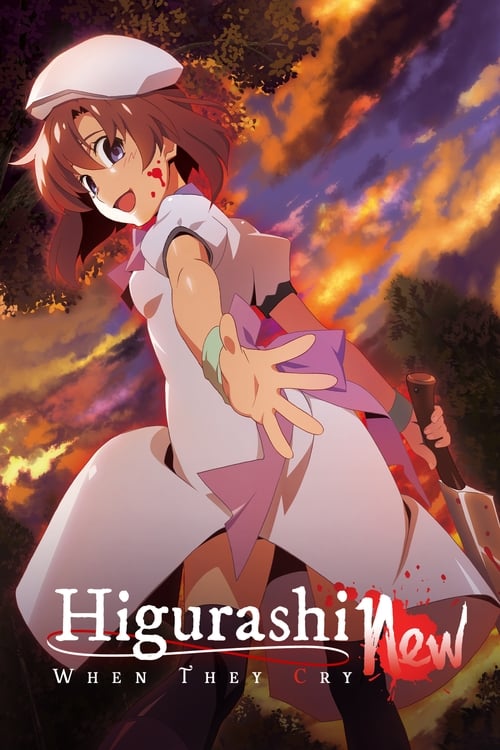
In the rural village of Hinamizawa, Keiichi Maebara moves in and quickly befriends a group of girls: Rena Ryuuguu, Mion Sonozaki, Satoko Houjou, and Rika Furude. The story begins with Keiichi settling into the village and becoming involved in the local culture, including the annual Watanagashi Festival. As he spends time with the girls, he learns about the village's dark history, particularly the mysterious deaths and disappearances that occur every year during the festival.
During a game of "question and answer," Keiichi becomes increasingly paranoid after hearing about the village's past, particularly the story of the Oyashiro-sama curse, which is said to punish those who leave the village. Rena and Mion tease Keiichi about his fears, but he begins to feel isolated and distrustful. This paranoia escalates when he overhears a conversation between Rena and Mion that suggests they might be hiding something from him.
Keiichi's suspicions grow, leading him to confront Rena about her behavior. Rena, who has been acting strangely, reveals her obsession with a certain incident involving a previous resident of Hinamizawa, which further fuels Keiichi's anxiety. He begins to believe that Rena and Mion are plotting against him, and he feels trapped in a web of deceit. This culminates in a confrontation where Keiichi, feeling cornered, lashes out at Rena, accusing her of being part of a conspiracy.
In a moment of desperation, Keiichi decides to take matters into his own hands. He seeks out a weapon, a baseball bat, and confronts Rena and Mion at the Sonozaki family's house. The scene is tense, filled with emotional turmoil as Keiichi struggles with his fear and anger. He demands to know the truth, and in a shocking twist, he attacks Mion, believing she is part of the threat against him. The confrontation spirals out of control, leading to a violent struggle.
After the attack, Keiichi is left in a state of confusion and guilt. He realizes that he has harmed his friends and is now a fugitive in his own mind. The narrative shifts as Keiichi grapples with the consequences of his actions, leading to a breakdown where he questions his sanity and the reality of the situation. He becomes increasingly isolated, haunted by the fear that he cannot trust anyone.
The story then shifts perspective to Rika, who is aware of the repeating cycles of violence and tragedy in Hinamizawa. She tries to navigate the complexities of her relationships with the other characters while seeking a way to break the cycle. Rika's internal struggle is palpable as she attempts to maintain her innocence and hope amidst the chaos surrounding her.
As the narrative progresses, the characters are drawn into a series of events that lead to the Watanagashi Festival. During the festival, the tension escalates as the village's dark history resurfaces. Rena, driven by her own motivations, becomes increasingly unstable, leading to a climactic moment where she confronts Keiichi again. This time, the confrontation is more intense, with Rena revealing her own fears and the burden of the village's curse.
The climax of the story occurs when the characters are forced to confront the reality of their situation. Rika, in a desperate attempt to save her friends and herself, makes a pivotal decision to try and change the course of events. She seeks out the truth behind the curse and the events that have led to the violence in the village. This leads to a series of revelations about the nature of the curse, the history of Hinamizawa, and the interconnected fates of the characters.
In the final act, the characters face the consequences of their actions. Keiichi, Rena, and Mion must confront their past mistakes and the impact of their choices on one another. The story culminates in a resolution that sees Rika's efforts to break the cycle of violence come to fruition, but not without significant sacrifice and loss. The emotional weight of the characters' journeys is felt deeply as they navigate the complexities of friendship, trust, and the haunting legacy of Hinamizawa.
The series concludes with a sense of ambiguity, leaving the characters and the audience to ponder the nature of fate and the possibility of redemption. The final scenes reflect the emotional scars left by the events, as the characters strive to find a way to move forward in a world still shadowed by the past.




What is the ending?
In the ending of Higurashi: When They Cry - NEW, the story culminates in a confrontation between the characters, revealing the truth behind the tragedies that have plagued Hinamizawa. Keiichi Maebara, along with his friends, confronts the cycle of violence and despair that has haunted them. The resolution comes as they break free from the repeating tragedies, leading to a hopeful future where they can live without fear.
As the final arc unfolds, the atmosphere in Hinamizawa is thick with tension. The sun hangs low in the sky, casting long shadows over the village, a stark contrast to the bright, cheerful days the characters once enjoyed. Keiichi Maebara, burdened by the weight of his friends' fates, stands at the center of the village, grappling with the memories of betrayal and loss. His heart races as he recalls the moments of horror that have unfolded, the faces of his friends twisted in anguish.
Scene by scene, the narrative reveals the characters' struggles. Rena Ryuuguu, once a vibrant girl filled with dreams, now carries the scars of her past. Her eyes, once bright with hope, are clouded with despair as she confronts the reality of her actions. She stands beside Keiichi, her resolve wavering but her loyalty unwavering. The bond they share is palpable, a mixture of fear and determination as they face the darkness together.
Mion Sonozaki, the strong-willed leader of the group, steps forward, her voice steady despite the turmoil within. She has always been the protector, but now she must confront her own demons. The weight of her family's legacy looms over her, and she struggles to reconcile her identity with the horrors that have unfolded. Her internal conflict is mirrored in her clenched fists and the way she holds her head high, refusing to back down.
As the climax approaches, the characters gather in the shrine, a place that once symbolized their childhood innocence. The air is thick with tension as they confront the malevolent force that has driven them to the brink of madness. The confrontation is intense, filled with emotional outbursts and revelations. Each character lays bare their fears and regrets, the truth of their intertwined fates unraveling before them.
In a moment of clarity, Keiichi realizes that the cycle of violence can be broken. He reaches out to Rena and Mion, urging them to remember the bonds they share, the laughter and joy that once filled their lives. The scene shifts as they join hands, a symbol of unity against the darkness that has plagued them. The atmosphere shifts from despair to hope, the sun breaking through the clouds as they embrace their shared humanity.
As the story reaches its conclusion, the characters find themselves in a new reality, free from the chains of their past. Keiichi, Rena, and Mion stand together, their expressions a mix of relief and determination. They have faced the darkness and emerged stronger, ready to forge a new path. The village of Hinamizawa, once a place of horror, now holds the promise of a brighter future.
In the final moments, the camera pans out, revealing the serene landscape of Hinamizawa, a stark contrast to the chaos that once reigned. The characters, now free from their burdens, look towards the horizon, their hearts filled with hope. Each of them has found a way to move forward, leaving behind the pain of the past. Keiichi, Rena, and Mion, along with their friends, step into the light, ready to embrace whatever comes next, united in their resolve to create a better tomorrow.
Is there a post-credit scene?
Yes, "Higurashi: When They Cry - NEW" features a post-credit scene that adds depth to the narrative.
As the final episode concludes, the screen fades to black, and after a brief moment, the scene transitions to a serene view of the rural landscape of Hinamizawa. The sun is setting, casting a warm golden hue over the rice fields, creating a stark contrast to the dark themes explored throughout the series.
In this post-credit scene, we see Rika Furude, the central character, standing alone at the edge of the fields. Her expression is contemplative, a mix of hope and lingering sadness. She gazes into the distance, reflecting on the trials and tribulations she has faced. The weight of her experiences is evident in her posture; she stands slightly hunched, as if carrying an invisible burden.
As she closes her eyes, a gentle breeze rustles the leaves around her, symbolizing a moment of peace amidst the chaos of her past. The scene shifts to a memory of her friends--Satoko, Mion, and Shion--laughing and playing together, their faces illuminated with joy. This flashback serves as a poignant reminder of the bonds they share and the innocence that was lost.
The camera then zooms in on Rika's face, revealing a single tear rolling down her cheek. It signifies her resilience and the emotional scars that remain, even as she strives for a brighter future. The scene ends with Rika whispering a soft promise to herself, vowing to protect her friends and ensure that they can live without fear.
This post-credit moment encapsulates the series' themes of friendship, trauma, and the hope for redemption, leaving viewers with a bittersweet sense of closure while hinting at the ongoing struggles that lie ahead.
What is the significance of the Hinamizawa Syndrome in the story?
The Hinamizawa Syndrome is a crucial plot element in Higurashi: When They Cry - NEW. It is a mysterious disease that affects the residents of Hinamizawa, causing paranoia, hallucinations, and violent behavior. The syndrome plays a pivotal role in the events of the story, as it is linked to the tragic fates of several characters, particularly in the context of the annual Watanagashi Festival. The fear and stigma surrounding the syndrome create tension and mistrust among the villagers, influencing character motivations and leading to tragic outcomes.
How does Rika Furude's character evolve throughout the series?
Rika Furude, a central character in Higurashi: When They Cry - NEW, experiences significant emotional turmoil and growth. Initially portrayed as a cheerful and innocent girl, Rika's character is deeply affected by the recurring tragedies in Hinamizawa. As the story progresses, she becomes increasingly aware of the time loops and her role in trying to break the cycle of violence and despair. Her determination to save her friends and change their fates showcases her resilience and depth, revealing a more complex emotional landscape as she grapples with feelings of hopelessness and the burden of knowledge.
What role does Keiichi Maebara play in the unfolding events of Hinamizawa?
Keiichi Maebara serves as the protagonist and a lens through which the audience experiences the horrors of Hinamizawa. His character begins as an optimistic and friendly newcomer, but as he becomes entangled in the village's dark secrets, his mental state deteriorates. Keiichi's internal conflict is marked by paranoia and distrust, particularly towards his friends, which leads to pivotal moments of violence and betrayal. His actions are driven by a desire to protect those he cares about, but they often result in tragic consequences, highlighting the fragility of human relationships under pressure.
What is the relationship between Mion Sonozaki and Shion Sonozaki?
Mion and Shion Sonozaki are twin sisters with a complex and tumultuous relationship that is central to the narrative of Higurashi: When They Cry - NEW. Mion, the more dominant and confident sister, often takes on the role of the leader among their peers, while Shion is portrayed as more sensitive and emotionally vulnerable. Their bond is tested by jealousy, rivalry, and the weight of family expectations, particularly regarding the Sonozaki family's secretive and often violent history. This dynamic culminates in tragic events that reveal the darker aspects of their personalities and the lengths they will go to protect or harm each other.
What are the implications of the time loops in the story?
The time loops in Higurashi: When They Cry - NEW serve as a narrative device that allows characters to relive the same events with varying outcomes. This concept creates a sense of inevitability and despair, as characters struggle to break free from the cycle of violence and tragedy. The implications of the time loops are profound, as they force characters like Rika to confront their past decisions and the consequences of their actions. Each iteration reveals different facets of character relationships and motivations, emphasizing themes of fate, choice, and the desire for redemption in a seemingly inescapable situation.
Is this family friendly?
"Higurashi: When They Cry - NEW" is not considered family-friendly due to its intense themes and graphic content. Here are some potentially objectionable or upsetting aspects that may affect children or sensitive viewers:
-
Violence and Gore: The series contains scenes of extreme violence, including graphic depictions of murder and self-harm, which can be disturbing.
-
Psychological Horror: The show explores themes of paranoia, mental illness, and trauma, which may be unsettling for younger audiences.
-
Death and Suffering: Characters experience significant emotional and physical suffering, including loss and betrayal, which can evoke strong feelings of distress.
-
Manipulation and Betrayal: The narrative includes elements of manipulation among friends and family, leading to feelings of mistrust and despair.
-
Dark Themes: Topics such as abuse, betrayal, and existential dread are prevalent, contributing to an overall atmosphere of tension and fear.
Due to these elements, the series is recommended for mature audiences who can handle its complex and often disturbing subject matter.