
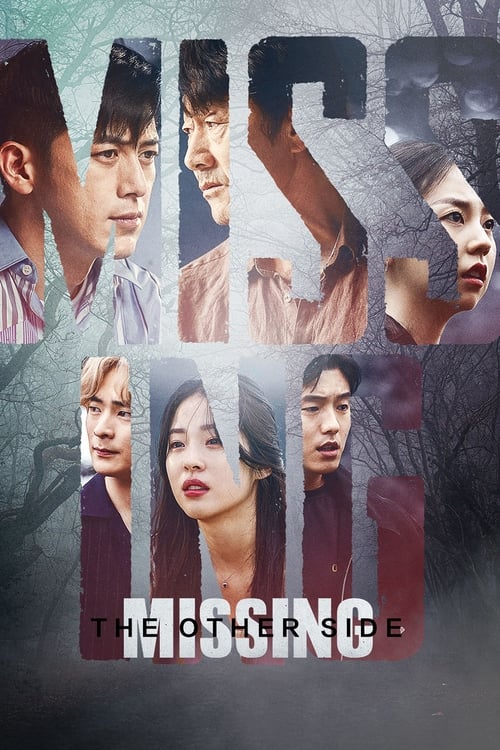












Popular
What is the significance of the village where the missing people appear?
How does the character Kim Wook's past influence his actions in the series?
What role does the character Jang Pan-seok play in the investigation of the missing people?
How does the relationship between Kim Wook and the ghost of the missing person evolve throughout the series?
What is the impact of the character Lee Jong-ah on the storyline and other characters?
Should I watch it?
Ask Your Own Question

What is the plot?
The story begins with a mysterious disappearance in a small village. The protagonist, Kim Wook, is a private investigator who is drawn to the case of a missing person, a young man named Go Soo. Wook is motivated by his own past, as he has a personal connection to loss and unresolved mysteries. He arrives in the village, where he learns that the locals are tight-lipped about the disappearances, hinting at a deeper, darker secret.
As Wook investigates, he meets a group of people who have also lost loved ones in the village. Among them is a woman named Lee Jong Ah, who is searching for her missing husband. The group forms a bond over their shared grief and determination to uncover the truth. They begin to share information and theories about the disappearances, leading Wook to suspect that there is a connection between the missing individuals and a series of strange occurrences in the village.
Wook discovers that the village is home to a mysterious phenomenon where the spirits of the deceased linger, and he learns that the missing individuals may be trapped in a limbo-like state. This revelation deepens the emotional stakes for Wook and the group, as they grapple with the idea that their loved ones may not be truly gone. Wook's determination to find Go Soo intensifies, and he begins to experience visions and encounters with the spirits of the missing.
As Wook delves deeper into the investigation, he uncovers a series of clues that lead him to a hidden location in the village. There, he finds evidence of a ritual that the villagers have been performing to appease the spirits. This discovery raises questions about the villagers' motivations and their role in the disappearances. Tensions rise as Wook confronts the villagers, demanding answers about their actions and the fate of the missing individuals.
In a pivotal moment, Wook and the group confront the village leader, who reveals that the disappearances are linked to a dark history of sacrifice and the need to maintain balance between the living and the dead. The leader explains that the spirits of the missing are restless and that the village has been trying to protect itself from their wrath. This revelation forces Wook and the group to reconsider their approach, as they must now find a way to help the spirits find peace.
As the investigation progresses, Wook experiences a personal crisis when he is confronted by the spirit of his own lost loved one. This encounter forces him to confront his own grief and guilt, adding emotional depth to his character. He realizes that in order to help the other spirits, he must first come to terms with his own past.
The climax of the story occurs when Wook and the group decide to perform a counter-ritual to free the spirits of the missing. They gather in a sacred location and prepare to confront the village's dark history. As they perform the ritual, they are met with resistance from the villagers, leading to a tense confrontation. The spirits begin to manifest, creating chaos as they seek closure.
In the final moments, Wook and the group manage to break the cycle of sacrifice, allowing the spirits to move on. The villagers, witnessing the power of the ritual, begin to understand the importance of letting go of the past. The emotional release is palpable as the spirits find peace, and the village begins to heal from its dark history.
The story concludes with Wook reflecting on his journey and the connections he has formed with the other characters. He has not only helped to uncover the truth behind the disappearances but has also found a sense of closure for himself. The village, now free from its haunting past, begins to rebuild, and Wook leaves with a renewed sense of purpose, ready to face whatever challenges lie ahead.







What is the ending?
In the ending of "Missing: The Other Side," the main characters confront their pasts and the unresolved issues surrounding the missing individuals. The story culminates in a resolution that brings closure to the characters and the community, revealing the fates of those who have been lost.
As the final episodes unfold, the narrative focuses on the characters' emotional journeys. The protagonist, Kim Wook, continues his quest to uncover the truth behind the disappearances in the village of Duon. He is joined by the ghost of a young man named Go Soo, who is searching for answers about his own death. The tension builds as they uncover the dark secrets of the village and the people who inhabit it.
In a pivotal scene, Wook and his team confront the antagonist, who has been manipulating events from the shadows. The confrontation is intense, filled with emotional stakes as Wook fights not only for the truth but also for the souls of the missing. The villagers, who have been haunted by their losses, come together to support Wook, showcasing the strength of community and the importance of remembering those who have disappeared.
As the climax approaches, Wook learns the truth about Go Soo's death, which is intertwined with the fate of other missing individuals. This revelation is both heartbreaking and cathartic, as it allows Go Soo to finally let go of his lingering attachments to the world of the living. In a poignant moment, he bids farewell to Wook and the other villagers, finding peace in the knowledge of his past.
The series concludes with Wook reflecting on the journey he has taken. He stands in the village, now filled with a sense of hope and renewal. The community begins to heal, and the memories of the missing are honored, ensuring they are not forgotten. Wook's character arc comes full circle as he embraces his role as a protector of the village, vowing to continue helping those in need.
In the end, Wook remains in Duon, having found a sense of belonging and purpose. The other main characters, including the villagers who supported him, also find closure in their own stories. The series closes on a hopeful note, emphasizing the themes of connection, memory, and the enduring impact of loss on a community.
Is there a post-credit scene?
In the TV show "Missing: The Other Side," there is no post-credit scene. The series concludes its narrative without additional scenes after the credits, focusing instead on the resolution of the main plot and character arcs within the episodes themselves. The story wraps up the mysteries surrounding the missing individuals and the emotional journeys of the characters, providing a satisfying conclusion without the need for a post-credit reveal.
What is the significance of the village where the missing people appear?
The village serves as a liminal space where the souls of the missing gather, allowing them to communicate with the living. It is a place filled with unresolved emotions and memories, reflecting the characters' struggles and desires to find closure.
How does the character Kim Wook's past influence his actions in the series?
Kim Wook, a former con artist turned investigator, is driven by guilt over his own past mistakes, particularly regarding his family. His desire to help the missing people stems from a need to atone for his previous life, making him deeply empathetic towards their situations.
What role does the character Jang Pan-seok play in the investigation of the missing people?
Jang Pan-seok, a local resident and former police officer, becomes a crucial ally to Kim Wook. His knowledge of the village and its secrets, along with his personal connection to the missing, provides essential insights that help unravel the mysteries surrounding the disappearances.
How does the relationship between Kim Wook and the ghost of the missing person evolve throughout the series?
As Kim Wook interacts with the ghost, their relationship deepens from mere investigation to a profound emotional connection. Wook learns about the ghost's life, regrets, and unfulfilled dreams, which motivates him to seek justice and closure not just for the ghost, but for himself as well.
What is the impact of the character Lee Jong-ah on the storyline and other characters?
Lee Jong-ah, a determined journalist, plays a pivotal role in uncovering the truth behind the disappearances. Her relentless pursuit of the story not only drives the plot forward but also challenges the other characters to confront their own fears and motivations, ultimately leading to significant revelations.
Is this family friendly?
"Missing: The Other Side" is a South Korean drama that combines elements of mystery, fantasy, and emotional storytelling. While it is generally suitable for a wide audience, there are some aspects that may be considered objectionable or upsetting for children or sensitive viewers.
-
Themes of Death and Loss: The show revolves around the concept of missing persons and the afterlife, which can be heavy and emotionally charged. Scenes depicting the grief of families searching for lost loved ones may be distressing.
-
Mysterious and Supernatural Elements: The presence of spirits and the exploration of the afterlife may be unsettling for younger viewers or those uncomfortable with supernatural themes.
-
Emotional Turmoil: Characters experience significant emotional struggles, including sadness, regret, and longing, which may resonate deeply and evoke strong feelings.
-
Mild Violence: There are moments of tension and conflict that may include mild violence or threatening situations, which could be alarming for sensitive viewers.
-
Parental Concerns: Some scenes may depict adult themes or complex relationships that might not be suitable for younger audiences without parental guidance.
Overall, while the show has a compelling narrative and emotional depth, it is advisable for parents to consider these elements when deciding if it is appropriate for children or sensitive individuals.







