
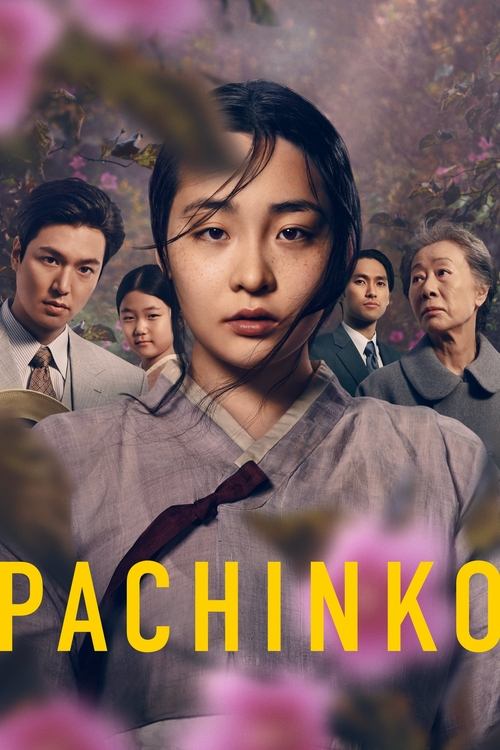














Popular
What motivates Sunja to marry Isak despite her feelings for Koh Hansu?
How does Koh Hansu's character evolve throughout the series?
What challenges does Sunja face after moving to Japan?
What is the significance of the title 'Pachinko' in relation to the characters' lives?
How does the relationship between Sunja and her sons develop throughout the series?
Should I watch it?
Ask Your Own Question

What is the plot?
In the early 20th century, the story begins in a small fishing village in Korea, where a young girl named Sunja lives with her family. Sunja's father, a fisherman, has passed away, leaving her mother, Yangjin, to raise her alone. Sunja is a beautiful and innocent girl, and her life takes a turn when she meets a wealthy, married man named Koh Hansu. He is a powerful figure in the community, and despite his status, he becomes infatuated with Sunja. They begin a secret affair, and Sunja is swept away by his charm and the promise of a better life.
As their relationship deepens, Sunja discovers she is pregnant. The revelation brings her immense fear and anxiety, as she knows that Hansu cannot marry her due to his existing family. In a moment of desperation, she confides in her mother, who is horrified by the situation. Yangjin urges Sunja to confront Hansu, but he offers her money to terminate the pregnancy and continue their affair. Sunja, feeling trapped and dishonored, refuses his offer and instead seeks a way out of her predicament.
Sunja's life changes dramatically when she meets a kind-hearted but sickly young minister named Isak. He is visiting the village and learns of Sunja's situation. Moved by her plight, Isak proposes marriage to her, offering her a chance at a new life in Japan. Sunja accepts his proposal, seeing it as a way to escape her shame and the life she has known. They marry quickly, and Sunja leaves Korea for Japan, leaving behind her mother and the memories of her past.
Upon arriving in Japan, Sunja and Isak settle in Osaka, where they live in a cramped boarding house run by a fellow Korean immigrant. The couple struggles to adapt to their new life, facing discrimination and hardship as they navigate the challenges of being Korean in Japan. Sunja gives birth to a son, Noa, and Isak's health continues to decline due to tuberculosis. Despite their struggles, Sunja finds solace in her new family and the community around her.
As Isak's health deteriorates, he becomes increasingly reliant on Sunja. She takes on the responsibility of caring for him and their son while also working to support the family. Isak's condition worsens, and he eventually dies, leaving Sunja a widow. The loss is devastating for her, but she remains determined to provide for Noa and ensure a better future for him.
After Isak's death, Sunja faces new challenges as a single mother. She struggles to make ends meet and is forced to confront the realities of her life in Japan. Noa grows up in a world filled with prejudice against Koreans, and Sunja is determined to shield him from the harshness of their circumstances. She works tirelessly, taking on various jobs to support them, while also trying to instill a sense of pride in their heritage.
As Noa matures, he becomes aware of the discrimination faced by his family and the complexities of their identity. He grapples with his mixed heritage and the expectations placed upon him. Sunja, meanwhile, continues to navigate her own feelings of loss and longing for her homeland. The bond between mother and son deepens, but the weight of their struggles looms over them.
Years later, Noa meets a young woman named Yumi, who becomes a significant part of his life. Their relationship blossoms, but it is complicated by the societal pressures and expectations surrounding them. Noa's desire to fit in and succeed in Japanese society clashes with his loyalty to his mother and his Korean roots. Sunja watches as her son grapples with his identity, feeling both pride and concern for his future.
As the story unfolds, the narrative shifts back and forth between different timelines, revealing the interconnected lives of Sunja's descendants. The impact of their choices reverberates through generations, highlighting the struggles and resilience of the Korean immigrant experience in Japan. The family faces various challenges, including love, loss, and the quest for belonging, all while navigating the complexities of their cultural identity.
In the later years, Sunja's health begins to decline, and she reflects on her life and the sacrifices she has made for her family. She is haunted by memories of her past, including her relationship with Hansu, who has remained a shadowy figure in her life. Despite the pain and heartache, Sunja finds strength in her family and the legacy she has built.
The series culminates in a poignant exploration of identity, belonging, and the enduring bonds of family. Sunja's journey from a young girl in Korea to a matriarch in Japan encapsulates the struggles of her lineage, as they navigate the complexities of their heritage and the world around them. The final scenes emphasize the importance of memory and the connections that bind them, leaving a lasting impact on the viewer.









What is the ending?
In the ending of "Pachinko," the story culminates in a poignant reflection on family, identity, and the enduring impact of choices across generations. The narrative weaves together the lives of the main characters, particularly focusing on Sunja, her son Solomon, and the legacy of their family.
As the series concludes, Sunja, now an elderly woman, reflects on her life and the sacrifices she made for her family. Solomon, who has been navigating his own identity as a Korean man in Japan, faces a critical decision about his future. The story ends with a sense of hope and continuity, emphasizing the importance of family ties and the struggles they have endured.
The final episodes of "Pachinko" unfold with a deep emotional resonance, beginning with Sunja, who is now in her later years, living in a modest home in Japan. The scene opens with her gazing out the window, her face lined with the wisdom and sorrow of her past. The camera lingers on her hands, worn and weathered, as she prepares a simple meal, a ritual that connects her to her roots and her family history.
In the next scene, we see Solomon, who has returned to Japan after a period of living in the United States. He is grappling with his identity, feeling the weight of his family's legacy and the expectations placed upon him. He meets with his mother, Sunja, in a quiet moment filled with unspoken words. Their conversation is tender yet heavy, as Sunja shares her memories of hardship and resilience, imparting the lessons she has learned throughout her life. Solomon listens intently, his expression a mix of admiration and pain, as he realizes the sacrifices his mother made for him to have a better life.
The narrative then shifts to a pivotal moment where Solomon is faced with a choice regarding his career and his future. He is offered a prestigious position that could elevate his status but would require him to distance himself from his Korean heritage. This internal conflict is palpable; the camera captures the tension in his furrowed brow and clenched jaw as he weighs his options. The scene is interspersed with flashbacks of Sunja's struggles, highlighting the sacrifices made by previous generations.
As the story progresses, we see Sunja's health declining. In a heart-wrenching scene, she is visited by her family, including her grandchildren, who gather around her. The atmosphere is filled with warmth and love, yet there is an underlying sadness as they all know that time is slipping away. Sunja shares stories of her youth, her voice trembling with emotion, as she recounts the journey from Korea to Japan and the challenges she faced. Her family listens, their eyes glistening with tears, understanding the weight of her words.
In the final moments of the series, Solomon makes a decision that reflects his growth and understanding of his family's history. He chooses to embrace his identity, rejecting the offer that would have compromised his roots. This choice is symbolized by a scene where he stands at a crossroads, looking back at his family's home and then forward, a determined look on his face. The camera captures the sunlight breaking through the clouds, a metaphor for hope and new beginnings.
The series concludes with a powerful image of Sunja, surrounded by her family, as they share a meal together. Laughter and love fill the room, a stark contrast to the struggles of the past. Sunja's eyes sparkle with pride and contentment, knowing that her legacy will continue through her children and grandchildren. The final shot lingers on her face, a testament to the strength of family bonds and the enduring spirit of those who came before.
In summary, the fates of the main characters are intertwined with themes of identity and legacy. Sunja, having lived a life of sacrifice, finds solace in her family's unity. Solomon, having faced his own demons, emerges with a renewed sense of self, ready to honor his heritage. The ending of "Pachinko" encapsulates the essence of resilience, love, and the unbreakable ties that bind generations together.
Is there a post-credit scene?
The TV show "Pachinko," produced in 2022, does not feature a post-credit scene. The series concludes its episodes without additional scenes after the credits, focusing instead on the narrative and emotional arcs of the characters throughout the main episodes. The storytelling is rich and layered, emphasizing the struggles and resilience of the characters across generations, particularly in the context of their experiences in Korea and Japan. Each episode wraps up with a poignant sense of closure, leaving viewers to reflect on the themes of identity, family, and the impact of history.
What motivates Sunja to marry Isak despite her feelings for Koh Hansu?
Sunja's decision to marry Isak is driven by a complex mix of emotions. Initially, she is deeply in love with Koh Hansu, who represents a life of passion and excitement. However, when she discovers she is pregnant and learns of Hansu's inability to offer her a legitimate life due to his ties to the underworld, she feels trapped and ashamed. Isak, a kind-hearted minister, offers her a chance at redemption and a stable life, which ultimately sways her decision. Sunja's internal conflict is palpable as she grapples with her love for Hansu and her need for security and respectability.
How does Koh Hansu's character evolve throughout the series?
Koh Hansu begins as a powerful and enigmatic figure, deeply entrenched in the underworld of Osaka. His initial attraction to Sunja is rooted in desire and a sense of possession. However, as the story unfolds, Hansu's character reveals layers of vulnerability and complexity. He becomes increasingly aware of the societal constraints and prejudices that affect Sunja and her family. His motivations shift from mere desire to a genuine, albeit flawed, love for Sunja, leading him to make sacrifices for her well-being, even as he remains a morally ambiguous character.
What challenges does Sunja face after moving to Japan?
After moving to Japan, Sunja faces a myriad of challenges that test her resilience and strength. She grapples with cultural alienation, as she is a Korean woman in a predominantly Japanese society that views her with suspicion and prejudice. The struggle to provide for her family in a foreign land adds to her burdens, as she takes on grueling work in a small fishing village. Sunja's emotional state fluctuates between hope and despair, as she navigates the complexities of motherhood, societal expectations, and her longing for a sense of belonging.
What is the significance of the title 'Pachinko' in relation to the characters' lives?
The title 'Pachinko' symbolizes the unpredictable nature of life and the struggles faced by the characters, particularly the Korean immigrants in Japan. Just as players in a pachinko parlor must navigate the chaotic machine to win, the characters must maneuver through societal obstacles and personal hardships to achieve their dreams. The game serves as a metaphor for chance, fate, and the relentless pursuit of success, reflecting the characters' experiences of resilience and the often harsh realities of their existence.
How does the relationship between Sunja and her sons develop throughout the series?
Sunja's relationship with her sons, Noa and Mozasu, evolves significantly as they grow up in a challenging environment. Initially, Sunja is fiercely protective and nurturing, instilling in them the values of hard work and perseverance. However, as they navigate their own identities in a society that discriminates against them, tensions arise. Noa, who struggles with his Korean heritage and seeks acceptance in Japanese society, often clashes with Sunja's traditional values. Mozasu, on the other hand, embraces his roots and finds success in the pachinko business, which creates a rift between him and Noa. Sunja's emotional turmoil is evident as she tries to bridge the gap between her sons, ultimately reflecting her deep love and desire for their happiness.
Is this family friendly?
"Pachinko," produced in 2022, is a historical drama that explores themes of identity, family, and the immigrant experience. While it is a beautifully crafted series, it does contain several elements that may be considered objectionable or upsetting for children or sensitive viewers.
-
Violence and War: The series depicts the impact of war, including scenes of conflict and its aftermath, which may be distressing.
-
Discrimination and Racism: Characters face prejudice and discrimination, particularly against Koreans in Japan, which can be emotionally charged and unsettling.
-
Death and Loss: The narrative includes significant moments of loss, including the death of key characters, which can evoke strong emotional responses.
-
Family Struggles: The series portrays complex family dynamics, including betrayal and hardship, which may be difficult for younger viewers to process.
-
Themes of Poverty: The characters experience poverty and struggle for survival, highlighting the harsh realities of their lives.
-
Emotional Turmoil: Characters often grapple with deep emotional pain, including feelings of hopelessness and despair, which may be heavy for sensitive audiences.
Overall, while "Pachinko" is a poignant exploration of resilience and hope, its mature themes and emotional depth may not be suitable for all viewers, particularly younger children.







