
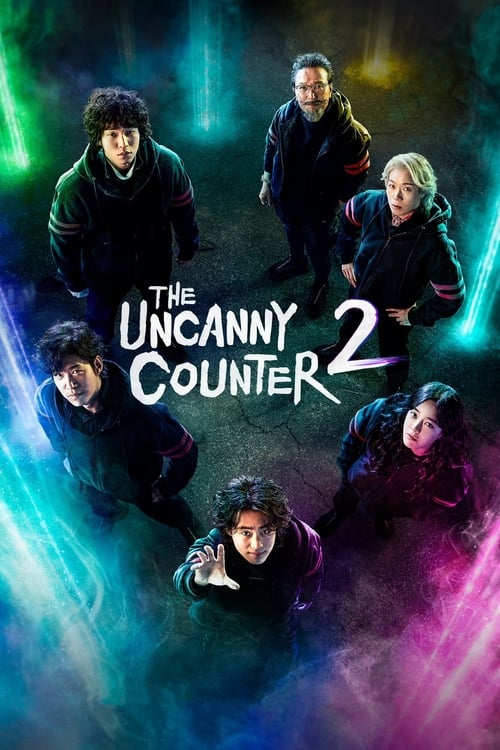



























Popular
What are the abilities of the Counters in The Uncanny Counter?
What is the significance of So Mun's past and his connection to the Counters?
How does the relationship between So Mun and his mentor, Ga Mo Tak, evolve throughout the series?
What role does the character of Do Ha Na play in the team dynamics of the Counters?
What is the significance of the evil spirit, the 'Murderer,' in the story?
Should I watch it?
Ask Your Own Question

What is the plot?
The story begins with a young man named So Mun, who is a high school student living with his grandmother. He has a traumatic past, having survived a brutal attack by a serial killer that left him with a physical disability. One day, while working part-time at a noodle shop, he encounters a mysterious figure who turns out to be a Counter, a member of a secret organization that hunts down evil spirits. This figure, known as the "Counter," is revealed to be a spirit that possesses the ability to fight against malevolent entities.
So Mun is soon recruited into the Counters, a group that includes other members: the strong and determined Do Ha-na, the wise and experienced Jang Joo-seok, and the compassionate yet tough leader, Ga Mo-tak. Each member has their own unique abilities and backstories, which are gradually revealed. They work together to hunt down evil spirits that have escaped from the afterlife and are causing havoc in the human world.
As the Counters begin their mission, they face their first major challenge when they encounter a powerful evil spirit that has been terrorizing a local community. The spirit possesses a young girl, and the Counters must work together to exorcise it. During this confrontation, So Mun struggles with his own fears and insecurities, but ultimately finds the courage to fight alongside his teammates. They successfully exorcise the spirit, but not without sustaining injuries and emotional scars.
In the following episodes, the Counters face various evil spirits, each with their own tragic backstories that reveal the pain and suffering they caused in life. The team learns to empathize with the spirits, which complicates their mission. So Mun, in particular, grapples with the moral implications of their work, as he begins to understand the humanity behind the evil they are fighting.
As the series progresses, the Counters discover that a powerful antagonist, a former Counter named Kim Seon-woo, is manipulating events from the shadows. Seon-woo has his own agenda and seeks to unleash chaos by resurrecting powerful spirits. The Counters must confront him and his minions, leading to intense battles that test their resolve and teamwork.
In a pivotal moment, So Mun learns about his own connection to the spirit world. He discovers that he has a unique ability to see and communicate with spirits, which makes him a valuable asset to the team. However, this also puts him in danger, as Seon-woo targets him for his powers. The Counters must protect So Mun while continuing their fight against the evil spirits.
The emotional stakes rise when one of the Counters, Ga Mo-tak, is captured by Seon-woo. The team devises a plan to rescue him, leading to a climactic showdown at Seon-woo's hideout. The battle is fierce, with each Counter showcasing their abilities. So Mun, fueled by the desire to save his friend, pushes himself to his limits, demonstrating growth and bravery.
During the confrontation, secrets are revealed, including the true nature of Seon-woo's powers and his tragic past. The Counters learn that Seon-woo was once a hero who fell from grace, and they must confront not only the physical threat he poses but also the emotional turmoil of his story. This revelation complicates their mission, as they must decide whether to save him or stop him at all costs.
In the final episodes, the Counters face their most formidable challenge yet as Seon-woo unleashes a horde of evil spirits in a desperate attempt to gain power. The team bands together for one last stand, utilizing everything they have learned throughout their journey. So Mun's leadership and newfound confidence shine as he rallies his friends to fight against the overwhelming odds.
The climax culminates in an epic battle where the Counters confront Seon-woo and the spirits he has summoned. Each member of the team plays a crucial role, and their bonds are tested as they fight for their lives and the lives of innocent people. The emotional weight of their journey comes to a head as they face their fears and regrets.
In the end, the Counters manage to defeat Seon-woo, but not without significant sacrifices. The team is left to grapple with the aftermath of their battles, reflecting on the lives they have saved and the spirits they have released. So Mun, now more confident and self-assured, takes on a leadership role within the group, vowing to continue their mission to protect the living from evil spirits.
The series concludes with the Counters standing together, united in their purpose, ready to face whatever challenges lie ahead in their ongoing fight against malevolence in the world.



What is the ending?
In the ending of "The Uncanny Counter," the main characters confront the powerful demon, and after a fierce battle, they manage to defeat it. The team members reflect on their experiences and the bonds they have formed. The series concludes with a sense of hope and the promise of continuing their fight against evil.
As the final episodes unfold, the tension escalates as the Counters prepare for their ultimate confrontation with the demon, Myeong-joon, who has been wreaking havoc and manipulating events from the shadows. The atmosphere is thick with anticipation and dread as the team gathers in their hideout, each member grappling with their fears and motivations.
Scene 1: The Counters, led by So Mun, gather around a table, their faces illuminated by the dim light. So Mun, filled with determination, speaks about the importance of their mission and the lives they have saved. His resolve is palpable, and the others nod in agreement, their expressions a mix of anxiety and courage. They know that this battle will not only test their skills but also their bonds as a team.
Scene 2: The team splits up to gather information and prepare for the confrontation. Each member has a moment of introspection. Ga Mo-tak, the leader, reflects on his past and the loss of his family, which fuels his desire to protect others. Meanwhile, Do Ha-na, with her fierce spirit, practices her abilities, determined to prove her worth. The emotional stakes are high as they each confront their personal demons, both literally and figuratively.
Scene 3: The climactic battle begins in an abandoned warehouse, where Myeong-joon has taken refuge. The atmosphere is charged with tension as the Counters enter, weapons drawn. The fight is intense, with Myeong-joon showcasing his formidable powers. The Counters work together, using their unique abilities to counter his attacks. The choreography of the fight is dynamic, with moments of desperation and bravery as they dodge and strike.
Scene 4: As the battle rages on, So Mun faces Myeong-joon directly. In a moment of vulnerability, he recalls the lives lost to the demon's cruelty, which fuels his determination. He channels his energy, and with the support of his teammates, he manages to land a critical blow. The scene is visually striking, with flashes of light and energy as the demon is weakened.
Scene 5: In a final desperate attempt, Myeong-joon tries to escape, but the Counters, united in their resolve, corner him. The emotional weight of their journey culminates in this moment, as they each express their motivations and the reasons they fight. With a final surge of power, they defeat Myeong-joon, and the warehouse is filled with a blinding light, signifying the end of his reign of terror.
Scene 6: In the aftermath, the Counters regroup, exhausted but triumphant. They share a moment of relief and reflection, acknowledging the sacrifices made along the way. So Mun, now more confident in his role, expresses gratitude to his teammates, recognizing the strength they draw from one another. The bonds they have formed are evident, and they vow to continue their fight against evil, hinting at future challenges.
Scene 7: The series concludes with a montage of the Counters returning to their everyday lives, but with a renewed sense of purpose. They are seen helping others, embodying the spirit of their mission. The final shot lingers on So Mun, who looks out into the distance, a determined expression on his face, symbolizing hope and the ongoing battle against darkness.
In the end, each main character finds a sense of closure: So Mun embraces his role as a leader, Ga Mo-tak finds peace with his past, and Do Ha-na solidifies her place within the team. The series closes on a hopeful note, emphasizing the importance of friendship, resilience, and the continuous fight against evil.
Is there a post-credit scene?
In the 2020 series "The Uncanny Counter," there is indeed a post-credit scene that adds an intriguing layer to the story.
As the credits roll, the scene opens in a dimly lit room, where a mysterious figure is seen sitting at a table, shrouded in shadows. The atmosphere is tense, and the air is thick with anticipation. The camera slowly zooms in, revealing the figure to be a woman with a striking presence, her face partially obscured. She is flipping through a series of photographs, each depicting various characters from the series, including the Counters and their adversaries.
The woman's expression is one of contemplation mixed with a hint of malice, suggesting she has a vested interest in the events that have unfolded. As she examines the photos, she pauses on one in particular, a close-up of a character who has been pivotal in the series. A smirk crosses her lips, hinting at her potential role in future conflicts.
The scene then cuts to a close-up of her hand, which is adorned with a ring that glimmers ominously in the low light. This detail suggests a connection to the supernatural elements of the show, hinting at her possible powers or influence over the spirit world.
The post-credit scene concludes with a lingering shot of the woman, her eyes narrowing as she looks directly at the camera, leaving viewers with a sense of foreboding and curiosity about her intentions and how she might impact the story moving forward. This moment effectively sets the stage for potential future developments, teasing the audience with the promise of new challenges for the Counters.
What are the abilities of the Counters in The Uncanny Counter?
The Counters in The Uncanny Counter possess unique abilities that allow them to combat evil spirits. Each Counter has enhanced physical strength, agility, and the ability to enter a spirit's body to exorcise it. They also have a special power called 'Counter's strength,' which is amplified by the food they consume, particularly the spicy rice cakes they sell at their noodle shop. This connection to food not only boosts their powers but also serves as a source of camaraderie and emotional bonding among the team.
What is the significance of So Mun's past and his connection to the Counters?
So Mun, the main protagonist, has a tragic past that deeply influences his character and motivations. As a child, he witnessed the brutal murder of his parents by a malevolent spirit, which left him traumatized and orphaned. This event drives his desire for justice and protection of others, leading him to become a Counter. His connection to the Counters is not only about fighting evil spirits but also about finding a sense of family and belonging, as he struggles with feelings of isolation and guilt over his past.
How does the relationship between So Mun and his mentor, Ga Mo Tak, evolve throughout the series?
The relationship between So Mun and Ga Mo Tak evolves from one of initial mentorship to a deep, familial bond. Ga Mo Tak, who is the leader of the Counters, initially sees So Mun as a rookie in need of guidance. However, as they face various challenges together, Ga Mo Tak comes to respect So Mun's determination and bravery. Their dynamic is filled with moments of humor, tension, and emotional support, particularly as Ga Mo Tak helps So Mun confront his traumatic past and embrace his role as a Counter.
What role does the character of Do Ha Na play in the team dynamics of the Counters?
Do Ha Na is a vital member of the Counters, known for her ability to sense spirits and her strong intuition. Her character adds a layer of complexity to the team dynamics, as she often acts as the emotional anchor for the group. Ha Na's backstory reveals her struggles with loneliness and her desire for connection, which resonates with So Mun. Her interactions with the other Counters, particularly her playful banter with Mun and her protective instincts towards them, highlight her importance in fostering teamwork and unity within the group.
What is the significance of the evil spirit, the 'Murderer,' in the story?
The 'Murderer' is a central antagonist in The Uncanny Counter, representing the embodiment of fear and trauma that the Counters must confront. This spirit is responsible for numerous deaths and embodies the darkness that the Counters fight against. The significance of the Murderer lies in its connection to So Mun's past, as it is revealed that this spirit is linked to the tragedy of his parents' death. The battle against the Murderer serves as a catalyst for So Mun's character development, pushing him to confront his fears and ultimately seek closure for his past.
Is this family friendly?
"The Uncanny Counter" is a supernatural action-comedy series that features themes and scenes that may not be suitable for younger audiences or sensitive viewers. Here are some potentially objectionable or upsetting aspects:
-
Violence and Action Scenes: The show includes intense fight sequences where characters battle evil spirits. These scenes can be graphic, showcasing physical confrontations and injuries.
-
Death and Supernatural Themes: The premise revolves around characters who hunt down evil spirits that possess humans, leading to themes of death and the afterlife, which may be unsettling for some viewers.
-
Emotional Trauma: Characters often deal with personal loss, grief, and trauma, which can evoke strong emotional responses. The backstories of some characters involve tragic events that may be distressing.
-
Mature Themes: The series touches on darker themes such as revenge, betrayal, and moral dilemmas, which may be complex for younger viewers to understand.
-
Scary Imagery: The design of the evil spirits and certain supernatural elements can be frightening, particularly for children.
-
Language and Humor: There are instances of strong language and adult humor that may not be appropriate for younger audiences.
Overall, while "The Uncanny Counter" has comedic elements and moments of levity, its darker themes and intense scenes may not be suitable for all viewers, especially children.









