

Popular
What is the significance of Wanda Maximoff's transformation into the Scarlet Witch in Marvel Studios Legends?
How does Loki's character development in Marvel Studios Legends reflect his journey in the MCU?
What role does the Tesseract play in Loki's story as depicted in Marvel Studios Legends?
What emotional impact does the death of Vision have on Wanda Maximoff in Marvel Studios Legends?
How does the episode on the Winter Soldier explore Bucky Barnes' guilt and redemption?
Should I watch it?
Ask Your Own Question

What is the plot?
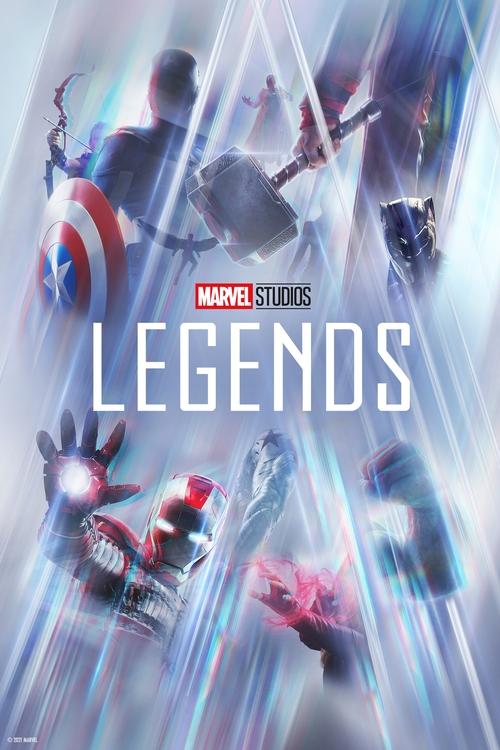
Marvel Studios Legends is an anthology series that focuses on individual characters from the Marvel Cinematic Universe (MCU), providing a recap of their journeys and significant moments. Each episode is dedicated to a specific character, summarizing their arcs and key events.
The series begins with the first episode centered on Wanda Maximoff, also known as Scarlet Witch. The episode opens with a montage of her early life, showcasing her childhood in Sokovia, where she and her brother, Pietro, are introduced. The scene shifts to their experiences with the Mind Stone, which enhances Wanda's powers. The emotional weight of her loss is highlighted as she mourns the death of her brother during the events of "Avengers: Age of Ultron."
The narrative progresses to her relationship with Vision, detailing their connection and the deep bond they form. Key moments from "Captain America: Civil War" are included, emphasizing her internal conflict regarding her powers and the consequences of her actions. The episode culminates in the tragic events of "Avengers: Infinity War," where Wanda is forced to destroy the Mind Stone to prevent Thanos from obtaining it, leading to Vision's death. The emotional turmoil she experiences is palpable, showcasing her grief and anger.
The second episode shifts focus to Loki, beginning with his introduction in "Thor," where he is depicted as the adopted brother of Thor and the God of Mischief. The episode highlights his motivations, including his desire for power and acceptance. Key scenes from "The Avengers" illustrate his villainous turn as he attempts to conquer Earth with the Chitauri army, showcasing his cunning and manipulative nature.
As the episode progresses, it delves into Loki's character development through "Thor: The Dark World" and "Thor: Ragnarok." His complex relationship with Thor is explored, revealing moments of rivalry and eventual camaraderie. The episode also touches on his redemption arc in "Avengers: Endgame," where he escapes with the Tesseract, creating an alternate timeline.
The third episode focuses on Sam Wilson, also known as Falcon. It begins with his introduction in "Captain America: The Winter Soldier," where he assists Steve Rogers in battling Hydra. The episode highlights his struggles with identity and legacy, particularly in relation to the Captain America mantle. Key scenes from "Avengers: Endgame" showcase his emotional farewell to Steve, who passes the shield to him.
The narrative continues with Sam's journey in "The Falcon and the Winter Soldier," where he grapples with the weight of becoming Captain America. His internal conflict is emphasized as he faces societal pressures and personal doubts. The episode concludes with his decision to embrace the shield and his new role, symbolizing hope and resilience.
The final episode centers on Bucky Barnes, also known as the Winter Soldier. It opens with his backstory, detailing his friendship with Steve Rogers and his transformation into the Winter Soldier due to Hydra's manipulation. Key moments from "Captain America: The Winter Soldier" and "Avengers: Infinity War" illustrate his struggles with guilt and redemption.
As the episode progresses, Bucky's journey towards healing is highlighted, particularly in "The Falcon and the Winter Soldier." His interactions with Sam and his efforts to confront his past are depicted, showcasing his growth and desire for forgiveness. The episode concludes with Bucky finding peace and a sense of purpose, solidifying his transformation from a weapon of destruction to a hero.
Each episode of Marvel Studios Legends serves as a comprehensive recap of the characters' journeys, emphasizing their motivations, emotional states, and pivotal moments that define their arcs within the MCU.



What is the ending?
Marvel Studios Legends does not have a traditional narrative structure with a beginning, middle, and end like a typical TV show or movie. Instead, it is a series of standalone episodes that explore the backstories and significant moments of various characters from the Marvel Cinematic Universe (MCU). Each episode focuses on a different character, summarizing their journeys, motivations, and key events that shaped them.
In a short, simple narrative fashion, the series concludes by providing viewers with a deeper understanding of characters like Wanda Maximoff, Loki, and others, setting the stage for their future appearances in the MCU. The episodes serve as a recap and a way to connect the dots for audiences, especially in relation to the events leading up to and following the series "WandaVision," "Loki," and "The Falcon and the Winter Soldier."
Expanding on this, the series is structured into several episodes, each dedicated to a specific character.
Episode 1: Wanda Maximoff The episode opens with a montage of Wanda's life, beginning with her childhood in Sokovia, where she and her brother, Pietro, are introduced. The scene shifts to her experiences with the Avengers, showcasing her growth from a frightened girl into a powerful superhero. Key moments include her grief over losing Vision and the creation of the Westview anomaly, where she constructs a false reality to cope with her pain. The episode ends with Wanda embracing her powers, hinting at her transformation into the Scarlet Witch.
Episode 2: Loki The episode begins with Loki's escape during the events of "Avengers: Endgame." It follows his journey through the Time Variance Authority (TVA), where he learns about the multiverse and his own significance. Key scenes include his interactions with Mobius, who helps him confront his past and understand his motivations. The episode culminates in Loki's realization of his potential for change, setting the stage for his future adventures.
Episode 3: The Falcon and the Winter Soldier This episode focuses on Sam Wilson and Bucky Barnes as they navigate their roles in a post-Captain America world. It highlights their struggles with identity and legacy, particularly Sam's decision to take up the mantle of Captain America. The episode features emotional scenes of Bucky confronting his past and Sam grappling with the weight of the shield. The conclusion sees Sam fully embracing his new role, symbolizing hope and unity.
Final Thoughts The series wraps up by reinforcing the importance of each character's journey, emphasizing themes of grief, identity, and redemption. While there is no traditional ending, the culmination of these character explorations prepares the audience for their future arcs in the MCU, leaving viewers with a sense of anticipation for what lies ahead. Each character's fate is left open-ended, inviting further development in upcoming films and series.
Is there a post-credit scene?
Marvel Studios Legends does not feature traditional post-credit scenes like many of the Marvel Cinematic Universe films. Instead, the series is structured as a collection of episodes that focus on individual characters, providing a recap of their journeys and significant moments within the MCU. Each episode serves to highlight the character's development and contributions to the overarching narrative, rather than setting up future storylines or cliffhangers typical of post-credit scenes. Therefore, viewers can expect a straightforward presentation of character histories without additional scenes after the credits.
What is the significance of Wanda Maximoff's transformation into the Scarlet Witch in Marvel Studios Legends?
Wanda Maximoff's transformation into the Scarlet Witch is a pivotal moment that encapsulates her journey from a conflicted character to a powerful entity. The episode delves into her traumatic past, showcasing her grief over the loss of Vision and her struggles with identity. The visual representation of her powers evolving, marked by the iconic red energy, symbolizes her acceptance of her true self and the immense potential she holds. This transformation is not just a physical change but an emotional awakening, as she embraces her role as the Scarlet Witch, setting the stage for her future in the Marvel Cinematic Universe.
How does Loki's character development in Marvel Studios Legends reflect his journey in the MCU?
Loki's character development in Marvel Studios Legends highlights his evolution from a villain to a more complex anti-hero. The episode explores key moments from his past, including his relationship with Thor and his struggles for acceptance. Through flashbacks, viewers witness his internal conflicts, feelings of inadequacy, and desire for power. The emotional weight of his actions, particularly the betrayal of his family, is palpable, showcasing his vulnerability. This retrospective not only deepens the audience's understanding of Loki's motivations but also sets the groundwork for his redemption arc in the series 'Loki'.
What role does the Tesseract play in Loki's story as depicted in Marvel Studios Legends?
The Tesseract serves as a crucial plot device in Loki's story, symbolizing both power and chaos. In Marvel Studios Legends, the Tesseract is portrayed as the object that catalyzes Loki's journey through time and space. Its allure drives his ambition and desire for control, leading to pivotal moments where he confronts his own limitations. The episode illustrates how the Tesseract not only grants him power but also becomes a source of conflict, as it ultimately leads to his capture by the Time Variance Authority. This relationship with the Tesseract encapsulates Loki's struggle between ambition and consequence.
What emotional impact does the death of Vision have on Wanda Maximoff in Marvel Studios Legends?
The death of Vision profoundly impacts Wanda Maximoff, serving as a catalyst for her emotional turmoil and subsequent actions. In Marvel Studios Legends, the episode captures her grief through poignant flashbacks that reveal the depth of their relationship. The visual imagery of her memories, intertwined with her pain, illustrates her sense of loss and isolation. Wanda's emotional state is characterized by a mix of anger, sorrow, and longing, which ultimately leads her to create the Westview anomaly. This act of desperation highlights her struggle to cope with the void left by Vision, showcasing her vulnerability and the lengths she will go to reclaim her happiness.
How does the episode on the Winter Soldier explore Bucky Barnes' guilt and redemption?
The episode on the Winter Soldier in Marvel Studios Legends delves deeply into Bucky Barnes' internal struggle with guilt and the quest for redemption. Through a series of flashbacks, viewers witness the atrocities he committed while under Hydra's control, which haunt him relentlessly. The emotional weight of his past actions is palpable, as Bucky grapples with the consequences of his choices. The episode emphasizes his desire to atone for his sins, showcasing moments of vulnerability where he confronts his past. This exploration of guilt not only humanizes Bucky but also sets the stage for his journey towards redemption, highlighting the complexities of his character.
Is this family friendly?
Marvel Studios Legends is generally considered family-friendly, as it is designed to provide context and background for characters in the Marvel Cinematic Universe. However, there are a few aspects that might be potentially objectionable or upsetting for children or sensitive viewers:
-
Violence: The series includes clips from various Marvel films that depict superhero battles, which may involve intense action sequences and some violence, though it is typically stylized and not graphic.
-
Emotional Themes: Some episodes explore heavy emotional themes, such as loss, sacrifice, and betrayal, which might be difficult for younger viewers to fully understand or process.
-
Mature Concepts: The show touches on complex themes like identity, legacy, and moral dilemmas faced by characters, which may be more suitable for older children and adults.
-
Character Deaths: There are references to the deaths of significant characters, which could be upsetting for younger audiences or those sensitive to loss.
Overall, while the content is not explicitly inappropriate, parents may want to consider these elements when deciding if it is suitable for their children.