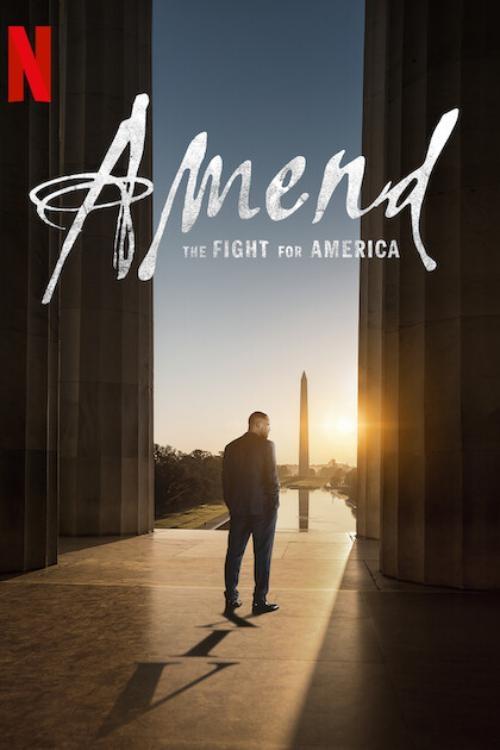



Popular
What role does the 14th Amendment play in the personal stories shared in the series?
How does the series portray the experiences of immigrants in relation to the 14th Amendment?
What specific historical events are highlighted in the series to illustrate the fight for civil rights?
How does the series address the intersectionality of race and gender in the context of the 14th Amendment?
What impact does the series suggest the 14th Amendment has on contemporary issues of social justice?
Should I watch it?
Ask Your Own Question

What is the plot?
"Amend: The Fight for America" is a docuseries that explores the history of the 14th Amendment and its impact on civil rights in the United States. The series is structured into six episodes, each focusing on different aspects of the amendment and the ongoing struggle for equality.
The first episode introduces the 14th Amendment, ratified in 1868, which grants citizenship to all persons born or naturalized in the United States. It highlights the historical context of its creation, following the Civil War and the abolition of slavery. The episode features powerful visuals of the era, including images of freed slaves and the Reconstruction period. It emphasizes the hopes and aspirations of newly freed African Americans who sought equality and protection under the law.
As the narrative unfolds, the episode delves into the challenges faced by African Americans in the post-Civil War era. It discusses the rise of Jim Crow laws and the systemic racism that emerged, undermining the protections promised by the 14th Amendment. The emotional weight of this struggle is conveyed through personal stories and testimonies from descendants of those who lived through this period, illustrating the pain and resilience of the African American community.
The second episode focuses on landmark Supreme Court cases that tested the boundaries of the 14th Amendment. It highlights the case of Plessy v. Ferguson in 1896, which upheld the "separate but equal" doctrine, effectively legalizing racial segregation. The episode portrays the internal conflict of Homer Plessy, who, despite being of mixed race, chose to challenge the law by sitting in a whites-only train car. The tension builds as Plessy is arrested, and the legal battle that ensues is depicted with dramatic reenactments and expert commentary.
The narrative then shifts to the Civil Rights Movement in the 1950s and 1960s, showcasing figures like Martin Luther King Jr. and Rosa Parks. The episode captures the emotional fervor of protests, sit-ins, and marches, emphasizing the courage of individuals who risked their lives for equality. The series uses archival footage to bring these moments to life, allowing viewers to feel the urgency and passion of the movement.
In the third episode, the focus turns to the impact of the 14th Amendment on women's rights. It highlights the struggles of women of color, particularly during the suffrage movement. The episode features the story of Ida B. Wells, a journalist and activist who fought against lynching and for women's suffrage. Her determination and bravery are illustrated through her writings and speeches, showcasing her internal motivations and the societal challenges she faced.
The fourth episode examines the LGBTQ+ rights movement, tracing the evolution of the 14th Amendment's interpretation in relation to sexual orientation and gender identity. It highlights key moments, such as the Stonewall Riots in 1969, where LGBTQ+ individuals fought back against police harassment. The emotional turmoil of those involved is depicted through personal narratives, emphasizing their desire for acceptance and equality.
The fifth episode addresses the ongoing struggles for immigration rights and how the 14th Amendment applies to undocumented immigrants. It features stories of families torn apart by deportation and the fight for a path to citizenship. The emotional stakes are high as individuals share their fears and hopes, illustrating the human impact of immigration policies.
The final episode brings the narrative to the present day, reflecting on the current state of civil rights in America. It discusses recent Supreme Court cases and the ongoing fight for equality, emphasizing that the struggle for the full realization of the 14th Amendment is far from over. The episode concludes with a call to action, urging viewers to continue the fight for justice and equality for all.
Throughout the series, the emotional weight of the stories is palpable, as individuals from various backgrounds share their experiences and the impact of the 14th Amendment on their lives. The series weaves together historical context, personal narratives, and expert analysis to create a comprehensive exploration of the ongoing fight for civil rights in America.







What is the ending?
In the ending of "Amend: The Fight for America," the series culminates in a powerful reflection on the ongoing struggle for equality and justice in America. The final episodes emphasize the importance of the 14th Amendment and its implications for civil rights, showcasing the resilience of individuals who have fought for their rights throughout history. The series concludes with a call to action, urging viewers to continue the fight for equality and to recognize the ongoing challenges that remain.
As the series draws to a close, the narrative shifts to a montage that encapsulates the journey of various historical figures and movements. The screen fills with images of protests, speeches, and moments of triumph and despair, illustrating the long and arduous path toward achieving true equality. The emotional weight of the struggles faced by these individuals is palpable, as their stories intertwine to create a tapestry of resilience and hope.
The final scenes highlight the voices of contemporary activists, echoing the sentiments of those who came before them. The series ends on a note of determination, emphasizing that the fight for justice is far from over. Each character's journey serves as a reminder of the sacrifices made and the work that still lies ahead, leaving viewers with a sense of urgency and responsibility to engage in the ongoing fight for civil rights.
In a more detailed narrative, the ending unfolds as follows:
The final episodes begin with a somber reflection on the historical context of the 14th Amendment, which was designed to ensure equal protection under the law. The screen transitions to a series of powerful images depicting the struggles of African Americans, women, and other marginalized groups throughout American history. The emotional resonance of these images is heightened by the poignant narration, which speaks to the pain and perseverance of those who have fought for their rights.
As the narrative progresses, the series intersperses historical footage with reenactments, showcasing key moments in the civil rights movement. The viewer is taken through the streets of Selma, where activists march for voting rights, their faces filled with determination and hope. The tension is palpable as they face opposition, yet their resolve remains unshaken. The series captures the essence of their struggle, highlighting the sacrifices made by individuals like John Lewis and Rosa Parks, whose legacies continue to inspire.
The focus then shifts to contemporary activists, who share their experiences and motivations for continuing the fight for equality. Their voices resonate with urgency, as they recount the challenges they face in a society still grappling with systemic racism and inequality. The emotional weight of their stories is underscored by the visuals of protests and rallies, where people of all backgrounds come together to demand justice.
In the final moments, the series culminates in a powerful montage that juxtaposes historical struggles with present-day activism. The screen fills with images of diverse groups united in their fight for civil rights, their faces reflecting a mix of hope, determination, and resilience. The narration emphasizes that while progress has been made, the journey is far from complete. The series closes with a call to action, urging viewers to recognize their role in the ongoing fight for justice and equality.
As the credits roll, the fate of the main characters is left in the hands of the audience. Their stories serve as a reminder that the fight for civil rights is a collective effort, one that requires continued engagement and commitment from all individuals. The series ends not with a resolution, but with an invitation to join the struggle, reinforcing the idea that the fight for America is a shared responsibility that transcends time and generations.
Is there a post-credit scene?
"Amend: The Fight for America" does not feature a post-credit scene. The series concludes its narrative with a powerful final episode that encapsulates the themes of the struggle for civil rights and the ongoing fight for equality in America. The focus remains on the historical context and the personal stories of those who have fought for the 14th Amendment and its implications, leaving viewers with a poignant reflection on the journey toward justice and the work that still lies ahead. The series ends on a note that emphasizes the importance of continued activism and awareness, rather than a traditional post-credit scene.
What role does the 14th Amendment play in the personal stories shared in the series?
The 14th Amendment serves as a central theme throughout 'Amend: The Fight for America,' as it is explored through the personal narratives of various historical figures and contemporary individuals. Each episode delves into how the amendment has impacted their lives, highlighting the struggles for equality and justice. For instance, the series features the story of civil rights activist Frederick Douglass, who fought for the recognition of Black Americans as full citizens under the law, illustrating the emotional weight of the amendment in the fight against systemic racism.
How does the series portray the experiences of immigrants in relation to the 14th Amendment?
The series poignantly depicts the experiences of immigrants, particularly through the story of individuals like the Chinese American activist Wong Kim Ark. His legal battle in the early 20th century to affirm his citizenship under the 14th Amendment showcases the emotional turmoil faced by immigrants seeking recognition and belonging in America. The narrative captures Wong's determination and the societal challenges he faced, emphasizing the amendment's role in shaping immigrant rights and identity.
What specific historical events are highlighted in the series to illustrate the fight for civil rights?
The series highlights several pivotal historical events, such as the Civil Rights Movement, the Women's Suffrage Movement, and the Stonewall Riots. Each event is depicted through personal stories, such as those of activists like Martin Luther King Jr. and Marsha P. Johnson. The emotional resonance of these events is captured through reenactments and testimonials, showcasing the courage and resilience of individuals who fought for their rights, thereby illustrating the ongoing struggle for equality under the 14th Amendment.
How does the series address the intersectionality of race and gender in the context of the 14th Amendment?
The series addresses intersectionality by featuring the stories of women of color, such as Sojourner Truth and Ida B. Wells, who navigated both racial and gender discrimination. Their narratives reveal the compounded challenges they faced in advocating for their rights, emphasizing the emotional weight of their struggles. The series illustrates how the 14th Amendment's promise of equality was often not extended to women, particularly women of color, highlighting their fight for recognition and justice.
What impact does the series suggest the 14th Amendment has on contemporary issues of social justice?
The series suggests that the 14th Amendment continues to be a vital tool in contemporary social justice movements, as seen through the stories of modern activists fighting for issues like immigration reform and police brutality. The emotional narratives of individuals involved in these movements illustrate the ongoing relevance of the amendment in the quest for equality. The series captures the hope and determination of these activists, emphasizing that the fight for justice is far from over and that the 14th Amendment remains a cornerstone in their struggle.
Is this family friendly?
"Amend: The Fight for America" is a documentary series that explores the history of the 14th Amendment and the ongoing struggle for civil rights in the United States. While it is educational and aims to inform viewers about important historical events and figures, there are several aspects that may be considered objectionable or upsetting for children or sensitive viewers:
-
Historical Violence and Injustice: The series discusses instances of racial violence, discrimination, and systemic injustice throughout American history. This includes graphic descriptions of events such as lynchings and riots, which may be distressing.
-
Emotional Testimonies: The series features personal stories from individuals who have faced discrimination and hardship. These testimonies can evoke strong emotions and may be difficult for younger viewers to process.
-
Themes of Oppression: The exploration of themes such as slavery, segregation, and the fight for civil rights may be heavy and intense, potentially leading to feelings of sadness or anger.
-
Confrontational Historical Context: The series does not shy away from discussing the confrontations and struggles that have occurred in the fight for equality, which may include scenes of protests and civil unrest.
-
Complex Social Issues: The discussions around race, identity, and citizenship can be complex and may require a level of maturity to fully understand and engage with.
Overall, while "Amend" is a significant educational resource, parents may want to consider these elements when deciding if it is suitable for younger audiences or sensitive viewers.