




Popular
What is the significance of music in Takt op.Destiny and how does it affect the characters?
How does Takt's relationship with Destiny evolve throughout the series?
What role do the D2s play in the story, and what motivates them?
What is the backstory of Takt Asahina and how does it influence his actions?
How do the other Musicarts, like Anna and Lenny, contribute to the story?
Should I watch it?
Ask Your Own Question

What is the plot?
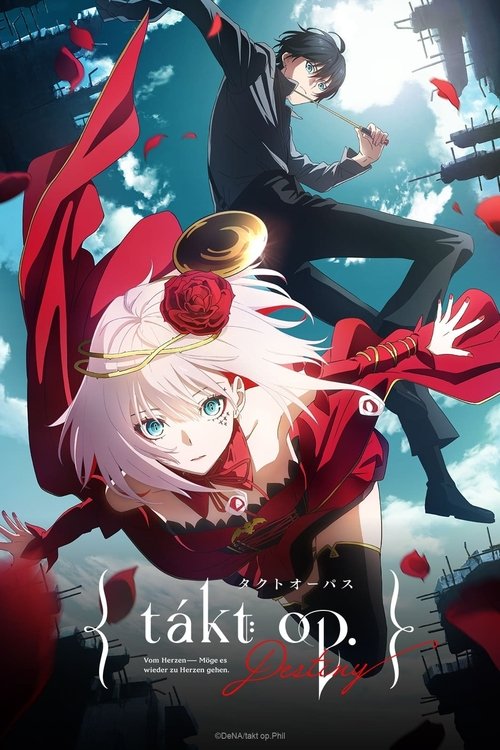
In a world where music has the power to combat monstrous creatures known as D2s, the story begins with Takt Asahina, a young man who has a deep love for music, particularly classical. He lives in a dystopian society where D2s, which are attracted to music, have caused chaos and destruction. Takt's life changes dramatically when he encounters a mysterious girl named Destiny, who is a Musicart--a being that can fight D2s using the power of music. Takt, who has lost his ability to play the piano due to the D2s, is initially reluctant to embrace his role as Destiny's Conductor, but he soon realizes that he must protect her and fight against the D2s.
As Takt and Destiny begin their journey, they are joined by a fellow Conductor named Anna, who is Takt's childhood friend. Anna is determined to help Takt regain his passion for music and to defeat the D2s. The trio travels to New York City, where they encounter various D2s and other Musicarts. During their travels, Takt struggles with his emotions, grappling with the loss of his family and the weight of his responsibilities as a Conductor. Destiny, on the other hand, is driven by her desire to protect Takt and fulfill her purpose as a Musicart.
In New York, Takt and Destiny face off against a powerful D2 known as the "D2 of the Night." The battle is intense, with Destiny using her musical abilities to fight the creature while Takt provides guidance and support. However, the D2 proves to be a formidable opponent, and Takt is forced to confront his own fears and insecurities. In a moment of desperation, Takt plays a melody on an old piano, which strengthens Destiny and allows her to unleash a powerful attack that ultimately defeats the D2.
After their victory, Takt and Destiny continue their journey, but they soon encounter a rival Conductor named Lenny, who has his own Musicart, a girl named Titan. Lenny is ruthless and seeks to eliminate Takt and Destiny to further his own goals. A confrontation ensues, leading to a fierce battle between the two pairs. Takt and Destiny manage to hold their ground, but Lenny's tactics are cunning, and he uses the environment to his advantage. The fight culminates in a dramatic showdown where Takt's determination and Destiny's strength shine through, allowing them to emerge victorious once again.
As they progress, Takt's relationship with Destiny deepens, and he begins to understand the importance of music in their fight against the D2s. However, their journey is not without its challenges. They encounter a powerful D2 that has the ability to manipulate sound, creating illusions that confuse and disorient them. Takt must rely on his instincts and the bond he shares with Destiny to navigate through the chaos. In a pivotal moment, Takt plays a melody that resonates with Destiny, allowing her to break free from the D2's illusions and strike a decisive blow.
The stakes rise when Takt learns about a mysterious organization known as the Symphonica, which is dedicated to eradicating the D2 threat. However, their methods are questionable, and Takt becomes wary of their intentions. He discovers that they have been experimenting on Musicarts, including Destiny, to enhance their abilities. This revelation causes Takt to question the morality of their fight and the sacrifices they must make.
In a climactic battle, Takt and Destiny confront the leader of the Symphonica, who reveals a shocking truth about Destiny's origins. She is not just a Musicart; she is a manifestation of Takt's own musical spirit, created from his memories and emotions. This revelation shakes Takt to his core, as he realizes that his connection to Destiny is deeper than he ever imagined. The battle against the Symphonica is fierce, with Takt and Destiny fighting side by side against overwhelming odds. Takt's determination to protect Destiny fuels their strength, and they manage to defeat the Symphonica's forces.
As the dust settles, Takt and Destiny reflect on their journey and the sacrifices they have made. Takt comes to terms with his past and embraces his role as a Conductor, vowing to continue fighting for a world where music can thrive without fear. Destiny, now fully aware of her connection to Takt, pledges to stand by his side as they face whatever challenges lie ahead. The series concludes with a sense of hope, as Takt and Destiny set out to create a future where music can once again bring joy and harmony to the world.

What is the ending?
In the ending of "takt op.Destiny," Takt, Destiny, and their allies face off against the final enemy, the Conductor, who has been manipulating events throughout the series. Takt sacrifices himself to save Destiny and the world from the destructive forces of the D2s. Destiny, heartbroken but determined, continues to fight, embodying Takt's spirit. The series concludes with a bittersweet resolution, as Destiny carries on Takt's legacy, vowing to protect music and humanity.
As the final episodes unfold, the tension escalates dramatically. The scene opens in a desolate city, the remnants of a once vibrant world now overshadowed by the looming threat of the D2s. Takt, Destiny, and their companions, including Anna and the other Musicarts, prepare for the ultimate confrontation. The air is thick with anticipation, and the stakes have never been higher.
In a dimly lit room, Takt reflects on his journey, the weight of his responsibilities pressing heavily on his shoulders. He recalls the moments shared with Destiny, the laughter, the battles fought side by side, and the bond that has grown between them. His internal struggle is palpable; he knows that the final battle will demand everything from him. Destiny, sensing his turmoil, reassures him with her unwavering support, her eyes filled with determination and love.
The scene shifts to the battlefield, where the Conductor reveals himself, a figure shrouded in darkness and malice. He taunts Takt and Destiny, revealing his plan to eradicate music and impose silence upon the world. The confrontation is fierce, with D2s swarming around them, their grotesque forms a stark contrast to the beauty of the music that Takt and Destiny wield. The clash of sound and silence reverberates through the air, a battle not just of strength but of ideals.
As the fight intensifies, Takt realizes that the only way to defeat the Conductor is to sacrifice himself. In a heart-wrenching moment, he turns to Destiny, his voice filled with resolve. He tells her that music must live on, and she must carry on their fight. Destiny's eyes widen in shock and despair, but Takt's determination is unyielding. He channels all his energy into a final, powerful note, creating a wave of sound that overwhelms the D2s and the Conductor.
In that moment, Takt's essence merges with Destiny's, and she feels his presence within her. The Conductor is defeated, but the cost is high. Takt's physical form fades away, leaving Destiny alone on the battlefield, her heart shattered yet filled with the strength of their shared memories. The scene captures her anguish, the tears streaming down her face as she clutches the air where Takt once stood.
In the aftermath, Destiny stands amidst the ruins, the echoes of their battle still resonating in the silence. She vows to honor Takt's sacrifice by continuing to fight for music and humanity. The final scenes depict her journey forward, a lone figure against the backdrop of a world still recovering from the chaos. Destiny's resolve is palpable; she will not let Takt's dream die. The series closes with her playing a haunting melody, a tribute to Takt, as the sun rises on a new day, symbolizing hope and the enduring power of music.
The fates of the main characters are sealed in this poignant conclusion. Takt, having sacrificed himself, becomes a part of Destiny's spirit, living on through her. Destiny, though heartbroken, emerges as a beacon of hope, embodying the legacy of their shared journey. Anna, who has supported them throughout, continues to advocate for the preservation of music, ensuring that Takt's dream lives on in the hearts of others. The series ends on a note of bittersweet resolution, emphasizing the themes of sacrifice, love, and the enduring power of music in a world fraught with silence.
Is there a post-credit scene?
In the anime series "takt op.Destiny," there is no post-credit scene following the final episode. The series concludes with a significant emotional climax, focusing on the resolution of the characters' journeys and the overarching conflict against the D2s. The ending encapsulates the themes of music, sacrifice, and the bond between the characters, particularly between Takt and Destiny. As the credits roll, viewers are left with a sense of closure regarding the main narrative, but there are no additional scenes or content after the credits that expand on the story or characters.
What is the significance of music in Takt op.Destiny and how does it affect the characters?
In Takt op.Destiny, music serves as a powerful force that influences the characters' emotions and actions. The protagonist, Takt Asahina, has a deep connection to music, particularly classical pieces, which he believes can change the world. His passion for music drives him to fight against the D2s, monstrous beings that despise music. The character of Destiny, a Musicart, embodies the physical manifestation of music, and her abilities are directly tied to the melodies that Takt plays. This connection highlights the theme of music as a source of strength and inspiration, as well as a means of expressing one's inner feelings.
How does Takt's relationship with Destiny evolve throughout the series?
Takt's relationship with Destiny evolves from one of initial reluctance to a deep bond built on mutual understanding and respect. At first, Takt is hesitant to accept Destiny as his partner, viewing her as a mere tool for fighting the D2s. However, as they face numerous challenges together, Takt begins to appreciate Destiny's strength and determination. Their shared experiences, particularly in battles where they must rely on each other, foster a sense of camaraderie. Takt learns to trust Destiny, and she, in turn, becomes more attuned to his emotions and desires, leading to a profound connection that transcends their initial partnership.
What role do the D2s play in the story, and what motivates them?
The D2s in Takt op.Destiny are antagonistic creatures that represent chaos and destruction, specifically targeting music and those who create it. They are motivated by a deep-seated hatred for music, which they perceive as a threat to their existence. This hatred stems from their origins, as they were once human beings who lost their humanity due to the overwhelming influence of music. The D2s' relentless attacks on cities and their desire to eradicate music create a sense of urgency for Takt and Destiny, driving the narrative forward as they strive to protect the world from these monstrous beings.
What is the backstory of Takt Asahina and how does it influence his actions?
Takt Asahina's backstory is pivotal to understanding his motivations and actions throughout Takt op.Destiny. He grew up in a world where music was banned due to the threat posed by the D2s, leading to a deep-seated longing for the beauty of music. His childhood was marked by a tragic event where he lost his father, a musician, which instilled in him a strong desire to fight against the D2s and restore music to the world. This personal loss fuels Takt's determination to protect Destiny and others, as he sees their battles as a way to honor his father's legacy and reclaim the joy that music brings to life.
How do the other Musicarts, like Anna and Lenny, contribute to the story?
The other Musicarts, such as Anna and Lenny, play crucial roles in Takt op.Destiny, enriching the narrative and providing depth to the world. Anna, a Musicart who partners with Takt's friend, brings a sense of camaraderie and support, showcasing the importance of teamwork in their fight against the D2s. Lenny, on the other hand, serves as a mentor figure, guiding Takt and Destiny in their journey. Their interactions highlight the varying dynamics between Musicarts and their conductors, emphasizing themes of friendship, sacrifice, and the shared goal of restoring music to the world. Each character's unique abilities and personalities contribute to the overarching battle against the D2s, making their collective efforts essential to the story's progression.
Is this family friendly?
"Takt op.Destiny" contains several elements that may not be suitable for younger audiences or sensitive viewers. Here are some potentially objectionable aspects:
-
Violence and Combat: The series features intense battles between music-themed creatures called D2s and the protagonists, which can include graphic depictions of combat and destruction. The violence is stylized but can be unsettling.
-
Death and Loss: Characters experience significant loss, including the deaths of friends and allies. These moments are emotionally charged and may be distressing for younger viewers.
-
Dark Themes: The overarching narrative deals with themes of despair, the struggle against fate, and the consequences of a world devoid of music. This can create a heavy atmosphere that might be difficult for children to process.
-
Emotional Turmoil: Characters often grapple with deep emotional pain, loneliness, and the burden of their responsibilities. This emotional weight can be intense and may resonate strongly with sensitive viewers.
-
Mature Situations: There are moments that imply mature themes, such as sacrifice and the moral dilemmas faced by the characters, which may not be appropriate for all audiences.
Overall, while "Takt op.Destiny" has beautiful animation and a compelling story, its darker elements and emotional depth may make it more suitable for older teens and adults rather than young children.