




















Popular
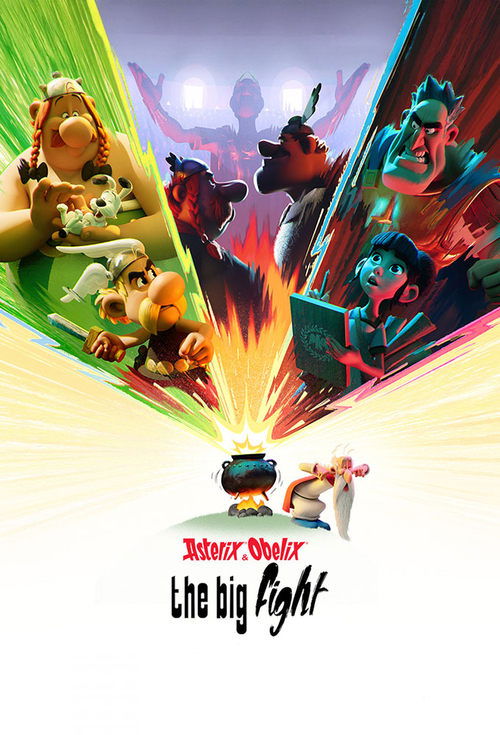
How does Getafix lose his memory in Asterix & Obelix: The Big Fight (2025), and what does that change for the village?
Who is Cassius Ceramix, and why is he important to the Big Fight?
What is the Big Fight in the 2025 series, and how is it used against Vitalstatistix?
Why do Asterix and Obelix have to take action after Getafix loses his memory?
What role does Vitalstatistix play in the series, and what is at stake for him personally?
Should I watch it?
Ask Your Own Question

What is the plot?
The series begins with the Roman camp at Totorum, where Centurion Nebulus Nimbus is furious that the small Gaulish village keeps humiliating Rome by repelling every assault. His advisor, Felonius Caucus, proposes using an ancient Gaulish custom called the Big Fight: a formal duel between chiefs, with the winner taking the loser's tribe, and Nimbus decides to use that law to destroy the village without another open battle.
Nimbus and Caucus then travel to Linoleum to recruit Cassius Ceramix, the chief of a tribe that has been conquered and absorbed into Roman life. Ceramix accepts the Roman side of the scheme, giving Nimbus a rival chief willing to challenge Vitalstatistix under the rules of the Big Fight.
Back in the Gaulish village, disaster strikes when Getafix is caught in an accident that leaves him unable to prepare the magic potion correctly. From that point on, Asterix and Obelix lose the protection that normally lets the village resist Roman forces, and the village becomes vulnerable just as the Romans' plan is taking shape.
At the same time, Caesar's broader strategy unfolds around the legal trap of the Big Fight, with the Romans aiming to manipulate Gaulish custom rather than win by force. The central pressure on the village becomes the duel itself, because if Vitalstatistix loses, the tribe is forfeit.
As the preparations continue, Getafix's condition remains a major obstacle, and the village scrambles to cope without the potion. Asterix and Obelix are forced into an increasingly desperate effort to protect the village by other means while the scheduled chief-vs-chief confrontation draws nearer.
The Big Fight is eventually fought between Vitalstatistix and Cassius Ceramix. During the confrontation, Obelix throws a menhir that accidentally strikes Ceramix, and the impact changes him: he suffers amnesia and becomes gentle, courteous, and no longer aligned with the Romans' hard-line attitude.
After the fight, Vitalstatistix refuses to exploit the victory by taking over Ceramix's tribe. Instead, he sends Ceramix home with honor, and Linoleum returns to its Gaulish ways rather than remaining tied to Rome.
In the aftermath, Psychoanalytix, who has also recovered most of his sanity, goes back to his trade and remains successful despite lingering mild mental disturbances that still affect his treatments.
The story closes with the village banquet celebrating Vitalstatistix's victory and Getafix's recovery, ending the crisis with the Gauls intact and the Romans defeated again.
More TV Shows Like This
Browse All TV Shows →
What is the ending?
The ending is a Roman victory that quickly turns into a Gaulish one. Caesar thinks he has won the village, but Getafix and Metadata restore the magic potion, the Romans are exposed and defeated in a chaotic display, and the Gauls end the story with a celebratory banquet.
Scene by scene, the final stretch begins with the long-awaited Big Fight approaching and Obelix overwhelmed by anxiety. After he had earlier banished Asterix, he is expected to deliver a grand speech before fighting, but the pressure crushes him and he collapses instead. The referee counts him out, and when Asterix arrives to help, it is already too late; Obelix is disqualified and Caesar is declared triumphant.
From there, Caesar treats the result as a real conquest and moves to force the village under Roman control. Cassius is presented as the formal winner of the ring even though he did not truly fight for it, while Vitalstatistix and the village stand on the edge of defeat. The Romans then push the situation further, with Caesar deciding to burn the village down, openly breaking the rules of war in the process.
At that point, the balance shifts because Metadata and Getafix have been working together. Getafix finally wakes from the amnesia that had followed his injury earlier in the story, and with Metadata's help he prepares the potion again. The Romans get hold of the potion first, but it does not secure their victory in the way they expect.
The last battle becomes a spectacle of Roman soldiers floating into the air after the potion is tampered with. Metadata questions Caesar's brutality, and then the trick takes full effect: the soldiers rise upward in a bright, colourful display while the Gauls watch the Roman force collapse into absurdity. Caesar, seeing the public spectacle and the failure of his own show of force, pardons the Gauls and allows them to remain free.
The surviving main characters end in clear places: Vitalstatistix keeps his leadership, Getafix regains his memory, Metadata defects from the Romans and sides with the Gauls, Asterix and Obelix reconcile, and Caesar is left having failed to crush the village. Cassius ends humiliated rather than triumphant, because his "victory" is hollow and does not secure lasting control. The story closes with a traditional Gallic banquet, which shows the village restored to safety and the conflict ended in its usual festive way.
Is there a post-credit scene?
Yes. The series has a brief post-credit scene at the very end of the finale.
It is an animated 2D gag titled "Mission Potager," which plays like a playful tribute to old-school cartoon shorts. In it, two wild boars try to sneak vegetables from a farmer's field around the village, but the chase escalates as Gauls, geese, and then even Roman-related chaos get pulled into the mayhem. The boars ultimately get to enjoy their stolen feast, with the sequence ending as a light, whimsical extra rather than a major plot teaser.
How does Getafix lose his memory in Asterix & Obelix: The Big Fight (2025), and what does that change for the village?
In the story, Obelix accidentally strikes Getafix with a menhir, and the blow causes the druid to lose both his memory and the recipe for the magic potion. That loss creates the central crisis for the village, because their usual source of superhuman strength disappears right as the Romans engineer the Big Fight.
Who is Cassius Ceramix, and why is he important to the Big Fight?
Cassius Ceramix is the pro-Roman Gaulish chief chosen as Vitalstatistix's opponent in the Roman-orchestrated Big Fight. He matters because the custom works like a political trap: if Vitalstatistix loses, the village falls under Roman control.
What is the Big Fight in the 2025 series, and how is it used against Vitalstatistix?
The Big Fight is an ancient Gaulish custom that the Romans deliberately invoke to force a showdown between chiefs. In this series, Caesar's side uses it against Vitalstatistix by setting up a contest with Cassius Ceramix, making the village's independence depend on the outcome.
Why do Asterix and Obelix have to take action after Getafix loses his memory?
Once Getafix can no longer make the magic potion, Asterix and Obelix lose the village's usual advantage over Rome. They therefore have to stop the Roman plot and find a way to restore Getafix's sanity so the village can keep resisting.
What role does Vitalstatistix play in the series, and what is at stake for him personally?
Vitalstatistix is the village chief who is forced into the center of the Roman scheme through the Big Fight. His personal stake is also the village's collective fate, because a loss would mean the end of Gaulish independence and Roman control over the village.
Is this family friendly?
Yes -- Asterix & Obelix: The Big Fight is generally family-friendly and is presented as a kids-and-adults animated adventure with broad appeal.
Potentially objectionable or upsetting elements, without spoilers, may include: - Cartoon violence and fighting: there are battle sequences and physical clashes, though they are in the comic, stylized Asterix tradition rather than realistic violence. - Mild peril / tension: the story includes conflict between Romans and Gauls, so some scenes may feel tense for very young or sensitive viewers. - Comic mischief and slapstick injury: one premise involves a character being hit on the head and losing memory, which suggests exaggerated cartoon mishap rather than graphic harm. - Adult humor / winking jokes: reviewers note humor aimed at both children and adults, so a few jokes may go over younger children's heads. - Possible themes of conquest, resistance, and unfair treatment: the series centers on a village under Roman pressure, which may be more emotionally intense than a purely light comedy.
Nothing in the available information suggests graphic violence, sexual content, or strongly explicit material.